👉 Register for Free. How to Diagnose Sleep Apnea Faster in Primary Care – FREE Webinar by Dr. Audrey Wells. – Friday, April 24 at 12 PM ET


If you received your CPAP from SLIIIP.com, you’re in the right place.
Book Appointment



You wouldn’t use the same toothbrush for two years!
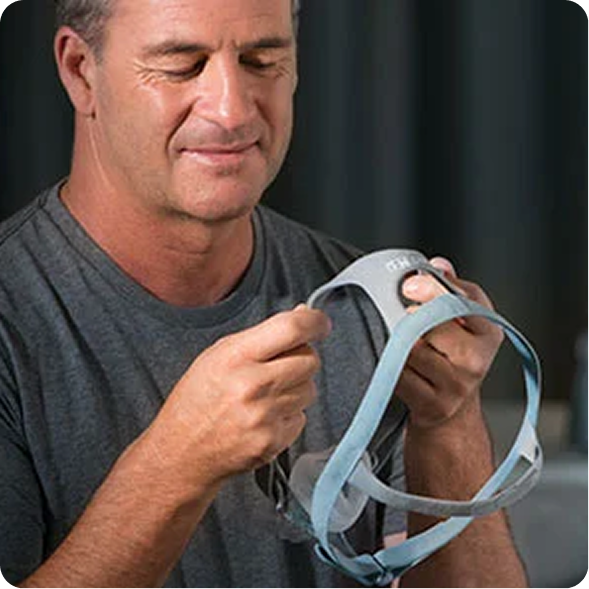
CPAP supplies are no different. Your mask cushion, filters, tubing, and humidifier chamber all wear out over time, causing leaks, skin irritation, and making therapy feel uncomfortable or like it stopped working. The fix is usually just fresh supplies.
The SLIIIP CPAP AutoSupply Program sends replacements on your schedule, before you notice a problem. If you’re going to the trouble of treating your sleep apnea, let’s do it right.
Masks should be replaced every 3-6 months for optimal performance. Contact us to order your replacement.

Mask leak is one of the most common challenges for patients. To ensure the best fit and adjustment, sit on your bed and place a mask on the head/face with straps loose when going to bed. With the machine turned on and air blowing lay down with your head on the pillow in your normal sleeping position. Slowly tighten your mask straps just until you get a good seal, being careful not to needlessly over-tighten. The final step is to “seat” your mask. After the straps are adjusted, pull the mask 1-2 inches away from your face and gently lay back on your face. This allows the dual mask cushions to inflate, ensuring the best seal possible and a comfortable fit. Mask fit varies with sleeping position, so if you fit for side or stomach sleeping, you will need to readjust if you roll to your back. Therefore, many patients train themselves to sleep solely on the side or stomach (exact mask fit) versus back sleeping which has a different mask fit.
No mask should cause pain nor discomfort if sized correctly and fitted properly. If irritation or sores are developing, chances are you are over-tightening your mask OR your mask cushion may be worn out. Fabric mask liners called RemZzz’s or Pad-A-Cheek might also resolve skin irritation and mask leak. Check out additional resources on Etsy.com (search ‘CPAP mask liners’). Let sores heal by applying a band-aid when wearing the mask or take a break for 1-2 days if the sore persists or worsens.
One is the Gecko nasal pad. It is an easy-to-use gel pad placed across the nose bridge and under the mask. It helps with leaks in the upper part of the mask frame and is beneficial to patients who have a narrow nose bridge or are prone to cuts or irritation of the nose bridge.
This is a common occurrence, especially during the early adjustment period of CPAP use. Chances are, you removed the mask due to discomfort or a leak. This would indicate that your mask is not fitted correctly, or a chin strap will be needed if mouth-breathing with a nasal mask.
No air should be directed up into the eye area with an appropriately sized and fitted mask. This might indicate a leak in the top spot of your mask; gently tighten the top mask straps taking care not to overtighten. This leak might also mean a worn mask cushion that needs replacing. Some people naturally sleep with their eyes partially open, which can cause dryness or irritation; they benefit from wearing a simple fabric eye mask. If swelling or irritation is chronic or persistent, consult your sleep or primary care physician
Skin irritation can quickly occur when the nasal pillows are not inserted correctly. Try rotating the barrel that holds the nasal pillow inserts to a more comfortable angled position against the nostrils. After best positioning, if a leak occurs at the nostril opening, then size up. If your nostrils are not the same size, a leak may occur on one side more than the other – consider switching to a nasal mask. Non-petroleum skin barriers will also help, such as lanolin.
Patients who experience claustrophobia usually find that nasal pillow masks are more tolerable. Most patients have an adjustment period as they get used to sleeping with anything on the face. While your goal is to sleep all night on CPAP, try to increase usage over time until you reach your goal. Your provider might be able to prescribe a sleep aid short term to help you acclimatize
This may indicate a leak from the area where your mask makes contact, with your skin. See tips for mask fit. Most masks have exhalation ports (look for a tiny cluster of holes) that allow the escape of carbon dioxide when we breathe out. These small holes must be checked to ensure they are not clogged by body oils or bedding lint when routinely cleaning your mask
parts. When blocked, they can cause the mask to make a whistling noise. Use a sewing needle to keep the holes free flowing.
Full Face – Mask users with forehead pads/brace: tighten the upper strap first, then follow with lower strap positioning and fit.
Mask Headgear – Masks come with a “one size fits most” headgear. Larger and smaller strapped headgear may be
available by order.
Nasal Pillow Mask – Place mask on face, position headgear, and place side straps above the ears. Gently slip nasal pillows into the nostrils making sure to rotate the angle of the pillow barrel for a comfortable fit. The pillows are meant to lie just against the nostril opening, not deeply inserted. Proper placement should not cause the tip of the nose to be raised.
All masks have exhalation ports to allow the escape of carbon dioxide. The higher the machine pressure setting, the higher this escape flow will be. Some patients resolve by side sleeping with their backs turned to their bed partner to avoid distracting airflow and lowering the pressure needed.
Snoring, choking, and gasping-like noises should be eliminated during CPAP use. If not, you may be opening your mouth with a nasal mask (use a chin strap) or your full-face mask (FFM) may not fit well. If you cannot adjust to a nasal mask with a chin strap, consider requesting an FFM. If you are already on an FFM, you may need a different size.
This occurs when the air delivered by your CPAP enters the esophagus and stomach rather than the lungs. An air leak from around your mask may cause your CPAP to increase the pressure and divert some of that air pressure into your stomach. It can also happen if you are a mouth breather but not wearing a full-face mask. With an automatic CPAP (or Auto-PAP), you can sleep with 3 pillows or on your sides to reduce the pressure of the machine. Sometimes simethicone helps.
Try placing the tubing behind your head near the top of your pillow or positioned behind the headboard bedpost. Most online CPAP suppliers offer an inexpensive Tubing Lift to help tube positioning for better sleep. Easy to use, the small frame is held between the box spring and mattress. The lift holds tubing above the head, allowing for better freedom of movement.
Check out additional resources on Etsy.com (search ‘CPAP hose holder/hanger).
Ensure the electric plugs to the wall and the machine is firmly in place. Check your electric outlet to make sure it is working. Otherwise, email cpap@sliiip.com to inform them of a machine malfunction.
Most noise from newer CPAPs is from mask leaks (See Sleep & Comfort FAQs). Today’s machines are nearly silent, so this would indicate a problem unless you are hypersensitive to noise (try earplugs). Check the machine filters. They should be changed monthly or when visibly discolored to help keep the machines running smoothly. There will be a slight audible noise if you use a Bi-Level machine as the pressure transitions between inhalation and exhalation settings. There will be a small audible noise if you use an Auto-CPAP as the machine changes inhalation pressure. If your machine is otherwise noisy, there may be a machine defect. Otherwise, email cpap@sliiip.com to inform them of a machine malfunction.
The length of standard CPAP tubing is about 6 feet. Active sleepers toss and turn and are more apt to tug on the tubing and pull their machine off the bedside table. Most CPAP suppliers offer tubing in 10-foot lengths, giving patients more freedom of movement, especially when coupled with a Tubing Lift. You may be able to place the CPAP on the floor beside your bed with a 10-foot hose. Please use a mat under the CPAP to avoid access dust buildup.
When initially using CPAP, most of us are excited about its ability to help us sleep. Please time your use of CPAP when you are very sleepy. Remember, you dictate your breathing – not the CPAP. Switch on the CPAP, close your eyes, get comfortable, and focus on your breathing – not the machine pressure. The machine will adjust to you, not the other way around.
Practice makes perfect, nothing beats nightly use to increase your comfort level. Most people take 2-3 weeks of nightly use to acclimatize to CPAP, give yourself a chance to succeed. To help get used to wearing the mask during sleep, practice wearing it during the day while sitting in a chair watching television or reading. This will distract your focus from the mask to a positive, familiar activity.
Often, side or stomach sleepers find that the head sinks into their bed pillow, which causes mask frame movement (pushed off-center), causing mask leak, or pressure point soreness. To resolve this, purchase a PAP pillow, a specially made bed pillow designed for CPAP users who are side or stomach sleepers.
A CPAP humidifier or temperature adjustment usually resolves all the above issues. Start with the lowest heat setting and turn up as needed for more moisture. If humidity adjustment does not resolve your dry mouth or throat, consider a mask leak either around your mouth or nose (See Mask & Fit FAQs). Check the sizing and fit of the mask. As masks are used longer, it may shift during sleep and cause an air and moisture leak. Biotene spray or oral rinse products may also help with dry mouth. If you are using a nasal mask, a chin strap or switch to a full-face mask may be needed, if adjusting the humidity does not address the issue. Flonase, Ocean, or other saltwater nasal sprays may satisfy chronic nasal congestion. Consult with your provider if the problem persists.
The REASON to wash the CPAP mask is NOT to remove germs. The MOST IMPORTANT REASON is to remove the facial oil from your mask. Your face will always have germs, so even if you sterilize the mask with strong chemicals like Lysol or Alcohol or Clorox, the minute you put the mask back on the face, there are germs on it, from the air and from your face. The germs on your skin and the germs in your nose and mouth are the normal germs that you live with every day, and they will not infect you, even in people who do not use CPAP.
The BEST WAY to wash your mask, so that the oil is removed, is with warm, soap water, just like washing greasy dishes. This gets the oil off the mask which makes the mask less likely to slip when you wear it. This slipping on the facial oil makes a leak more likely.
Unless you have very oily skin, washing the mask ONCE PER WEEK is fine. Our experience has been that if someone washes it every day, after a while they get tired of washing it and stop washing it altogether.
Always take your mask off by pulling it from BACK to FRONT, not front to back. Pulling your CPAP mask off from the front stretches the headgear, which in turn will create a problem that the elastic in the mask will lose its “spring” and you will start having to tighten the straps to maintain a good fit.
Always use the quick clip or magnets to remove your mask (if available on your mask). Do NOT pull the Velcro loose every time you take it on or off. The Velcro will wear out if you do this and more importantly, every time you do this you are changing the fit of the mask. If you had found a good degree of tightness for the fit, this will change every time you readjust it.
Do not remove your mask when you get up during the night to go to the bathroom. Instead, remove the HOSE from the mask. Even if you need to get a sip of water keep the mask on and use a straw. Alternatively, remove the mask using the quick clips. Taking the mask off increases the chance of changing the mask fit when putting it back on.
All manufacturers recommend the use of distilled water. Tap water may be used on occasion. The long-term use of tap or bottled water leads to calcium and mineral build-up in your CPAP, shortening the device’s lifespan.
Excess condensation can form in the CPAP tubing/mask. Try reducing the humidity level on your CPAP. Some people prefer it OFF. The humidity level will need to be adjusted as seasons change and bedroom temperatures fluctuate. If adjusting the humidity level does not work, add an insulating hose cover. Most CPAPs now have the option for a climate control hose, which helps regulate condensation. Check out additional resources on Etsy.com (search ‘CPAP hose cover).
Two to three times a week, empty any leftover water, rinse the chamber, and let air dry. Once a week, fill the chamber with warm soapy water and let soak for an hour. You may also use 1/3 white distilled vinegar to 2/3 tap water solution to soak. Rinse with water, and air dry thoroughly.
Remove the water chamber unit from the machine before filling it with distilled water. Some people find a funnel helpful. Spilling water into the device may compromise the interior circuits and void the warranty
Speak directly with a board-certified sleep specialist.
Get regular articles and insights from our team directly to your inbox.


