👉 Register for Free. How to Diagnose Sleep Apnea Faster in Primary Care – FREE Webinar by Dr. Audrey Wells. – Friday, April 24 at 12 PM ET


Bedroom Temperature for Sleep: The Ideal Setting for Deep Rest
Bedroom temperature for sleep is one of the most controllable factors in a good night, and Dr. Avinesh Bhar, Board-Certified Sleep Physician at SLIIIP.com, often reminds people that a room that feels a touch cool is usually working in their favor. Your body needs to shed a little heat to drift off, so a warm bedroom can quietly stand in the way. The right room temperature can be the difference between tossing for an hour and settling in quickly. This article is for general education and does not diagnose or treat any condition. It explains the science of temperature and rest, shares a practical target range, and offers simple ways to cool your room, while pointing you to your own doctor for any lasting concern. The goal is useful, everyday guidance you can act on tonight.
SLIIIP’s board-certified sleep physicians can do sleep evaluations for sleep apnea. Virtual consultations in all 50 states. Home sleep tests shipped to your door.
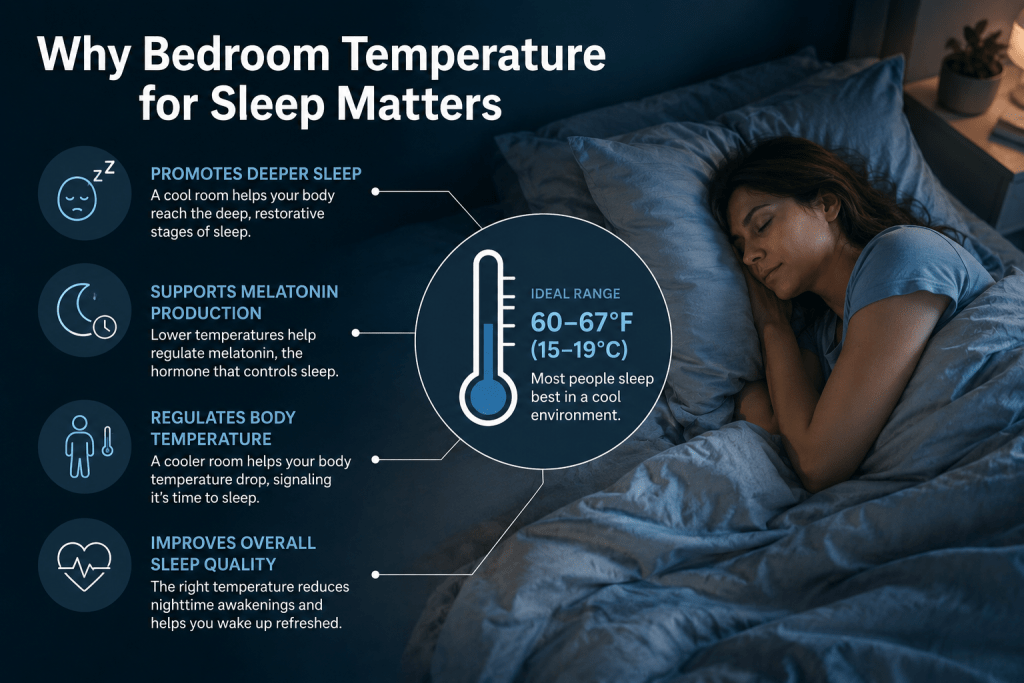
Why Bedroom Temperature for Sleep Matters
Bedroom temperature for sleep matters because your body uses a small drop in core temperature as a signal that it is time to rest. As bedtime nears, your body naturally starts to cool, releasing heat through the skin. A cooler room supports that process, while a warm room fights against it.
This cooling is tied to your body clock. The same circadian rhythm that governs alertness also guides your temperature across the day and night. When the room helps your body cool on schedule, the whole wind down feels more natural. You can read more about that clock in our guide on how to fix your circadian rhythm.
When a room is too warm, the body struggles to release heat, and sleep can turn restless. Many people who blame stress or a busy mind for poor sleep are also fighting an overheated bedroom. Adjusting the thermostat is one of the simplest changes you can make. Unlike many sleep habits that take weeks to build, a cooler room is a fix you can test the very same night and feel the difference by morning.
CHECK YOUR SLEEP SYMPTOMS: TAKE THE 2 MINUTE QUIZ
TAKE THE QUIZ
The Ideal Bedroom Temperature
Sleep experts often point to a range of about 60 to 67 degrees Fahrenheit, which is roughly 15 to 19 degrees Celsius. A common target that many people find comfortable is around 65 degrees Fahrenheit, or about 18 degrees Celsius. This is cooler than most people keep in their homes during the day.
That number is a starting point, not a strict rule. Personal comfort, bedding, and what you wear to bed all shift the ideal for each person. Someone who runs cold may prefer the warmer end of the range, while a hot sleeper may want it cooler. The point is to experiment within the range until you land on the setting where you fall asleep easily and stay asleep through the night.
The key is a room that feels slightly cool when you climb into bed, not cold. If you often wake up sweating or throwing off the covers, your room may be too warm. Our article on how to get more deep sleep covers other factors that pair well with a cool room.
How Temperature Shapes Deep Sleep and Dreaming
Temperature does not just help you fall asleep, it also supports the quality of sleep once you are there. Research has associated a cooler sleeping environment with more time in deep, restorative sleep. These are associations reported in research, not certainties for any single person.
During the night, your body temperature stays lower than it is during the day. A room that drifts too warm can nudge you out of deeper stages and into lighter, more easily disturbed sleep. That is part of why a hot night can leave you feeling unrested even after enough hours.
Your body is especially sensitive to temperature during dreaming sleep, when its own ability to regulate heat is reduced. A stable, cool room takes pressure off that system. Keeping the environment steady through the night supports smoother, less broken rest.
Signs Your Room Is Too Hot or Too Cold
Your body often signals when the temperature is off. Waking up sweaty, kicking off the covers, or feeling sticky and restless are common signs that a room is too warm. These clues are easy to notice once you start paying attention.
A room that is too cold has its own tells. Cold hands and feet, tension in the shoulders, and waking up stiff can point to an environment that dipped too low. Very cold air can make it harder to relax into sleep.
Night sweats can have many causes beyond room temperature, including hormonal shifts. If you are navigating that stage of life, our page on menopause sleep problems and natural remedies may help. When temperature swings feel out of step with the room, it is worth mentioning to a doctor.
How to Get Your Bedroom to the Right Temperature
You do not need fancy gear to dial in a comfortable room. Start by setting your thermostat toward the cooler end in the evening, and let the room settle before you get into bed. A programmable or smart thermostat can lower the temperature automatically at night.
Airflow helps too. A fan keeps air moving and can make a room feel cooler without changing the thermostat much. Cracking a window, closing blinds during a hot day, and using breathable bedding all support a cooler sleep surface.
What you wear and sleep under matters as much as the air. Lightweight, breathable sheets and sleepwear help your body release heat, while heavy bedding can trap it. Our ultimate sleep routine guide shows how to fold these habits into a steady wind down. According to the Centers for Disease Control and Prevention, a comfortable, quiet, and cool bedroom is a core part of healthy sleep habits.
Watch: 8 Tricks to Core Sleep – Sliiip.com
When Temperature Is Not the Whole Story
A cool room helps many people, but it cannot fix every sleep problem on its own. If you still wake tired, snore loudly, or gasp for air even with a comfortable temperature, something deeper may be at work. Those signs point beyond the thermostat.
Conditions like obstructive sleep apnea fragment sleep from the inside, no matter how perfect the room feels. As Dr. Avinesh Bhar notes, lasting tiredness that does not respond to good habits deserves a real evaluation rather than guesswork. If you often wake unrefreshed, our article on why you wake up tired is a helpful next read.
The National Heart, Lung, and Blood Institute notes that ongoing sleep problems are worth a professional look. A sleep evaluation is one part of a broader view of your health, and any concern beyond sleep belongs with your own physician.
At Sliiip, we accept the following insurances:

SLIIIP’s board-certified sleep physicians can do sleep evaluations for sleep apnea. Virtual consultations in all 50 states. Home sleep tests shipped to your door.
Frequently Asked Questions
What is the best bedroom temperature for sleep?
Many sleep experts suggest a range of about 60 to 67 degrees Fahrenheit, or roughly 15 to 19 degrees Celsius. Around 65 degrees Fahrenheit is a common comfortable target.
Why does a cooler room help me sleep?
Your body needs to shed a little heat to fall asleep. A cooler room supports that natural drop in core temperature.
Is 65 degrees too cold for sleeping?
For many people, 65 degrees Fahrenheit feels slightly cool and comfortable. Personal preference, bedding, and sleepwear can shift the ideal up or down.
Can a warm room really ruin my sleep?
A room that is too warm can make it harder to fall asleep and stay in deep sleep. Many restless nights trace back to an overheated bedroom.
Does room temperature affect deep sleep?
Research links a cooler environment with more time in deep, restorative sleep. These are associations, not guarantees for any one person.
Why do I wake up sweating at night?
An overly warm room or heavy bedding is a common cause. Hormonal changes and other factors can also play a role, so mention ongoing night sweats to your doctor.
Should the temperature change through the night?
A steady, cool room is generally ideal. Big swings can nudge you out of deeper sleep stages.
Is a fan good for sleep?
A fan keeps air moving and can make a room feel cooler and more comfortable. The steady sound can also help mask other noises.
What should I wear to bed to stay cool?
Lightweight, breathable sleepwear helps your body release heat. Heavy fabrics can trap warmth and disrupt rest.
Does bedding affect how hot I get?
Yes, breathable sheets and lighter blankets help you stay cool. Heavy bedding can trap heat against your body.
Is the ideal temperature different for babies or kids?
Children can have different comfort needs, and safety guidance matters. Follow your pediatrician’s advice on room temperature for infants.
Can a cold room disrupt sleep too?
Yes, a room that is too cold can cause tension and stiffness. Aim for slightly cool rather than genuinely cold.
Does temperature affect how fast I fall asleep?
A cool room supports the body’s natural cooling before sleep. That can help you drift off more easily.
Why do my feet feel cold at night?
Cold feet can make it harder to relax into sleep. Warm socks or a warmer sleep surface for your feet may help.
How do I cool my room without air conditioning?
Use fans, open windows in the evening, close blinds during hot days, and choose breathable bedding. Small steps add up.
Does a smart thermostat help sleep?
A programmable thermostat can lower the temperature automatically at night. That makes a cool room easier to maintain.
Can the wrong temperature cause night waking?
Yes, being too hot or too cold can pull you out of sleep. A comfortable, steady room reduces those disruptions.
Is a cool room enough to fix my sleep?
It helps, but it is one factor among many. Lasting sleep trouble deserves a broader look.
Does room temperature matter more in summer?
Hot summer nights make temperature especially important. Fans, cooling bedding, and blocking daytime heat can help.
When should I see a doctor about poor sleep?
If you stay tired despite a comfortable room, or you snore heavily or gasp for air, seek an evaluation. A sleep visit can clarify what is going on.
SLIIIP’s board-certified sleep physicians can do sleep evaluations for sleep apnea. Virtual consultations in all 50 states. Home sleep tests shipped to your door.
Latest posts
-
Why Do I Feel Drunk or Confused When I Wake Up?
Last updated: October 2, 2026. Medically reviewed by Dr. Avinesh Bhar, Board-Certified Sleep Physician, SLIIIP.com. If you often feel drunk when you wake up, you may have sleep drunkenness. It…
-
Why Do I Sleep Through Multiple Alarms?
Last updated: October 2, 2026. Medically reviewed by Dr. Avinesh Bhar, Board-Certified Sleep Physician, SLIIIP.com. Most people who sleep through alarms are either deep in slow-wave sleep, short on sleep,…
-
Why Can’t I Wake Up Even After Getting Enough Sleep?
Last updated: October 2, 2026. Medically reviewed by Dr. Avinesh Bhar, Board-Certified Sleep Physician, SLIIIP.com. If you can’t wake up after enough sleep, the cause is usually not the number…
Get updates
Spam-free subscription, we guarantee. This is just a friendly ping when new content is out.

