👉 Register for Free. Peri/Menopause at Midnight: Why You Wake Up Hot, Wired, and Wide Awake at 3AM. – Friday, March 27th, 3:00 AM ET with Dr. Audrey Wells.

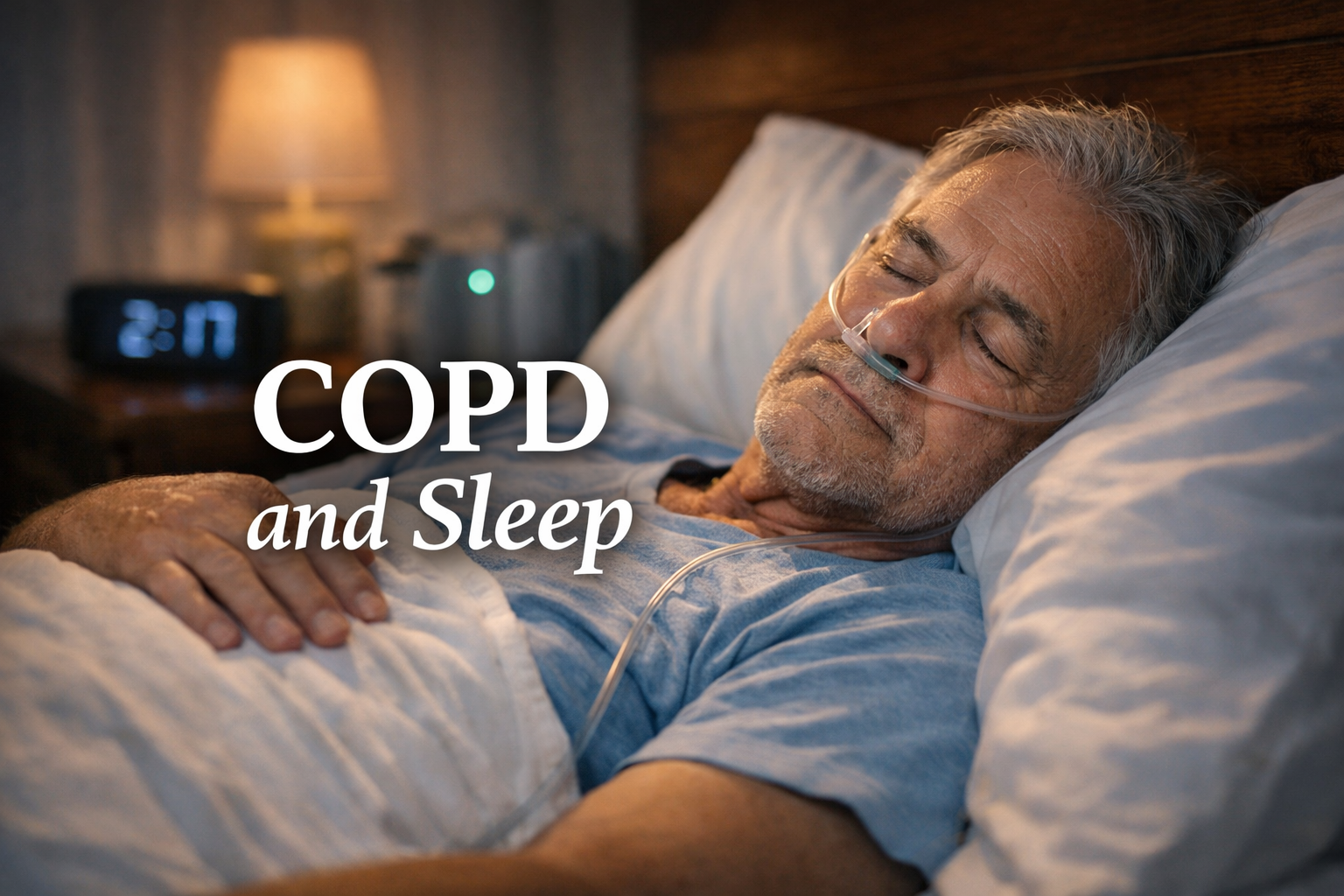
COPD and Sleep: How Chronic Lung Disease Disrupts Your Rest
Chronic obstructive pulmonary disease does more than affect your breathing during the day. At night, COPD can fragment sleep, reduce oxygen levels, and dramatically increase the risk of undiagnosed sleep apnea. Understanding how these two conditions overlap is the first step toward getting the rest your body needs to function.
Reviewed by Dr. Avinesh Bhar, Board Certified Sleep Physician at Sliiip.com
You already manage your breathing during the day. Inhalers, activity limits, careful planning. But when you close your eyes at night, the struggle often continues in ways you cannot see or feel.
COPD and sleep are deeply intertwined. And for many patients, the nightly battle is as damaging as the daytime one.
Research published in the journal Sleep Medicine found that up to 65% of COPD patients report significant sleep disturbances, and nearly one in three has an undiagnosed co-occurring sleep disorder.
SLIIIP’s board-certified sleep physicians can do sleep evaluations for sleep apnea. Virtual consultations in all 50 states. Home sleep tests shipped to your door.
Myth vs. Reality: What Most Patients Get Wrong About COPD and Sleep
Myth: If you manage your COPD during the day, your sleep will be fine.
Reality: COPD causes overnight oxygen drops, airway changes, and breathing pattern shifts that occur independent of daytime control. Many patients with well-managed daytime symptoms still experience severe sleep disruption.
Myth: Snoring and waking up tired is just part of having lung disease.
Reality: These are symptoms of a separate, treatable condition. Overlap syndrome, where COPD and sleep apnea occur together, affects an estimated 1% of the general adult population but is far more common among COPD patients. It requires independent evaluation.
Myth: A sleep study would not show anything useful.
Reality: Sleep testing is one of the most informative tools available for COPD patients. It can reveal oxygen desaturation patterns, breathing disruptions, and sleep architecture changes that directly inform treatment decisions.
Why COPD Makes Sleep Harder
Your lungs are already working harder than they should. At night, that challenge intensifies.
During sleep, your respiratory drive naturally decreases. For healthy adults, this is manageable. For patients with COPD, reduced airflow at rest means oxygen levels can drop significantly during the night, a condition called nocturnal hypoxemia.
This triggers frequent micro-arousals. Your brain detects the oxygen drop and briefly wakes the body to restore normal breathing. You may never be consciously aware of it. But these arousals fragment sleep architecture, preventing the deep, restorative stages your body depends on.
The result is waking up exhausted despite spending eight hours in bed.
The Overlap Syndrome: COPD Plus Sleep Apnea
This is one of the most underdiagnosed combinations in pulmonary medicine.
Signs of sleep apnea in a COPD patient can easily be attributed to the underlying lung disease. Fatigue, morning headaches, difficulty concentrating, waking during the night: all of these are explained away as COPD symptoms when a second condition may actually be driving them.
When COPD and obstructive sleep apnea occur together, the consequences compound. Oxygen desaturation is more severe. Cardiovascular strain is greater. Quality of life declines faster.
A study published in the American Journal of Respiratory and Critical Care Medicine found that patients with overlap syndrome had significantly higher rates of hospitalization and mortality compared to those with COPD alone.
Expert Q&A
Q: Should every COPD patient be evaluated for sleep apnea?
Dr. Avinesh Bhar, Board Certified Sleep Physician, Sliiip.com: Any COPD patient who experiences excessive daytime fatigue, reports snoring, wakes frequently at night, or has morning headaches should be evaluated for sleep-disordered breathing. These symptoms are not explained by COPD alone in many cases. A home sleep test can clarify the picture without requiring a lab visit.
What COPD Does to Sleep Architecture
Sleep is not a single state. It cycles through light, deep, and REM stages across the night. Each stage serves a different restorative function.
COPD disrupts this architecture in predictable ways. Patients spend less time in deep slow-wave sleep, the stage most critical for physical recovery. REM sleep, which involves a natural relaxation of the muscles that support breathing, becomes particularly difficult. Breathing irregularities tend to worsen during REM.
The result is a pattern of shallow, fragmented sleep that leaves the body under-recovered every single morning.
Book a Sleep Evaluation with SLIIIP
SLIIIP’s board-certified sleep physicians have completed more than 10,000 consultations. We evaluate patients with COPD, sleep apnea, and complex breathing conditions through telemedicine, in all 50 states. No referral required. Home sleep tests shipped to your door.
How Overnight Oxygen Levels Affect Your Daytime Function
When your oxygen drops during sleep, your body compensates by activating the stress response. Cortisol and adrenaline rise. Heart rate increases. Blood pressure spikes.
This nightly cardiovascular strain accumulates over time. Research from the American Heart Association links nocturnal hypoxemia to increased risk of cardiac arrhythmia, pulmonary hypertension, and accelerated disease progression in COPD patients.
Understanding how sleep apnea affects the heart provides important context for why overnight breathing quality matters so much in lung disease.
The Role of Sleep Position in COPD
How you sleep matters.
For COPD patients, lying flat on your back can worsen overnight breathing. The diaphragm moves less efficiently in the supine position, and airway resistance increases. Many patients with COPD instinctively sleep propped up or on their side, and research supports this.
Side sleeping improves airway patency and reduces the frequency of breathing disruptions. A positional evaluation is a standard component of a comprehensive sleep assessment.
Expert Q&A
Q: Can treating sleep apnea improve COPD outcomes?
Dr. Avinesh Bhar, Board Certified Sleep Physician, Sliiip.com: For patients with overlap syndrome, treating the sleep-disordered breathing component consistently leads to measurable improvements in sleep quality, daytime energy, and in some cases, respiratory metrics. CPAP therapy is often the most effective intervention. It addresses both conditions simultaneously by maintaining airway patency and supporting oxygen levels overnight.
Why Fatigue in COPD Is Not Always What It Seems
Fatigue is the most commonly reported symptom in COPD. It is also one of the most commonly misattributed.
Many COPD patients have learned to accept exhaustion as part of their diagnosis. But persistent fatigue that does not improve with rest, that comes with brain fog, low mood, or difficulty concentrating, is often the signature of a co-occurring sleep disorder.
If you are waking up tired every day despite what feels like a full night’s rest, that is a signal worth investigating. The symptoms of sleep apnea overlap significantly with what COPD patients experience and report.
Watch our video on the process of falling asleep
Lifestyle Habits That Support Better Sleep With COPD
Clinical evaluation is the priority. But there are evidence-based habits that can reduce the severity of nighttime breathing disruption.
Avoid alcohol in the hours before bed. Alcohol relaxes the muscles of the upper airway and increases the frequency and severity of breathing disruptions during sleep.
Maintain a consistent sleep schedule. Irregular sleep timing disrupts the circadian processes that regulate breathing patterns and oxygen regulation overnight.
Elevate the head of your bed by four to six inches. This reduces the work your diaphragm must do while lying down and can meaningfully reduce nocturnal symptoms.
Avoid large meals within two to three hours of bedtime. Gastroesophageal reflux, which is more common in COPD patients, worsens overnight breathing and contributes to arousals.
Engage in supervised pulmonary rehabilitation during the day. Exercise capacity improvements are associated with better sleep quality in COPD patients, per research from the European Respiratory Journal.
Stay hydrated but limit fluids close to bedtime to reduce overnight awakenings.
SLIIIP’s board-certified sleep physicians can do sleep evaluations for sleep apnea. Virtual consultations in all 50 states. Home sleep tests shipped to your door.
Is Your COPD Disrupting Your Sleep?
SLIIIP’s board-certified physicians evaluate the full picture. More than 10,000 consultations. All 50 states. No referral required. Major insurance accepted including Medicare and Tricare.

Frequently Asked Questions
Does COPD always cause sleep problems?
Not always, but sleep disturbances are extremely common in COPD. Research suggests that up to 65% of COPD patients experience significant sleep disruption. The mechanisms include nocturnal oxygen drops, airway changes during sleep, and increased work of breathing at rest.
What is overlap syndrome?
Overlap syndrome refers to the co-occurrence of COPD and obstructive sleep apnea. It is associated with worse outcomes than either condition alone, including more severe oxygen desaturation, greater cardiovascular risk, and higher rates of hospitalization. It is underdiagnosed because the symptoms of both conditions overlap.
Can a home sleep test detect COPD-related sleep problems?
A home sleep test monitors breathing patterns, oxygen levels, heart rate, and body position throughout the night. It can identify sleep apnea, nocturnal hypoxemia, and sleep architecture disruption, all of which are relevant in COPD patients.
How do I know if my fatigue is from COPD or a sleep disorder?
Fatigue that persists despite adequate rest, accompanied by morning headaches, brain fog, or witnessed snoring, is more likely to involve a co-occurring sleep disorder. COPD-related fatigue typically responds to breathing management during the day. Sleep-disorder fatigue does not resolve without addressing the nighttime component.
Is CPAP used for COPD patients?
CPAP is used when a COPD patient also has obstructive sleep apnea, the overlap syndrome. It addresses the airway component during sleep. Some patients may require bilevel therapy, which provides different pressure levels for inhalation and exhalation. Treatment decisions are made by a sleep physician following evaluation.
Can poor sleep make COPD worse?
Yes. Fragmented sleep and nocturnal hypoxemia increase systemic inflammation, reduce immune function, and elevate cardiovascular strain. These effects can accelerate COPD progression and increase exacerbation frequency.
Why do COPD patients wake up at night?
Multiple mechanisms are involved. Nocturnal hypoxemia triggers brief arousals. Coughing is more common during certain sleep stages. Airway inflammation increases mucus production overnight. Co-occurring sleep apnea causes additional breathing-related awakenings. Identifying which mechanism is dominant requires sleep evaluation.
Does sleep position affect COPD symptoms at night?
Yes. Sleeping on your back reduces diaphragm efficiency and increases airway resistance. Most COPD patients benefit from side sleeping or sleeping with the head elevated. A sleep physician can provide personalized positional guidance based on evaluation findings.
What time of night is COPD worst?
Breathing difficulties in COPD tend to be most pronounced during REM sleep, which concentrates in the later hours of the night. Muscle tone is lowest during REM, reducing the support structures of the upper airway and diaphragm.
Can treating sleep improve COPD outcomes?
Research consistently shows that addressing sleep-disordered breathing in COPD patients improves quality of life scores, daytime energy levels, and in some cases, objective respiratory metrics. Treatment of the sleep component does not cure COPD but substantially reduces the cumulative burden.
Should COPD patients see a sleep specialist?
Any COPD patient experiencing persistent fatigue, morning headaches, frequent nighttime awakenings, or reported snoring should consult a sleep specialist. A board-certified sleep physician can assess for overlap syndrome and other treatable sleep disorders that are distinct from the COPD itself.
Is insomnia common in COPD?
Yes. Dyspnea-related anxiety, medication effects, and sleep architecture disruption all contribute to insomnia symptoms in COPD. Cognitive behavioral therapy for insomnia, CBT-I, can be effective and is offered through telemedicine sleep care.
Latest posts
-
Why CBT-I Works Even When Medications Don’t
Why CBT-I works when medications do not comes down to one fundamental difference: CBT-I addresses the neural and behavioral patterns that maintain insomnia, while medications suppress symptoms without changing the…
-
CBT-I vs Sleep Medications: What Patients Need to Know
CBT-I vs sleep medications is one of the most important comparisons in sleep medicine today. CBT-I, or Cognitive Behavioral Therapy for Insomnia, is a structured, evidence-based program that addresses the…
-
Sleep Apnea and Depression: What the Research Actually Shows
Sleep apnea and depression share a bidirectional biological relationship that most patients and clinicians do not fully recognize. A Sliiip board-certified sleep physician explains the mechanism, why treatment resistance is…
Get updates
Spam-free subscription, we guarantee. This is just a friendly ping when new content is out.

