👉 Register for Free. How to Diagnose Sleep Apnea Faster in Primary Care – FREE Webinar by Dr. Audrey Wells. – Friday, April 24 at 12 PM ET

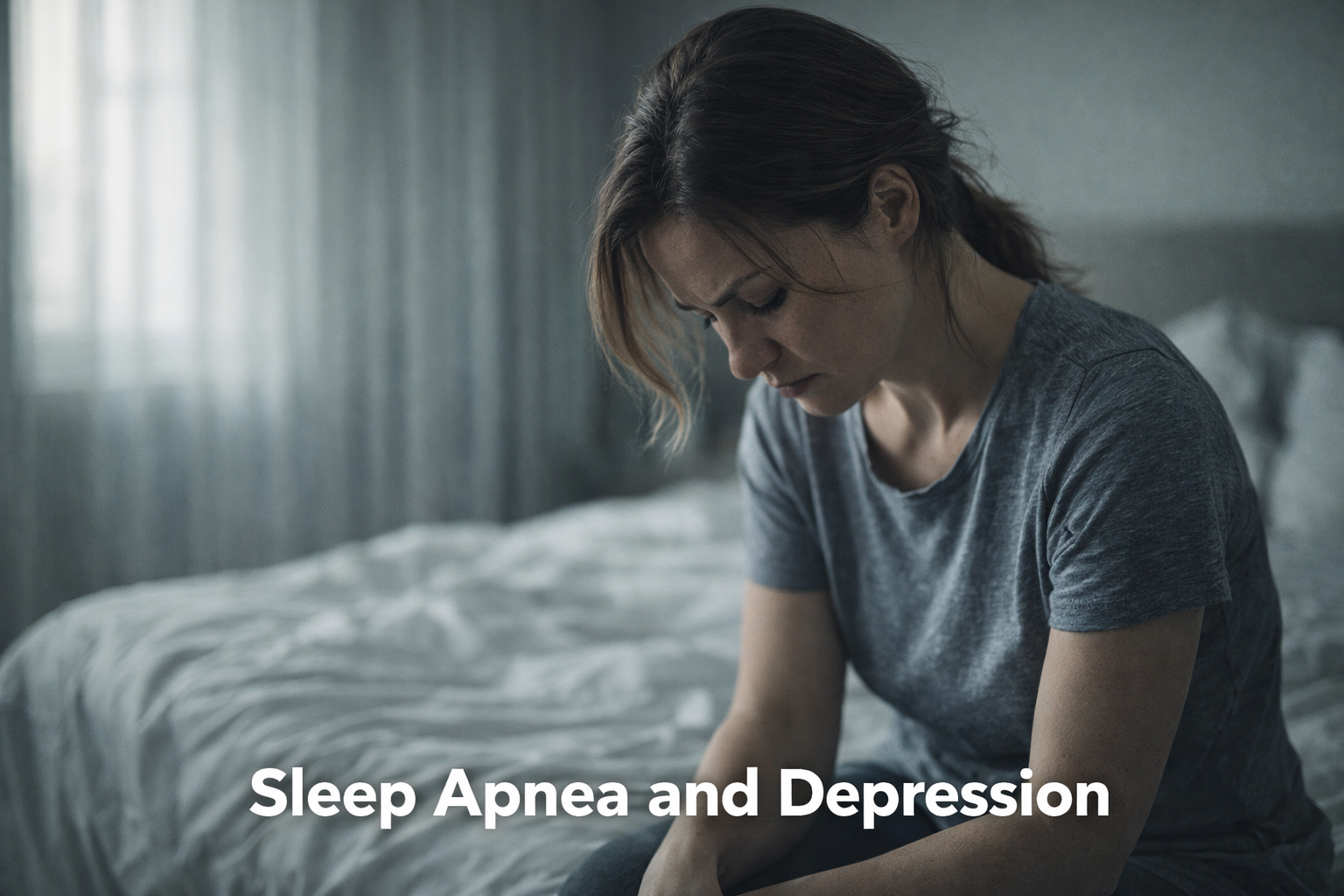
Sleep Apnea and Depression: What the Research Actually Shows
Sleep apnea and depression share a bidirectional biological relationship that most patients and clinicians do not fully recognize. A Sliiip board-certified sleep physician explains the mechanism, why treatment resistance is a red flag, and what clinical evidence shows when sleep apnea is treated.
Reviewed by Dr. Avinesh Bhar, Board Certified Sleep Physician at Sliiip.com
You have been told you are depressed. The antidepressants help, but not completely. You are still exhausted every morning. The fog does not lift.
What no one has asked yet is whether something is happening while you sleep.
SLIIIP’s board-certified sleep physicians can do sleep evaluations for sleep apnea. Virtual consultations in all 50 states. Home sleep tests shipped to your door.
Myth vs. Reality: What Patients Get Wrong About Sleep Apnea and Depression
Myth: Depression and sleep apnea are separate problems that happen to coincide.
Reality: They share a bidirectional biological relationship. Sleep apnea fragments the REM sleep that regulates emotional processing. It chronically elevates cortisol. It reduces oxygen to the brain overnight. Each of these mechanisms independently produces depressive symptoms. They are not just co-occurring. They are actively driving each other.
Myth: If I am depressed, a sleep evaluation is not the right first step.
Reality: For patients whose depression does not respond fully to standard treatment, an undiagnosed sleep disorder is one of the most commonly missed explanations. A sleep evaluation is medically warranted when depression co-occurs with fatigue, snoring, morning headaches, or unrefreshing sleep.
Myth: Antidepressants will fix the problem even if sleep apnea is present.
Reality: Antidepressants address neurochemical pathways. They do not address the nightly oxygen drops and sleep fragmentation that sleep apnea causes. For patients with both conditions, antidepressants without sleep apnea treatment is an incomplete approach that leaves the physiological driver unaddressed.
CHECK YOUR SLEEP SYMPTOMS: TAKE THE 2 MINUTE QUIZ
TAKE THE QUIZ
How Sleep Apnea Produces Depressive Symptoms
Every apnea event drops blood oxygen. The brain activates the stress response. Cortisol and adrenaline surge. The body briefly wakes to restore breathing.
This cycle repeats dozens to hundreds of times per night. The cumulative effect is chronic cortisol elevation, which is one of the most well-established biological markers of depression.
Simultaneously, sleep apnea fragments REM sleep, the stage during which the brain processes emotional memories and recalibrates the stress response. When REM is repeatedly disrupted, emotional regulation degrades. The result is a neurochemical state that looks identical to depression because, at the biochemical level, it largely is.
The Oxygen Connection
Research from Johns Hopkins Medicine found that patients with obstructive sleep apnea show changes in brain structure and chemistry in regions associated with mood regulation, including the hippocampus and prefrontal cortex. These are the same regions that show abnormalities in major depressive disorder.
Chronic intermittent hypoxia, the repeated overnight oxygen drops in sleep apnea, is now recognized as an independent pathway to mood dysregulation distinct from, but additive with, the effects of sleep fragmentation.
Expert Q&A
Q: How do you tell whether someone’s depression is being driven by sleep apnea?
Dr. Avinesh Bhar, Board Certified Sleep Physician, Sliiip.com: There are reliable clinical patterns. Patients whose primary complaint is fatigue alongside low mood, particularly if the fatigue does not respond to antidepressants, are a priority group. Snoring, waking gasping, and morning headaches are the classic markers. But many patients, particularly women, present without the classic snoring profile. If someone has treatment-resistant mood symptoms and any sleep-related complaints, a home sleep test is a clinically warranted step.
Why Depression Treatment Alone Often Falls Short
Antidepressants work by modulating serotonin, dopamine, and norepinephrine signaling. They are effective for neurochemical depression. But when depression is being continuously generated by a physiological process, nightly oxygen drops and sleep fragmentation, the neurochemical correction is fighting an active, ongoing source of disruption.
Multiple studies have documented patients with depression and undiagnosed sleep apnea who showed partial or minimal response to antidepressants, followed by meaningful improvement in mood after sleep apnea treatment was initiated.
Whether your depression is actually a sleep problem is a question worth asking before assuming treatment resistance is the answer.
The Fatigue-Depression Spiral
Untreated sleep apnea produces exhaustion that reduces motivation, social engagement, and physical activity. Each of these reductions is an independent risk factor for depression. The mood deteriorates further. Depression makes the sleep fragmentation worse.
Recognizing the physiological anchor in this spiral is the first step to breaking it. For patients experiencing feeling depressed and tired all the time, or noticing they are foggy and disconnected, sleep-disordered breathing deserves investigation.
Watch also our video: What is Sleep Apnea and How it Affects Me?
Expert Q&A
Q: What improvements in mood can patients realistically expect after treating sleep apnea?
Dr. Avinesh Bhar, Board Certified Sleep Physician, Sliiip.com: Studies show that consistent CPAP use or effective oral appliance therapy produces measurable reductions in depressive symptom scores, often within the first few weeks of treatment. The improvements are most significant in patients who achieve high treatment adherence and whose mood symptoms were not preceded by a long history of depression independent of sleep. For patients with both conditions, treating sleep apnea creates better conditions for psychological treatment to work effectively.
Who Is Most at Risk for This Overlap
Women are significantly underdiagnosed for sleep apnea and more likely to present with depression as a primary complaint. The classic snoring presentation is less common in women, who more often report fatigue, insomnia, mood changes, and headaches. Understanding sleep apnea symptoms in women explains why the overlap is so commonly missed.
Patients with PTSD have extremely high rates of both sleep apnea and depression. The shared mechanism of REM sleep disruption makes this overlap biologically predictable.
Older adults, who have higher rates of both conditions, are another group where the physiological connection is frequently overlooked in favor of attributing mood changes to aging.
Lifestyle Factors That Support Both Sleep and Mood
Establish a consistent sleep and wake schedule. Circadian stability is one of the most powerful regulators of both sleep architecture and mood.
Limit alcohol. Alcohol suppresses REM sleep, elevates cortisol, and relaxes airway muscles. It worsens both sleep apnea and mood simultaneously.
Physical activity during the day improves mood through endorphin and serotonin release and is associated with better sleep quality. Avoid intense exercise within two hours of sleep onset.
Attend to anxiety at night. Anxiety in the evening frequently co-occurs with both depression and sleep apnea. CBT-I and behavioral sleep support is an evidence-based approach available through telemedicine.
Consider whether mental health-integrated sleep care is the right framing for your situation.
Find Out Whether Sleep Apnea Is Driving Your Depression
More than 10,000 consultations. No referral required. All 50 states. Major insurance accepted including Medicare and Tricare.

SLIIIP’s board-certified sleep physicians can do sleep evaluations for sleep apnea. Virtual consultations in all 50 states. Home sleep tests shipped to your door.
Frequently Asked Questions
Can sleep apnea cause depression?
Yes. Sleep apnea produces chronic cortisol elevation, fragments REM sleep, and causes repeated overnight oxygen drops, all of which independently generate depressive symptoms. Patients with untreated sleep apnea have significantly higher rates of depression, and treating sleep apnea produces measurable mood improvements.
How do I know if my depression is related to sleep apnea?
Key indicators include fatigue that does not fully respond to antidepressants, depression accompanied by snoring or breathing pauses, morning headaches, and waking unrefreshed. A home sleep test is the clearest way to determine whether a sleep disorder is contributing.
Can treating sleep apnea improve depression?
Research consistently shows that effective sleep apnea treatment produces measurable improvements in depressive symptom scores. Improvements are most significant in patients who achieve high treatment adherence. Treating sleep apnea creates better neurochemical conditions for mood to stabilize.
Why do antidepressants sometimes not fully work?
For patients with undiagnosed sleep apnea, antidepressants address the neurochemical consequence while the physiological cause continues operating. Multiple studies document partial antidepressant response followed by meaningful mood improvement when sleep apnea was subsequently diagnosed and treated.
What is the connection between sleep apnea and cortisol?
Each apnea event activates the stress response, releasing cortisol. With dozens to hundreds of events per night, this creates chronic cortisol elevation. High cortisol is one of the most consistent biological markers of depression and also impairs hippocampal function and disrupts REM sleep.
Does sleep apnea affect brain chemistry?
Yes. Research found that patients with obstructive sleep apnea show changes in brain regions associated with mood regulation, including the hippocampus and prefrontal cortex, the same regions showing abnormalities in major depressive disorder.
Is depression more common in women with sleep apnea?
Yes. Women with sleep apnea are more likely to present with fatigue and mood symptoms than with classic snoring, leading to a higher rate of depression diagnosis and a lower rate of sleep apnea evaluation, despite the sleep disorder being a significant driver of the mood symptoms.
Can sleep apnea cause anxiety as well as depression?
Yes. The same mechanisms, cortisol elevation, REM fragmentation, and oxygen drops, also produce anxiety, hyperarousal, and emotional dysregulation. Sleep apnea patients frequently experience both anxiety and depression simultaneously.
What role does REM sleep play in depression and sleep apnea?
REM sleep is when the brain processes emotional memories and recalibrates the stress response. Sleep apnea preferentially disrupts REM through repeated arousals, meaning the emotional regulation that healthy REM provides is consistently incomplete, leading to mood degradation over time.
Should I be evaluated for sleep apnea if I have treatment-resistant depression?
Yes. Treatment-resistant depression is one of the most important scenarios in which to evaluate for an undiagnosed sleep disorder. Multiple clinical guidelines now recommend sleep evaluation as a component of workup for treatment-resistant mood disorders.
Can CBT-I help with both sleep apnea and depression?
CBT-I directly treats the insomnia and sleep disruption that co-occur with sleep apnea and depression. Combined with sleep apnea treatment, it produces the most comprehensive improvement in both sleep and mood outcomes.
Is Sliiip able to help with sleep apnea-related depression?
Yes. Sliiip’s board-certified sleep physicians evaluate the sleep component of mood disorders, order home sleep testing, and coordinate comprehensive telemedicine sleep care including CBT-I. A consultation is the appropriate starting point for any patient whose mood symptoms may have a sleep-disordered breathing component.
SLIIIP’s board-certified sleep physicians can do sleep evaluations for sleep apnea. Virtual consultations in all 50 states. Home sleep tests shipped to your door.
Latest posts
-
Why Are My Naps Never Refreshing?
Last updated: October 2, 2026. Medically reviewed by Dr. Avinesh Bhar, Board-Certified Sleep Physician, SLIIIP.com. Naps that leave you groggy usually come down to how long you sleep, when you…
-
Is Sleeping Too Much a Sleep Disorder?
Last updated: October 2, 2026. Medically reviewed by Dr. Avinesh Bhar, Board-Certified Sleep Physician, SLIIIP.com. Sleeping too much is not always a sleep disorder, but it can be a sign…
-
Why Does My Insomnia Get Worse After Stopping Sleep Medication?
Last updated: October 2, 2026. Medically reviewed by Dr. Avinesh Bhar, Board-Certified Sleep Physician, SLIIIP.com. Insomnia can get worse after stopping sleep medication for three main reasons. They are rebound…
Get updates
Spam-free subscription, we guarantee. This is just a friendly ping when new content is out.

