👉 Register for Free. How to Diagnose Sleep Apnea Faster in Primary Care – FREE Webinar by Dr. Audrey Wells. – Friday, April 24 at 12 PM ET

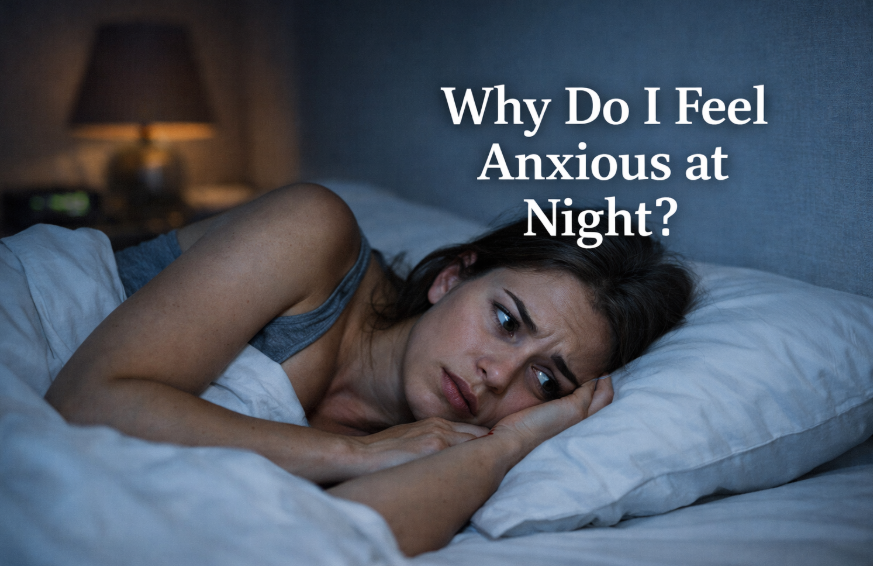
Why do I feel anxious at night?
The house is quiet. The lights are off. You are in bed, ready to sleep. And then it hits: a wave of unease, a racing mind, a tightness in your chest. You start to wonder, “why so i feel anxious at night?”
Nighttime anxiety is one of the most frustrating experiences people face. It robs you of rest, feeds a vicious cycle of poor sleep and worsening worry, and can leave you dreading bedtime itself. According to Dr. Avinesh Bhar, about 36% of people who have difficulty sleeping at night have an anxiety disorder.
This article explores why anxiety tends to spike at night, what is happening in your body and brain, what might be making it worse, and what you can do to reclaim your evenings and your rest.
Why Does Anxiety Get Worse at Night?
The Quiet Amplifies the Noise
During the day, your brain is busy. Work, conversations, errands, and daily responsibilities occupy your attention and provide natural distraction from anxious thoughts. At night, those distractions disappear. When the world quiets down, your mind finally has space to wander, and for an anxious brain, that space often fills with worry.
The Default Mode Network Activates
Neuroscience research has identified a network of brain regions called the default mode network (DMN) that becomes more active when you are resting and not focused on a specific task. The DMN is responsible for self-reflection, memory processing, and, unfortunately, rumination. When you are lying in bed with nothing to focus on, this network kicks into gear, often replaying the day’s stresses or projecting worries about tomorrow.
Cortisol and Circadian Rhythm Disruption
Your body’s stress hormone, cortisol, normally follows a predictable daily pattern: peaking in the morning to promote alertness and gradually declining through the day, reaching its lowest levels at bedtime. In people with chronic anxiety, this rhythm can become disrupted. If cortisol levels remain elevated or spike in the evening, it can leave you feeling wired and unable to wind down for sleep.
Isolation and Lack of Support
At night, you are often alone with your thoughts. The social connections and support systems that help regulate emotions during the day are unavailable. This isolation can make anxious feelings feel more intense and harder to manage.
The Anxiety-Sleep Cycle: How One Makes the Other Worse
Anxiety and sleep problems create a self-reinforcing cycle. Anxiety makes it harder to fall asleep. Poor sleep weakens your brain’s ability to regulate emotions, making you more vulnerable to anxiety the following day. Over time, your brain can begin to associate the bed with worry and wakefulness, creating what sleep specialists call conditioned insomnia. Eventually, the mere act of getting into bed can trigger anxiety, perpetuating the cycle.
Could a Sleep Disorder Be Fueling Your Nighttime Anxiety?
Often Overlooked: Many symptoms of obstructive sleep apnea, including racing heart, gasping awake, chest tightness, and a feeling of dread, overlap significantly with symptoms of anxiety and nocturnal panic attacks. Some patients treated for anxiety for years discover that an underlying sleep disorder was contributing to or causing their symptoms all along. |
Here is something that surprises many patients: obstructive sleep apnea (OSA) can trigger symptoms that feel identical to anxiety. When your airway becomes blocked during sleep, your body responds with a burst of adrenaline and cortisol to wake you enough to resume breathing. This stress response produces a racing heart, sweating, shortness of breath, and a feeling of panic, all of which can be mistaken for an anxiety or panic attack.
Research supports this overlap. Studies show that anxiety is significantly more common in people with untreated sleep apnea, and that treating the sleep disorder often leads to meaningful improvements in anxiety symptoms.
If you have been managing anxiety for a long time without full relief, a sleep evaluation could uncover a contributing factor that has been overlooked.
You can meet with our sleep doctors who take care of patients in 40 states. We work with Medicare, Tricare and major insurances.
All appointments are made from the comfort of your home.

Signs That a Sleep Disorder Might Be Contributing to Your Nighttime Anxiety
- You wake up suddenly with a racing heart and difficulty breathing
- Your bed partner reports snoring, gasping, or breathing pauses
- You feel exhausted during the day despite spending enough time in bed
- You wake with morning headaches, dry mouth, or a sore throat
- Anxiety treatments (therapy, medication) have helped somewhat but have not fully resolved your symptoms
- You feel a sense of dread about going to sleep that you cannot fully explain
Strategies to Calm Anxiety at Night
Build a Consistent Wind-Down Routine
Give your brain signals that it is time to transition from wakefulness to rest. Dim the lights 30 to 45 minutes before bed. Engage in calming activities such as reading, gentle stretching, or listening to soothing music. Avoid screens, intense television, and work emails during this period. Consistency is key: over time, your brain will begin to associate these cues with relaxation.
Try Structured “Worry Time”
Rather than trying to suppress anxious thoughts (which often makes them louder), set aside 10 minutes earlier in the day as dedicated “worry time.” Write down everything that is nagging you. Research suggests that this practice helps reduce nighttime rumination by giving your brain a designated time and place to process concerns.
Practice Breathing Exercises
Slow, controlled breathing activates the parasympathetic nervous system, which counteracts the stress response. One effective technique is square breathing: inhale slowly for 4 counts, hold for 4 counts, exhale for 4 counts, and hold for 4 counts. Repeat until you feel your heart rate slow and your body relax.
Get Out of Bed if You Cannot Sleep
If you have been lying awake for more than 15 minutes, get up and move to another room. Do something calm and non-stimulating until you feel sleepy again. This prevents your brain from strengthening the association between your bed and wakefulness.
Limit Stimulants and Late Meals
Caffeine, nicotine, and large meals close to bedtime can all activate your nervous system and worsen nighttime anxiety. Try to avoid caffeine after mid-afternoon and keep evening meals light.
When Self-Help Is Not Enough: Professional Treatment Options
If nighttime anxiety is significantly affecting your quality of life, professional support can make a meaningful difference. Cognitive behavioral therapy for insomnia (CBT-I) is considered the gold standard treatment for sleep-related anxiety. It helps you identify and change the thoughts and behaviors that perpetuate the anxiety-sleep cycle.
If a sleep evaluation reveals obstructive sleep apnea, treating the condition, whether through CPAP therapy or oral appliance therapy, can reduce or eliminate the adrenaline surges and nighttime awakenings that mimic anxiety symptoms.
Oral Appliance Therapy: What Patients Want to Know
For patients whose nighttime anxiety is connected to sleep-disordered breathing, oral appliance therapy can be transformative. By keeping the airway open during sleep, these devices prevent the oxygen drops and stress hormone surges that trigger nighttime awakenings and panic-like symptoms. Dr. Avinesh Bjar answers Why do I wake up gasping for air? Your airway is collapsing while you sleep. This is not stress. Find out what it really is.
|
Q: Are oral appliances covered by insurance? |
|
Dr. Rebecca Fronheiser, DDS Our team works closely with you to review your insurance benefits and expected costs ahead of time, so there are no surprises. We believe in transparency, and we don’t like financial surprises either. We’ll walk you through your options and help you understand what to expect before treatment begins.” |
“One of the most practical things I teach clients who struggle with nighttime anxiety is to stop trying to force sleep. The more you lie there watching the clock, calculating how many hours you have left, and worrying about when you’ll fall asleep, the more activated your nervous system gets. This works well alongside the calming strategies described in this article – instead of fighting the wakefulness, you acknowledge it: ‘I’m awake right now, and that’s uncomfortable, and I can tolerate it.’ It sounds simple but it breaks the cycle. When you stop treating wakefulness as a crisis, your body stops responding to it like one.”
Daniele Lewin, LMFT
http://www.daniele-lewin.com
Frequently Asked Questions
Why is my anxiety worse at night but fine during the day?
During the day, your brain is occupied with tasks and social interactions that provide natural distraction. At night, those distractions disappear, and the brain’s default mode network, which is responsible for self-reflection and worry, becomes more active. Additionally, if you have an undiagnosed sleep disorder, the physical stress on your body during sleep can produce anxiety-like symptoms.
Can sleep apnea cause panic attacks at night?
Yes. When obstructive sleep apnea causes your airway to close, the resulting oxygen drop triggers a burst of stress hormones. You may wake suddenly with a racing heart, shortness of breath, and a feeling of dread, all of which closely resemble a panic attack. A sleep study can help distinguish between panic disorder and sleep apnea.
Is nighttime anxiety a sign of a serious health condition?
Occasional nighttime anxiety is a normal human experience, especially during stressful periods. However, persistent nighttime anxiety that disrupts your sleep and daily functioning warrants evaluation. It could be related to an anxiety disorder, a sleep disorder, or both. Getting the right diagnosis is the first step toward effective treatment.
Latest posts
-
Why Are My Naps Never Refreshing?
Last updated: October 2, 2026. Medically reviewed by Dr. Avinesh Bhar, Board-Certified Sleep Physician, SLIIIP.com. Naps that leave you groggy usually come down to how long you sleep, when you…
-
Is Sleeping Too Much a Sleep Disorder?
Last updated: October 2, 2026. Medically reviewed by Dr. Avinesh Bhar, Board-Certified Sleep Physician, SLIIIP.com. Sleeping too much is not always a sleep disorder, but it can be a sign…
-
Why Does My Insomnia Get Worse After Stopping Sleep Medication?
Last updated: October 2, 2026. Medically reviewed by Dr. Avinesh Bhar, Board-Certified Sleep Physician, SLIIIP.com. Insomnia can get worse after stopping sleep medication for three main reasons. They are rebound…
Get updates
Spam-free subscription, we guarantee. This is just a friendly ping when new content is out.

