👉 Register for Free. How to Diagnose Sleep Apnea Faster in Primary Care – FREE Webinar by Dr. Audrey Wells. – Friday, April 24 at 12 PM ET


Is CBT-I Better Than Sleep Meds?
Whether CBT-I is better than sleep meds comes up in nearly every first visit, according to Dr. Avinesh Bhar, Board-Certified Sleep Physician at SLIIIP.com, and the honest answer surprises most patients who have spent years cycling through pills.
Cognitive Behavioral Therapy for Insomnia, known as CBT-I, is now the first line option for chronic insomnia in the U.S., recommended ahead of sleep medications by major sleep medicine groups.
SLIIIP’s board-certified sleep physicians can do sleep evaluations for sleep apnea. Virtual consultations in all 50 states. Home sleep tests shipped to your door.
What CBT-I Is in Plain Terms
CBT-I is a short, structured program that retrains how your body and mind handle sleep. It usually runs six to eight weeks. Each session works on a different piece of the puzzle.
The core tools inside CBT-I include:
- Sleep restriction therapy to rebuild sleep drive
- Stimulus control to fix the link between bed and sleep
- Cognitive restructuring to calm racing thoughts
- Relaxation training to lower body tension
- Sleep hygiene education to clean up small habits
You can read a deeper guide at cognitive behavior therapy CBT-I for sleep disorders and a week by week walkthrough at what CBT-I feels like week by week.
CHECK YOUR SLEEP SYMPTOMS: TAKE THE 2 MINUTE QUIZ
TAKE THE QUIZ
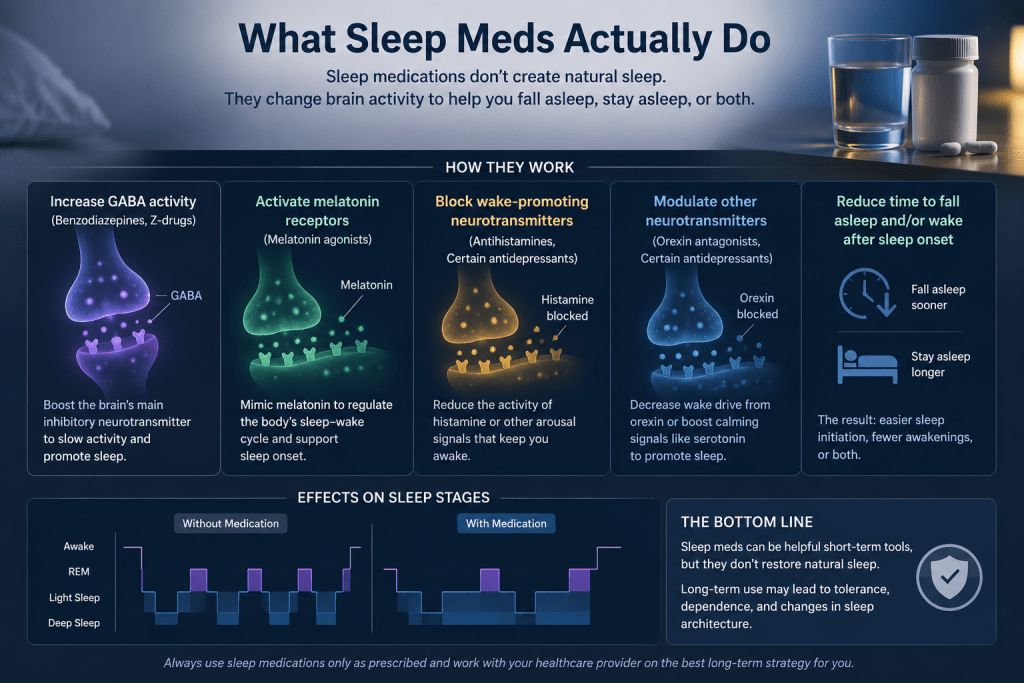
What Sleep Meds Actually Do
Sleep medications fall into a few main groups. Each one works in a different way.
- Z drugs like zolpidem and eszopiclone act on brain chemistry to push you into sleep.
- Benzodiazepines like temazepam and triazolam calm the nervous system but carry strong risks for habit and falls.
- Sedating antidepressants like trazodone and doxepin are often used off label for sleep.
- Orexin blockers like suvorexant and lemborexant block a wake signal in the brain.
- Antihistamines like diphenhydramine, found in many over the counter sleep aids, force drowsiness but disrupt deep sleep.
- Melatonin and other supplements help mainly with timing, not chronic insomnia.
For a closer look at supplements, see melatonin and sleep, melatonin news, and CBD and sleep.
Head to Head: CBT-I vs Sleep Meds
So is CBT-I better than sleep meds? The answer depends on what you mean by better. Speed, depth, side effects, and long term results all tell a different story.
Speed of Relief
- Sleep meds. Often work the first night. This is the main reason people start them.
- CBT-I. Usually starts to help in week two or three. The first week can feel harder.
If you need help tonight, meds win. If you want help that lasts, CBT-I wins.
Long Term Results
- Sleep meds. Most lose effect over weeks or months. Stopping them often causes rebound insomnia.
- CBT-I. The gains tend to last for years after the program ends.
This is one of the biggest reasons sleep groups now place CBT-I first. See why CBT-I works when medications don’t.
Side Effects
- Sleep meds. Common side effects include morning grogginess, memory issues, falls, and odd behaviors like sleep eating or sleep driving. Older adults are at higher risk.
- CBT-I. The main side effect is short term daytime tiredness in weeks one and two.
Risk of Dependence
- Sleep meds. Some carry a real risk of dependence. The brain learns to need the drug to sleep.
- CBT-I. No risk of dependence. You keep the skills for life.
Fit for Other Conditions
- Sleep meds. Often a poor match for people with sleep apnea, lung disease, or substance use history.
- CBT-I. Safe for most adults. Can be paired with treatment for anxiety, depression, or chronic pain.
Cost and Access
- Sleep meds. Often cheap with insurance, but the long tail of refills adds up.
- CBT-I. Covered by many major plans when ordered by a sleep doctor. Digital CBT-I lowers cost further. You can verify your benefits today.
What the Major Sleep Groups Say
The American College of Physicians, the American Academy of Sleep Medicine, and many other groups now list CBT-I as the first step for chronic insomnia. Sleep meds are placed second, used short term, or used when CBT-I is not available.
According to the Centers for Disease Control and Prevention, about one in three adults in the U.S. does not get enough sleep. Many of them are reaching for pills first when a research backed behavior program would serve them better.
The National Heart, Lung, and Blood Institute also points to behavior based care as the preferred first step, with medication used only when needed and usually for short periods.
When Sleep Meds Still Make Sense
Sleep meds are not the enemy. They have a real place when used the right way. They can help when:
- You are in a short term crisis, like a death in the family
- You are crossing time zones and need to reset fast
- You are starting CBT-I and need a brief bridge
- You have already tried CBT-I and need extra support
- A specific medical issue calls for a sedating medication
The key word is short term. When sleep meds turn into a nightly habit for years, the risks tend to rise and the benefits tend to fade. Read more in the sleeping pill scam and our roundup at top picks for the best sleep aids.
When CBT-I Is the Clear Choice
CBT-I is the better choice when:
- You have had trouble sleeping for three or more months
- You have already tried sleep meds with poor or fading results
- You want a long term fix, not a nightly band aid
- You are older and want to lower fall and memory risks
- You are pregnant, breastfeeding, or planning for a child
- You have anxiety or depression alongside insomnia
- You drink alcohol or take other meds that mix poorly with sleep drugs
See insomnia treatment methods, how to fix insomnia naturally, and hormonal insomnia for more.
What Dr. Bhar Tells Patients
Dr. Avinesh Bhar often shares a few key points with patients weighing CBT-I against sleep meds.
- A pill does not teach your body anything. It works only while it is in your system.
- CBT-I teaches your body a skill. That skill stays with you.
- Most insomnia is a behavior loop, not a chemistry problem. A skill fix beats a chemistry fix in most cases.
- The hardest two weeks of CBT-I are still shorter than years on pills.
- Rule out sleep apnea first. Pills can hide apnea symptoms while the underlying issue keeps doing harm.
If snoring, gasping, or daytime tiredness is part of your picture, see do I have insomnia or something else.
A Simple Decision Path
Use this short path to decide your next step.
- If insomnia is new and short term. Try sleep hygiene first. Use a brief course of meds only if needed.
- If insomnia has lasted three months or more. Start CBT-I as your first step.
- If you are already on sleep meds and want off. Add CBT-I now. Then taper meds with your doctor.
- If you have snoring or gasping at night. Get a home sleep test first. Treat apnea before insomnia.
- If your mind races at night. Pair CBT-I with our guides on how do I stop overthinking at night and can’t shut brain off at night.
Watch: Sleep Medicine 101 webinar by Dr. Avinesh Bhar (SLIIIP)
How SLIIIP.com Supports Your Choice
SLIIIP.com is a sleep telehealth platform built for people who want a clear plan without long waits. Our team offers:
- Virtual consultations in all 50 states
- Home sleep tests shipped to your door
- Nationwide coverage with board certified sleep physicians
- Insurance verification for many major plans
- Digital therapeutics for chronic insomnia
You can start CBT-I from home. You can also taper sleep meds with clinical support. Learn more in how it works, our insomnia treatment page, and our digital therapeutics program. For a broader look at the side by side, see CBT-I vs sleep medications.
At Sliiip, we accept the following insurances:

SLIIIP’s board-certified sleep physicians can do sleep evaluations for sleep apnea. Virtual consultations in all 50 states. Home sleep tests shipped to your door.
Frequently Asked Questions
Is CBT-I better than sleep meds for chronic insomnia?
Yes. Major sleep groups list CBT-I as the first line option.
How fast does CBT-I work compared to sleep meds?
Sleep meds work the same night. CBT-I usually starts to help in two to three weeks.
Can I do both at once?
Yes. Many people start CBT-I while still on meds, then taper meds with their doctor.
Do sleep meds work long term?
Most lose effect over time and can cause rebound insomnia when stopped.
Is melatonin a good replacement for sleep meds?
Melatonin helps mostly with timing, not chronic insomnia. See melatonin and sleep.
Is CBD a safer choice than sleep meds?
Research is mixed. See CBD and sleep for what is known so far.
Will I have to give up my sleep meds to do CBT-I?
Not at the start. Most plans taper meds slowly once sleep is more stable.
Does insurance cover CBT-I?
Many major plans cover CBT-I when ordered by a sleep doctor.
Can older adults safely take sleep meds?
Many sleep meds carry higher risks in older adults, including falls and confusion.
Is over the counter Benadryl safe for sleep?
Daily use is linked to memory issues and other risks. It should not be a long term plan.
Can CBT-I help if I also have anxiety?
Yes. CBT-I pairs well with broader cognitive therapy.
How long does CBT-I last?
Most programs run six to eight weeks.
Can children or teens use sleep meds?
Most sleep meds are not approved for kids. CBT-I is preferred when possible.
What if I have sleep apnea?
Treat the apnea first. Sleep meds can make apnea worse.
Are Z drugs like Ambien safe?
They carry real risks, including odd nighttime behaviors. Short term use only.
Will I sleep worse when I stop sleep meds?
A short rebound is common. CBT-I helps protect you through it.
Can CBT-I help with menopause sleep issues?
Yes. See hormonal insomnia.
Is digital CBT-I as good as in person?
Research shows strong results for both. Live care is often best for complex cases.
Do I need a sleep study before starting?
Not always, but it helps if snoring or gasping is part of your nights.
How do I start CBT-I today?
You can book a virtual visit with SLIIIP.com from any state in the U.S.
Make the Best Choice for Your Sleep
The honest answer to whether CBT-I is better than sleep meds is yes for most people with chronic insomnia, when judged on long term results, safety, and skill building. Dr. Avinesh Bhar and the SLIIIP.com team can help you build a plan that fits your life, taper meds safely if needed, and rule out other sleep issues along the way.
SLIIIP’s board-certified sleep physicians can do sleep evaluations for sleep apnea. Virtual consultations in all 50 states. Home sleep tests shipped to your door.
Latest posts
-
Circular Ring Sleep Accuracy: What It Gets Right and Wrong
Last updated: September 14, 2026. Medically reviewed by Dr. Avinesh Bhar, Board-Certified Sleep Physician, SLIIIP.com. The Circular Ring estimates sleep stages, heart rate, and recovery using a finger-worn light sensor,…
-
Ballistocardiography Sleep Sensors: How Under-Mattress Tracking Works
Last updated: September 14, 2026. Medically reviewed by Dr. Avinesh Bhar, Board-Certified Sleep Physician, SLIIIP.com. Ballistocardiography sleep sensors sit under your mattress and detect the tiny mechanical vibrations your body…
-
RingConn vs Oura: Which Smart Ring Tracks Sleep Better?
Last updated: September 10, 2026. Medically reviewed by Dr. Avinesh Bhar, Board-Certified Sleep Physician, SLIIIP.com. RingConn and Oura both track sleep through a finger-worn ring, but they differ most in…
Get updates
Spam-free subscription, we guarantee. This is just a friendly ping when new content is out.

