👉 Register for Free. How to Diagnose Sleep Apnea Faster in Primary Care – FREE Webinar by Dr. Audrey Wells. – Friday, April 24 at 12 PM ET

Digital Sunset: Build a Low-Tech Bedroom for Sleep
A digital sunset, the simple habit of powering down screens and dimming light well before bed, is a routine Dr. Avinesh Bhar, Board-Certified Sleep Physician at SLIIIP.com, often suggests to people whose minds race the moment their head hits the pillow. Just as the sun sets to signal night, easing off devices tells your brain the day is ending. Winding down your tech can be as important as winding down your body. This article is for general education and does not diagnose or treat any condition. It explains what the habit is, why light and screens can work against sleep, and how to build a calmer, low-tech bedroom, while pointing you to your own doctor for any lasting concern. The aim is practical steps you can start tonight.
SLIIIP’s board-certified sleep physicians can do sleep evaluations for sleep apnea. Virtual consultations in all 50 states. Home sleep tests shipped to your door.
What Is a Digital Sunset?
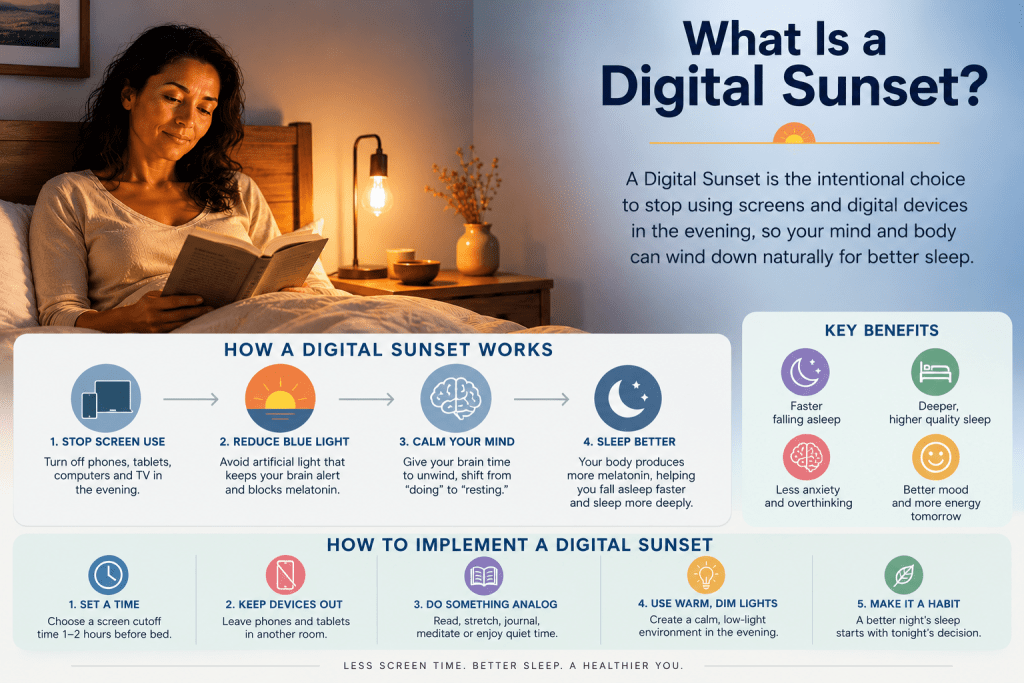
A digital sunset is a set time each evening when you begin stepping back from screens and bright light. Phones, tablets, laptops, and the television all wind down, and the lights around you soften. The idea is to mimic the natural fading of daylight that once told our bodies to prepare for sleep.
The name captures the goal well. Before electric light and glowing screens, the setting sun was a daily cue to slow down. This practice brings back that signal on purpose, in a world that never really goes dark on its own. Between porch lights, phone screens, and the glow of a television, most of us now spend our evenings in an artificial daylight our ancestors never had to fight against.
This is not about banning technology or living without it. It is about creating a buffer between a busy, connected day and a restful night. Our ultimate sleep routine guide shows how a habit like this fits into a full wind down.
CHECK YOUR SLEEP SYMPTOMS: TAKE THE 2 MINUTE QUIZ
TAKE THE QUIZ
Why Screens and Light Before Bed Hurt Sleep
Two things happen when you stare at a bright screen late at night. First, light exposure in the evening can delay the natural rise of melatonin, the hormone tied to sleepiness. This can make it harder to feel drowsy at a reasonable hour.
The light matters, but so does what you are doing on the device. Scrolling feeds, answering messages, and watching gripping shows keep the mind alert and engaged. That mental stimulation can be just as activating as the glow itself, which is why setting the phone down often helps even more than dimming it.
Researchers continue to study exactly how much evening light affects sleep, and the picture is nuanced rather than absolute. Still, the combination of bright light and engaging content is a common recipe for a restless start to the night. Our page on melatonin and sleep explains how timing shapes that hormone.
Building a Low-Tech Bedroom
The bedroom itself can support or sabotage your wind down. A low-tech bedroom keeps bright screens and buzzing devices out of the space where you sleep. The goal is a room that feels calm and dark, not lit up like an office.
Start by moving your phone charger away from the nightstand, or better yet, out of the room. Swap a glowing phone alarm for a simple bedside clock or a standalone alarm. Keeping the television out of the bedroom removes a strong temptation to keep watching just one more episode.
Soft, warm lighting helps the room feel restful. A dim lamp with a warm bulb is gentler than bright overhead light in the hour before bed. If a racing mind keeps you up once the lights are out, our guide on how to stop overthinking at night offers practical help.
How to Start Your Own Digital Sunset
You do not need to go cold turkey to see a benefit. Pick a cutoff time, perhaps thirty to sixty minutes before bed, and begin stepping away from screens then. Start with a modest window and extend it if it feels good.
Replace the scroll with something calming you can look forward to. Reading a paper book, stretching, journaling, or listening to quiet music all make good swaps. Having a pleasant alternative makes the change stick far better than willpower alone.
Use your devices to help, not hurt. Night mode, do not disturb settings, and screen time reminders can nudge you toward your cutoff. According to the Centers for Disease Control and Prevention, a consistent, calming routine before bed is a core part of healthy sleep. If falling asleep is your main struggle, our article on how to fall asleep fast pairs well with this habit.
The Hidden Lights You May Be Missing
Screens are the obvious culprit, but they are not the only source of light. Standby lights on chargers, power strips, televisions, and other electronics can add a surprising glow to a dark room. Once you start looking, these tiny lights are everywhere. A charging cable here, a smoke detector indicator there, and a cluster of colored dots on the power strip all add up to a room that is never truly dark.
Even small amounts of light can be noticeable when your eyes have adjusted to darkness. Covering or unplugging these standby lights, or using a small piece of tape, can make a room feel meaningfully darker. Blackout curtains help block streetlights and early morning sun too.
A truly dark room supports the natural signals your body uses to stay asleep. Our guide on how to fix your circadian rhythm explains why darkness at night and light in the morning both matter. Small tweaks to your room can add up to a calmer sleep space.
Watch: Sliiip – Intro to Sleep Telemedicine
When Better Sleep Needs More Than a Screen Curfew
This habit helps many people ease into rest, but it cannot fix every sleep problem. If you still wake tired, snore loudly, or gasp for air even with a dark, screen-free bedroom, something deeper may be at work. Habits alone may not resolve that.
Conditions like obstructive sleep apnea fragment sleep from the inside, no matter how calm the room. As Dr. Avinesh Bhar notes, lasting tiredness that does not respond to good habits deserves a real evaluation rather than guesswork. If you often wake unrefreshed, our article on why you wake up tired is a helpful next read.
The National Heart, Lung, and Blood Institute notes that ongoing sleep problems are worth a professional look. A sleep evaluation is one part of a broader view of your health, and any concern beyond sleep belongs with your own physician.
At Sliiip, we accept the following insurances:

SLIIIP’s board-certified sleep physicians can do sleep evaluations for sleep apnea. Virtual consultations in all 50 states. Home sleep tests shipped to your door.
Frequently Asked Questions
What is a digital sunset?
It is a set time each evening when you step back from screens and dim the lights. It mimics the natural fading of daylight to help your body prepare for sleep.
How long before bed should I start winding down screens?
Many people start thirty to sixty minutes before bed. Begin with a modest window and extend it if it feels good.
Does blue light from screens really affect sleep?
Evening light can delay the natural rise of melatonin for some people. The engaging content on the screen can be just as activating as the light.
Do I have to give up my phone completely at night?
No, this habit is about a buffer, not banning technology. Even a short screen break before bed can help.
What can I do instead of scrolling before bed?
Reading a paper book, stretching, journaling, or quiet music are calming swaps. A pleasant alternative makes the habit easier to keep.
What is a low-tech bedroom?
It is a bedroom kept free of bright screens and buzzing devices. The goal is a calm, dark space focused on rest.
Should I keep my phone out of the bedroom?
Charging your phone in another room removes a common temptation. A simple bedside clock can replace a phone alarm.
Do standby lights on electronics matter?
Small standby lights can add a surprising glow to a dark room. Covering or unplugging them can make the space feel darker.
Does night mode on my phone help?
Night mode can reduce brightness and warm the screen tone. Setting the phone down still tends to help more.
Is reading on an e-reader okay before bed?
A warm, dim e-reader is gentler than a bright phone for many people. The calming act of reading can support winding down.
Will winding down screens help me fall asleep faster?
Easing off screens and light can make it easier to feel drowsy. Falling asleep also depends on your overall routine.
Does watching TV in bed hurt my sleep?
Bright light and engaging shows can keep the mind alert. Keeping the television out of the bedroom removes that pull.
What kind of lighting is best in the evening?
Soft, warm, dim lighting is gentler than bright overhead light. A small lamp with a warm bulb works well.
Can blackout curtains improve sleep?
Blackout curtains block streetlights and early sun for a darker room. A dark room supports staying asleep.
Is a screen-free wind down good for kids?
A calm, screen-free wind down can help children settle. Follow age-appropriate guidance and your pediatrician’s advice.
What if my work requires screens late at night?
Try dimming brightness, using night mode, and adding a short buffer after you finish. Any calming step before bed can help.
Can an evening screen break reduce anxiety at night?
Stepping away from news and feeds can ease evening stimulation for some people. A calmer routine may help you relax.
How long until I notice a difference?
Many people notice a calmer wind down within a week or two. Consistency is what helps the habit take hold and become an automatic part of your evening.
Is this habit a treatment for insomnia?
No, it is a helpful habit, not a treatment. Ongoing insomnia deserves a professional approach.
When should I see a doctor about my sleep?
If you stay tired despite good habits, or you snore heavily or gasp for air, seek an evaluation. A sleep visit can clarify what is going on.
SLIIIP’s board-certified sleep physicians can do sleep evaluations for sleep apnea. Virtual consultations in all 50 states. Home sleep tests shipped to your door.
Latest posts
-
Why Can’t I Wake Up Even After Getting Enough Sleep?
Last updated: October 2, 2026. Medically reviewed by Dr. Avinesh Bhar, Board-Certified Sleep Physician, SLIIIP.com. If you can’t wake up after enough sleep, the cause is usually not the number…
-
Why Does My Heart Rate Drop So Low While I Sleep?
Last updated: October 2, 2026. Medically reviewed by Dr. Avinesh Bhar, Board-Certified Sleep Physician, SLIIIP.com. Your heart rate drops low while sleeping mainly because your body needs less work from…
-
Why Are My Naps Never Refreshing?
Last updated: October 2, 2026. Medically reviewed by Dr. Avinesh Bhar, Board-Certified Sleep Physician, SLIIIP.com. Naps that leave you groggy usually come down to how long you sleep, when you…
Get updates
Spam-free subscription, we guarantee. This is just a friendly ping when new content is out.

