
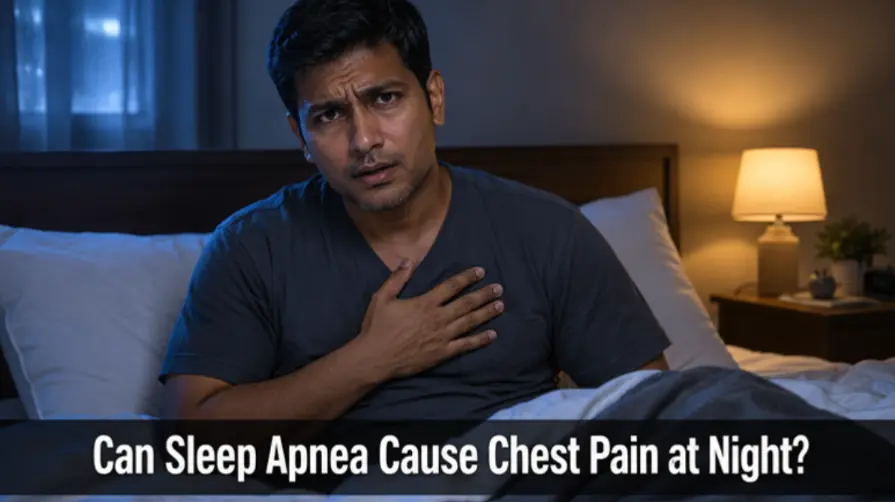
Can Sleep Apnea Cause Chest Pain at Night?
Last updated: November 17, 2026. Medically reviewed by Dr. Avinesh Bhar, Board-Certified Sleep Physician, SLIIIP.com.
Sleep apnea is linked to nighttime chest discomfort, but it is rarely the only explanation. Breathing pauses drop oxygen levels and raise strain on the heart, which is associated with chest tightness, nighttime angina and reflux-related burning in some people.
Dr. Avinesh Bhar, Board-Certified Sleep Physician at SLIIIP.com, sees many patients whose nighttime chest pressure came with loud snoring and gasping awakenings. Once a heart emergency is ruled out, a sleep test is a reasonable next step when chest symptoms cluster at night.
SLIIIP’s board-certified sleep physicians can do sleep evaluations for sleep apnea. Virtual consultations in all 50 states. Home sleep tests shipped to your door.
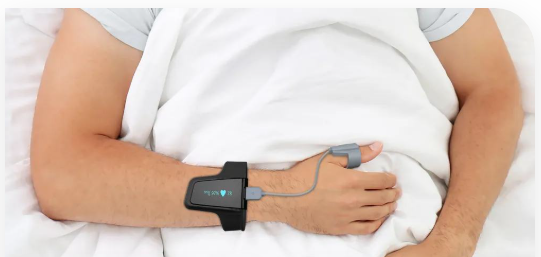
Can Sleep Apnea Cause Chest Pain?
It can contribute. During an apnea, the chest works hard against a closed airway, oxygen drops and blood pressure surges, and those changes are associated with chest discomfort.
In people with narrowed heart arteries, low oxygen at night may trigger angina. Angina is chest pain from reduced blood flow to the heart muscle.
TAKE THE QUIZ
When Is Chest Pain an Emergency?
Some chest pain needs 911 right away. The MedlinePlus guide to chest pain lists warning signs that call for emergency care.
- Sudden crushing, squeezing, tightness or pressure in the chest.
- Pain that spreads to the jaw, left arm or between the shoulder blades.
- Chest pain with nausea, sweating, dizziness, a racing heart or shortness of breath.
- Angina that is new, stronger, lasts longer or happens at rest.
- Sharp chest pain with shortness of breath after a long trip, bed rest or with a swollen leg.
What Else Causes Chest Pain at Night?
Many conditions cause nighttime chest pain. MedlinePlus groups them by body system.
- Heart: angina, heart attack, inflammation of the sac around the heart.
- Lungs: blood clot in the lung, pneumonia, collapsed lung, inflamed lung lining.
- Digestive: heartburn, reflux, stomach ulcers, gallstones, esophageal spasm.
- Other: panic attacks, strained chest muscles, inflamed rib cartilage, shingles.
Several of these can overlap with sleep apnea. Reflux and panic-like awakenings are two common examples.
How Does Sleep Apnea Strain the Heart?
Each apnea triggers a stress response. Oxygen falls, the brain jolts awake briefly and the body releases stress hormones that raise heart rate and blood pressure.
This can happen dozens of times an hour in severe sleep apnea. Over time, that pattern is associated with high blood pressure, heart rhythm problems and heart disease.
Watch: Why Sleep Apnea Is More Dangerous Than Most People Realize | Signs, Risks & Treatment
Is It Sleep Apnea, Reflux or Angina?
The pattern of symptoms gives clues, but only testing can confirm the cause. Burning that improves with antacids points toward reflux, while pressure with exertion or sweating points toward the heart.
Sleep apnea is suggested by loud snoring, witnessed pauses, gasping awakenings and heavy daytime sleepiness. It often comes with the other two.
Can Treating Sleep Apnea Ease Chest Symptoms?
For some people, it may help. Treating sleep apnea reduces breathing pauses and oxygen drops, which is associated with less nighttime strain on the heart.
Some people notice fewer reflux episodes and fewer jolting awakenings once their sleep apnea is treated. Results vary from person to person.
Treating sleep apnea does not replace heart care. If you have coronary artery disease, your cardiologist still guides that treatment.
Who Is Most at Risk?
Risk is higher when several factors combine. People with high blood pressure, obesity, diabetes or known heart disease are more likely to have both sleep apnea and heart-related chest pain.
Men, older adults and women after menopause also have higher rates of sleep apnea. Smoking and heavy alcohol use add to heart risk.
If you have these risk factors and nighttime chest symptoms, it is worth asking about both a heart workup and a sleep test.
Our guide on sleep apnea and high blood pressure covers one of the most common overlaps.

What Should You Track Before Your Appointment?
Notes make your visit more useful. Write down when chest symptoms happen, how long they last and what you were doing.
- Time of night the pain wakes you.
- Whether it burns, presses, stabs or squeezes.
- Whether you also gasp, choke or wake with a racing heart.
- Whether antacids, sitting up or rest change it.
- Any snoring or pauses your bed partner notices.
Bring these notes to both your primary doctor and your sleep doctor. A shared timeline helps each specialist see the full picture and avoid repeat tests.
When to See a Doctor
Call 911 for chest pain that is severe, sudden, spreading or paired with shortness of breath, sweating or fainting. For recurring nighttime chest discomfort that has already been checked, see your doctor about next steps. Dr. Avinesh Bhar recommends a sleep study when nighttime chest symptoms come with snoring, gasping or daytime sleepiness after the heart has been evaluated.
Check Your Insurance Before You Book
SLIIIP works with many major insurance plans. Checking your benefits first takes a few minutes and helps you avoid surprises.

SLIIIP’s board-certified sleep physicians can do sleep evaluations for sleep apnea. Virtual consultations in all 50 states. Home sleep tests shipped to your door.
For cash payments, price for Initial Consultation is $150
Follow up appointments cost $125
Frequently Asked Questions
Can sleep apnea cause chest pain?
It is linked to nighttime chest discomfort, but other causes must be ruled out first.
Is chest pain at night an emergency?
It can be. Call 911 for crushing pressure, spreading pain or pain with shortness of breath.
How does sleep apnea affect the chest?
The chest strains against a closed airway while oxygen drops and blood pressure rises.
Can sleep apnea trigger angina?
In people with narrowed heart arteries, low oxygen at night may trigger angina.
Can sleep apnea cause acid reflux?
Sleep apnea is associated with nighttime reflux, which can cause chest burning.
How can I tell reflux from heart pain?
Clues help, but only testing can tell for sure. See a doctor for any unexplained chest pain.
Can sleep apnea cause a heart attack?
Untreated sleep apnea is associated with higher heart attack risk, but it is one factor among many.
Can anxiety cause chest pain at night?
Yes. Panic attacks can cause chest pain, and gasping awakenings may feel like panic.
Should I get a sleep test for chest pain?
After a heart emergency is ruled out, a sleep test makes sense if you snore or gasp at night.
What tests check chest pain?
Doctors may use an ECG, blood tests, stress testing, imaging or reflux tests.
Can CPAP reduce chest pain?
Treating sleep apnea may reduce nighttime strain, but heart disease still needs its own care.
Does sleeping position affect chest pain?
Lying flat can worsen reflux, and back sleeping can worsen sleep apnea.
Can low oxygen at night cause chest tightness?
Low oxygen is associated with chest tightness in some people, especially with heart disease.
Who is most at risk?
People with high blood pressure, obesity, diabetes or heart disease.
Can women have different chest pain symptoms?
Yes. Women may have jaw, back or stomach pain, nausea or fatigue instead of classic pressure.
Should I take aspirin for nighttime chest pain?
Follow emergency dispatcher or doctor advice. Do not self-treat unexplained chest pain.
Can sleep apnea cause palpitations?
Yes. It is linked to racing heartbeats and rhythm problems at night.
What should I track before my visit?
Note the time, type and length of the pain and any snoring or gasping.
Does SLIIIP treat heart disease?
No. SLIIIP evaluates and treats sleep disorders and works alongside your heart care team.
How can SLIIIP help?
SLIIIP's sleep physicians diagnose adult sleep apnea through virtual visits and home sleep tests.
Latest posts
-
Can Sleep Apnea Cause Chest Pain at Night?
Last updated: November 17, 2026. Medically reviewed by Dr. Avinesh Bhar, Board-Certified Sleep Physician, SLIIIP.com. Sleep apnea is linked to nighttime chest discomfort, but it is rarely the only explanation.…
-
Which Sleep Aids Are Safe With Heart Disease?
Last updated: November 17, 2026. Medically reviewed by Dr. Avinesh Bhar, Board-Certified Sleep Physician, SLIIIP.com. No sleep aid is automatically safe with heart disease, so the right choice depends on…
-
Can Statins Cause Insomnia? What the Research Shows
Last updated: November 17, 2026. Medically reviewed by Dr. Avinesh Bhar, Board-Certified Sleep Physician, SLIIIP.com. For most people, probably not. A meta-analysis of placebo-controlled sleep lab studies found that statins…
Get updates
Spam-free subscription, we guarantee. This is just a friendly ping when new content is out.

