👉 Register for Free. How to Diagnose Sleep Apnea Faster in Primary Care – FREE Webinar by Dr. Audrey Wells. – Friday, April 24 at 12 PM ET

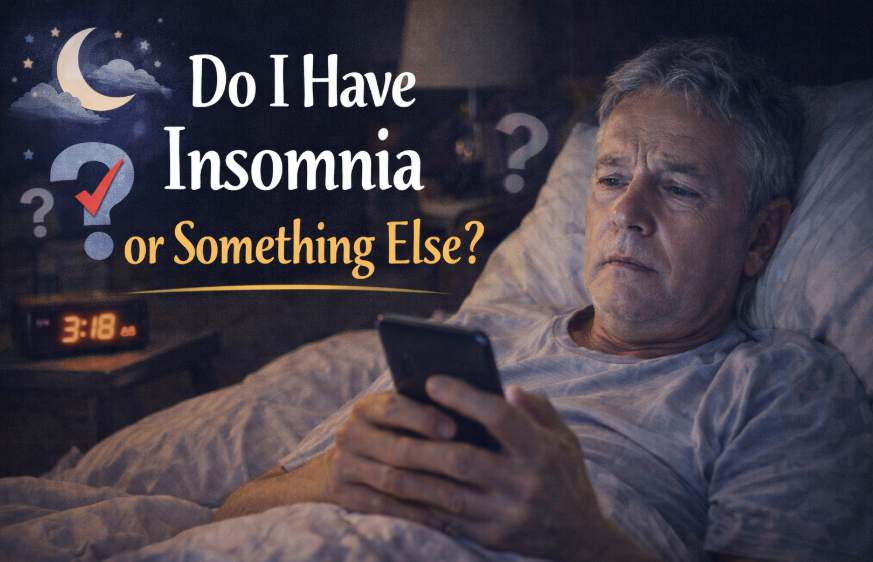
Do I have insomnia or something else?
You have been struggling to sleep. Maybe it takes you forever to fall asleep. Maybe you fall asleep fine but wake up at 3 AM and cannot get back to sleep. Dr. Avinesh Bhar explains why you may be wondering, do I have insomnia or something else?
This is an important question, because the answer determines what treatment will actually help. Insomnia is one of many sleep disorders, and misidentifying the problem can lead to treatments that address symptoms without resolving the root cause.
What Is Insomnia, Exactly?
Insomnia is defined as persistent difficulty falling asleep, staying asleep, or waking up too early, despite having adequate opportunity and conditions for sleep. It must also cause daytime impairment, such as fatigue, difficulty concentrating, mood disturbance, or reduced performance at work or school.
Insomnia is classified by duration. Episodic insomnia lasts one to three months and is often triggered by a specific stressor. Persistent insomnia lasts three months or longer and occurs at least three nights per week. Recurrent insomnia involves two or more episodes within a year. You can learn more about these distinctions in our guide to the different types of insomnia.
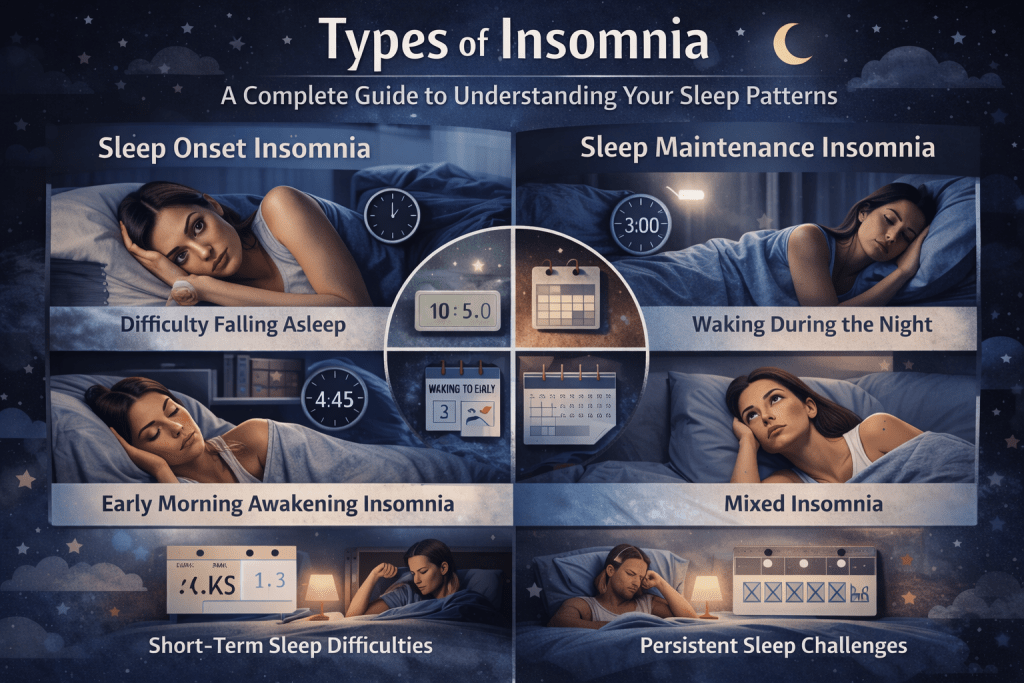
Primary insomnia means the sleep difficulty is the main condition. Secondary insomnia means it is caused by or associated with another condition, such as depression, anxiety, chronic pain, or a separate sleep disorder.
Could It Be Something Other Than Insomnia?
Several other sleep disorders share symptoms with insomnia, and getting the right diagnosis is critical. Here is how to begin distinguishing between them:
Obstructive Sleep Apnea (OSA)
Sleep apnea can look a lot like insomnia. People with OSA often report difficulty staying asleep, waking up frequently, and feeling unrefreshed in the morning, all hallmark insomnia symptoms. The key difference is that in sleep apnea, breathing interruptions are fragmenting your sleep even when you are not aware of it. If you snore, wake up with dry mouth or headaches, or feel excessively tired during the day despite sleeping adequate hours, sleep apnea may be the underlying issue.
Important Distinction: If you have been treated for insomnia with medications or therapy without meaningful improvement, an undiagnosed sleep disorder like sleep apnea should be strongly considered. Research shows that 40 to 60 percent of patients with obstructive sleep apnea also experience insomnia symptoms, a condition now recognized as COMISA (comorbid insomnia and sleep apnea).
Restless Legs Syndrome (RLS)
RLS causes an uncomfortable, sometimes overwhelming urge to move your legs, typically worse in the evening and at night. This can make falling asleep extremely difficult and is frequently misdiagnosed as insomnia. If your difficulty sleeping is specifically associated with restless, uncomfortable sensations in your legs that improve with movement, RLS may be the cause.
Circadian Rhythm Disorders
Delayed sleep-wake phase disorder is common, especially in younger adults. If you naturally fall asleep very late (2 AM or later) and sleep well when allowed to sleep on your own schedule, but struggle to sleep at a conventional bedtime, your issue is likely circadian rhythm misalignment rather than insomnia.
Narcolepsy
Narcolepsy is a neurological disorder that disrupts the brain’s ability to regulate sleep-wake cycles. People with narcolepsy often experience fragmented nighttime sleep alongside overwhelming daytime sleepiness. If you fall asleep uncontrollably during the day and also sleep poorly at night, narcolepsy should be considered.

Depression and Anxiety
Both depression and anxiety are strongly linked to sleep disruption. Depression often causes early morning awakening, while anxiety tends to cause difficulty falling asleep. Research indicates that as many as 90% of people with depression experience some form of sleep disturbance. If your sleep problems are accompanied by persistent sadness, hopelessness, loss of interest, or chronic worry, a mental health evaluation may be as important as a sleep evaluation.
A Self-Assessment: Which Pattern Fits Your Experience?
Use the following patterns to help identify what may be disrupting your sleep:
- Difficulty falling asleep with a racing mind: May indicate anxiety, conditioned insomnia, or circadian rhythm delay
- Falling asleep easily but waking frequently: May indicate sleep apnea, GERD, or pain-related disruption
- Waking too early and unable to return to sleep: Common in depression and advanced circadian rhythm phase
- Sleeping adequate hours but waking unrefreshed: Strongly suggests a sleep quality issue such as sleep apnea
- Uncomfortable leg sensations that prevent sleep onset: May indicate restless legs syndrome
Uncontrollable daytime sleepiness with fragmented nighttime sleep: May indicate narcolepsy

How Sleep Disorders Are Diagnosed
A sleep medicine specialist will begin with a detailed history of your symptoms, sleep habits, medical history, and any medications you take. Depending on the suspected condition, they may recommend a home sleep apnea test (for OSA), an actigraphy study (for circadian rhythm assessment), or an in-lab polysomnography (for more complex evaluations). Telemedicine makes accessing these specialists much easier. Services like SLIIIP allow you to consult with a board-certified sleep physician from home, receive testing, and begin treatment without the traditional referral delays.
Treatment Depends on the Correct Diagnosis
For true insomnia, cognitive behavioral therapy for insomnia (CBT-I) is the recommended first-line treatment. For sleep apnea, CPAP therapy or oral appliance therapy is standard. For circadian rhythm disorders, strategic light exposure and melatonin timing can help. For restless legs syndrome, iron supplementation or specific medications may be prescribed. The critical point: the right treatment depends entirely on the right diagnosis.
Oral Appliance Therapy: What Patients Want to Know
If your sleep difficulties turn out to be caused by obstructive sleep apnea rather than (or in addition to) insomnia, oral appliance therapy may be part of your solution.
Often these are more comfortable than CPAP.
These custom-fitted devices keep the airway open during sleep, addressing the root cause of fragmented, non-restorative sleep.
Here is a common question answered by an expert sleep dentist.
Q: In your experience, why do patients tend to wear their oral appliance more consistently than CPAP, and what difference does that consistency make in their treatment outcomes?” |
Andrea Mier Parsons, D.D.S. That ease of use really matters, because consistency is everything in sleep apnea treatment. Even the most effective therapy won’t work if it isn’t used regularly. Research consistently shows that while CPAP can be very effective when worn, oral appliance therapy often achieves comparable real-world outcomes in mild to moderate obstructive sleep apnea because patients actually use it night after night. When patients wear their oral appliance consistently, we see meaningful improvements—steadier nighttime breathing, reduced airway inflammation, more restorative sleep, and fewer daytime symptoms like fatigue and brain fog. Over time, that consistency translates into better overall quality of life. For many patients, oral appliance therapy isn’t just a treatment they tolerate—it’s one they can realistically commit to, and that makes all the difference.” |
Frequently Asked Questions
How do I know if I have insomnia or sleep apnea?
The most reliable way is through a professional sleep evaluation, often including a sleep study. However, key clues include: if you snore, wake with headaches or dry mouth, or feel unrested despite sleeping adequate hours, sleep apnea is more likely. If your primary issue is difficulty initiating sleep due to racing thoughts, insomnia is more likely. Many people have both conditions simultaneously.
Can insomnia be cured?
For many people, yes. CBT-I has been shown to resolve chronic insomnia in a significant majority of patients. When insomnia is secondary to another condition like sleep apnea, treating the underlying condition often resolves the insomnia as well.
Is it normal to have trouble sleeping occasionally?
Yes. Occasional difficulty sleeping, especially during stressful periods, is a normal human experience. It becomes a clinical concern when it occurs at least three nights per week for three months or longer and causes meaningful daytime impairment.
Ready to Find Out What Is Disrupting Your Sleep?
SLIIIP offers advanced telemedicine consultations with board-certified sleep medicine specialists. No waiting rooms. No long drives. Just answers.
Latest posts
-
Sleep Debt: What It Is and How to Pay It Back
Most people first hear the term sleep debt after a rough week, and Dr. Avinesh Bhar, Board-Certified Sleep Physician at SLIIIP.com, says the banking metaphor is useful right up until…
-
Studying at Night vs Morning: Which Works Better for You?
The debate over studying at night vs morning usually gets framed as a discipline question, but Dr. Avinesh Bhar, Board-Certified Sleep Physician at SLIIIP.com, treats it as a biology question…
-
Can’t Sleep the Night Before an Exam? Here Is What to Do
If you can’t sleep the night before an exam, you are dealing with a normal stress response rather than a broken sleep system, according to Dr. Avinesh Bhar, Board-Certified Sleep…
Get updates
Spam-free subscription, we guarantee. This is just a friendly ping when new content is out.

