👉 Register for Free. How to Diagnose Sleep Apnea Faster in Primary Care – FREE Webinar by Dr. Audrey Wells. – Friday, April 24 at 12 PM ET

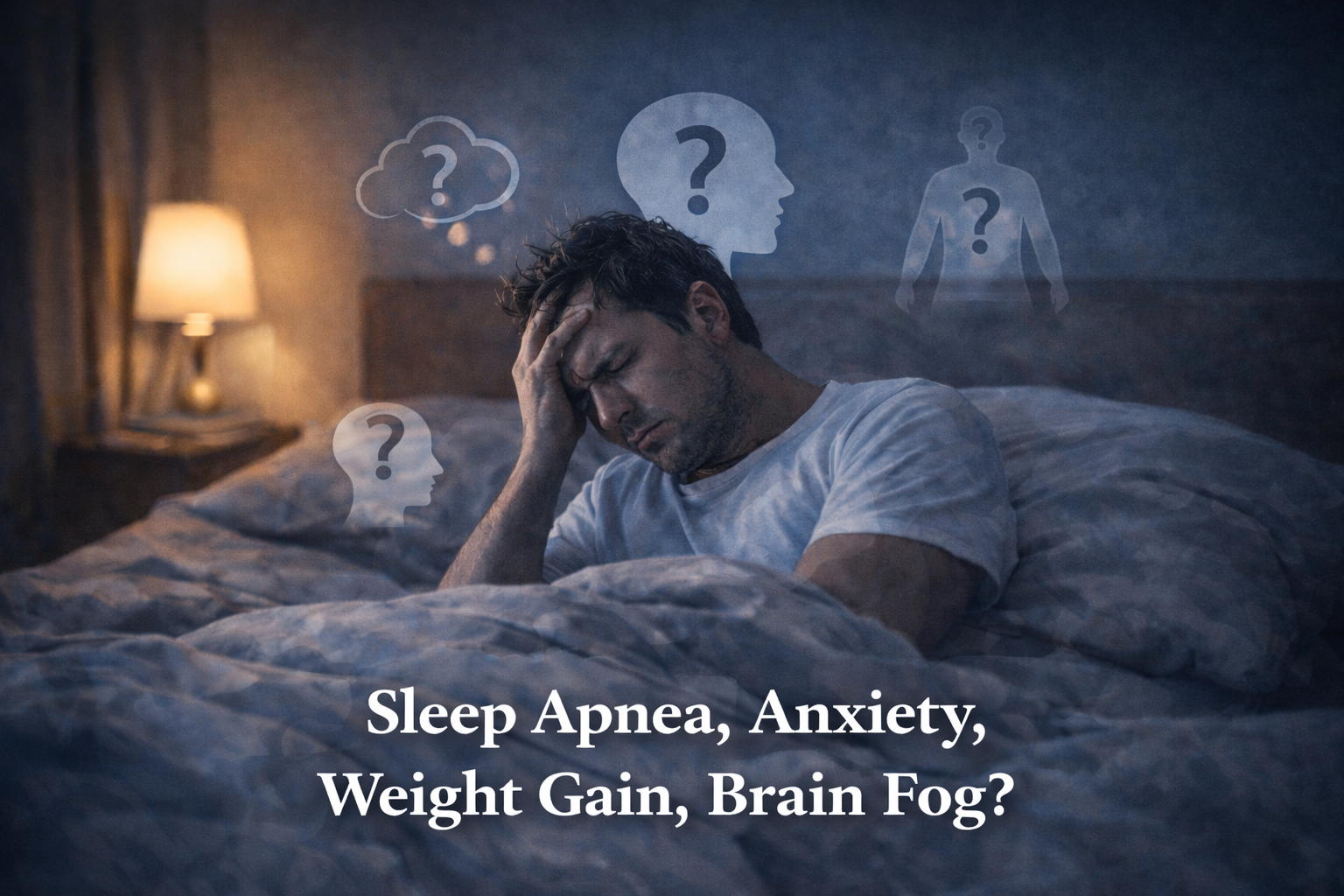
Can Sleep Apnea Cause Anxiety, Weight Gain, or Brain Fog? What Sleep Apnea Symptoms Really Look Like
Sleep Apnea Anxiety, Weight Gain, or Brain Fog. Many people go years without connecting their daytime struggles to their breathing at night, and that is why sleep apnea symptoms are one of the most missed health clues in adults today, explains Dr. Avinesh Bhar, Board-Certified Sleep Physician at SLIIIP.com, where patients often arrive already frustrated by months of unclear answers. SLIIIP.com offers virtual consultations in all 50 states and sends home sleep tests right to your door, giving patients true nationwide coverage without the wait of a traditional sleep lab. Many people living with disrupted nighttime breathing do not realize that their daytime anxiety, weight struggles, or foggy thinking may be tied to what happens in their airway at night. The three concerns in this guide, anxiety, weight gain, and brain fog, are some of the most common hidden signals that your sleep is not doing its job. The good news is that these clues can be checked and understood with a simple evaluation from home.
At SLIIIP.com, Dr. Avinesh Bhar and the team regularly see patients who were told they had ADHD. Many of them had an undiagnosed sleep disorder. SLIIIP.com makes it easy to find out, with virtual consultations available in all 50 states and home sleep tests shipped directly to your door.
SLIIIP’s board certified sleep physicians can do sleep evaluations for sleep apnea. Virtual consultations in all 50 states. Home sleep tests shipped to your door.
SLIIIP’s board-certified sleep physicians can do sleep evaluations for sleep apnea. Virtual consultations in all 50 states. Home sleep tests shipped to your door.
What Sleep Apnea Symptoms Actually Feel Like
Most people picture sleep apnea as loud snoring and someone gasping for air at night. While that is one version of the picture, many patients never snore at all. Instead, their brain gets repeated tiny wake up signals that they never remember in the morning. These short interruptions can lower oxygen, raise stress hormones, and leave the body in a kind of survival mode even after a full night in bed.
Over time, this pattern can show up as:
- Waking up tired after 7 or 8 hours of sleep
- Morning headaches
- A racing heart in the middle of the night
- Shifts in mood
- Trouble focusing at work
- Cravings and weight that will not budge
Learning to spot these sleep apnea symptoms is one of the most useful things a person can do for their long term health. You can see a deeper list in our guide to the signs of sleep apnea.
Can Sleep Apnea Cause Anxiety?
Waking up many times at night, even briefly, keeps the body stuck in a stress response. When oxygen drops and the brain jolts awake, the nervous system releases adrenaline and cortisol. People often describe this as waking up with a pounding heart, feeling on edge for no reason, or having a sense of dread in the early hours. Over weeks and months, this pattern can feel a lot like an anxiety disorder.
According to the U.S. National Heart, Lung, and Blood Institute, untreated sleep apnea is linked with a higher risk of mood and cardiovascular changes. You can read more in our article on anxiety, insomnia, and sleep apnea.
Signs that anxiety might be tied to sleep apnea symptoms include:
- Panic like feelings that wake you from sleep
- Daytime anxiety that improves on vacation when sleep is deeper
- A partner who hears pauses in your breathing
- Feeling wired but tired at the same time
It is important to know that anxiety is a real health concern on its own. Sleep apnea is one possible driver, not the only one. A proper sleep evaluation is the best way to sort out what is playing a role.
Can Sleep Apnea Cause Weight Gain?
The link between nighttime breathing and body weight is a two way street. Poor sleep lowers leptin, the hormone that tells you that you are full, and raises ghrelin, the hormone that tells you that you are hungry, which can push the body toward late night snacking and bigger portions. Add daytime fatigue that makes exercise feel impossible, and it is easy to see why patients sometimes gain weight without changing their diet.
Weight gain can also make sleep apnea worse. Extra tissue around the neck and upper airway narrows the space where air needs to pass. That means more breathing pauses at night, more awakenings, and more hormone changes the next day. To dive deeper into the science, visit our article on does sleep apnea cause weight gain.
Many patients ask if losing weight can fix sleep apnea. It can help in some cases, but not always, and many people cannot lose weight until their sleep is treated first. This is why the team at SLIIIP.com looks at sleep and weight together rather than one at a time. Our related article on losing weight and sleep apnea explains this in detail.
Can Sleep Apnea Cause Brain Fog?
Brain fog is the feeling that your thinking is slow, cloudy, or just not quite right. When breathing pauses disturb deep sleep and REM sleep, the brain never gets its full cleanup and repair cycle. The result can be poor focus, forgetfulness, slower reaction times, and that foggy feeling many patients describe as not being themselves.
Common brain fog complaints tied to sleep apnea symptoms include:
- Reading the same paragraph three times
- Walking into a room and forgetting why
- Losing words in a conversation
- Feeling mentally drained by noon
Some patients have been told they have attention problems or early memory concerns when the real driver is disrupted breathing. Our detailed article on sleep apnea and extreme brain fog explains how this happens and what changes when sleep is restored. According to the Centers for Disease Control and Prevention, adults who do not get enough quality sleep are more likely to struggle with concentration, mood, and overall health. More information is available at the CDC sleep page.
CHECK YOUR SLEEP SYMPTOMS: TAKE THE 2 MINUTE QUIZ
TAKE THE QUIZ
Why These Sleep Apnea Symptoms Get Missed
Dr. Avinesh Bhar often reminds patients that sleep apnea does not always look like the television version. Many women, younger adults, and thinner patients have sleep apnea symptoms that get blamed on stress, hormones, or a busy schedule. People may spend years treating anxiety, trying diets, or chasing focus with caffeine before anyone asks about their sleep.
The most common reasons sleep apnea is missed include:
- No one else sleeps in the room to hear the breathing
- The person does not snore, or only snores on their back
- The symptoms feel emotional or mental rather than physical
- Short office visits do not ask the right questions
- Patients assume they are just getting older or burned out
This is the exact gap that SLIIIP.com was built to close. Our depression and sleep apnea piece and the first signs most people ignore guide show how often these clues get missed in regular care.
How a Home Sleep Test Can Help
A home sleep test is a small device that you wear for one or two nights in your own bed. It tracks breathing, oxygen, and heart rate while you sleep. Because it happens at home, the results reflect your real sleep, not a lab night with wires and a strange room.
At SLIIIP.com, a board certified physician reviews the results, explains what they mean, and discusses options during a virtual visit. You can learn more on our home sleep apnea test page and take the short sleep apnea quiz to see if testing makes sense for you.
Watch: The Dangers of Poor Sleep
SLIIIP’s board-certified sleep physicians can do sleep evaluations for sleep apnea. Virtual consultations in all 50 states. Home sleep tests shipped to your door.
Frequently Asked Questions
Can sleep apnea cause panic attacks at night?
Some patients wake with a racing heart, sweating, or a feeling of panic. These episodes can look like panic attacks but may actually be the body reacting to a drop in oxygen during a breathing pause. A sleep evaluation can help tell the two apart.
Is it possible to have sleep apnea without snoring?
Yes. Not all people with sleep apnea snore, especially women and thinner patients. Our article on sleep apnea without snoring covers this in detail.
Can treating sleep apnea help me lose weight?
Treating sleep apnea may improve hormones, energy, and cravings, which can support healthier habits over time. It is not a weight loss treatment on its own, but many patients find it easier to make healthy changes once their sleep is restored.
How long does it take for brain fog to improve?
Some patients notice clearer thinking within a few weeks of consistent treatment. Others take longer. Results depend on how long sleep was disrupted and on overall health.
Can sleep apnea cause depression as well?
There is a strong link between sleep and mood. Our guide on sleep apnea and depression explains how disrupted sleep can feed into low mood and what to do about it.
What makes SLIIIP.com different?
SLIIIP.com offers virtual consultations in all 50 states, home sleep tests shipped to your door, and board certified sleep physicians who work with patients over time. That is true nationwide coverage without the long wait lists of a traditional sleep lab.
Do I need a referral to get tested?
In most cases, no. A quick intake with a SLIIIP.com physician is usually enough to decide if a home sleep test is the right next step.
Is a home sleep test covered by insurance?
Many insurance plans cover home sleep testing. You can check your own plan in minutes using the verify benefits link above.
Should I see my primary doctor first?
You can, but you do not need to. SLIIIP.com physicians are board certified sleep specialists. Going directly to a sleep trained physician can save you time and extra visits.
How long is a virtual visit?
Most first visits with a SLIIIP.com physician are about 30 to 45 minutes. That is usually enough time to review symptoms, discuss testing, and plan next steps.
At Sliiip, we accept the following insurances:

SLIIIP’s board-certified sleep physicians can do sleep evaluations for sleep apnea. Virtual consultations in all 50 states. Home sleep tests shipped to your door.
Take the Next Step
If anxiety, weight changes, or brain fog have been part of your life, it is worth asking whether your sleep is part of the picture. A simple home sleep test can give you answers in days, not months. You do not have to live with foggy mornings, restless nights, or a body that feels out of sync.
Thank you for reading this article.
Latest posts
-
Why Are My Naps Never Refreshing?
Last updated: October 2, 2026. Medically reviewed by Dr. Avinesh Bhar, Board-Certified Sleep Physician, SLIIIP.com. Naps that leave you groggy usually come down to how long you sleep, when you…
-
Is Sleeping Too Much a Sleep Disorder?
Last updated: October 2, 2026. Medically reviewed by Dr. Avinesh Bhar, Board-Certified Sleep Physician, SLIIIP.com. Sleeping too much is not always a sleep disorder, but it can be a sign…
-
Why Does My Insomnia Get Worse After Stopping Sleep Medication?
Last updated: October 2, 2026. Medically reviewed by Dr. Avinesh Bhar, Board-Certified Sleep Physician, SLIIIP.com. Insomnia can get worse after stopping sleep medication for three main reasons. They are rebound…
Get updates
Spam-free subscription, we guarantee. This is just a friendly ping when new content is out.

