👉 Register for Free. How to Diagnose Sleep Apnea Faster in Primary Care – FREE Webinar by Dr. Audrey Wells. – Friday, April 24 at 12 PM ET


When Should I See a Doctor for Insomnia? Clear Signs It Is Time
Most adults wait far too long to see a doctor for insomnia, and Dr. Avinesh Bhar, Board-Certified Sleep Physician at SLIIIP.com, says the average patient has been struggling for two to seven years before they finally book a visit. By the time most people ask the question, they have already tried a dozen apps, supplements, and routines that were never going to fix the real problem.
SLIIIP’s board-certified sleep physicians can do sleep evaluations for sleep apnea. Virtual consultations in all 50 states. Home sleep tests shipped to your door.
What Actually Counts as Insomnia
Insomnia is more than one bad night. It is a steady pattern of trouble falling asleep, staying asleep, or waking up too early, even when you have time and space for rest. If your sleep struggle has lasted at least three nights a week for three or more weeks, that is no longer a rough patch. That is clinical insomnia.
There are different types, including short-term insomnia from a stressful event and chronic insomnia that has settled in for months. For a deeper look, see types of insomnia and do I have insomnia or something else.
CHECK YOUR SLEEP SYMPTOMS: TAKE THE 2 MINUTE QUIZ
TAKE THE QUIZ
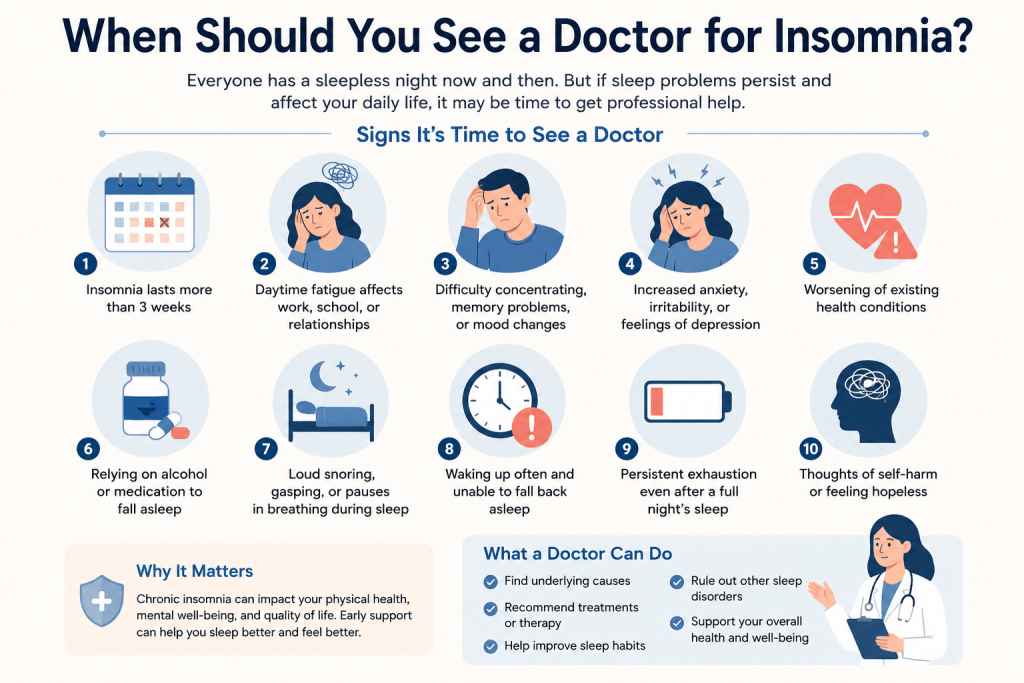
When Should You See a Doctor for Insomnia?
If you are unsure whether your sleep problem deserves professional help, use these clear signals. Any one of them is reason enough to see a doctor for insomnia, and most people checking this list will hit several.
1. The Three-Week Rule
If you have struggled to fall or stay asleep at least three nights a week for three weeks or more, your insomnia is no longer short term. The longer it sits untreated, the more your brain learns the bed is a place for stress.
2. Daytime Life Is Slipping
Insomnia matters when it shows up during the day. Common signs include:
- Brain fog and trouble focusing
- Forgetting words or names
- Slipping work performance
- Falling asleep at red lights
- Mood swings, snapping at family
- Coffee that no longer touches the tiredness
If even two of these sound familiar, it is time to see a doctor for insomnia.
3. Sleeping Pills Are the Only Thing Holding It Together
Plenty of people end up on a pill they never planned to stay on. Tolerance builds, doses creep up, and the sleep keeps getting worse anyway. If your nightly routine starts with a bottle, talk to a sleep physician. See the sleeping pill scam and CBT-I vs sleep medications.
4. You Have Already Tried the Basics
If you have run the gauntlet of melatonin, magnesium, breathwork, screens off, cool room, and journaling, and nothing has stuck, the issue is not your routine. It is something deeper that needs a real evaluation. Many patients arrive at SLIIIP after months of trying to fix insomnia naturally on their own.
5. You Have Symptoms That Are Not Just Insomnia
Insomnia rarely travels alone. If your sleep loss comes with any of these, see a doctor sooner rather than later:
- Loud or chronic snoring
- Gasping or choking at night
- Morning headaches
- Racing heart at night
- Restless or jumpy legs
- Severe daytime sleepiness, even with a full night in bed
These can point to obstructive sleep apnea, restless legs disorder, or another medical issue. According to the National Heart, Lung, and Blood Institute, sleep apnea is widely missed in adults and often hides behind insomnia symptoms. Review signs of sleep apnea and take the sleep apnea quiz.
6. Your Mental Health Is Shifting
Bad sleep and mood feed each other. If you have noticed anxiety creeping in at night, low mood that will not lift, or panic-like awakenings, your sleep is part of the conversation. You do not have to choose between treating your sleep or your mental health, because the right plan helps both. Read Why do I feel anxious at night and can lack of sleep cause depression.
7. Hormones Have Changed
Perimenopause, menopause, pregnancy, thyroid shifts, and high cortisol can all unmask insomnia that was hidden before. If your sleep tanked after a life change, it is worth a professional look. See hormonal insomnia.
Red Flags That Mean See a Doctor Sooner
Some symptoms should not wait three weeks. Book a visit right away if you notice:
- Falling asleep while driving
- Pauses in breathing witnessed by a partner
- Severe gasping or choking awakenings
- Insomnia paired with chest pain, palpitations, or shortness of breath
- Severe mood changes, hopelessness, or thoughts of self-harm
The Centers for Disease Control and Prevention links short or poor-quality sleep to higher risks for heart disease, diabetes, depression, and accidents. Insomnia is not just a comfort issue. It is a health issue.
Watch: Sleep Doctor Needed
What Happens at Your First Sleep Visit
A common reason people wait is fear of what the visit will look like. The reality is much simpler than most expect. At SLIIIP, a first visit typically includes:
- A virtual conversation with a board-certified sleep physician
- A full review of your sleep history, symptoms, and goals
- Screening for sleep apnea, restless legs, and other disorders
- A plan that may include a home sleep test, CBT-I, or both
- Clear next steps with no pressure to choose on the spot
You can review the value of telehealth in 3 benefits of sleep telemedicine, why choose sleep telemedicine, and online sleep doctor.
What a Sleep Doctor Can Actually Do for Insomnia
People often picture a sleep doctor as someone who writes a prescription and sends you home. Modern sleep medicine is the opposite of that. A good sleep physician helps you:
- Rule out sleep apnea, restless legs, or other hidden disorders
- Build a personalized plan that fits your life
- Access Cognitive Behavior Therapy for Insomnia, the first-line option for chronic cases
- Step off sleeping pills safely if you want to
- Treat the whole picture, including stress, hormones, and mood
For a deeper background, see insomnia treatment, insomnia treatment methods, CBT-I for sleep disorders, and why CBT-I works when medications do not.
Why Telemedicine Makes the First Visit Easier
For many adults, the biggest reason they have not seen a doctor for insomnia is simple: getting to a clinic feels impossible when you are exhausted. Virtual care fixes that.
You can talk to a board-certified sleep physician from your bed if you want to, and most patients get a clear plan in a single visit. Home sleep tests ship to your door. CBT-I happens by video. Insurance verification happens before you commit. There is no waiting room, no parking, and no early alarm to make the appointment.
SLIIIP Services for Insomnia
Dr. Avinesh Bhar and the SLIIIP care team specialize in real, modern, root-cause sleep care. SLIIIP services include:
- Virtual sleep consultations with board-certified physicians in all 50 states
- Home sleep tests shipped to your door for at-home testing
- CBT-I support for chronic and anxious insomnia
- Apnea, restless legs, and circadian rhythm evaluations
- Insurance verification with most major carriers accepted
- Follow-up care and ongoing support
The goal is simple. You leave the first visit with a clear answer, not another to-do list.
At Sliiip, we accept the following insurances:

SLIIIP’s board-certified sleep physicians can do sleep evaluations for sleep apnea. Virtual consultations in all 50 states. Home sleep tests shipped to your door.
Frequently Asked Questions About When to See a Doctor for Insomnia
- How many nights of bad sleep before I should see a doctor for insomnia?
If you have trouble sleeping at least three nights a week for three weeks, it is time to book a visit. - Can I just keep using over-the-counter sleep aids?
You can, but most lose effect over time and many can worsen sleep quality. A sleep doctor can find the cause instead of just masking the symptom. - Will the doctor just prescribe a pill?
Not at SLIIIP. The first-line option for chronic insomnia is CBT-I, not medication. Pills are a tool, not a default. - What kind of doctor treats insomnia?
Board-certified sleep physicians. They handle insomnia, apnea, restless legs, and circadian issues in one place. - Can I see a sleep doctor without a referral?
With SLIIIP, yes. You can book a virtual visit directly. - How long does the first visit take?
Most virtual first visits run 30 to 45 minutes. - Does insurance cover a sleep doctor visit?
Most major carriers cover virtual sleep care and home sleep testing. SLIIIP verifies benefits before you commit. - What if my sleep problem is mostly anxiety?
That is one of the most common patterns. CBT-I addresses anxious sleep directly, and many patients see real progress in a few weeks. - Could my insomnia actually be sleep apnea?
Yes. Apnea is widely missed and can mimic insomnia. A home sleep test usually clears that up fast. - Is virtual care as good as an in-person visit?
For most insomnia care, yes. Studies show telehealth-based sleep care performs just as well as in-clinic visits. - What if I have been on sleeping pills for years?
A sleep doctor can help you taper safely while building real, long-term sleep tools. - Can hormone changes cause insomnia?
Yes. Perimenopause, menopause, thyroid changes, and pregnancy can all spark new sleep issues. - Do I need a sleep study before I see a doctor for insomnia?
No. The visit comes first. The physician will decide if testing makes sense based on your symptoms. - Can shift work cause real insomnia?
Yes. Shift work disorder is its own condition and often needs targeted care. - What if I have tried CBT-I before and it did not work?
Many things can derail CBT-I, including untreated apnea, restless legs, or a poorly matched program. A new evaluation can find the missing piece. - Will I have to give up coffee completely?
Probably not. Most plans focus on timing, not full elimination. - Is insomnia genetic?
There is a genetic piece, but lifestyle, stress, hormones, and habits play a much bigger role. - Can children and teens have insomnia too?
Yes. Sleep issues in kids and teens are common and worth a real evaluation, not just more screen-time rules. - How fast can sleep improve after I see a doctor?
Many patients feel a difference in the first two weeks. Full results from CBT-I usually land within 4 to 8 weeks. - How do I get started with SLIIIP?
Book a virtual sleep evaluation, verify your benefits, and meet with a board-certified physician from home.
Ready to Stop Counting Bad Nights?
If you have read this far, you already know the answer. Insomnia rarely fixes itself, and the longer you wait to see a doctor for insomnia, the harder the cycle gets to break. SLIIIP makes the next step simple, with virtual consultations, home sleep tests, and nationwide coverage built around your life.
SLIIIP’s board-certified sleep physicians can do sleep evaluations for sleep apnea. Virtual consultations in all 50 states. Home sleep tests shipped to your door.
Latest posts
-
Circular Ring Sleep Accuracy: What It Gets Right and Wrong
Last updated: September 14, 2026. Medically reviewed by Dr. Avinesh Bhar, Board-Certified Sleep Physician, SLIIIP.com. The Circular Ring estimates sleep stages, heart rate, and recovery using a finger-worn light sensor,…
-
Ballistocardiography Sleep Sensors: How Under-Mattress Tracking Works
Last updated: September 14, 2026. Medically reviewed by Dr. Avinesh Bhar, Board-Certified Sleep Physician, SLIIIP.com. Ballistocardiography sleep sensors sit under your mattress and detect the tiny mechanical vibrations your body…
-
RingConn vs Oura: Which Smart Ring Tracks Sleep Better?
Last updated: September 10, 2026. Medically reviewed by Dr. Avinesh Bhar, Board-Certified Sleep Physician, SLIIIP.com. RingConn and Oura both track sleep through a finger-worn ring, but they differ most in…
Get updates
Spam-free subscription, we guarantee. This is just a friendly ping when new content is out.

