👉 Register for Free. How to Diagnose Sleep Apnea Faster in Primary Care – FREE Webinar by Dr. Audrey Wells. – Friday, April 24 at 12 PM ET


Bed Rotting: Real Self-Care or Hidden Exhaustion?
Bed rotting is the name people give to spending a whole day under the covers with snacks, a phone, and no plans, and Dr. Avinesh Bhar, Board-Certified Sleep Physician at SLIIIP.com, treats it less as a trend to judge and more as information worth reading.
A slow day in bed can be a genuine rest. It can also be the body asking for help that a Saturday will not fix. The difference shows up in how you feel afterward, and in how often the day happens.
SLIIIP’s board-certified sleep physicians can do sleep evaluations for sleep apnea. Virtual consultations in all 50 states. Home sleep tests shipped to your door.
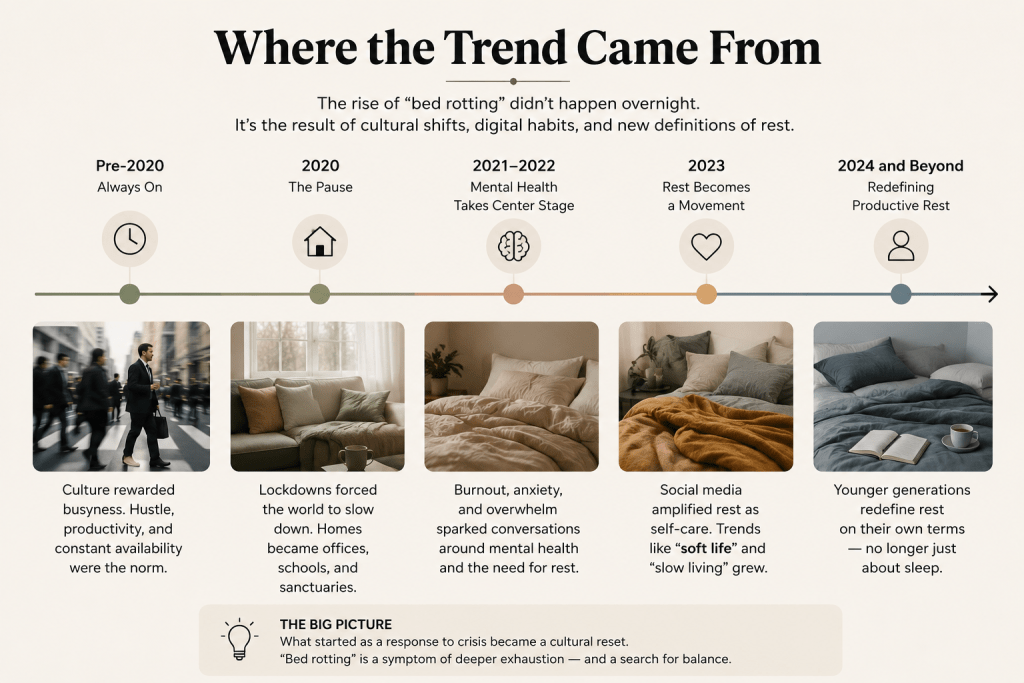
Where the Trend Came From
The phrase spread on social media as a reaction to hustle culture. After years of advice about morning routines and productive weekends, a lot of people pushed back with something simpler: stay in bed, watch shows, eat cereal, do nothing on purpose.
There is nothing new about a lazy Sunday. What changed is the framing. Bed rotting is presented as a form of self-care rather than something to apologize for, and for many people that reframing is genuinely useful. Rest does not have to be earned.
The trouble is that one word now covers two very different experiences. One is a chosen break that leaves you restored. The other is a body running on empty that cannot get up. They look identical from the outside.
CHECK YOUR SLEEP SYMPTOMS: TAKE THE 2 MINUTE QUIZ
TAKE THE QUIZ
The Version That Works as Rest
A restorative day in bed usually has a few features.
You chose it. The day was a decision, not a collapse. You could have gotten up and decided not to.
It has an end. By evening or the next morning, you are ready to move again.
You feel better afterward. Not perfect, but lighter. The nervous system got a break.
It is occasional. A slow day now and then, usually after a heavy stretch of work, travel, or caregiving.
For a lot of people this is exactly what a weekend is for. Downtime lowers stress, and low stress supports better sleep at night. There is no medical reason to feel guilty about a quiet day.
The Version That Signals Something Else
The other pattern reads differently.
You cannot get up rather than choosing not to. Getting vertical feels like moving through concrete.
It repeats. Most weekends disappear this way, and weekdays start to as well.
Rest does not restore. You spend twelve hours in bed and feel exactly as tired at the end.
Other things fade with it. Meals get skipped, texts go unanswered, plans get canceled, interest in things you used to enjoy drops off.
That last cluster matters. When low energy comes with low mood, loss of interest, or a sense that nothing is worth the effort for two weeks or more, that is worth raising with a primary care clinician or a mental health professional. Our article on feeling depressed and tired all the time covers that overlap in more detail. Sleep problems and mood problems often travel together, and each one is easier to address when both are on the table.
If you are struggling and need someone to talk to right now, support lines are available in most countries, and reaching out to a clinician you trust is a reasonable first step.
Why Bed Rotting Can Make the Next Night Harder
Even when a day in bed is chosen and enjoyable, long hours under the covers can affect the following night.
Bed loses its meaning. Sleep tends to work best when bed is associated mostly with sleep. Spending twelve waking hours there weakens that link, and some people notice it takes longer to drift off.
Light exposure drops. A dark room all day means the body clock gets a weak signal about what time it is. Morning light in particular helps keep the schedule steady.
Movement drops. Physical activity builds the pressure that helps sleep come at night. A day with almost no movement can leave you less tired at bedtime.
Long naps stack up. Dozing on and off through the afternoon can push bedtime later. Our guide on the benefits of napping explains how timing and length change the effect.
None of this means a slow day is harmful. It means the day works better with a few adjustments: open the curtains, get outside briefly, and try to keep the overnight schedule roughly where it usually is.
The Question Underneath the Trend
If the main reason you spend days in bed is exhaustion rather than choice, the useful question is not whether the trend is healthy. It is why the tiredness is there.
Dr. Avinesh Bhar points out that persistent daytime tiredness has many possible contributors, and several of them involve sleep quality rather than sleep quantity. Breathing problems during sleep, an irregular schedule, ongoing insomnia, thyroid or iron issues, medication effects, and mood conditions can all leave someone tired after a full night in bed.
Signs worth mentioning to a clinician include loud snoring, gasping or choking during sleep, a partner noticing pauses in breathing, morning headaches, waking up unrefreshed, and falling asleep during the day without meaning to. Our articles on whether your fatigue is normal and sleeping eight hours and still feeling tired go through the common explanations.
A sleep evaluation is one piece of a broader workup, not an answer by itself. It looks at your schedule, symptoms, health history, and whether testing would add information. When testing is appropriate, a home sleep apnea test can often be done in your own bed.
Watch: Sleep Apnea – Evaluation and Testing by Dr. Avinesh Bhar (SLIIIP)
Habits That Make Rest Actually Restful
If you want the slow day without the rough night that sometimes follows, a few habits help.
Get light within an hour of waking. Even a few minutes at a window or on a step outside gives the body clock a clear signal.
Move a little, twice. Two short walks break up the day without turning rest into a workout.
Eat something at normal meal times. Skipping meals entirely tends to leave energy lower, not higher.
Keep the phone out of the last stretch before sleep. A day of scrolling followed by a night of scrolling makes for a long stimulating stretch.
Hold your usual wake time. Sleeping three hours past your normal time on a weekend often makes Sunday night harder.
Notice how you feel at the end. Restored means the day worked. Flat or worse means that the tiredness needs a different kind of attention.
Keep caffeine early and alcohol modest. Both change sleep quality more than most people expect.
For general recommendations on sleep and health, the Centers for Disease Control and Prevention publishes clear guidance. The National Heart, Lung, and Blood Institute explains what ongoing short sleep does over time.
At Sliiip, we accept the following insurances:

SLIIIP’s board-certified sleep physicians can do sleep evaluations for sleep apnea. Virtual consultations in all 50 states. Home sleep tests shipped to your door.
Frequently Asked Questions
What does bed rotting mean?
It refers to spending an extended stretch, often most of a day, lying in bed while awake doing low effort activities like watching shows or scrolling.
Is bed rotting bad for you?
Not automatically. An occasional chosen rest day is fine for most people. Frequent days you cannot get out of are worth looking into.
How often is too often?
There is no strict number. If it becomes most weekends, or starts crowding out meals, work, or people you care about, that is a useful signal.
Does lying in bed all day count as rest?
It can, but rest and sleep are not the same. Lying awake in bed does not carry the same benefits as actual sleep.
Why am I still tired after a full day in bed?
Tiredness that does not improve with more time in bed often points to sleep quality or another health factor rather than a lack of hours.
Can spending the day in bed hurt my night sleep?
It can. Low light, low movement, and long naps all reduce the drive to sleep at night for some people.
Is bed rotting a sign of depression?
It is not a diagnosis on its own. When it comes with low mood, loss of interest, and changes in appetite lasting two weeks or more, talking with a clinician is a good idea.
What is the difference between rest and avoidance?
Rest usually leaves you more able to face things. Avoidance usually leaves the same weight waiting when you get up.
Should I feel guilty about a day in bed?
Guilt rarely helps. A more useful question is whether the day left you better or the same.
Does napping during a rest day matter?
Long or late naps can make falling asleep harder that night. Shorter and earlier tends to work better.
How can I make a rest day healthier?
Add daylight, a short walk, regular meals, and a normal bedtime. The rest of the day can stay slow.
Is it better to rest on the couch than in bed?
For some people yes, because it keeps the bed linked with sleep. If falling asleep has been difficult lately, that small shift can help.
Can this affect my body clock?
Yes. Very late wake times and long dark days weaken the signals that keep your schedule steady.
Does bed rotting affect teens differently?
Teens naturally shift later, so long weekend days in bed can make school mornings noticeably harder.
What if I have no energy even on good days?
Ongoing low energy that does not respond to rest deserves a medical review rather than more downtime.
Could snoring be part of why I feel this tired?
Loud snoring, gasping, or witnessed pauses in breathing are worth discussing with a sleep physician, since they can affect how restorative sleep is.
Do I need a lab visit for a sleep test?
Not always. Many people can complete a home sleep test after a physician determines it fits their situation.
What happens in a virtual sleep consultation?
A physician reviews your sleep history, symptoms, schedule, and health background, then discusses whether testing would add useful information.
Is a sleep evaluation covered by insurance?
Coverage varies by plan. Checking your benefits before booking gives you a clear picture of costs.
When should I stop waiting and get checked?
If tiredness has lasted more than a few weeks, or if it is changing how you work, drive, or live day to day, that is a reasonable point to seek help.
Ready to Look Closer
If slow days in bed are becoming the norm and rest is not helping, the answer is probably not more rest. A physician review can tell you whether sleep quality is part of the picture.
SLIIIP’s board-certified sleep physicians can do sleep evaluations for sleep apnea. Virtual consultations in all 50 states. Home sleep tests shipped to your door.
Latest posts
-
RingConn vs Oura: Which Smart Ring Tracks Sleep Better?
Last updated: September 10, 2026. Medically reviewed by Dr. Avinesh Bhar, Board-Certified Sleep Physician, SLIIIP.com. RingConn and Oura both track sleep through a finger-worn ring, but they differ most in…
-
Withings ScanWatch Sleep Tracking Accuracy: What It Can and Cannot Tell You
Last updated: September 10, 2026. Medically reviewed by Dr. Avinesh Bhar, Board-Certified Sleep Physician, SLIIIP.com. Withings ScanWatch is a hybrid analog watch that tracks sleep stages and can flag nighttime…
-
Are Cheap Fitness Trackers Accurate for Sleep?
September 10, 2026. Medically reviewed by Dr. Avinesh Bhar, Board-Certified Sleep Physician, SLIIIP.com. Cheap fitness trackers can be reasonably accurate at telling you when you fell asleep and woke up,…
Get updates
Spam-free subscription, we guarantee. This is just a friendly ping when new content is out.

