👉 Register for Free. How to Diagnose Sleep Apnea Faster in Primary Care – FREE Webinar by Dr. Audrey Wells. – Friday, April 24 at 12 PM ET

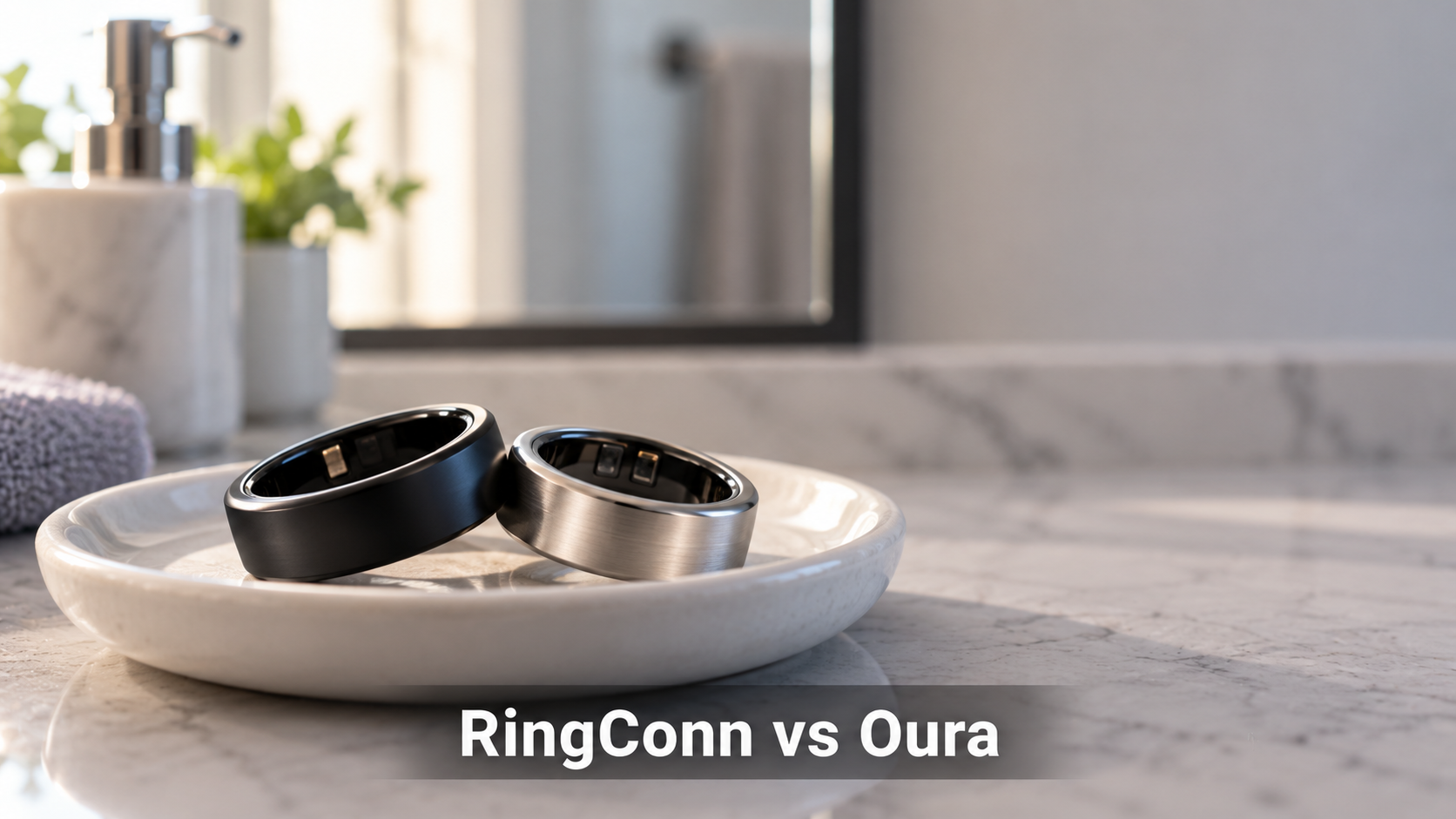
RingConn vs Oura: Which Smart Ring Tracks Sleep Better?
Last updated: September 10, 2026. Medically reviewed by Dr. Avinesh Bhar, Board-Certified Sleep Physician, SLIIIP.com.
RingConn and Oura both track sleep through a finger-worn ring, but they differ most in cost structure rather than in the basic sensors each one uses. Dr. Avinesh Bhar, Board-Certified Sleep Physician, SLIIIP.com, tells patients that the choice between smart rings usually comes down to comfort and budget, since neither ring can diagnose a sleep disorder on its own. Oura carries a longer track record of published accuracy data, while RingConn’s main advantage is a lower price with no ongoing subscription. SLIIIP.com sees patients wearing both brands, and this guide breaks down where they actually differ.
SLIIIP’s board-certified sleep physicians can do sleep evaluations for sleep apnea. Virtual consultations in all 50 states. Home sleep tests shipped to your door.
What Each Ring Measures Overnight
Both rings use optical sensors to read heart rate and blood oxygen, along with a temperature sensor and motion sensor to estimate sleep stages, restfulness, and overnight recovery signals like heart rate variability.
Oura reports its data through Sleep Score and Readiness Score summaries, while RingConn’s app reports sleep stages, heart rate variability, and a daily wellness summary. Both companies also offer skin temperature trends that can shift around illness or a menstrual cycle.
Do RingConn and Oura Cost the Same to Own?
This is a literal question that matters more than most spec comparisons. Oura’s rings require an ongoing monthly membership to unlock full features after purchase, on top of the upfront ring cost. RingConn sells its rings for a one-time price with no required subscription for its core features.
This subscription difference is often the deciding factor for buyers who are not chasing the newest sensor, since the total cost of ownership over a few years can end up meaningfully higher with a subscription model than without one.
Which Ring Has Better Published Accuracy Data?
Oura has a longer history of independent research behind it. A study comparing the Oura Ring, Fitbit, and Apple Watch against polysomnography, the PMC study, found that Oura performed competitively on sleep versus wake detection and stage discrimination compared with the other two devices tested.
RingConn has less independent, peer-reviewed validation published so far, which does not necessarily mean it performs worse, but it does mean fewer outside researchers have formally tested its claims the way Oura’s algorithms have been tested.
Can Either Ring Detect Sleep Apnea?
Neither Oura nor RingConn holds FDA clearance for a sleep apnea diagnosis feature. RingConn markets a blood oxygen based sleep apnea monitoring feature on some models, while Oura tracks blood oxygen as a general wellness metric without marketing a dedicated apnea detection claim.
Any oxygen dip or restless-night pattern from either ring is a reason to look closer, not a stand-in for a validated sleep test that measures breathing directly.
Comfort, Battery, and Everyday Fit
Both rings are lightweight and designed to be worn continuously, including overnight, which many people find more comfortable than a wrist-worn device. Battery life on both brands typically runs from about a week to well over a week per charge, depending on the model.
Sizing and durability during workouts, especially grip-heavy activities like weightlifting, are common complaints across smart ring brands generally, not something unique to either RingConn or Oura. Anyone deciding between the two is usually better served trying on a sizing kit from each brand before committing, since ring fit affects sensor contact and therefore data quality more than most people expect.
Which Ring Should You Actually Choose?
If you want the most independently studied sleep and recovery algorithm and do not mind an ongoing membership fee, Oura remains the safer, better-documented pick. If you want core sleep and recovery tracking without a recurring bill, RingConn covers the same basic ground for less money over time.
Neither choice is wrong for most people, and switching brands later is common as smart ring subscription models and hardware continue to change year over year. The bigger decision is simply whether you will wear a ring consistently at all, since that matters more than which brand’s logo is on it.
When to See a Doctor Regardless of Which Ring You Wear
Dr. Avinesh Bhar, Board-Certified Sleep Physician, SLIIIP.com, recommends an evaluation when either ring shows a pattern of low blood oxygen or restless sleep alongside snoring, gasping, or ongoing daytime fatigue.
The CDC notes that most adults need at least 7 hours of sleep a night, and neither a RingConn nor an Oura ring can substitute for a physician’s assessment when symptoms point toward a sleep disorder.

SLIIIP’s board-certified sleep physicians can do sleep evaluations for sleep apnea. Virtual consultations in all 50 states. Home sleep tests shipped to your door.
Frequently Asked Questions
What is the main difference between RingConn and Oura?
RingConn sells its core features for a one-time price, while Oura requires an ongoing monthly membership.
Do both rings measure the same signals?
Yes, both use optical heart rate and blood oxygen sensors, plus temperature and motion sensors, to estimate sleep.
Which ring has more published accuracy research?
Oura has a longer history of independent, peer-reviewed validation studies compared with RingConn.
Can RingConn detect sleep apnea?
RingConn markets a blood oxygen based sleep apnea monitoring feature on some models, but it does not hold FDA clearance for a diagnosis.
Can Oura detect sleep apnea?
No, Oura tracks blood oxygen as a general wellness metric and does not market a dedicated sleep apnea detection claim.
Is Oura more accurate than RingConn?
Oura has more outside validation, but that does not automatically mean every RingConn metric is less accurate in practice.
Does Oura require a subscription?
Yes, Oura requires an ongoing monthly membership on top of the ring purchase to access full features.
Does RingConn require a subscription?
No, RingConn sells its core features for a one-time price with no required ongoing subscription.
How long does the battery last on each ring?
Both brands typically offer roughly a week or more per charge, depending on the specific model.
Are smart rings comfortable to wear overnight?
Most users find rings more comfortable overnight than a wrist-worn device, though sizing matters for comfort.
Do smart rings hold up during weightlifting?
Both brands, like most smart rings, can be prone to scratching or discomfort during grip-heavy workouts.
What does Oura Readiness Score measure?
It combines sleep, activity, and recovery signals into a single daily readiness estimate.
What does RingConn track daily?
RingConn tracks sleep stages, heart rate variability, and a daily wellness summary in its app.
Can skin temperature tracking help with anything besides sleep?
Yes, both brands use skin temperature trends that can shift around illness or a menstrual cycle.
Is total cost of ownership higher with a subscription ring?
Often yes, since a monthly membership can add up to more than the price difference between the two rings over a few years.
Should I pick a ring based on price alone?
Price is a reasonable factor, but comfort, fit, and which features you actually need matter just as much.
Can either ring replace a home sleep test?
No, neither ring measures airflow directly, which is required for a real sleep apnea diagnosis.
Can SLIIIP review data from either ring?
Yes, you can bring your ring data to a virtual visit for your physician to review alongside your symptoms.
What is a home sleep test?
It is a sleep study you complete at home using a device shipped to you, then read by a physician.
How do I get evaluated for sleep apnea?
You can schedule a virtual visit with a SLIIIP sleep physician from any of the 50 states.
SLIIIP’s board-certified sleep physicians can do sleep evaluations for sleep apnea. Virtual consultations in all 50 states. Home sleep tests shipped to your door.
Latest posts
-
Why Are My Naps Never Refreshing?
Last updated: October 2, 2026. Medically reviewed by Dr. Avinesh Bhar, Board-Certified Sleep Physician, SLIIIP.com. Naps that leave you groggy usually come down to how long you sleep, when you…
-
Is Sleeping Too Much a Sleep Disorder?
Last updated: October 2, 2026. Medically reviewed by Dr. Avinesh Bhar, Board-Certified Sleep Physician, SLIIIP.com. Sleeping too much is not always a sleep disorder, but it can be a sign…
-
Why Does My Insomnia Get Worse After Stopping Sleep Medication?
Last updated: October 2, 2026. Medically reviewed by Dr. Avinesh Bhar, Board-Certified Sleep Physician, SLIIIP.com. Insomnia can get worse after stopping sleep medication for three main reasons. They are rebound…
Get updates
Spam-free subscription, we guarantee. This is just a friendly ping when new content is out.

