👉 Register for Free. How to Diagnose Sleep Apnea Faster in Primary Care – FREE Webinar by Dr. Audrey Wells. – Friday, April 24 at 12 PM ET

Acid Reflux and Sleep Apnea: Why You Wake Up Choking
Acid reflux and sleep apnea show up together far more often than most people expect, and Dr. Avinesh Bhar, Board-Certified Sleep Physician at SLIIIP.com, hears the same story again and again from patients who jolt awake choking in the middle of the night.
If you wake up choking on stomach acid, the burning in your throat is only half of the picture. What your breathing does while you sleep may be driving the whole event.
SLIIIP’s board-certified sleep physicians can do sleep evaluations for sleep apnea. Virtual consultations in all 50 states. Home sleep tests shipped to your door.
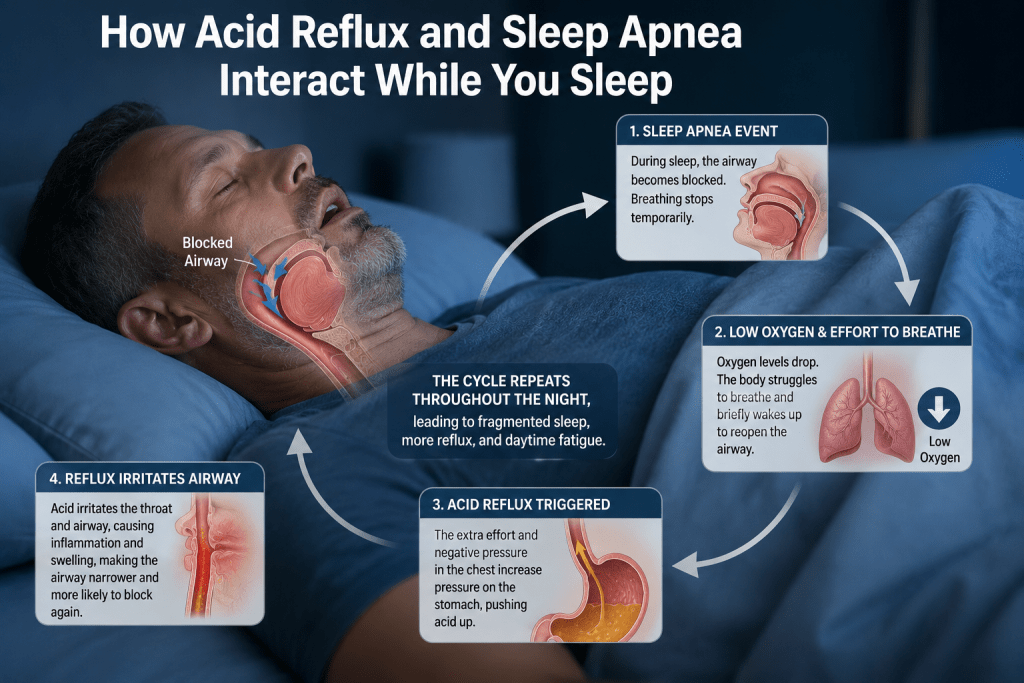
How Acid Reflux and Sleep Apnea Interact While You Sleep
Your body handles stomach acid differently once you lie down. Gravity no longer keeps fluid low in the stomach, and the muscle ring at the bottom of the esophagus relaxes during deep sleep. Acid can then travel upward toward the throat.
Breathing adds a second layer. When the airway narrows or closes during sleep, the chest keeps pulling for air against a blocked passage. That pulling creates suction inside the chest. Research suggests this pressure change can draw stomach contents upward, which is one reason acid reflux and sleep apnea are studied together so often.
The link runs in both directions. Airway events may pull acid up, and acid in the throat may irritate tissue in ways that make breathing feel tighter.
Doctors describe this as an association supported by research, not a simple cause and effect chain. Two people with identical symptoms can have very different findings on testing.
CHECK YOUR SLEEP SYMPTOMS: TAKE THE 2 MINUTE QUIZ
TAKE THE QUIZ
Why the Choking Feeling Wakes You Up So Fast
Waking up choking is startling because it happens without warning and ends within seconds. Several things can produce that sensation.
Acid reaching the voice box can trigger a reflex that snaps the vocal cords shut. This protects the lungs, but it also blocks air for a moment. People often describe a burning throat, a sour taste, and a racing heart afterward.
An airway that collapses during sleep produces a similar jolt. The brain senses low oxygen and pulls you toward wakefulness. Many patients report gasping rather than burning. Our guide on why you wake up gasping for air walks through that version of the experience.
Mucus and saliva can also pool in the throat overnight, especially with allergies or sinus congestion. If choking episodes are your main concern, our detailed piece on choking while sleeping covers the full range of explanations.
Repeated episodes several nights a week deserve a conversation with a clinician rather than another night of guessing.
Silent Reflux and the Symptoms People Miss
Not every reflux event burns. Some people never feel heartburn at all yet still deal with throat symptoms every morning. Clinicians sometimes call this pattern silent reflux.
Common signs include a hoarse voice at breakfast, a lump feeling in the throat, frequent throat clearing, a dry cough that lingers, and tooth sensitivity. These signs overlap heavily with what sleep physicians look for, which is why acid reflux and sleep apnea questions often come up in the same visit.
Morning headaches, dry mouth, and daytime fatigue point toward breathing during sleep. Our overview of signs of sleep apnea lists the patterns worth tracking. If you are unsure which category your symptoms fall into, the page on sleep apnea symptoms offers a broader comparison.
What Sleep Position Changes at Night
Body position shapes both problems. Lying flat on your back allows the tongue and soft tissue to fall backward, which narrows the airway. That same flat position removes the gravity advantage that keeps acid low.
Many people find that sleeping on the left side with the head and chest slightly elevated feels calmer. Our guide to the best sleeping position explains the tradeoffs, and the article on the wedge pillow for sleep apnea covers elevation options in detail.
Position changes are a comfort strategy, not a substitute for evaluation. They may reduce how often you notice symptoms while the underlying pattern stays unmeasured.
Lifestyle Habits That Support Calmer Nights
Small routine changes often make evenings easier. None of these replace medical care, and none of them diagnose anything. They simply give your body a better setup for sleep.
Finish your last meal about three hours before bed. A full stomach at lights out increases the volume available to move upward.
Keep late night portions smaller. Large evening meals stretch the stomach and raise pressure.
Watch which foods sit poorly for you. Common triggers include fried food, tomato sauce, citrus, chocolate, mint, and heavy spice. Trigger lists vary by person, so tracking your own pattern beats following a generic chart.
Limit alcohol in the evening. Alcohol relaxes muscle tone in the throat and the esophagus at the same time.
Reduce caffeine after mid afternoon. Caffeine lingers longer than most people expect.
Raise the head of the bed by a few inches using risers or a wedge. Stacking regular pillows bends the neck and rarely helps.
Wear looser clothing to bed. Tight waistbands push upward on the stomach.
Keep a steady sleep schedule. Irregular timing makes every other habit harder to hold.
Discuss weight with your clinician if it applies to you. The relationship between body weight and nighttime breathing is well documented, and our article on whether losing weight reduces sleep apnea explains what research actually supports.
The Centers for Disease Control and Prevention publishes practical guidance on healthy sleep habits, and the National Heart, Lung, and Blood Institute maintains a plain language overview of sleep apnea.
Watch: Choking while Sleeping – SLIIIP.COM
How Evaluation Works at SLIIIP
Dr. Avinesh Bhar and the SLIIIP clinical team start with your story. When your episodes happen, what they feel like, how often they repeat, and what your mornings look like all shape the next step.
A home sleep test records breathing effort, airflow, oxygen levels, and heart rate while you sleep in your own bed. The device ships to your door with instructions. You wear it, mail it back, and a physician reviews the data. Our page on the home sleep apnea test explains the process step by step.
Testing turns a guess into a measurement. That matters when acid reflux and sleep apnea produce symptoms that look identical from the outside.
Some patients need a lab based study instead, particularly when other conditions are present. Your clinician will tell you which path fits. Digestive symptoms may also warrant a referral to a gastroenterologist, and the two evaluations can run side by side.
Nothing about this process requires you to describe your symptoms perfectly. Most people cannot say whether they stopped breathing, because the events happen while they are asleep. That is exactly what the recording is for. A partner who has heard gasping or long pauses can add useful detail, but their report is a starting point rather than a conclusion.
At Sliiip, we accept the following insurances:

SLIIIP’s board-certified sleep physicians can do sleep evaluations for sleep apnea. Virtual consultations in all 50 states. Home sleep tests shipped to your door.
Frequently Asked Questions
Can acid reflux cause sleep apnea?
Research shows an association between the two, not a proven one way cause. Reflux may irritate throat tissue, and breathing events may pull acid upward. A clinician can help sort out which pattern fits you.
Why do I wake up choking on stomach acid?
Acid reaching the voice box can trigger a protective reflex that closes the vocal cords briefly. This produces a sudden choking sensation, often with burning and a sour taste.
Is choking in my sleep dangerous?
Occasional episodes are common and usually brief. Frequent episodes, or episodes with chest pain or trouble breathing afterward, should be evaluated promptly.
What is silent reflux?
It describes reflux that reaches the throat without producing classic heartburn. Symptoms tend to show up as hoarseness, throat clearing, and cough instead of burning.
Does sleeping on my back make things worse?
For many people, yes. Back sleeping allows soft tissue to narrow the airway and removes the gravity advantage that keeps stomach contents low.
Can a wedge pillow help?
Elevating the head and chest helps some people feel more comfortable. It is a comfort measure and does not replace evaluation or treatment.
Why does reflux feel worse at night?
You swallow less while asleep, saliva production drops, and lying flat removes gravity. Together these slow the natural clearing that happens during the day.
Can sleep apnea cause acid reflux?
Breathing effort against a blocked airway changes pressure inside the chest, and research suggests this can encourage stomach contents to move upward.
Does CPAP affect nighttime reflux?
Some patients report fewer nighttime symptoms once their breathing is managed. Responses vary, so discuss your experience with your clinician.
Why do I wake up coughing with nothing in my throat?
A small amount of acid or mucus can trigger a cough reflex without anything visible. Airway events can produce the same reaction.
Is waking up choking always about reflux?
No. Mucus, allergies, and airway collapse all produce a similar feeling. Testing helps separate them.
How long before bed should I stop eating?
About three hours is a common recommendation. A more settled stomach at lights out reduces the volume available to move upward.
Does alcohol make nighttime symptoms worse?
Alcohol relaxes muscle tone in both the throat and the esophagus, which can increase both snoring and reflux for many people.
Can body weight affect both conditions?
Weight influences pressure on the abdomen and the size of the upper airway. Any weight discussion should happen with your own clinician.
What does a home sleep test measure?
It records airflow, breathing effort, oxygen levels, and heart rate while you sleep at home, then a physician reviews the data.
Do I need a lab study instead?
Some situations call for lab testing. Your clinician will recommend the setting that matches your history.
Should I see a sleep physician or a digestive specialist first?
It depends on which symptoms dominate. Many patients benefit from both, and a sleep evaluation can start while digestive care is arranged.
Can children wake up choking too?
Yes, and pediatric evaluation follows a different path. Bring the pattern to your child’s pediatrician.
Does snoring mean I have reflux?
Not by itself. Snoring points toward airway narrowing, and reflux requires its own assessment.
When should I get my choking episodes checked?
When they repeat weekly, disturb your sleep, or come with daytime fatigue, morning headaches, or witnessed pauses in breathing.
SLIIIP’s board-certified sleep physicians can do sleep evaluations for sleep apnea. Virtual consultations in all 50 states. Home sleep tests shipped to your door.
Latest posts
-
Why Can’t I Wake Up Even After Getting Enough Sleep?
Last updated: October 2, 2026. Medically reviewed by Dr. Avinesh Bhar, Board-Certified Sleep Physician, SLIIIP.com. If you can’t wake up after enough sleep, the cause is usually not the number…
-
Why Does My Heart Rate Drop So Low While I Sleep?
Last updated: October 2, 2026. Medically reviewed by Dr. Avinesh Bhar, Board-Certified Sleep Physician, SLIIIP.com. Your heart rate drops low while sleeping mainly because your body needs less work from…
-
Why Are My Naps Never Refreshing?
Last updated: October 2, 2026. Medically reviewed by Dr. Avinesh Bhar, Board-Certified Sleep Physician, SLIIIP.com. Naps that leave you groggy usually come down to how long you sleep, when you…
Get updates
Spam-free subscription, we guarantee. This is just a friendly ping when new content is out.

