👉 Register for Free. How to Diagnose Sleep Apnea Faster in Primary Care – FREE Webinar by Dr. Audrey Wells. – Friday, April 24 at 12 PM ET

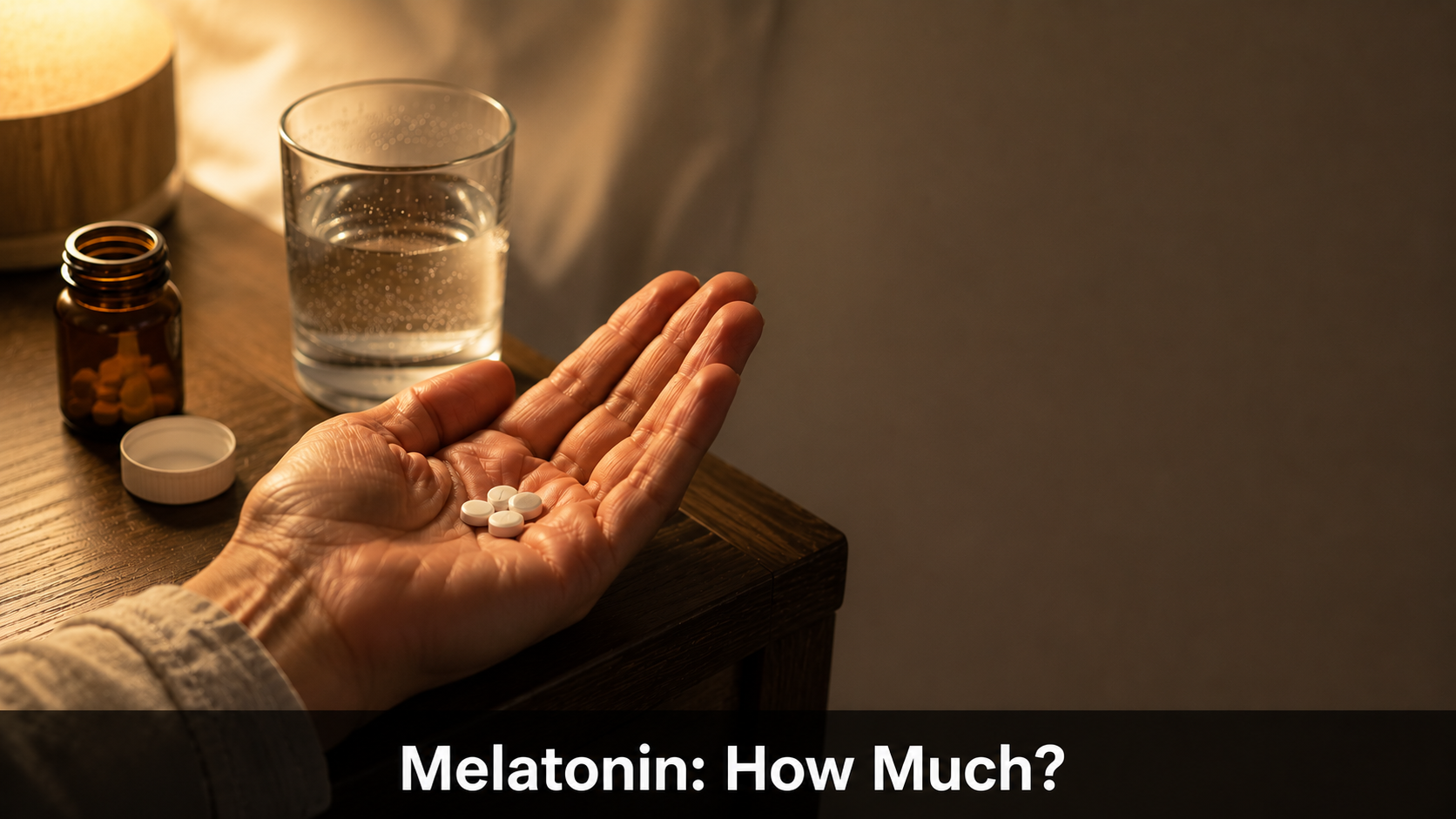
How Much Melatonin Should I Take? A Sleep Doctor’s Honest Guide
Most people get the dose of melatonin wrong on their very first try, and Dr. Avinesh Bhar, Board-Certified Sleep Physician at SLIIIP.com, says the answer to how much melatonin should I take is almost always lower than what the supplement aisle is selling. Bigger gummies do not mean better sleep, and high doses can actually make sleep worse.
SLIIIP’s board-certified sleep physicians can do sleep evaluations for sleep apnea. Virtual consultations in all 50 states. Home sleep tests shipped to your door.
What Melatonin Actually Does Before You Pick a Dose
Melatonin is a hormone your brain makes on its own. It rises in the evening as the lights drop, signals your body that night is coming, and sets the stage for sleep. Melatonin is a timing signal, not a sedative. It does not knock you out. It tells your internal clock when to start the wind-down.
That is why dose matters so much. A bigger dose does not equal a stronger sleep aid. It just amplifies the timing signal, sometimes past the point of usefulness. For background, see melatonin and sleep and the latest research in melatonin news.
CHECK YOUR SLEEP SYMPTOMS: TAKE THE 2 MINUTE QUIZ
TAKE THE QUIZ
How Much Melatonin Should I Take? The Real Answer
The most studied range for adults is 0.3 mg to 5 mg. The most common effective dose for healthy adults is 0.5 mg to 3 mg, taken 30 to 60 minutes before bed. Many store-bought gummies and tablets contain 5 mg, 10 mg, or even higher, which is far more than the body needs for a timing nudge.
A quick reference for how much melatonin to take based on what you are dealing with:
- Trouble falling asleep at a normal hour: 0.5 to 1 mg
- Mild jet lag: 0.5 to 3 mg at local bedtime, for 3 to 5 nights
- Severe jet lag across many time zones: up to 5 mg, short term
- Shift work transitions: 0.5 to 3 mg before sleep, after the shift
- Older adults with low natural melatonin: 0.5 to 2 mg
- Sleep maintenance issues: controlled-release forms in the same low range
Lower doses often work better than higher ones for one simple reason: they more closely match what the body naturally makes.
When Should You Take Melatonin?
Timing is more important than dose for most people. Take melatonin 30 to 60 minutes before your target bedtime, with the lights already dim.
A few timing rules to follow:
- Stay consistent. Same time each night.
- Pair it with dim lighting, not screens.
- Avoid taking it at 2 a.m. if you wake up. The next morning will feel like a hangover.
- For jet lag, take it at the local bedtime of the destination.
- For shift workers, take it before the main sleep block, not before the shift.
Need help with timing larger circadian shifts? See how do I fix my circadian rhythm and circadian rhythm sleep disorder.
Common Melatonin Mistakes to Avoid
Most patients who walk into a SLIIIP visit with melatonin questions are making one of these common mistakes.
Mistake 1: Taking Too Much
Doses of 5 mg, 10 mg, and 20 mg are easy to find on shelves. They are also rarely needed. High doses can cause grogginess, vivid dreams, headaches, and a feeling of being more out of sync the next day.
Mistake 2: Taking It at the Wrong Time
Melatonin taken at 2 a.m. when you wake up will linger into the morning and ruin the next day. If middle-of-the-night waking is your main issue, the fix is usually not more melatonin. Read waking up at 2 a.m. and how to stop waking up multiple times at night.
Mistake 3: Using It Every Night for Years
Melatonin is best for short-term use, jet lag, or specific circadian issues. Long-term nightly use is not well studied, and it can mask a bigger sleep problem. See how to fix insomnia naturally and CBT-I for sleep disorders.
Mistake 4: Trusting the Label
Melatonin supplements are not always accurate. Studies have found products that contain anywhere from 25 percent to 400 percent of what the label says. Choose brands with third-party testing.
Mistake 5: Stacking It With Other Sedatives
Mixing melatonin with alcohol, antihistamines, or sleeping pills can backfire. The combo can leave you groggy without improving sleep. For the bigger picture, see the sleeping pill scam.

Melatonin Side Effects and Safety
Melatonin is generally well tolerated at low doses. Possible side effects include:
- Morning grogginess
- Headaches
- Vivid dreams or nightmares
- Mild dizziness
- Mood changes
- Increased nighttime urination
According to the Centers for Disease Control and Prevention, poor sleep is linked to a wide range of health risks, which is why so many adults reach for melatonin. The National Heart, Lung, and Blood Institute also notes that long-term sleep loss carries real risks, so the goal of any melatonin plan should be real sleep recovery, not just a nightly cover-up.
If you are pregnant, breastfeeding, on blood thinners, on seizure medications, or have an autoimmune condition, talk to a clinician before using melatonin at any dose.
How Much Melatonin Is Safe for Kids?
This is one of the most searched melatonin questions, and the honest answer is: never start melatonin in a child without a pediatrician’s green light. Children and teens make plenty of their own melatonin, and most kid sleep problems are about habits, screens, and schedules, not hormones. For more context, see Are we overmedicating our children.
When Melatonin Is Not the Right Answer
Melatonin works well for timing problems. It does not work well for everything else. If you snore loudly, gasp at night, wake up exhausted no matter how long you sleep, or feel anxious the moment your head hits the pillow, melatonin will not fix it.
Watch for these signs that your sleep issue is bigger than dosing:
- Loud, chronic snoring
- Waking up gasping or choking
- Morning headaches
- Severe daytime sleepiness
- Racing heart or panic-like awakenings
- Insomnia that has lasted more than 3 weeks
Review signs of sleep apnea, take the sleep apnea quiz, and consider a virtual sleep evaluation.
Watch: Can I Just Get Sleep Meds?
SLIIIP Services for People Who Are Tired of Guessing
If you have been bouncing between melatonin brands and doses for months, you do not have a dose problem. You have an evaluation problem. Dr. Avinesh Bhar and the SLIIIP team build real plans for real sleep.
SLIIIP services include:
- Virtual sleep consultations with board-certified physicians in all 50 states
- Home sleep tests shipped to your door for at-home testing
- CBT-I support for chronic and anxious insomnia
- Personalized treatment plans for snoring, apnea, and circadian issues
- Insurance verification with most major carriers accepted
- Follow-up care and ongoing support
You leave the first visit with a clear plan, not another supplement.
At Sliiip, we accept the following insurances:

SLIIIP’s board-certified sleep physicians can do sleep evaluations for sleep apnea. Virtual consultations in all 50 states. Home sleep tests shipped to your door.
Frequently Asked Questions About How Much Melatonin to Take
- How much melatonin should I take as an adult?
Most healthy adults do well with 0.5 mg to 3 mg, taken 30 to 60 minutes before bed. - Is 10 mg of melatonin too much?
For most people, yes. High doses can lead to grogginess and worse sleep the next day. - How much melatonin should I take for jet lag?
0.5 to 3 mg at local bedtime for 3 to 5 nights usually works. Severe time zone shifts may need up to 5 mg short term. - Can I take melatonin every night?
Short term is fine for many people. Long-term nightly use is not well studied and can mask a deeper sleep issue. - What is the lowest effective dose of melatonin?
Studies suggest as little as 0.3 mg can shift the circadian rhythm in healthy adults. - Does melatonin work for staying asleep?
It is mainly a sleep-onset tool. Controlled-release versions can help some people with maintenance, but it is not the strongest option for middle-of-the-night waking. - How long before bed should I take melatonin?
30 to 60 minutes is the sweet spot. - Can I take melatonin with coffee earlier in the day?
Yes, but heavy late-afternoon caffeine can blunt the effect. - Can melatonin cause grogginess in the morning?
At high doses or wrong timing, yes. Lowering the dose usually fixes it. - Is melatonin safe for older adults?
Often yes, at low doses. Older adults naturally make less melatonin, so even 0.5 to 2 mg can help. - Can I take melatonin while pregnant?
Talk to your doctor first. There is not enough safety data to recommend regular use. - Is melatonin addictive?
It is not addictive in the classic sense, but you can become psychologically reliant on it. - Can I take melatonin with alcohol?
Skip the combo. Alcohol disrupts sleep stages and dulls melatonin’s effect. - What if melatonin stops working?
That is a strong sign your sleep issue is not really about timing. A sleep evaluation can find the actual cause. - Does melatonin help with anxiety at night?
Not directly. Anxiety usually needs behavior tools like CBT-I, breathwork, and worry journaling. - Can melatonin help shift workers?
Yes. 0.5 to 3 mg before the main sleep block can help adjust the body clock. - Is liquid or gummy melatonin better?
Both work. Gummies often contain more sugar and larger doses, so check the label. - Should I take melatonin every night during a stressful month?
Short-term use can help, but stress-driven sleep loss usually needs a fuller plan. - Can I overdose on melatonin?
A true overdose is rare, but very high doses can cause vivid dreams, headaches, and next-day grogginess. - When should I stop trying melatonin and see a sleep doctor?
If 2 weeks of consistent low-dose use have not helped, or if you have any warning signs of a sleep disorder, book a virtual evaluation.
Ready to Stop Guessing the Dose?
The right melatonin dose is part timing, part body, part bigger picture. If you have been climbing the dose ladder and your sleep is still off, the issue is not the milligrams. It is the missing diagnosis. SLIIIP makes that next step simple, with virtual consultations, home sleep tests, and nationwide coverage built around your life.
SLIIIP’s board-certified sleep physicians can do sleep evaluations for sleep apnea. Virtual consultations in all 50 states. Home sleep tests shipped to your door.
Latest posts
-
Why Can’t I Wake Up Even After Getting Enough Sleep?
Last updated: October 2, 2026. Medically reviewed by Dr. Avinesh Bhar, Board-Certified Sleep Physician, SLIIIP.com. If you can’t wake up after enough sleep, the cause is usually not the number…
-
Why Does My Heart Rate Drop So Low While I Sleep?
Last updated: October 2, 2026. Medically reviewed by Dr. Avinesh Bhar, Board-Certified Sleep Physician, SLIIIP.com. Your heart rate drops low while sleeping mainly because your body needs less work from…
-
Why Are My Naps Never Refreshing?
Last updated: October 2, 2026. Medically reviewed by Dr. Avinesh Bhar, Board-Certified Sleep Physician, SLIIIP.com. Naps that leave you groggy usually come down to how long you sleep, when you…
Get updates
Spam-free subscription, we guarantee. This is just a friendly ping when new content is out.

