👉 Register for Free. How to Diagnose Sleep Apnea Faster in Primary Care – FREE Webinar by Dr. Audrey Wells. – Friday, April 24 at 12 PM ET

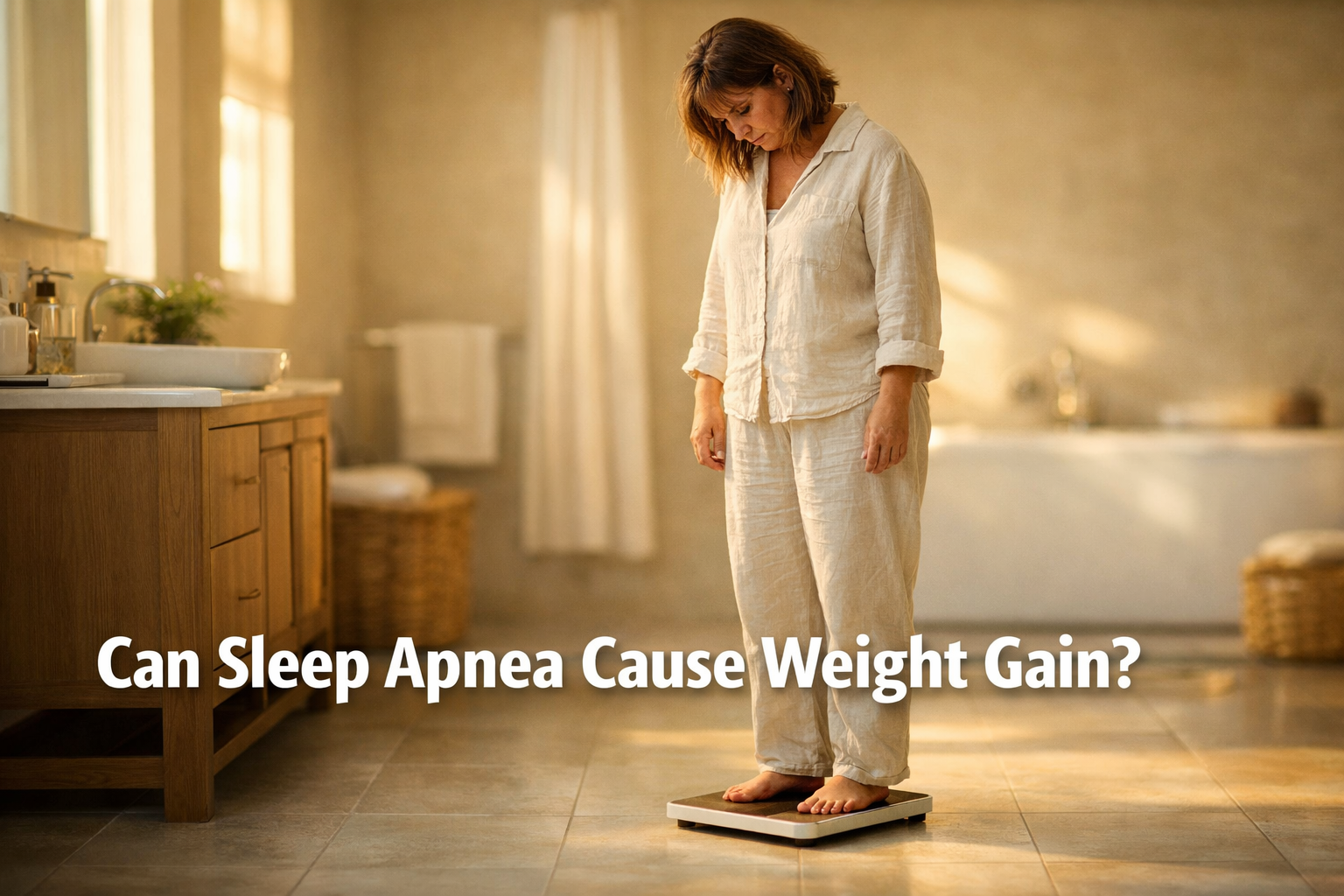
Can Sleep Apnea Cause Weight Gain? The Metabolic Connection
Sleep apnea does not just disrupt your rest. It actively interferes with the hormones that regulate hunger, metabolism, and fat storage. If you have been gaining weight despite effort, or struggling to lose it, untreated sleep-disordered breathing may be working against you.
Reviewed by Dr. Avinesh Bhar, Board Certified Sleep Physician at Sliiip.com
You are eating reasonably. You are trying to exercise. The weight is not moving, or it is creeping upward.
What most people do not know is that how you breathe during sleep directly controls the hormones that govern your weight.
A landmark study published in the Journal of Clinical Endocrinology and Metabolism found that sleep-disordered breathing significantly elevates ghrelin, the hunger hormone, and suppresses leptin, the satiety hormone, independent of caloric intake or physical activity levels.
SLIIIP’s board-certified sleep physicians can do sleep evaluations for sleep apnea. Virtual consultations in all 50 states. Home sleep tests shipped to your door.
Myth vs. Reality: What Patients Get Wrong About Sleep Apnea and Weight
Myth: Weight gain causes sleep apnea, not the other way around.
Reality: The relationship is bidirectional. Excess weight can narrow the airway. But sleep apnea independently causes hormonal and metabolic changes that drive weight gain. Both directions operate simultaneously in most patients.
Myth: If I lose weight, my sleep apnea will resolve on its own.
Reality: Weight loss can reduce severity in some patients but rarely eliminates sleep apnea entirely. Many normal-weight individuals have it. Without addressing the sleep component, weight loss becomes significantly harder due to the hormonal disruption sleep apnea creates.
Myth: Fatigue just makes me less active, which causes weight gain.
Reality: While reduced activity is a factor, the primary driver is biochemical. Sleep apnea directly alters insulin sensitivity, cortisol regulation, and the leptin-ghrelin balance in ways that promote fat storage regardless of activity level.
How Sleep Apnea Hijacks Your Hunger Hormones
Every time you stop breathing during sleep, your body activates a stress response. Cortisol and adrenaline spike. Oxygen drops. The brain registers a survival threat.
This repeated activation across hundreds of apnea events per night chronically elevates cortisol. Elevated cortisol signals the body to store fat, particularly abdominal fat, as an energy reserve against the perceived threat.
At the same time, sleep fragmentation drives leptin resistance. Leptin is the hormone that tells your brain you are full. When leptin signaling is impaired, the fullness signal fails to register. You keep eating past the point of actual need.
Ghrelin, the hormone that triggers hunger, rises in response to the same disrupted sleep. The net result is a body that feels hungrier, stores more fat, and never feels satisfied.
The Insulin Resistance Connection
Research from the American Diabetes Association has established that obstructive sleep apnea significantly impairs insulin sensitivity, independent of body weight.
The mechanism involves repeated intermittent hypoxia, the oxygen drops during apnea events, which stresses metabolic pathways in ways that mirror the effects of obesity and a poor diet.
Insulin resistance is the metabolic precursor to type 2 diabetes and is itself a driver of progressive weight gain. Addressing the sleep disorder is a medically important step in any metabolic health strategy.
Expert Q&A
Q: If someone is trying to lose weight and not succeeding, how likely is sleep apnea to be a factor?
Dr. Avinesh Bhar, Board Certified Sleep Physician, Sliiip.com: More likely than most people realize. If someone is consistently tired despite adequate time in bed, experiencing strong cravings particularly for carbohydrates and sugar, and not responding to diet and exercise the way they expect, sleep-disordered breathing is a serious consideration. A home sleep test is a straightforward way to determine whether disordered breathing is undermining their metabolic health.
Why Sleep Apnea Makes You Crave the Wrong Foods
The hormonal disruption from sleep apnea targets your food preferences, not just your hunger level.
Research from the University of Chicago found that sleep deprivation significantly increased cravings for high-calorie, high-carbohydrate foods while reducing the reward from healthier options.
For sleep apnea patients, this is not a willpower problem. It is a neurochemical consequence of disrupted sleep architecture.
The Abdominal Fat Cycle
Sleep apnea-driven cortisol elevation specifically promotes visceral fat storage, the deep abdominal fat that surrounds organs. Visceral fat produces inflammatory cytokines that worsen insulin resistance, increase cardiovascular risk, and create additional hormonal disruption.
This creates a self-reinforcing cycle. Sleep apnea drives visceral fat. Visceral fat worsens metabolic function. Metabolic dysfunction makes weight loss harder.
Understanding whether being overweight causes sleep apnea captures only one direction of a two-way relationship. Research published by the NIH confirms that patients who treat sleep apnea effectively show measurable improvements in metabolic markers. Some also find that losing weight reduces sleep apnea severity when pursued alongside clinical treatment.
Expert Q&A
Q: Can treating sleep apnea directly improve metabolic markers?
Dr. Avinesh Bhar, Board Certified Sleep Physician, Sliiip.com: The research is clear. Effective treatment of sleep apnea improves insulin sensitivity, reduces cortisol levels, and normalizes the leptin-ghrelin balance. Patients who achieve consistent, quality sleep through CPAP or oral appliance therapy frequently report reduced hunger, fewer cravings, and improved weight management outcomes. The metabolic benefits extend well beyond feeling more rested.
Lifestyle Habits That Support Both Sleep and Weight
Get evaluated first. No lifestyle change will fully compensate for untreated sleep-disordered breathing. A home sleep test is the starting point.
Eat on a consistent schedule. Irregular meal timing worsens the circadian disruption that sleep apnea creates and amplifies cortisol dysregulation.
Avoid alcohol within three hours of bedtime. Alcohol relaxes airway muscles, worsens apnea severity, and disrupts the REM sleep that regulates appetite hormones.
Prioritize protein at meals. Protein activates satiety pathways more effectively than carbohydrates and partially compensates for leptin resistance in sleep-deprived individuals.
For a broader picture of how sleep and body weight connect, the sleep and obesity relationship is well-documented in clinical literature. And for patients already struggling with weight management, fixing sleep issues first can be the intervention that makes everything else work.
Watch also our video: How Weight Loss Can Go Wrong and Impact Your Sleep
Does Sleep Apnea Explain Why You Cannot Lose Weight?
More than 10,000 consultations. No referral required. All 50 states. Major insurance accepted including Medicare and Tricare.

SLIIIP’s board-certified sleep physicians can do sleep evaluations for sleep apnea. Virtual consultations in all 50 states. Home sleep tests shipped to your door.
Frequently Asked Questions
Can sleep apnea cause weight gain? Yes. Sleep apnea disrupts the hormones that regulate hunger and metabolism. It elevates ghrelin, suppresses leptin, raises cortisol, and impairs insulin sensitivity. Each of these changes independently promotes weight gain and makes weight loss harder.
What is the connection between sleep apnea and leptin? Leptin is the hormone that signals fullness to the brain. Sleep apnea causes leptin resistance, meaning the brain stops responding to the signal that you have had enough to eat. This leads to overeating that is not driven by caloric need but by a broken hormonal feedback loop.
Does treating sleep apnea help with weight loss? Research shows that effective treatment normalizes cortisol, improves insulin sensitivity, and restores the leptin-ghrelin balance. Many patients report reduced hunger and cravings after starting treatment. While sleep apnea treatment is not a weight loss intervention on its own, it removes a significant metabolic barrier.
Why do I crave sugar and carbs when I am tired? Sleep deprivation and sleep apnea both increase ghrelin and make the brain’s reward circuitry more responsive to high-calorie foods. This is a documented neurochemical response, not a character flaw. Treating the underlying sleep disorder reduces these cravings in most patients.
Can a thin person have sleep apnea-related weight problems? Yes. Sleep apnea occurs in people of all body types. The metabolic disruption affects weight management in normal-weight individuals too. A home sleep test is relevant regardless of body size.
How does cortisol from sleep apnea cause weight gain? Each apnea event activates the stress response, which releases cortisol. Chronic cortisol elevation shifts the body into fat-storage mode, particularly promoting visceral abdominal fat. This fat is metabolically active and creates further hormonal disruption that makes weight control harder over time.
Is there a link between sleep apnea and diabetes? Yes. Research from the American Diabetes Association confirms that sleep apnea significantly impairs insulin sensitivity independent of body weight. Untreated sleep apnea is considered a risk factor for type 2 diabetes. Treating sleep apnea improves insulin sensitivity in most patients.
Does alcohol make sleep apnea and weight gain worse? Yes, through two pathways. Alcohol relaxes the muscles of the upper airway, worsening apnea severity. It also disrupts REM sleep, the stage most involved in appetite hormone regulation. Both effects compound the metabolic consequences of sleep apnea.
Can fixing sleep help break a weight loss plateau? For patients whose plateau is driven by sleep-disordered breathing, yes. When sleep apnea is treated, the hormonal environment shifts in ways that support weight management. Patients who were previously resistant to diet and exercise often see improved responses once sleep quality is restored.
How do I know if my weight issues are linked to sleep apnea? Key signs include persistent fatigue despite adequate time in bed, strong cravings for carbohydrates and sugar, weight that does not respond to diet and exercise as expected, and any reported snoring or breathing pauses during sleep. A home sleep test is the clearest way to find out.
Is sleep apnea connected to metabolic syndrome? Yes. Sleep apnea is strongly associated with metabolic syndrome, the cluster of conditions including abdominal obesity, high blood pressure, elevated blood sugar, and abnormal cholesterol. The shared mechanism is chronic intermittent hypoxia and cortisol dysregulation driven by repeated apnea events.
Does the GLP-1 and sleep apnea connection matter for weight loss? Sleep apnea undermines the hormonal environment that weight management strategies target. Treating the sleep disorder as part of a comprehensive metabolic health plan gives any weight management strategy a stronger foundation. The Sliiip team can evaluate whether sleep-disordered breathing is a factor in your specific situation.
SLIIIP’s board-certified sleep physicians can do sleep evaluations for sleep apnea. Virtual consultations in all 50 states. Home sleep tests shipped to your door.
Latest posts
-
Why Are My Naps Never Refreshing?
Last updated: October 2, 2026. Medically reviewed by Dr. Avinesh Bhar, Board-Certified Sleep Physician, SLIIIP.com. Naps that leave you groggy usually come down to how long you sleep, when you…
-
Is Sleeping Too Much a Sleep Disorder?
Last updated: October 2, 2026. Medically reviewed by Dr. Avinesh Bhar, Board-Certified Sleep Physician, SLIIIP.com. Sleeping too much is not always a sleep disorder, but it can be a sign…
-
Why Does My Insomnia Get Worse After Stopping Sleep Medication?
Last updated: October 2, 2026. Medically reviewed by Dr. Avinesh Bhar, Board-Certified Sleep Physician, SLIIIP.com. Insomnia can get worse after stopping sleep medication for three main reasons. They are rebound…
Get updates
Spam-free subscription, we guarantee. This is just a friendly ping when new content is out.

