👉 Register for Free. How to Diagnose Sleep Apnea Faster in Primary Care – FREE Webinar by Dr. Audrey Wells. – Friday, April 24 at 12 PM ET

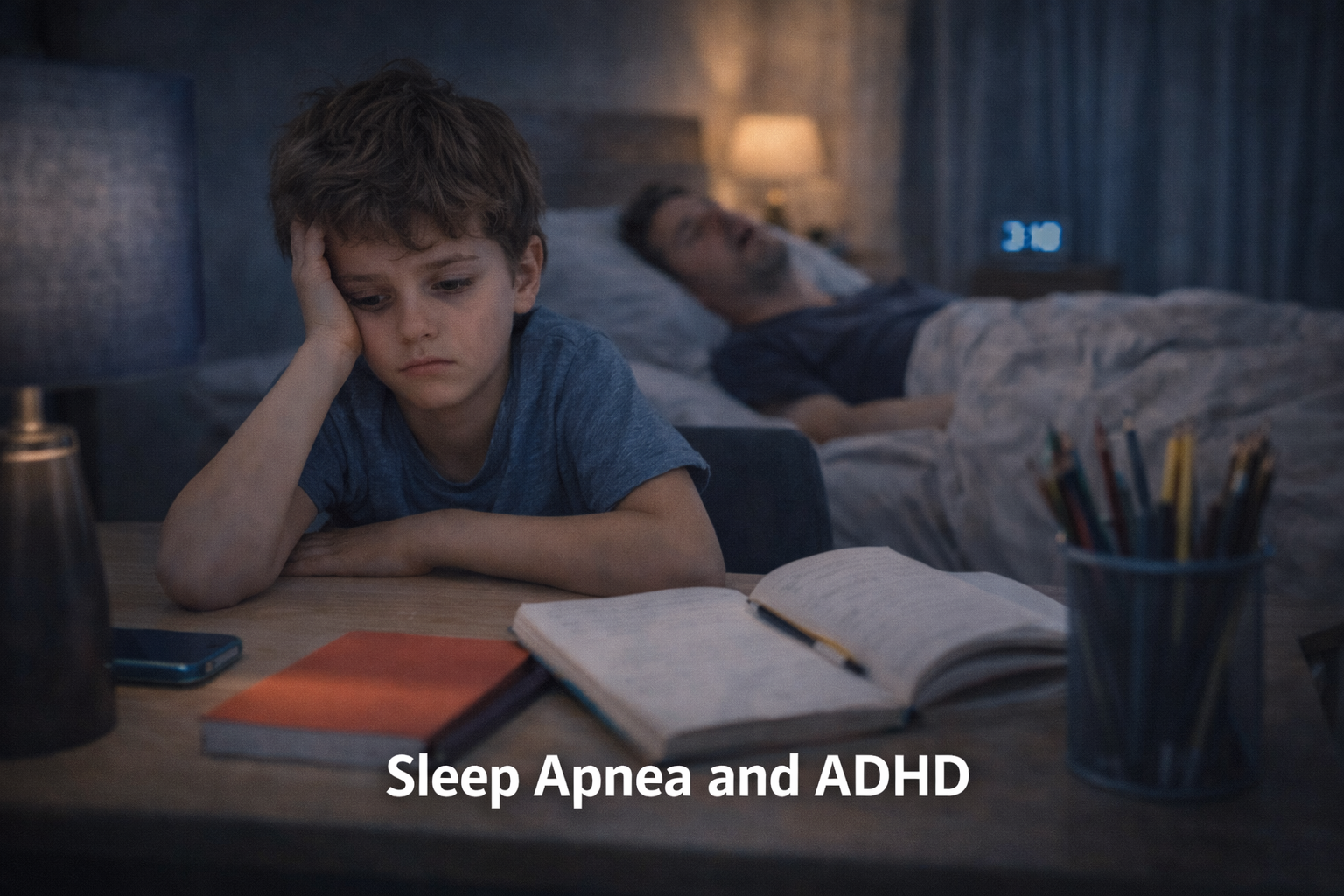
Sleep Apnea and ADHD: Could Your Attention Problems Be a Breathing Problem?
The connection between sleep apnea and ADHD is often overlooked, according to Dr. Avinesh Bhar Board-Certified Sleep Physician at SLIIIP.com, and many individuals are treated for attention problems without anyone ever evaluating their sleep.
Adult ADHD diagnoses have grown fast in recent years. But one important question is often skipped. Could a breathing problem during sleep be causing the attention issues? For many patients, the answer is yes.
At SLIIIP.com, Dr. Avinesh Bhar and the team regularly see patients who were told they had ADHD. Many of them had an undiagnosed sleep disorder. SLIIIP.com makes it easy to find out, with virtual consultations available in all 50 states and home sleep tests shipped directly to your door.
SLIIIP’s board certified sleep physicians can do sleep evaluations for sleep apnea. Virtual consultations in all 50 states. Home sleep tests shipped to your door.
SLIIIP’s board-certified sleep physicians can do sleep evaluations for sleep apnea. Virtual consultations in all 50 states. Home sleep tests shipped to your door.
The Unexpected Link Between Sleep Apnea and ADHD
The connection between sleep apnea ADHD is neurobiological, not coincidental. When breathing repeatedly stops or reduces during sleep, the brain is forced into brief arousals to restore airflow. These awakenings, sometimes dozens or hundreds per night, fragment sleep architecture and prevent adequate time in the slow-wave and REM stages where the brain consolidates memory, regulates emotion, and restores the prefrontal cortex’s capacity for executive function.
The prefrontal cortex is the region most responsible for attention regulation, impulse control, working memory, and task initiation, the precise functions that define the ADHD clinical picture. When sleep deprivation or fragmentation impairs the prefrontal cortex, the behavioral and cognitive presentation is nearly indistinguishable from ADHD in formal symptom checklists.
This creates a diagnostic pathway problem: a patient with untreated sleep apnea presents to a psychiatrist or primary care physician with classic ADHD complaints. The physician applies standard screening tools, finds that the patient meets criteria, and initiates stimulant therapy. The underlying sleep disorder continues unaddressed. The stimulant may provide partial improvement stimulants affect some of the same neurotransmitter systems disrupted by sleep deprivation which is interpreted as confirming the ADHD diagnosis. The sleep disorder remains hidden.
CHECK YOUR SLEEP SYMPTOMS: TAKE THE 2 MINUTE QUIZ
TAKE THE QUIZ

How Sleep Apnea Disrupts Executive Function, Attention, and Impulse Control
Understanding why sleep apnea produces ADHD-like symptoms requires a brief look at what sleep deprivation and fragmentation do to the brain at a functional level.
Dopamine dysregulation. Sleep fragmentation from sleep apnea disrupts dopamine signaling pathways, the same pathways that are considered central to ADHD neurobiology. Reduced dopamine availability impairs reward processing, motivation, and the ability to sustain attention on tasks that lack immediate gratification. Stimulant medications work partly by increasing dopamine availability, which is why they can mask the dopamine disruption caused by sleep deprivation.
Prefrontal cortex impairment. Even a single night of significantly fragmented sleep reduces prefrontal cortex glucose metabolism meaning the region responsible for executive function is literally less metabolically active when you haven’t slept well. Chronic sleep disruption from untreated sleep apnea creates a sustained impairment of this region.
Increased amygdala reactivity. Sleep deprivation amplifies the amygdala’s emotional response while simultaneously weakening the prefrontal cortex’s ability to regulate it. The result is emotional dysregulation impulsivity, frustration intolerance, and rapid mood shifts which mirrors the emotional lability component of ADHD, particularly in adults.
Working memory degradation. Slow-wave sleep is the period when the hippocampus consolidates short-term memories into long-term storage. When sleep apnea repeatedly disrupts slow-wave sleep, working memory performance deteriorates producing the “forgetfulness” that is one of the most common complaints in both ADHD and sleep apnea ADHD presentations.
Symptoms That Look Like ADHD but Might Be Disrupted Sleep
If you or someone you know has received an ADHD diagnosis and continues to struggle despite medication, the following symptom pattern warrants a sleep evaluation:
- Difficulty concentrating, particularly on tasks requiring sustained attention
- Forgetfulness and misplacing objects frequently
- Starting multiple tasks without completing any
- Impulsive decision-making or speaking without filtering
- Emotional sensitivity and quick frustration
- Difficulty sitting still or feeling mentally “restless”
- Chronic fatigue that worsens cognitive symptoms
- Falling asleep in sedentary situations (watching TV, in meetings)
- Waking up feeling unrefreshed regardless of sleep duration
- Reports from a partner of snoring, gasping, or breathing pauses
The last three items are particularly important clinical flags. They point specifically toward a breathing-related sleep disorder rather than a primary attention disorder. No behavioral or psychiatric cause of attention difficulties causes snoring and breathing pauses during sleep.
See Signs of Sleep Apnea for a full symptom overview.
In Children: When “Problem Behavior” Is Really Disrupted Breathing
The sleep apnea ADHD overlap is especially well-documented in pediatric populations. In children, obstructive sleep apnea does not produce the classic adult symptoms of snoring and obvious daytime sleepiness. Instead, children with sleep-disordered breathing often appear hyperactive, aggressive, oppositional, and impulsive precisely the behavioral presentation that triggers ADHD evaluations.
Multiple studies have found that the prevalence of sleep-disordered breathing in children diagnosed with ADHD is significantly higher than in the general pediatric population. Critically, several studies have shown that treating sleep apnea often through tonsil and adenoid removal in younger children led to dramatic improvements in ADHD-like behavior and cognitive performance, sometimes eliminating the need for stimulant medication.
For parents of children who have been diagnosed with ADHD and who also snore, mouth-breathe, or sleep in unusual positions (such as hyperextending the neck), a pediatric sleep evaluation is warranted before ADHD medication is initiated or increased.
See Does My Child Have Sleep Apnea Quiz for an initial assessment tool.
In Adults: Why Late ADHD Diagnoses Often Coincide with Untreated Sleep Disorders
The surge in adult ADHD diagnoses has been notable over the past decade, driven by growing awareness that ADHD frequently goes undiagnosed into adulthood. However, sleep medicine physicians have observed a parallel trend: many adults presenting with late-onset ADHD symptoms also have significant sleep-disordered breathing that predates their cognitive complaints.
This is not surprising given the natural history of obstructive sleep apnea. Sleep apnea tends to worsen with age, weight gain, and anatomical changes over time. A patient in their late thirties or forties whose sleep apnea has been quietly worsening for years may reach a threshold where the cognitive consequences of brain fog, inattention, memory failures become severe enough to prompt an ADHD evaluation.
The critical question for these patients is sequencing: has sleep been evaluated before or alongside the psychiatric workup? If not, confirming the presence or absence of a sleep disorder before attributing symptoms exclusively to ADHD is clinically important.
Dr. Avinesh Bhar emphasizes that the evaluation itself is straightforward: a home sleep test takes a single night in your own bedroom, with results reviewed by a board-certified sleep physician via telemedicine. The information it provides is clinically invaluable, regardless of what it shows.
Should You Get a Sleep Study Before Starting ADHD Medication?
This is a question that sleep medicine physicians are increasingly being asked and the honest answer is: for many patients, yes.
Stimulant medications are effective for ADHD but carry cardiovascular implications, appetite effects, and the potential for dependency. Before initiating stimulant therapy, ruling out a treatable sleep disorder is a low-risk, high-value step particularly when the patient presents with fatigue, unrefreshing sleep, or reports of snoring or breathing irregularities from a bed partner.
It is also worth noting that stimulant medications can worsen sleep quality particularly sleep onset and sleep maintenance which can in turn worsen the sleep deprivation component of the picture. Patients already dealing with undiagnosed sleep apnea who begin stimulants may find their sleep deteriorates further, creating a feedback loop that makes both conditions harder to manage.
A sleep evaluation does not prevent ADHD diagnosis or treatment. It simply ensures that a reversible, treatable physiological cause is not being overlooked in favor of a lifelong diagnosis.
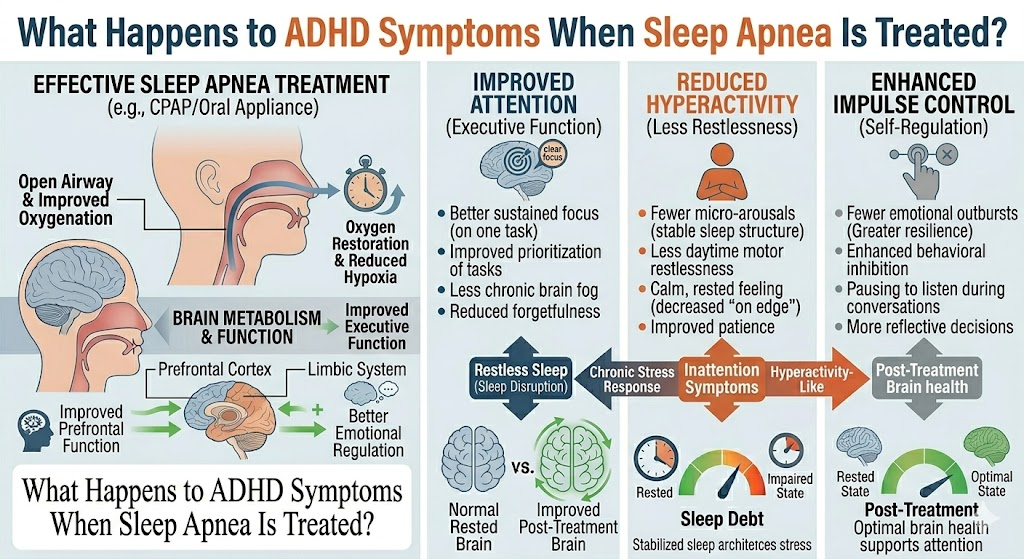
What Happens to ADHD Symptoms When Sleep Apnea Is Treated?
Outcomes vary by individual, but the clinical pattern is consistent enough to be meaningful. Patients who are successfully treated for obstructive sleep apnea frequently report:
- Improved concentration and mental clarity within weeks of starting therapy
- Reduced emotional reactivity and better frustration tolerance
- Improved memory and working memory performance
- Reduced fatigue, which itself amplifies attentional symptoms
- In some cases, a reduced need for ADHD medication dose adjustments
This does not mean that treating sleep apnea cures ADHD co-occurrence is real, and some patients have both conditions independently. But in cases where the cognitive symptoms are primarily or substantially driven by sleep fragmentation, addressing the root cause produces the most durable results.
The appropriate approach for patients who believe the sleep apnea ADHD overlap may apply to them is: evaluate sleep, establish a diagnosis if one exists, initiate treatment, and then reassess cognitive and behavioral symptoms after 60–90 days of adequate therapy before assuming additional interventions are necessary.
For more on home sleep testing, see Sleep Apnea Test at Home.
At Sliiip, we accept the following insurances:

SLIIIP’s board-certified sleep physicians can do sleep evaluations for sleep apnea. Virtual consultations in all 50 states. Home sleep tests shipped to your door.
Frequently Asked Questions About Sleep Apnea and ADHD
Can sleep apnea cause ADHD symptoms?
Yes. Fragmented sleep from sleep apnea disrupts dopamine pathways and prefrontal cortex function, producing inattention, impulsivity, and memory difficulties that mirror ADHD.
How do I know if my attention problems are from sleep apnea or ADHD?
Key signals favoring a sleep cause include unrefreshing sleep, snoring, gasping during sleep, and symptoms that worsen with fatigue. A sleep evaluation is the most direct way to distinguish the two.
Can treating sleep apnea improve ADHD?
For patients whose ADHD-like symptoms are substantially driven by sleep fragmentation, treating sleep apnea can produce meaningful cognitive improvement and sometimes reduce the need for medication adjustment.
Do children with ADHD often have sleep apnea?
Research shows significantly higher rates of sleep-disordered breathing in children diagnosed with ADHD compared to the general pediatric population.
Is it possible to have both ADHD and sleep apnea?
Yes. The two conditions can co-occur independently. The clinical goal is to identify and address both, not assume one explains the other.
Why does sleep deprivation mimic ADHD?
Both sleep deprivation and ADHD impair the same brain systems prefrontal cortex function, dopamine signaling, and working memory producing an overlapping symptom picture.
Should I get a sleep study before ADHD medication?
For patients with symptoms suggesting a sleep disorder (fatigue, snoring, unrefreshing sleep), evaluating sleep before or alongside ADHD workup is a reasonable clinical step.
What kind of sleep study detects sleep apnea ADHD connections?
A home sleep test evaluates for obstructive sleep apnea, which is the most common form associated with ADHD-like symptoms. An in-lab study provides more comprehensive data.
Can stimulant medications make sleep apnea worse?
Stimulants can impair sleep onset and quality, potentially worsening fragmented sleep in patients with untreated sleep apnea.
Is sleep apnea more common in people with ADHD?
Studies have found associations between ADHD and sleep-disordered breathing, though causality is complex. The co-occurrence is higher than would be expected by chance alone.
What age is ADHD-sleep apnea overlap most common?
In children, it is most relevant in elementary-school-age patients. In adults, it is often identified in the late thirties and forties when sleep apnea severity tends to increase.
Can treating a child’s sleep apnea eliminate ADHD symptoms?
In some children, particularly those with tonsil-related obstruction, treating sleep apnea has led to dramatic improvement in ADHD-like behavior sometimes eliminating the need for stimulant medication.
What does “brain fog” have to do with sleep apnea?
Cognitive fogginess, memory lapses, and reduced mental sharpness are direct consequences of sleep fragmentation which is the core physiological mechanism of untreated sleep apnea.
Does sleep apnea cause impulsivity?
Sleep fragmentation impairs the prefrontal cortex’s ability to regulate impulse control. Impulsive behavior associated with sleep deprivation is well-documented in research.
Can adults outgrow sleep apnea-related ADHD symptoms?
Sleep apnea typically worsens rather than improves without treatment. The cognitive symptoms associated with it tend to progress as the disorder progresses.
Is there a quiz to assess sleep apnea risk?
Yes. SLIIIP offers a sleep apnea risk assessment at Do I Have Sleep Apnea Quiz.
How long does a home sleep test take?
A home sleep test involves wearing a small device during a single night of sleep. Results are typically reviewed by a physician within a few days.
What happens if both sleep apnea and ADHD are confirmed?
Both can be treated simultaneously. Sleep apnea treatment typically begins first to establish a baseline before evaluating residual attentional symptoms.
Does poor sleep cause ADHD to develop?
Sleep deprivation doesn’t cause ADHD as a neurological condition, but chronic sleep disruption produces an acquired attentional syndrome that is functionally similar.
Where do I start if I think sleep is affecting my focus?
Begin with a telehealth consultation with a board-certified sleep physician. SLIIIP.com offers virtual consultations nationwide and can ship a home sleep test directly to your door.
Thank you for reading this article.
SLIIIP’s board-certified sleep physicians can do sleep evaluations for sleep apnea. Virtual consultations in all 50 states. Home sleep tests shipped to your door.
Latest posts
-
RingConn vs Oura: Which Smart Ring Tracks Sleep Better?
Last updated: September 10, 2026. Medically reviewed by Dr. Avinesh Bhar, Board-Certified Sleep Physician, SLIIIP.com. RingConn and Oura both track sleep through a finger-worn ring, but they differ most in…
-
Withings ScanWatch Sleep Tracking Accuracy: What It Can and Cannot Tell You
Last updated: September 10, 2026. Medically reviewed by Dr. Avinesh Bhar, Board-Certified Sleep Physician, SLIIIP.com. Withings ScanWatch is a hybrid analog watch that tracks sleep stages and can flag nighttime…
Get updates
Spam-free subscription, we guarantee. This is just a friendly ping when new content is out.

