👉 Register for Free. How to Diagnose Sleep Apnea Faster in Primary Care – FREE Webinar by Dr. Audrey Wells. – Friday, April 24 at 12 PM ET


Why Am I Waking Up Tired Even After 8 Hours?
If you are waking up tired even after 8 hours of sleep, the problem is almost never the number of hours you slept. It is the quality of the sleep inside those hours. Repeated breathing disruptions, fragmented sleep cycles, and undetected sleep disorders can make eight hours in bed feel like four hours of actual rest.
This article reflects the clinical expertise of Dr. Avinesh Bhar, Board Certified Sleep Physician at Sliiip.com, who has spent years helping patients finally understand why waking up tired even after 8 hours is not a character flaw but a clinical signal.
The American Academy of Sleep Medicine estimates that 50 to 70 million Americans have a chronic sleep disorder.
Myth vs. Reality: Waking Up Tired After 8 Hours
Myth: If you slept eight hours, you got enough sleep. Feeling tired means you need more hours.
Reality: Sleep duration and sleep quality are entirely different variables. Eight hours of fragmented, shallow, or oxygen-disrupted sleep produces the same subjective exhaustion as significantly fewer hours of uninterrupted rest. Adding more hours in bed does not fix the structural problem.
Myth: Waking up tired even after 8 hours is just how some people are. It is a personality trait or a matter of constitution.
Reality: Chronic unrefreshing sleep is a medical symptom. It indicates that something is disrupting your sleep architecture before you wake up. It is not a personality type and it is not something you simply accept. It is something you investigate.
SLIIIP’s board-certified sleep physicians can do sleep evaluations for sleep apnea. Virtual consultations in all 50 states. Home sleep tests shipped to your door.
What Your Brain Actually Does During 8 Hours
The restorative power of sleep comes from what happens inside those hours, not from the total count. Sleep cycles through distinct stages approximately every 90 minutes. Each cycle includes light sleep, deep slow-wave sleep, and REM sleep.
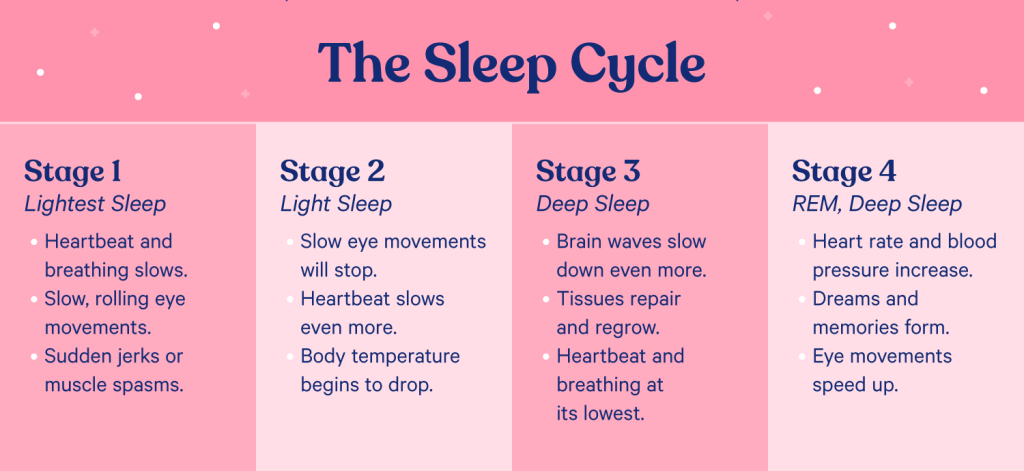
Deep slow-wave sleep is the most physically restorative stage. It is when growth hormone is released, cellular repair happens, immune function is reinforced, and metabolic waste is cleared from the brain. REM sleep governs emotional processing, memory consolidation, and mood regulation.
If either of these stages is repeatedly disrupted, compressed, or skipped entirely, you wake up tired even after 8 hours because your brain and body never completed their overnight maintenance cycle. The clock read eight hours. The biology did not.
The Leading Reason You Wake Up Tired After 8 Hours: Sleep Apnea
Obstructive sleep apnea is the most underdiagnosed cause of waking up tired even after 8 hours. It causes the airway to partially or fully collapse during sleep, triggering oxygen drops and micro-arousals that fragment deep sleep without ever fully waking you.
These events can happen dozens to hundreds of times per night. You have no memory of them in the morning. You simply wake up exhausted and cannot explain why.
The critical point is that sleep apnea does not require loud snoring to be present. Many people with sleep apnea, particularly women, have minimal or no audible snoring. Their breathing disruptions produce a quiet fragmentation of sleep architecture that leaves them waking up tired every single morning.
If you are waking up tired even after 8 hours and the pattern has persisted for weeks or months, a breathing evaluation during sleep is the most direct diagnostic step available. Learn more about recognized sleep apnea symptoms.
Other Clinical Reasons for Waking Up Tired After 8 Hours
Upper airway resistance syndrome is a condition where the airway narrows and breathing effort increases significantly without meeting the formal threshold for obstructive sleep apnea. It produces sleep fragmentation and morning exhaustion identical to sleep apnea but can be missed on standard sleep studies if it is not specifically evaluated.

Periodic limb movement disorder causes repetitive involuntary leg movements during sleep that trigger arousals without full waking. The person has no awareness of the movements but their sleep is fractured throughout the night. Morning fatigue and feeling unrefreshed despite adequate hours are hallmark symptoms.
Thyroid dysfunction, particularly hypothyroidism, disrupts the metabolic processes that sleep is meant to restore. Even subclinical thyroid abnormalities can contribute to persistent morning exhaustion that does not respond to more sleep time.
Circadian rhythm misalignment places the body’s internal clock at odds with the environment. A person with a delayed circadian phase genuinely cannot achieve deep restorative sleep during conventional nighttime hours. Sleeping from 11 p.m. to 7 a.m. may produce poor quality sleep, while sleeping from 2 a.m. to 10 a.m. in the same person produces far more restorative rest.
Chronic elevated cortisol from ongoing stress, poor metabolic health, or adrenal dysregulation prevents the nervous system from reaching the low-arousal state required for deep sleep. Night after night of cortisol-elevated sleep produces accumulating non-restorative rest.
SLIIIP’s board-certified sleep physicians can do sleep evaluations for sleep apnea. Virtual consultations in all 50 states. Home sleep tests shipped to your door.
Sleep Architecture: Why Hours Mean Less Than You Think
Think of your eight hours as a container. Whether that container is filled with deep, organized sleep or shallow, fragmented, oxygen-interrupted sleep determines everything about how you feel in the morning.
Slow-wave sleep is front-loaded. The most physically restorative deep sleep occurs in the first two to three sleep cycles of the night. If breathing disruptions, micro-arousals, or poor sleep initiation compress these early cycles, you lose the most biologically valuable portion of your eight hours.
REM sleep is back-loaded. The most emotionally and cognitively restorative sleep occurs in the longer REM periods that cluster in the final two to three hours of the night. If you are waking up tired even after 8 hours and you frequently wake feeling emotionally flat, irritable, or cognitively foggy, disrupted late-night REM may be the specific driver.
Understanding this architecture is why a board-certified sleep physician’s evaluation is different from simply counting hours or wearing a consumer tracker. Consumer devices measure duration and estimate stages. They cannot identify the breathing events, oxygen drops, and arousal patterns that explain why you wake up tired every morning.
Expert Q&A
Q: I have tracked my sleep for months and I consistently get 7 to 9 hours. I wake up exhausted every single morning. My doctor says my labs are normal. What am I missing?
Normal labs and adequate sleep duration with persistent morning exhaustion is one of the most consistent clinical presentations of undetected sleep-disordered breathing. When the clock records eight hours but the morning brings exhaustion, the next question is what was happening to your breathing during those eight hours. Oxygen drops, airway collapses, and micro-arousals that fragment deep sleep leave no trace in a blood panel and no memory in the morning. They show up only on an overnight breathing evaluation. That is the missing piece in the majority of cases I see with this exact pattern.
Dr. Avinesh Bhar Board Certified Sleep Physician Sliiip.com
Behavioral and Environmental Factors That Compound Morning Fatigue
- Alcohol within three hours of sleep. Alcohol creates an initial sedating effect that is mistaken for better sleep. It suppresses REM sleep in the second half of the night and fragments sleep architecture globally. Waking up tired even after 8 hours is significantly more common among people who drink in the evening, even in moderate amounts.
- Inconsistent sleep and wake times. Shifting bedtime and wake time by more than 30 to 60 minutes across the week continuously resets the circadian clock. The deep sleep your body organizes around consistent timing never fully consolidates. Irregular sleep timing is one of the most common and most overlooked contributors to non-restorative sleep.
- Screen use within 60 minutes of bedtime. Blue light suppresses melatonin production and sustains cognitive arousal. Sleep onset under these conditions is slower and the early slow-wave sleep cycles that follow are shallower than they would be under appropriate biological wind-down conditions.
- Sleeping too warm. Core body temperature must drop two to three degrees for deep sleep initiation and maintenance. Room temperature above 68 to 70 degrees Fahrenheit actively competes with this requirement and reduces slow-wave sleep depth.
Eating large meals close to bedtime. Digestion raises core body temperature and metabolic rate, both of which oppose the conditions needed for deep restorative sleep. A heavy meal within two hours of sleep onset reliably reduces slow-wave sleep quality.
Getting Out of the Cycle
The first step is separating the behavioral contributors from any clinical contributors. Addressing alcohol, sleep timing, and the sleep environment is reasonable and valuable. But if you apply all of these changes and are still waking up tired even after 8 hours after four to six weeks, the problem is structural and behavioral optimization will not resolve it.
A home sleep test is the most direct and accessible next step. Sliiip.com ships the testing device directly to your home. You wear it overnight in your own bed. A board-certified sleep physician reviews the results and can identify whether breathing disruptions are fragmenting your sleep architecture.

Learn more about how the home sleep test works.
You do not need a referral. You do not need to fit a snoring stereotype. You need an honest look at what is happening during those eight hours.
Our home sleep tests are covered by Medicare, Tricare and these insurances listed below.

Eight Hours Should Be Enough. Find Out Why It Is Not.
Are you waking up tired even after 8 hours no matter what you try?
The team at Sliiip.com has completed over 10,000 consultations with patients across all 50 states. No referral is needed. Home sleep testing ships directly to your door and is covered by most major insurance plans including Medicare and Tricare.
Frequently Asked Questions
Why am I waking up tired even after 8 hours of sleep?
Waking up tired after 8 hours is almost always a sleep quality problem rather than a sleep duration problem. The most common cause is obstructive sleep apnea, which fragments deep sleep through repeated breathing disruptions without fully waking you. Other causes include upper airway resistance syndrome, periodic limb movement disorder, thyroid dysfunction, and circadian rhythm misalignment.
Can you sleep 8 hours and still be sleep deprived?
Yes. Sleep deprivation refers to insufficient restorative sleep, not simply insufficient hours. If your sleep is fragmented by breathing events, oxygen drops, or other disruptions, your brain and body do not complete the restorative cycles they need. Eight hours of fragmented sleep leaves you physiologically under-rested regardless of the clock time.
Does sleep apnea cause morning tiredness after a full night?
Yes. Sleep apnea causes repeated micro-arousals throughout the night that fragment deep slow-wave sleep and REM sleep. These arousals are brief and almost never remembered in the morning. The cumulative result is severe non-restorative sleep that produces morning exhaustion even after a full night in bed.
What does non-restorative sleep feel like?
Non-restorative sleep feels like waking up just as tired as when you went to bed, sometimes more so. It is commonly accompanied by cognitive fog, physical heaviness, difficulty motivating, irritability, and the sense that no amount of sleep would feel like enough. It is distinct from ordinary tiredness and is a recognized clinical symptom.
Can stress cause waking up tired after 8 hours?
Yes. Elevated cortisol from chronic stress prevents the nervous system from reaching the deep low-arousal state needed for restorative sleep. Even with eight hours in bed, stress-elevated sleep tends to be lighter, more fragmented, and less physically and emotionally restorative than neurologically calm sleep.
Does alcohol make you wake up tired after sleeping?
Yes. Alcohol suppresses REM sleep and fragments the second half of the night. The sedating effect of alcohol creates an illusion of faster sleep onset while reducing the quality of overall sleep architecture. Waking up tired after drinking in the evening is a direct result of this REM suppression.
How do I know if my tiredness is from sleep apnea?
The most common signs that sleep apnea may be causing morning tiredness include waking unrefreshed after adequate hours, morning headaches, waking during the night without a clear reason, cognitive fog during the day, mood changes, and in some cases snoring or witnessed breathing pauses. A home sleep test is the only definitive way to determine whether breathing events are present.
Can a home sleep test explain why I wake up tired?
Yes. A home sleep test measures airflow, breathing effort, oxygen saturation, and heart rate throughout the night. If breathing events are fragmenting your sleep, the test captures them. A board-certified physician reviews the data and can provide a clinical explanation for why you are waking up tired despite adequate hours.
Is waking up tired every morning a sign of depression?
Waking up tired every morning is associated with depression, but it is also a primary symptom of sleep-disordered breathing and other sleep disorders. Many people who receive depression diagnoses have undetected sleep apnea. The two conditions can coexist, but treating depression without addressing an underlying sleep disorder rarely resolves the morning exhaustion.
What time should I wake up to not feel tired?
Consistent wake time matters more than the specific hour. Waking at the same time every day, including weekends, anchors the circadian rhythm and improves the depth and continuity of sleep over time. Varying your wake time by more than 60 minutes significantly disrupts sleep architecture quality across the week.
Can thyroid problems make you wake up exhausted?
Yes. Hypothyroidism and subclinical thyroid dysfunction reduce metabolic rate and disrupt the cellular repair processes that sleep enables. Morning exhaustion despite adequate sleep hours is one of the most consistent symptoms of thyroid dysfunction and warrants evaluation if other causes have been excluded.
How long should it take to feel alert after waking up?
Most adults experience a brief period of sleep inertia immediately after waking that resolves within 15 to 30 minutes. If it takes one to two hours or more to feel functionally alert, or if you never fully shake morning fatigue during the day, that persistent pattern is a clinical signal that deserves investigation rather than normalization.
Latest posts
-
Is My Sleep Pattern Normal? What a Normal Sleep Pattern Looks Like
If you have ever lain awake wondering whether your nights match everyone else’s, learning what a normal sleep pattern looks like can bring real peace of mind, says Dr. Avinesh…
-
Spike in Cortisol: How Workplace Stress Destroys Men’s Sleep Cycles
After a long, high pressure day at work, a spike in cortisol can follow men straight into the bedroom and quietly wreck a good night of rest, says Dr. Avinesh…
-
Overthinking at Night
Overthinking at night can turn the quietest hours into the loudest part of the day, and Dr. Avinesh Bhar, Board-Certified Sleep Physician at SLIIIP.com, hears this complaint more than almost…
Get updates
Spam-free subscription, we guarantee. This is just a friendly ping when new content is out.

