👉 Register for Free. Peri/Menopause at Midnight: Why You Wake Up Hot, Wired, and Wide Awake at 3AM. – Friday, March 27th, 3:00 AM ET with Dr. Audrey Wells.

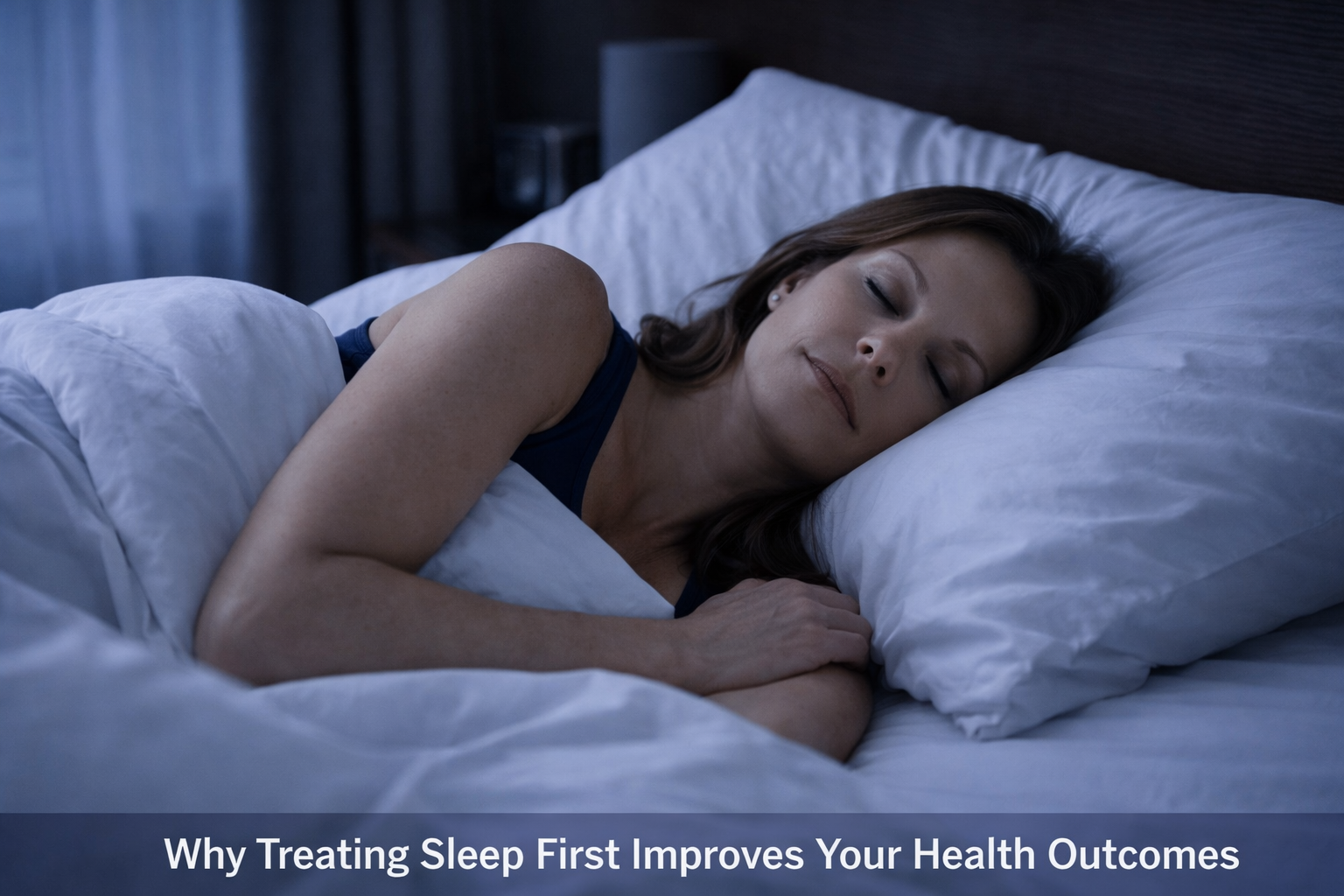
Why Treating Sleep First Improves Your Health Outcomes
Untreated sleep disorders reduce the effectiveness of virtually every health intervention, from cardiovascular management to mental health treatment. When sleep is disrupted at the physiological level, the body cannot regulate inflammation, hormones, or recovery processes. Addressing the sleep disorder first creates the physiological conditions under which all other health interventions are more likely to succeed.
Medically reviewed by Dr. Avinesh Bhar, Board Certified Sleep Physician, Sliiip.com
You are doing everything right. You are seeing your doctors. You are making lifestyle changes. But you are not getting better at the rate you expected. The missing variable may not be your treatment plan. It may be your sleep.
Dr. Avinesh Bhar, board-certified sleep physician at Sliiip.com, approaches sleep as foundational to all health outcomes. When a sleep disorder is present and untreated, it functions as a continuous physiological stressor that undermines the effectiveness of every other intervention a patient pursues.
SLIIIP’s board-certified sleep physicians can do sleep evaluations for sleep apnea. Virtual consultations in all 50 states. Home sleep tests shipped to your door.
Patients with untreated obstructive sleep apnea have significantly higher rates of treatment-resistant hypertension, uncontrolled blood glucose, mood disorder persistence, and all-cause hospitalization. (American Heart Association, AASM)
Myth vs. Reality
Common Belief | Clinical Reality |
Sleep is a lifestyle issue, not a medical one | Physiological sleep disorders directly impair organ system function, hormonal regulation, and immune response |
I can manage my health conditions separately from my sleep | Sleep disorders interact physiologically with cardiovascular, metabolic, neurological, and psychological health |
Getting more hours of sleep is enough | Disrupted sleep architecture prevents restorative sleep regardless of time in bed |
My doctor would have mentioned it if sleep was important | Sleep evaluation is absent from most standard care pathways despite its established clinical significance |
Why Sleep Is the Foundation of Every Health System
Sleep is when the body performs its most critical restorative functions. Cellular repair, immune response consolidation, hormonal release, metabolic regulation, and memory consolidation all occur primarily during sleep. When sleep is physiologically disrupted, these processes are impaired.
Untreated sleep disorders create a state of chronic physiological stress. Repeated oxygen desaturations trigger sympathetic nervous system activation, elevate cortisol, promote systemic inflammation, and destabilize blood pressure, blood glucose, and cardiac rhythms.
No external health intervention can fully compensate for the physiological disruption created by an active, untreated sleep disorder.

Sleep and Cardiovascular Health
Sleep-disordered breathing is one of the most significant modifiable contributors to cardiovascular risk. The connection between sleep apnea and heart disease is well-established and bidirectional. Addressing sleep-disordered breathing is a cardiovascular intervention, not just a sleep intervention.
Sleep and Metabolic Health
Sleep disruption impairs glucose regulation and insulin sensitivity. Patients attempting to manage weight or metabolic health without addressing co-occurring sleep disorders face a significant physiological barrier.
Sleep deprivation elevates hunger-regulating hormones, reduces motivation for physical activity, and impairs the metabolic processes that govern energy use.
Sleep and Mental Health Treatment
Mental health treatment operates through neurological mechanisms directly impaired by sleep disruption. Prefrontal cortex function, emotional regulation, and neuroplasticity all require adequate restorative sleep.
Identifying and addressing an underlying sleep disorder as part of a mental health care plan is a clinical priority. Sliiip offers comprehensive evaluation of sleep solutions for mental health conditions including anxiety, depression, PTSD, ADHD, and bipolar disorder.
The Physiological Cascade of Untreated Sleep Apnea
Untreated obstructive sleep apnea creates a cascade affecting every major organ system. Nightly oxygen drops. Elevated nocturnal blood pressure. Systemic inflammation. Cortisol dysregulation. Impaired glucose control. Fragmented sleep architecture. Each of these effects compounds the others.
A home sleep test is the starting point for identifying whether sleep-disordered breathing is part of this picture. The evaluation is completed at home, reviewed by a board-certified physician, and requires no lab visit or prior referral.
Expert Q&A
Q: Why should sleep be treated before or alongside other health conditions?
Sleep is not a passive state. It is the foundation of every physiological recovery process the body has. When a sleep disorder is present, the body is in a state of chronic nocturnal stress that impairs cardiovascular function, metabolic regulation, immune response, and neurological recovery. No other health intervention can fully function as intended when this foundational system is compromised. Identifying and addressing sleep disorders as a clinical priority is evidence-based physiology.
Dr. Avinesh Bhar, Board Certified Sleep Physician, Sliiip.com
Q: What types of patients at Sliiip benefit most from treating their sleep disorder first?
Patients managing cardiovascular conditions, metabolic concerns, mood disorders, chronic fatigue, and treatment-resistant symptoms of any kind. When I evaluate a patient who has not been progressing despite appropriate care for another condition, sleep-disordered breathing or another sleep disorder is frequently the missing variable. Identifying it changes the entire clinical picture.
Dr. Avinesh Bhar, Board Certified Sleep Physician, Sliiip.com

SLIIIP’s board-certified sleep physicians can do sleep evaluations for sleep apnea. Virtual consultations in all 50 states. Home sleep tests shipped to your door.
Sleep Strategies That Support Health Recovery
- Prioritize a consistent wake time to anchor circadian rhythm
- Ensure your sleep environment is dark, cool (below 68 degrees Fahrenheit), and quiet
- Avoid alcohol in the hours before sleep. Alcohol suppresses REM sleep and worsens airway tone
- Treat snoring and nighttime breathing disruptions as clinical symptoms, not lifestyle inconveniences
- If you wake unrefreshed despite adequate sleep duration, seek a sleep evaluation
- Communicate sleep symptoms to all of your treating physicians
Frequently Asked Questions
How does sleep affect overall health outcomes?
Sleep governs cellular repair, immune function, hormonal regulation, metabolic stability, and neurological recovery. When sleep is physiologically disrupted by an untreated sleep disorder, every system the body depends on for health maintenance and recovery is impaired.
Why does untreated sleep apnea make other health conditions harder to manage?
Sleep apnea creates nightly oxygen drops and sympathetic nervous system activation that elevate blood pressure, destabilize blood glucose, and promote systemic inflammation. This physiological state makes cardiovascular, metabolic, and mental health conditions significantly harder to control.
Is sleep evaluation important if I already have a primary care physician?
Sleep disorders are rarely screened for in standard primary care pathways. A board-certified sleep physician conducts a specialized evaluation focused on sleep physiology. Sliiip is available in all 50 states. No referral required.
Can better sleep improve cardiovascular health?
Addressing sleep-disordered breathing reduces nocturnal sympathetic activation, lowers blood pressure variability, and reduces the inflammatory burden on the cardiovascular system.
How does sleep affect mental health treatment?
Sleep deprivation impairs prefrontal cortex function, reduces neuroplasticity, and maintains elevated cortisol. Addressing the sleep disorder creates the neurological conditions under which mental health treatment is more likely to succeed.
Can improving sleep quality help with weight management?
Sleep deprivation disrupts hunger-regulating hormones, increases appetite, and impairs metabolic efficiency. Addressing the underlying sleep disorder removes a significant physiological barrier to weight management.
What is a home sleep test and how does it work?
A home sleep test is an FDA-approved device worn overnight in your own bed. It measures breathing events, oxygen saturation, and physiological sleep signals. Results are reviewed by a board-certified sleep physician. Sliiip uses SleepImage and WatchPAT devices.
Do I need a referral to get a sleep evaluation at Sliiip?
No referral is required. Sliiip is available in all 50 states. Most major insurance, Medicare, and Tricare are accepted.
How quickly can sleep issues affect health outcomes?
Even a single night of poor sleep produces measurable effects on immune function, glucose regulation, and cardiovascular markers. Chronic sleep disruption from untreated sleep disorders creates compounding effects that accumulate over months and years.
Is treating sleep disorders covered by insurance?
Sliiip accepts most major insurance plans, Medicare, and Tricare. Sleep evaluations and home sleep testing are covered by many insurance plans when clinically indicated.
Latest posts
-
Why Treating Sleep First Improves Your Health Outcomes
Untreated sleep disorders reduce the effectiveness of virtually every health intervention, from cardiovascular management to mental health treatment. When sleep is disrupted at the physiological level, the body cannot regulate…
-
Sleep Disorders That Masquerade as Depression
Several sleep disorders produce symptoms that are clinically indistinguishable from depression, including persistent low mood, fatigue, loss of motivation, and cognitive slowing. These conditions are frequently misidentified as primary depression.…
-
When Anxiety Looks Like Insomnia and When It Is Sleep Apnea
Anxiety, insomnia, and sleep apnea share overlapping symptoms that are frequently misidentified. Racing thoughts, difficulty falling asleep, and unrefreshing sleep can reflect anxiety, primary insomnia, or untreated sleep-disordered breathing. Accurate…
Get updates
Spam-free subscription, we guarantee. This is just a friendly ping when new content is out.

