👉 Register for Free. How to Diagnose Sleep Apnea Faster in Primary Care – FREE Webinar by Dr. Audrey Wells. – Friday, April 24 at 12 PM ET

Do EEG Sleep Headbands Actually Track Sleep Accurately?
Last updated: September 14, 2026. Medically reviewed by Dr. Avinesh Bhar, Board-Certified Sleep Physician, SLIIIP.com.
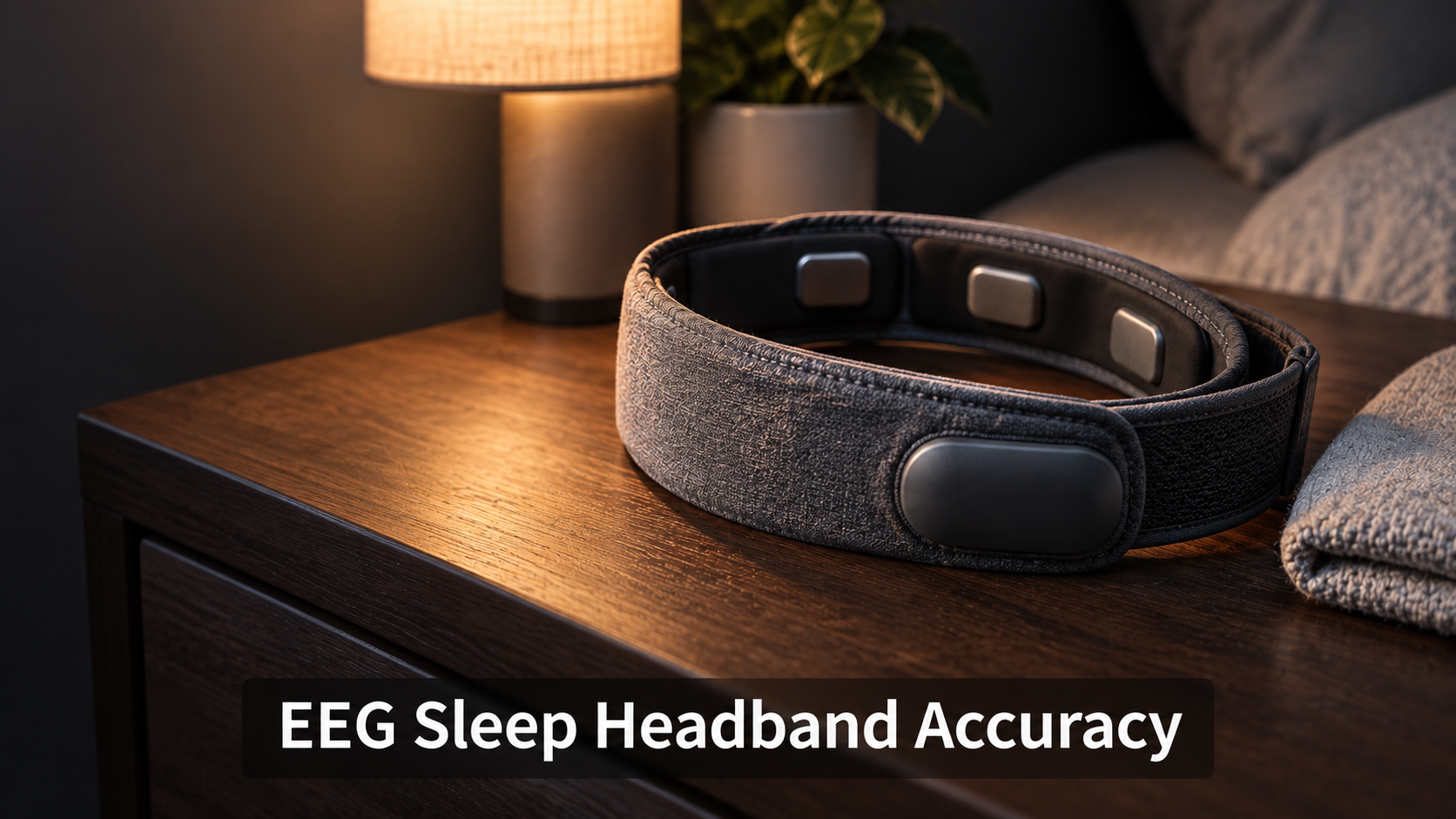
EEG sleep headbands, like the Dreem headband, use dry electrodes to record brain wave activity, giving them a more direct window into sleep stages than rings or watches. Independent validation shows these headbands can approach expert-level accuracy for sleep staging, but they still are not a substitute for a diagnostic sleep test. According to Dr. Avinesh Bhar, Board-Certified Sleep Physician at SLIIIP.com, an EEG headband can show detailed sleep architecture, yet it does not calculate the breathing metrics used to diagnose sleep apnea. Better brain data is not the same as a medical diagnosis.
SLIIIP’s board-certified sleep physicians can do sleep evaluations for sleep apnea. Virtual consultations in all 50 states. Home sleep tests shipped to your door.
How Do EEG Sleep Headbands Work?
Unlike rings and watches, which infer sleep stages from heart rate and movement, an EEG headband records actual electrical activity from the brain using dry electrodes placed against the scalp and forehead. This is the same signal type used in polysomnography, the clinical gold-standard sleep study, just with far fewer electrode sites and a simplified algorithm running on the device itself.
Most consumer EEG headbands pair a reduced-electrode EEG with an accelerometer and a pulse sensor, then use a machine learning model to classify each 30-second window of sleep into a stage.
Are EEG Sleep Headbands Accurate for Sleep Staging?
Yes, more so than most other wearable categories. A validation study comparing the Dreem headband directly against polysomnography scored by five sleep experts found automatic sleep staging reached about 83.5 percent accuracy, compared with 86.4 percent average agreement among the human expert scorers themselves, according to research published in the journal Sleep.
That is a meaningfully different result than a ring or a watch. An EEG headband is working with real brain wave data, not an estimate built from heart rate and movement.
Can an EEG Sleep Headband Detect Sleep Apnea?
No, not on its own. Even though the brain wave data is far more clinically relevant, most consumer EEG headbands still do not include the airflow and effort sensors needed to calculate an AHI, the metric used to diagnose obstructive sleep apnea. A headband can show that your sleep architecture looks fragmented. It generally cannot tell you whether the cause is a breathing disorder.
How Does an EEG Sleep Headband Compare to a Home Sleep Test?
Feature | EEG Sleep Headband | WatchPAT (SLIIIP) | Sleep Image Ring (SLIIIP) |
Sensor type | Dry EEG electrodes, accelerometer, pulse sensor | Peripheral arterial tone, chest and wrist sensors | Light-based finger sensor |
What it measures | Brain wave activity, heart rate, movement | Oxygen, breathing effort, snoring, position | Heart rate, oxygen, breathing pattern |
Sleep staging | Near clinical-grade, algorithm based | Clinically validated | Clinically validated |
Calculates AHI for diagnosis | No, in most consumer models | Yes | Yes |
Reviewed by a physician | No | Yes, board-certified sleep physician | Yes, board-certified sleep physician |
Insurance accepted | No, out of pocket | Yes | Yes |
Best used for | Detailed at-home sleep architecture tracking | Diagnosing sleep apnea | Diagnosing sleep apnea and insomnia workup |
Watch: Dr. Bhar answers why am I still tired after 8 hours of sleep?
When to See a Doctor About Your Sleep
If your EEG headband consistently shows fragmented deep sleep, frequent brief awakenings, or poor sleep efficiency that does not improve with better habits, that pattern is worth a real evaluation. Dr. Bhar notes that detailed sleep architecture data is genuinely useful context for a doctor, but it works best alongside a validated breathing test, not instead of one. A headband can describe your sleep in detail. A board-certified sleep physician can determine whether a breathing disorder is behind what it shows.
Why a Real SLIIIP Evaluation Is Critical for an Accurate Diagnosis
Detailed brain wave data is a strong starting point, but a real diagnosis still requires:
- A validated breathing test. WatchPAT and the Sleep Image Ring calculate AHI using signals clinically validated against polysomnography.
- Physician interpretation. Even high-quality EEG data needs a trained clinician to connect it to a diagnosis and treatment plan.
- A treatment path. A diagnosis only helps if it leads somewhere, whether that is CPAP therapy, an oral appliance, or another approach.
- Insurance coverage. SLIIIP’s home sleep tests are accepted by insurance, unlike most consumer EEG headbands.

SLIIIP’s board-certified sleep physicians can do sleep evaluations for sleep apnea. Virtual consultations in all 50 states. Home sleep tests shipped to your door.
Frequently Asked Questions
Are EEG sleep headbands accurate?
Yes, relative to other wearables. Studies show accuracy approaching expert-level agreement with polysomnography for sleep staging.
Can an EEG headband diagnose sleep apnea?
Generally no. Most consumer models lack the airflow and effort sensors needed to calculate an AHI.
How is an EEG headband different from a ring or watch for sleep tracking?
It records real brain wave activity instead of estimating sleep stages from heart rate and movement.
What does an EEG headband actually measure?
Brain wave activity through dry electrodes, along with heart rate and movement from secondary sensors.
Is an EEG headband as accurate as a sleep lab?
It comes close for sleep staging, but a sleep lab study also captures breathing and oxygen data that most headbands do not.
Can I use my EEG headband data at a doctor’s appointment?
Yes, it can be useful context, but your doctor will still need a validated home sleep test for a breathing-disorder diagnosis.
Is a home sleep test more accurate than an EEG headband for sleep apnea?
Yes. WatchPAT and the Sleep Image Ring are built specifically to calculate AHI, which most EEG headbands do not do.
Do EEG headbands detect insomnia?
They can show fragmented or poor-quality sleep, but a clinical evaluation is still needed for a diagnosis.
Are EEG sleep headbands FDA approved?
Most are marketed as general wellness or research devices, not FDA-cleared for diagnosing a specific sleep disorder.
Can an EEG headband replace a sleep study?
No. It provides detailed sleep architecture but not the breathing data needed for a sleep apnea diagnosis.
Why is my EEG headband data different from how I feel in the morning?
Even accurate sleep staging does not always match subjective feelings of rest, since daytime factors also affect how you feel.
Does insurance cover EEG sleep headbands?
No. They are out-of-pocket wellness or research purchases, unlike SLIIIP’s home sleep tests.
What is the difference between an EEG headband and the Sleep Image Ring?
The headband measures brain waves without diagnosing breathing disorders. The Sleep Image Ring is diagnostic for breathing-related sleep issues and is reviewed by a physician.
Can children use an EEG sleep headband?
SLIIIP does not evaluate or treat children. If you have concerns about a child’s sleep, a pediatrician or pediatric ENT specialist is the right next step.
Is it comfortable to sleep in an EEG headband?
Most users adjust within a few nights, though comfort varies by head shape and sleep position.
What happens after a SLIIIP home sleep test?
A board-certified sleep physician reviews your results and discusses a treatment plan during a virtual visit.
Can an EEG headband detect snoring?
Most consumer EEG headbands do not include a microphone or airflow sensor to detect snoring directly.
How long should I use an EEG headband before trusting the data?
Several nights are typically needed to account for normal night-to-night variation in sleep architecture.
How do I know if I need a real sleep evaluation instead of just tracking with an EEG headband?
Snoring, gasping awakenings, excessive daytime sleepiness, or fragmented deep sleep that does not improve are all reasons to book a real evaluation.
Is an EEG headband worth it if I already use a ring or watch?
It can add more detailed sleep architecture data, but it answers a different question than a diagnostic breathing test.
Check your sleep symptoms with SLIIIP’s 2-minute quiz, then take the next step.
CHECK YOUR SLEEP SYMPTOMS: TAKE THE 2 MINUTE QUIZ
TAKE THE QUIZ
SLIIIP’s board-certified sleep physicians can do sleep evaluations for sleep apnea. Virtual consultations in all 50 states. Home sleep tests shipped to your door.
Latest posts
-
Why Are My Naps Never Refreshing?
Last updated: October 2, 2026. Medically reviewed by Dr. Avinesh Bhar, Board-Certified Sleep Physician, SLIIIP.com. Naps that leave you groggy usually come down to how long you sleep, when you…
-
Is Sleeping Too Much a Sleep Disorder?
Last updated: October 2, 2026. Medically reviewed by Dr. Avinesh Bhar, Board-Certified Sleep Physician, SLIIIP.com. Sleeping too much is not always a sleep disorder, but it can be a sign…
-
Why Does My Insomnia Get Worse After Stopping Sleep Medication?
Last updated: October 2, 2026. Medically reviewed by Dr. Avinesh Bhar, Board-Certified Sleep Physician, SLIIIP.com. Insomnia can get worse after stopping sleep medication for three main reasons. They are rebound…
Get updates
Spam-free subscription, we guarantee. This is just a friendly ping when new content is out.

