
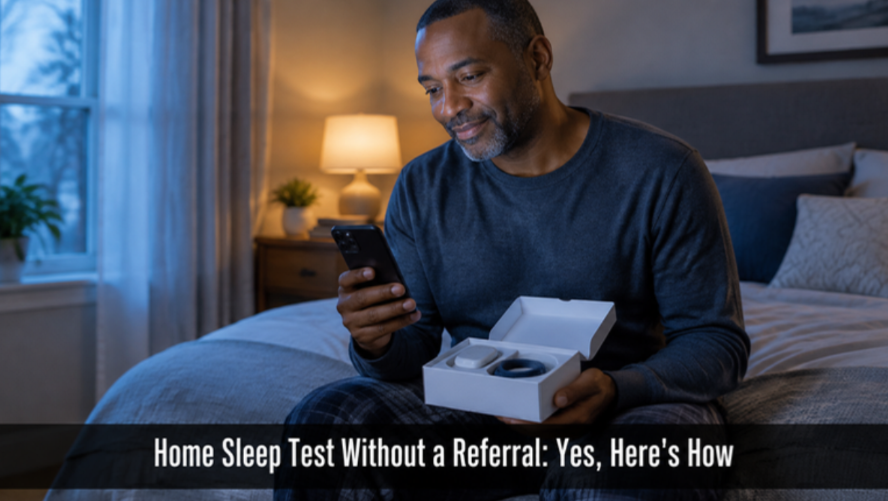
Can I Get a Home Sleep Test Without a Referral? Yes, Here’s How
Last updated: October 30, 2026. Medically reviewed by Dr. Avinesh Bhar, Board-Certified Sleep Physician, SLIIIP.com.
Yes, you can usually get a home sleep test without a referral from your primary care doctor. A home sleep apnea test does need an order from a licensed clinician, but that clinician can be a sleep physician you book directly. Dr. Avinesh Bhar, Board-Certified Sleep Physician at SLIIIP.com, points out that people often mix up three different things: a referral, a prescription, and insurance approval. Knowing which one your plan actually asks for is the fastest way to get tested.
SLIIIP’s board-certified sleep physicians can do sleep evaluations for sleep apnea. Virtual consultations in all 50 states. Home sleep tests shipped to your door.
Who Is a Good Fit for a Home Sleep Test?
A home test works best for adults with a high chance of moderate to severe obstructive sleep apnea. The American Academy of Sleep Medicine patient guide says it is often used when you have no other significant medical conditions besides suspected sleep apnea.
Common signs that point toward a home test include:
- Loud snoring, gasping, or pauses in breathing during sleep
- Morning headaches or brain fog
- Waking up tired, even after 7 to 8 hours of sleep
- Dozing off during the day
- Waking up several times a night, or using the restroom at night
TAKE THE QUIZ
Do You Need a Referral for a Home Sleep Test?
No. At SLIIIP, you do not need a referral from a primary care doctor to get a home sleep test. You do need a licensed provider to confirm the test is right for you and order it. Those are two separate things. Many people put off testing because they think the first step is a primary care visit. That is often not true.
A referral is a note from one doctor sending you to another doctor. A prescription, or order, is the clinical request for the test itself. At SLIIIP, you take a free assessment, and a licensed SLIIIP provider reviews it and orders your test if it is right for you.
The one common exception is your insurance plan. Some plans require a referral before they will pay for a specialist. That rule comes from the plan, not from the test. We cover how to check this below.
Referral vs Prescription vs Prior Authorization: What Is the Difference?
These three words get used as if they mean the same thing. They do not. Here is a simple way to tell them apart.
- Referral: A primary care doctor formally sends you to a specialist. Some insurance plans require one before they cover a specialist visit.
- Prescription or order: A licensed clinician requests the home sleep test after reviewing your symptoms and health history. Every medical-grade home sleep apnea test needs one.
- Prior authorization: Your insurance company approves the test before it is done. The clinic usually handles this request, not you.
A referral is about who you see, a prescription is about what test you get, and prior authorization is about who pays. With SLIIIP, the provider order is included whether you use insurance or pay yourself.
How Do I Order a Home Sleep Test Without Seeing My Primary Care Doctor?
You can order directly from SLIIIP, without leaving home. Here is how it works.
- Take the assessment and order your test. Answer a few questions about your sleep online. It takes about 2 minutes.
- Provider review. A licensed SLIIIP provider confirms a home test is right for you and orders it. No referral is needed.
- Your test arrives. Your FDA-cleared test ships to your door with a prepaid return label. You will need a smartphone.
- Sleep and return. Wear it for two nights in your own bed, then mail it back.
- Get your results. A board-certified sleep physician reads your test, and your results and treatment plan come from the same care team.
SLIIIP sends results in 48 to 72 hours, so you can get answers without a primary care visit or a night in a sleep lab.
How Much Does a Home Sleep Test Cost?
SLIIIP offers the same 2-night test two ways. You can use your insurance or pay one flat price.
Self-pay: $250, one time. There are no surprise add-ons, and HSA and FSA cards are accepted.
The price includes:
- A 2-night home sleep test, shipped to you
- The provider order and board-certified physician read
- A sleep report sent to you
- A prescription for therapy, if needed
- Your treatment plan, with the same team
Insurance: your cost depends on your plan. SLIIIP works with BCBS, UHC, Cigna, and more. Medicaid is not accepted. The team checks your benefits and tells you your cost before anything ships.

Which Insurance Plans Require a Referral for a Sleep Test?
Referral rules depend on your plan type, not on the sleep test. The short version: HMO-style plans are the most likely to require a referral. PPO plans and Original Medicare usually do not.
- HMO plans: Many require a referral from your primary care doctor before covering any specialist, including a sleep physician.
- PPO plans: Most let you see an in-network specialist without a referral.
- EPO and POS plans: Rules vary, so check your plan documents or call the member line.
- Original Medicare: It generally does not require referrals to see specialists, but the test still needs an order.
- Medicare Advantage: Rules depend on the plan, and HMO-style plans often require referrals.
- Self-pay: No referral is needed. At SLIIIP, the provider order is included in the $250 price.
Even when no referral is needed, many insurers still ask for prior authorization before a sleep test. If your plan requires a referral, ask your primary care office for it by phone or patient portal. Many offices can send one without a new visit.
Can I Just Buy a Sleep Test Online Without Seeing Anyone?
You can buy wellness trackers and some over-the-counter sleep kits without an order. Most of these products are not designed to diagnose sleep apnea, and insurance does not cover them. A smartwatch, fitness tracker, or phone app can flag snoring or oxygen dips. It cannot tell you whether you have obstructive sleep apnea or how severe it is. You can learn more in our guide on home sleep apnea tests vs over-the-counter kits.
Some online services do sell a medical test, but stop at the report. With many testing-only services, you get your results and then have to find a doctor on your own, which can mean a new clinic, new forms, and a new wait.
At SLIIIP, the licensed provider who orders your test can also treat what it finds.
What Is a Home Sleep Test Like?
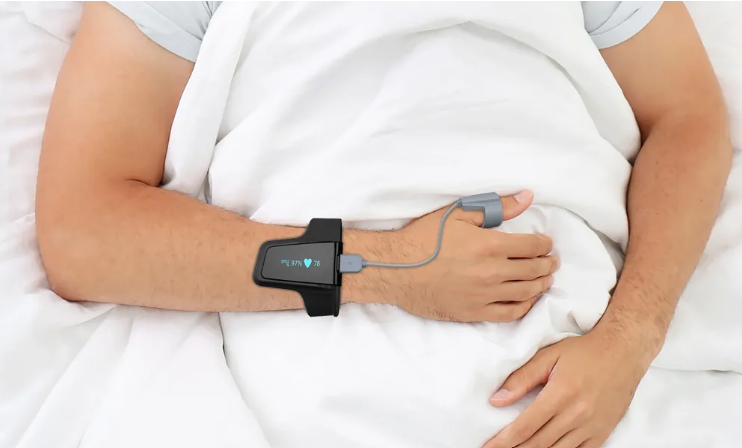
A home sleep test is a small sensor you wear for two nights. It records your breathing patterns and oxygen while you sleep, so a sleep physician can see what is really happening.
- Where: In your own bed, on your own schedule, with no nights away from home.
- Setup: A few small sensors and an app on your phone. Setup takes about 5 minutes.
- Comfort: There are no needles, and most people sleep normally.
- What it records: Blood oxygen, pulse rate, heart rate variability, airflow and breathing effort, snoring, body position, movement, and sleep stages.
- Who scores it: Your test is scored to AASM standards and interpreted by a board-certified sleep physician.
Recording two nights gives your physician a backup if one night is restless.
These symptoms alone do not diagnose a sleep disorder, which is why testing matters.
What Happens After My Home Sleep Test?
A board-certified sleep physician reads your results, and you receive a sleep report. Your provider then walks you through your options. Not everyone needs CPAP.
Options include oral appliances, CPAP, and drug-free insomnia care, all with the same team. SLIIIP also handles the follow-up visits insurance often requires to keep covering CPAP.

A negative home test does not always rule out sleep apnea. The AASM guideline recommends an in-lab sleep study when a home test is negative, inconclusive, or technically inadequate and symptoms remain. Most home tests do not record brain waves directly, so they may underestimate how often breathing is disrupted.
If you do not have sleep apnea, that is still useful news. SLIIIP also treats insomnia, restless legs, circadian rhythm disorders, and more, so your provider can help you look at what else may be affecting your sleep.
Tips to Make the Process Faster
A few small steps can shorten the time between ordering and results.
- Have your insurance card handy if you plan to use your benefits.
- Write down your symptoms, how long you have had them, and what your bed partner notices.
- Make sure your smartphone is charged and ready for the test app.
- Follow the device instructions closely so your two nights produce usable data.
- Mail the test back with the prepaid label as soon as you finish.
A clear symptom history helps your provider confirm the right test the first time. That can spare you a second round of testing.
When to See a Doctor
See a sleep physician if you snore loudly, wake up gasping, or feel sleepy most days. Do not wait for a referral you may not need. Dr. Avinesh Bhar recommends that adults with these symptoms book a sleep evaluation first and sort out referral questions with their insurer in parallel. Waiting weeks for a primary care visit only to be sent to a sleep specialist is a common delay that can often be avoided.
Seek urgent care right away if you have chest pain, severe shortness of breath, or fainting. Those symptoms need emergency evaluation, not a home sleep test. If you fall asleep while driving, stop driving until a doctor has evaluated you.
SLIIIP works with many major insurance plans, including those below. Check your coverage before you book.
Get a 2-night home sleep test shipped to your door and read by a board-certified sleep physician. No referral needed. Available in all 50 states.
Frequently Asked Questions
Can I get a home sleep test without a referral?
Yes. At SLIIIP, you start with a free assessment, and a licensed provider orders your test if it is right for you.
Do I need a prescription for a home sleep apnea test?
Yes. Medical-grade tests need a clinician's order. At SLIIIP, the provider order is included whether you use insurance or pay yourself.
Is a referral the same as a prescription?
No. A referral sends you to a specialist, while a prescription orders the test itself.
How do I order a home sleep test from SLIIIP?
Take the free 2-minute assessment and order your test. A licensed provider confirms it is right for you, and it ships to your door.
How much does a home sleep test cost at SLIIIP?
Self-pay is $250, one time. With insurance, your cost depends on your plan, and SLIIIP tells you before anything ships.
Can I use my HSA or FSA card?
Yes. The self-pay option accepts HSA and FSA cards.
Does SLIIIP accept my insurance?
SLIIIP works with BCBS, UHC, Cigna, and more. Medicaid is not accepted.
What is prior authorization for a sleep test?
It is your insurer's approval before the test is done. The clinic usually submits it for you.
Does Medicare require a referral for a sleep test?
Original Medicare generally does not require referrals to see specialists. The test still needs a clinician's order.
Does an HMO plan require a referral for a sleep doctor?
Many HMO plans do. Call the number on your insurance card to confirm.
Does a PPO plan require a referral for a sleep test?
Most PPO plans do not require a referral for in-network specialists. Prior authorization may still apply.
How many nights does the test take?
Two nights, in your own bed. The second night gives your physician a backup if one night is restless.
How long does it take to get results?
SLIIIP lists results in 48 to 72 hours.
Does the test hurt or keep me awake?
No. There are no needles and only a few small sensors. Most people sleep normally.
Who reads my home sleep test results?
A board-certified sleep physician reads your results, and you receive a sleep report.
Can a smartwatch replace a home sleep test?
No. A watch can flag possible problems, but it cannot diagnose obstructive sleep apnea.
Can an online assessment diagnose sleep apnea?
No. The AASM says questionnaires alone should not be used to diagnose sleep apnea in adults. The SLIIIP assessment is a screening step before your test.
Is a home sleep test right for everyone?
No. Some health conditions need a lab study instead, and the SLIIIP assessment checks for these.
What if my home sleep test is negative but I still snore?
Talk to your provider. A negative home test does not always rule out sleep apnea.
What happens after the test?
Your provider walks you through your options and builds a plan with the same team. Not everyone needs CPAP.
Get started with SLIIIP's free 2-minute assessment and find out if a home sleep test is right for you. Enjoy convenient virtual sleep care, physician-reviewed results, and home sleep testing delivered to your door.
Latest posts
-
Drowsy Driving: When It’s Time for a Sleep Test
Last updated: November 24, 2026. Medically reviewed by Dr. Avinesh Bhar, Board-Certified Sleep Physician, SLIIIP.com. Do you nod off, drift out of your lane or forget the last few miles…
-
Can You Buy a CPAP Without a Sleep Test?
Last updated: November 24, 2026. Medically reviewed by Dr. Avinesh Bhar, Board-Certified Sleep Physician, SLIIIP.com. No, in the United States you cannot legally buy a new CPAP machine without a…
·
-
Do I Need a Sleep Study to Get Zepbound for Sleep Apnea?
Last updated: November 24, 2026. Medically reviewed by Dr. Avinesh Bhar, Board-Certified Sleep Physician, SLIIIP.com. Yes, in most cases you need a sleep study to get Zepbound prescribed for sleep…
Get updates
Spam-free subscription, we guarantee. This is just a friendly ping when new content is out.

