👉 Register for Free. How to Diagnose Sleep Apnea Faster in Primary Care – FREE Webinar by Dr. Audrey Wells. – Friday, April 24 at 12 PM ET

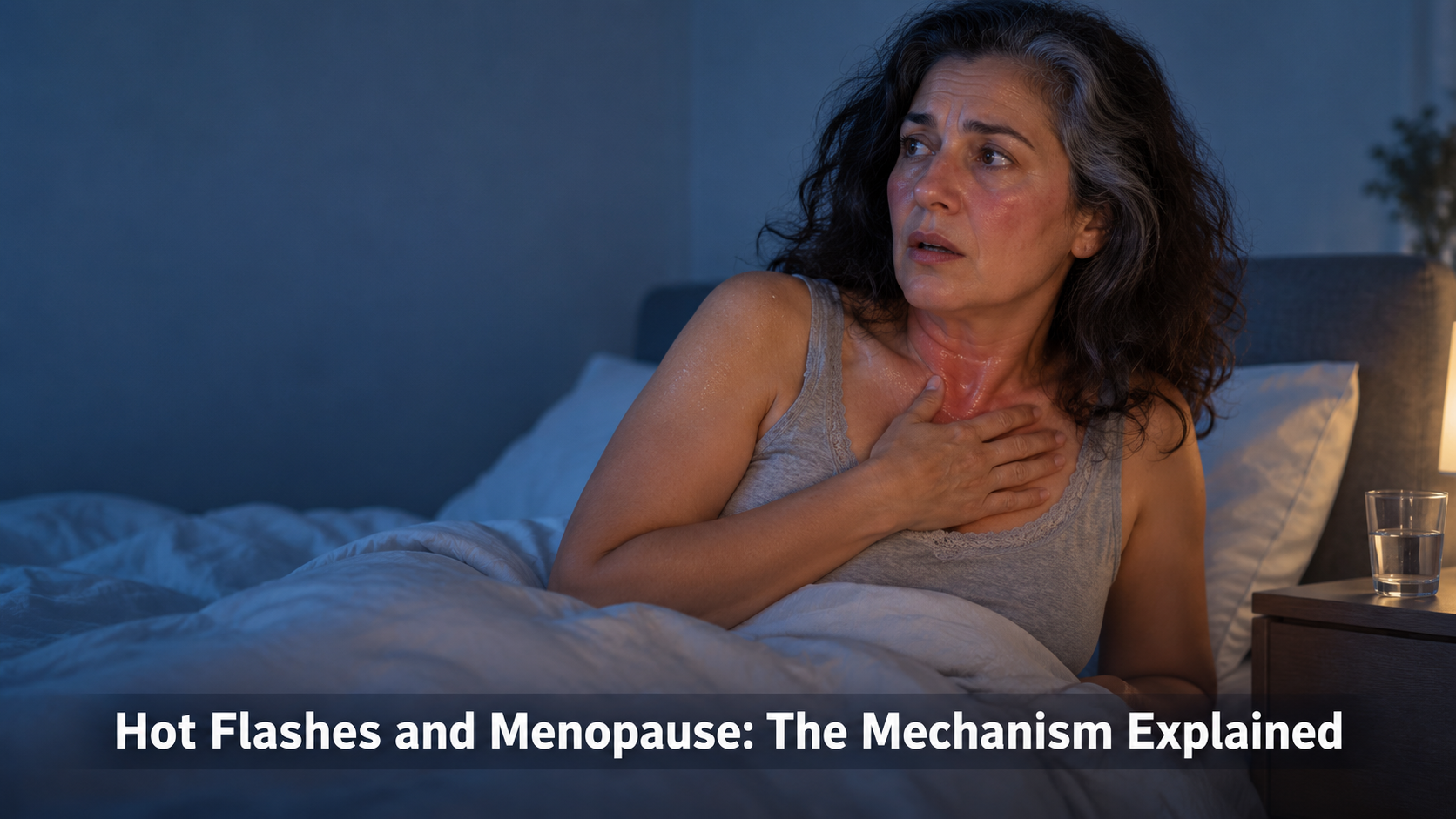
How Are My Hot Flashes Related to Menopause? The Mechanism Explained
Last updated: September 21, 2026. Medically reviewed by Dr. Avinesh Bhar, Board-Certified Sleep Physician, SLIIIP.com.
Hot flashes are directly related to menopause through declining estrogen’s effect on the hypothalamus, the part of the brain that regulates body temperature. A hot flash is not simply feeling warm; it is a specific, measurable neurological event triggered by a narrowed temperature comfort zone in the brain. Dr. Avinesh Bhar, Board-Certified Sleep Physician at SLIIIP.com, points out that understanding this mechanism matters most at night, since a hot flash during sleep does more than cause discomfort, it actively fragments sleep architecture.
Knowing what is actually happening in the brain during a hot flash explains why they feel so sudden and so hard to prevent.
SLIIIP’s board-certified sleep physicians can do sleep evaluations for sleep apnea. Virtual consultations in all 50 states. Home sleep tests shipped to your door.
What Is Actually Happening in the Brain?
The hypothalamus maintains a narrow internal temperature range, sometimes called the thermoneutral zone, within which the body does not need to actively heat or cool itself. Estrogen helps keep this zone appropriately wide. As estrogen levels decline during the menopausal transition, this zone narrows significantly.
With a narrower thermoneutral zone, even a very small rise in core body temperature, too small to normally register, is misread by the brain as overheating. The body responds as if it needs to cool down urgently: blood vessels near the skin dilate, heart rate increases, and sweat glands activate, producing the sudden heat, flushing, and sweating recognized as a hot flash.
Why Do Hot Flashes Happen More at Night?
Core body temperature naturally drops in the evening as part of the process that helps initiate sleep. This natural temperature dip, combined with an already narrowed thermoneutral zone, can trigger more frequent hot flashes during the night than during the day for many women. When one occurs during sleep, it is called a night sweat.
A hot flash at night briefly pulls the brain out of deeper stages of sleep even when the person does not fully wake up, which is part of why hot flashes are linked to non-restorative sleep even in women who do not remember waking up sweating. According to a peer-reviewed review in the Journal of Mid-Life Health, more than 80 percent of women experience hot flashes during the menopausal transition, and the underlying mechanism centers on this hypothalamic thermoregulatory disruption.
Do Hot Flashes End When Menopause Ends?
Not necessarily. Hot flashes often begin during perimenopause, years before a woman’s final period, and can continue for a decade or more after menopause is complete for some women. The intensity and frequency vary widely between individuals and do not follow a predictable timeline tied strictly to menopausal status.
Severity also does not necessarily decline in a straight line; some women notice their hot flashes become more frequent for a period before eventually easing, related to how erratically estrogen levels fluctuate throughout the transition rather than declining smoothly.
What Makes Some Women’s Hot Flashes Worse Than Others’?
Body weight, smoking, and baseline stress levels all appear to influence hot flash frequency and severity, though estrogen decline remains the underlying driver in every case. Women who enter menopause at a younger age, whether naturally or due to surgery, often experience more intense symptoms, likely because the drop in estrogen happens more abruptly rather than gradually.
None of these factors change the basic mechanism in the brain, but they help explain why two women in the same stage of menopause can have very different experiences of the same underlying process.
When to See a Doctor
Hot flashes alone, even when frequent, do not automatically require a sleep evaluation, but persistent poor sleep quality that continues despite hot flash management does. Dr. Bhar recommends evaluation when hot flashes are severe, occur mainly or entirely at night, or when sleep stays fragmented and unrefreshing even on nights with fewer episodes, since this pattern is associated with a higher likelihood of an underlying breathing disorder.
A home sleep test can determine whether something beyond the hot flashes themselves is contributing to how poorly you are sleeping.
Insurance and Cost
SLIIIP works with most major insurance plans, including Medicare and TRICARE, and offers transparent cash pricing for patients without applicable coverage.

SLIIIP’s board-certified sleep physicians can do sleep evaluations for sleep apnea. Virtual consultations in all 50 states. Home sleep tests shipped to your door.
Frequently Asked Questions
How are hot flashes related to menopause?
Declining estrogen during menopause narrows the brain’s temperature regulation zone, triggering hot flashes at small temperature changes.
What causes a hot flash at the brain level?
The hypothalamus misreads a small rise in core body temperature as overheating, triggering vessel dilation, sweating, and increased heart rate.
Why do hot flashes happen more at night?
Core body temperature naturally drops in the evening, which combined with a narrowed thermoneutral zone can trigger more frequent nighttime episodes.
What percentage of women get hot flashes during menopause?
More than 80 percent of women experience hot flashes during the menopausal transition.
Do hot flashes disrupt sleep even if I don’t fully wake up?
Yes, a hot flash can briefly pull the brain out of deeper sleep stages without producing full conscious awakening.
When do hot flashes typically start?
They often begin during perimenopause, years before a woman’s final menstrual period.
How long do hot flashes usually last after menopause?
Duration varies widely; some women experience them for just a few years while others have them for a decade or more.
Can hot flashes get worse before they get better?
Yes, because estrogen fluctuates erratically rather than declining smoothly, frequency and intensity can increase before easing.
Is a hot flash the same as a night sweat?
A night sweat is a hot flash that occurs during sleep, causing sweating that can soak clothing or bedding.
What triggers hot flashes besides hormones?
Alcohol, caffeine, spicy food, stress, and a warm sleep environment can all trigger or worsen individual hot flash episodes.
Can hormone therapy stop hot flashes?
Hormone therapy is an effective treatment for many women, though it should be discussed individually with a physician.
Do hot flashes mean something is wrong with my heart?
Not typically; the rapid heartbeat during a hot flash is part of the body’s temperature response rather than a cardiac issue.
Can hot flashes happen without any hormone therapy?
Yes, hot flashes are a direct result of declining estrogen and occur independent of whether someone uses hormone therapy.
Are hot flashes linked to sleep apnea risk?
Severe, frequent hot flashes and night sweats have been associated with a higher likelihood of undiagnosed sleep apnea.
Can cooling the bedroom help with hot flashes?
Yes, a cooler sleep environment can reduce the frequency or intensity of nighttime episodes for many women.
Do all women experience hot flashes during menopause?
No, while more than 80 percent do, a smaller number of women experience minimal or no hot flashes.
Can hot flashes come back years after they stopped?
It is uncommon but possible, particularly if a new factor such as stress or a change in health status is involved.
Is it normal for hot flashes to vary in intensity from day to day?
Yes, intensity and frequency naturally fluctuate as estrogen levels rise and fall erratically during the transition.
Can non-hormonal treatments help with hot flashes?
Yes, certain non-hormonal medications and lifestyle changes can reduce hot flash frequency and severity for some women.
What is the first step if hot flashes are wrecking my sleep?
Start by tracking frequency and severity, then book a sleep evaluation if poor sleep continues despite managing the hot flashes.
Take the Next Step
SLIIIP’s board-certified sleep physicians can do sleep evaluations for sleep apnea. Virtual consultations in all 50 states. Home sleep tests shipped to your door.
Latest posts
-
How Are My Hot Flashes Related to Menopause? The Mechanism Explained
Last updated: September 21, 2026. Medically reviewed by Dr. Avinesh Bhar, Board-Certified Sleep Physician, SLIIIP.com. Hot flashes are directly related to menopause through declining estrogen’s effect on the hypothalamus, the…
-
Why Did My Sleep Change So Fast in My Late 40s?
Last updated: September 21, 2026. Medically reviewed by Dr. Avinesh Bhar, Board-Certified Sleep Physician, SLIIIP.com. Sleep can change quickly in the late 40s because this is often when the perimenopause-to-menopause…
-
Why Does PMS Wreck My Sleep Even When My Symptoms Are Mild?
Last updated: September 21, 2026. Medically reviewed by Dr. Avinesh Bhar, Board-Certified Sleep Physician, SLIIIP.com. Sleep can fall apart in the days before your period even when your other PMS…
Get updates
Spam-free subscription, we guarantee. This is just a friendly ping when new content is out.

