👉 Register for Free. How to Diagnose Sleep Apnea Faster in Primary Care – FREE Webinar by Dr. Audrey Wells. – Friday, April 24 at 12 PM ET

Hypnic Jerks: Is It Sleep Apnea?
Is it Hypnic Jerks or Sleep Apnea? Dr. Avinesh Bhar from SLIIIP.com explains why sudden body jerks while falling asleep can sometimes overlap with symptoms linked to nighttime breathing disruptions and sleep quality concerns.
SLIIIP’s board-certified sleep physicians can do sleep evaluations for sleep apnea. Virtual consultations in all 50 states. Home sleep tests shipped to your door.
What Are Hypnic Jerks?
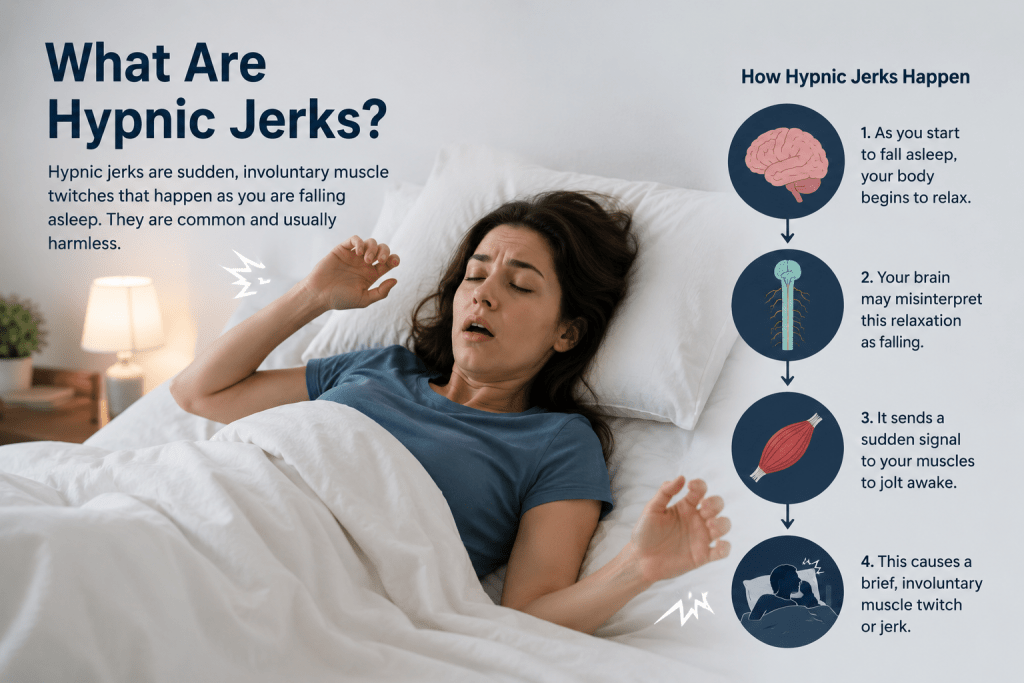
Hypnic jerks are sudden muscle movements that happen as a person begins falling asleep. Many people describe the sensation as a quick body jolt, a leg kick, or the feeling of suddenly falling. These events are common and can happen occasionally in healthy sleepers.
For some people, hypnic jerks become more noticeable during periods of stress, poor sleep habits, caffeine use, or irregular sleep schedules. They can feel alarming, especially when they repeatedly interrupt the transition into sleep.
While hypnic jerks are not automatically linked to sleep apnea, both issues can disturb sleep quality and create nighttime anxiety. People often search for answers because the sensations feel dramatic or unfamiliar.
Understanding the difference between common sleep transitions and possible breathing-related sleep disruptions is important for long-term wellness and sleep health.
CHECK YOUR SLEEP SYMPTOMS: TAKE THE 2 MINUTE QUIZ
TAKE THE QUIZ
Hypnic Jerks: Is It Sleep Apnea?
The question “Hypnic Jerks: Is It Sleep Apnea?” appears frequently online because both conditions can create sudden awakenings at night. A person may wake up with a jolt, rapid heartbeat, or sensation of panic and assume the event is caused by a breathing issue.
Sleep apnea involves repeated pauses or reductions in breathing during sleep. These breathing interruptions can affect oxygen levels and increase nighttime arousals. In some situations, a person may wake suddenly and confuse the experience with a hypnic jerk.
However, hypnic jerks typically happen while first drifting into sleep, whereas sleep apnea events usually occur after sleep has already started. Some individuals may experience both patterns together.
If nighttime awakenings are paired with loud snoring, daytime fatigue, morning headaches, or witnessed breathing pauses, it may be helpful to discuss these symptoms with a sleep specialist.
Common Signs That May Point Toward Sleep Apnea
A single hypnic jerk does not automatically mean someone has sleep apnea. However, repeated nighttime symptoms combined with daytime exhaustion may suggest a broader sleep health issue.
Possible signs linked to sleep apnea include:
• Loud or frequent snoring
• Waking up gasping for air
• Morning headaches
• Dry mouth upon waking
• Trouble concentrating during the day
• Excessive daytime sleepiness
• Restless sleep
• Irritability or mood changes
Many adults live with nighttime breathing disruptions for years without realizing sleep quality may be contributing to fatigue and poor recovery.
Why Hypnic Jerks Feel So Intense
As the body transitions from wakefulness into sleep, muscles naturally begin relaxing. The brain may sometimes interpret this relaxation as instability or falling, triggering a brief muscle contraction.
This response can feel surprisingly strong. Some people notice a rapid heartbeat afterward because the event briefly activates the body’s alert system.
Factors that may increase hypnic jerks include:
• Stress and anxiety
• High caffeine intake
• Sleep deprivation
• Intense evening exercise
• Irregular sleep schedules
• Emotional tension
Improving bedtime habits and maintaining a consistent sleep routine may help reduce the frequency of hypnic jerks for many individuals.
Could Anxiety Make Hypnic Jerks Worse?
Yes. Anxiety and stress can increase body alertness during the transition into sleep. People under high stress often report more frequent hypnic jerks and nighttime awakenings.
When the nervous system remains highly activated, falling asleep smoothly becomes harder. This may lead to repeated awakenings, racing thoughts, or sensitivity to normal body sensations.
Sleep-related anxiety can also cause individuals to become hyper-aware of every nighttime movement or breathing sensation. Over time, this can create a cycle of poor sleep habits and worry around bedtime.
Healthy sleep routines, stress reduction, and consistent sleep schedules are important parts of overall sleep wellness.
Watch: Waking Up Anxious
When to Consider a Home Sleep Test
Some people experiencing repeated nighttime awakenings wonder if a breathing issue may be affecting their sleep quality. A home sleep test can help evaluate breathing patterns during sleep from the comfort of home.
People experiencing ongoing fatigue, loud snoring, or repeated nighttime awakenings should consider discussing their symptoms with a qualified sleep specialist.
Lifestyle Habits That May Support Better Sleep
Simple lifestyle habits may help support calmer sleep transitions and better overnight recovery.
Helpful sleep habits include:
• Limiting caffeine later in the day
• Keeping a regular bedtime schedule
• Reducing bright light exposure before bed
• Avoiding heavy meals close to bedtime
• Creating a cool and quiet sleep environment
• Practicing calming nighttime routines
These habits support overall wellness and may reduce sleep interruptions for some individuals.
Good sleep quality plays an important role in energy, focus, mood, and daily performance.
Why Virtual Sleep Care Is Growing
Many people delay sleep evaluations because of busy schedules, travel limitations, or difficulty accessing specialists locally. Virtual sleep care has made it easier for individuals to discuss sleep concerns from home.
The convenience of telemedicine may encourage more people to explore sleep health concerns earlier rather than ignoring symptoms for years.
Early conversations about sleep quality may help people better understand patterns affecting their overall wellness and recovery.
At Sliiip, we accept the following insurances:

SLIIIP’s board-certified sleep physicians can do sleep evaluations for sleep apnea. Virtual consultations in all 50 states. Home sleep tests shipped to your door.
Frequently Asked Questions
Are hypnic jerks dangerous?
Hypnic jerks are generally considered common sleep transition events. However, ongoing sleep concerns should be discussed with a qualified healthcare professional.
Can sleep apnea feel like a panic attack at night?
Some people with nighttime breathing disruptions report sudden awakenings with a racing heartbeat or sense of panic.
Do hypnic jerks happen every night?
Frequency varies from person to person. Stress, caffeine, and poor sleep habits may increase episodes.
Can a home sleep test evaluate breathing patterns?
Yes. Home sleep tests are commonly used to gather information about nighttime breathing and sleep-related patterns.
Does SLIIIP.com offer virtual consultations?
Yes. SLIIIP.com provides virtual sleep consultations and nationwide sleep care services.
SLIIIP’s board-certified sleep physicians can do sleep evaluations for sleep apnea. Virtual consultations in all 50 states. Home sleep tests shipped to your door.
Latest posts
-
Why Are My Naps Never Refreshing?
Last updated: October 2, 2026. Medically reviewed by Dr. Avinesh Bhar, Board-Certified Sleep Physician, SLIIIP.com. Naps that leave you groggy usually come down to how long you sleep, when you…
-
Is Sleeping Too Much a Sleep Disorder?
Last updated: October 2, 2026. Medically reviewed by Dr. Avinesh Bhar, Board-Certified Sleep Physician, SLIIIP.com. Sleeping too much is not always a sleep disorder, but it can be a sign…
-
Why Does My Insomnia Get Worse After Stopping Sleep Medication?
Last updated: October 2, 2026. Medically reviewed by Dr. Avinesh Bhar, Board-Certified Sleep Physician, SLIIIP.com. Insomnia can get worse after stopping sleep medication for three main reasons. They are rebound…
Get updates
Spam-free subscription, we guarantee. This is just a friendly ping when new content is out.

