
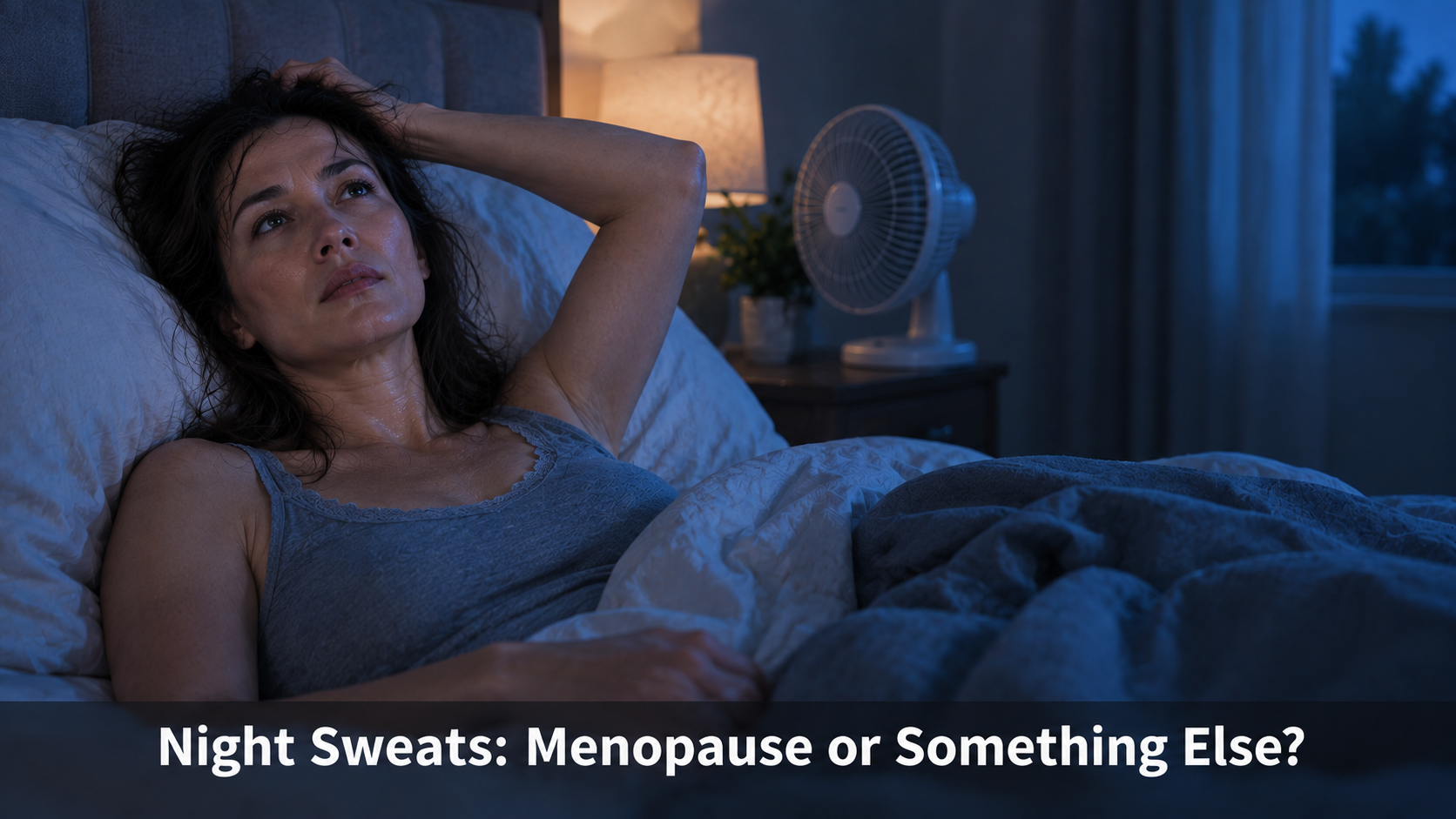
Are My Night Sweats Menopause or Something Else?
Last updated: September 21, 2026. Medically reviewed by Dr. Avinesh Bhar, Board-Certified Sleep Physician, SLIIIP.com.
Night sweats that wake you up can come from menopause, from obstructive sleep apnea, or from both at once. The two causes feel similar in the moment but follow different patterns, and telling them apart matters because the fix is not the same.
Dr. Avinesh Bhar, Board-Certified Sleep Physician at SLIIIP.com, sees this confusion often in women in their 40s and 50s, where a menopause-only diagnosis sometimes overlooks a breathing problem happening at the same time. A few specific details in how the sweating happens can point toward the real cause.
SLIIIP’s board-certified sleep physicians can do sleep evaluations for sleep apnea. Virtual consultations in all 50 states. Home sleep tests shipped to your door.
What Menopausal Night Sweats Typically Look Like
Menopausal night sweats are vasomotor events. Declining estrogen affects the hypothalamus, the brain’s temperature control center, causing it to misread normal body temperature as too high. The body responds by dilating blood vessels and sweating to cool down, often paired with a sudden flush of heat and a racing heartbeat.
These episodes tend to be brief, lasting a few minutes, and often happen once or twice a night rather than repeatedly. They frequently coincide with daytime hot flashes, and women can often recall the sensation of heat arriving before the sweating starts.
Can Sleep Apnea Cause Night Sweats That Feel Just Like Menopause?
Yes, and this is the pattern most often missed. When the airway repeatedly collapses during obstructive sleep apnea, oxygen levels drop and the body responds with a stress reaction, releasing cortisol and adrenaline. Heart rate and blood pressure spike, core temperature rises, and the result is heavy sweating that can look identical to a hot flash from the outside.
Research from the Icelandic Sleep Apnea Cohort found that 31 percent of untreated OSA patients reported frequent night sweats, compared with 11 percent of matched controls, and that figure fell to 11.5 percent after successful treatment with positive airway pressure therapy. That drop after treatment is strong evidence that the airway, not the thermostat, was driving the sweating in many of those cases.
Key Differences Between the Two Patterns
Sleep apnea-related sweating tends to repeat many times a night rather than once or twice, since each apnea event can trigger its own stress response. It is also more likely to come with loud snoring, gasping, witnessed breathing pauses, morning headaches, and a dry mouth on waking. Menopausal night sweats, by contrast, are more likely to occur alongside daytime hot flashes and mood changes tied to the menstrual transition.
Neither pattern rules out the other, and many women in perimenopause have both happening on the same night. Estrogen decline itself reduces upper airway muscle tone, which raises the odds of developing sleep apnea for the first time during this transition.
A Simple Way to Track What You’re Experiencing
For a week or two, note the time each sweating episode happens, how long it lasts, whether it comes with a specific heat sensation beforehand, and whether a partner has noticed snoring or breathing pauses. A pattern of many brief episodes clustered close together, especially with snoring, leans toward a breathing cause, while one or two longer episodes tied to a felt wave of heat lean toward a vasomotor cause.
This log is not a diagnosis on its own, but it gives a physician useful detail to work from and can shorten the path to the right evaluation.
Watch: Why You Wake Up At 3am
When to See a Doctor
If night sweats happen more than a few times a week, occur repeatedly within the same night, or come with snoring, gasping, or morning headaches, evaluation for sleep apnea is worth pursuing regardless of menopausal status. Dr. Bhar notes that a home sleep test can settle the question directly, since it records breathing and oxygen levels overnight in the patient’s own bed rather than relying on guesswork about symptoms.
Even when hormones are clearly part of the picture, ruling out a treatable breathing disorder first prevents months of managing the wrong problem.
Insurance and Cost
SLIIIP works with most major insurance plans, including Medicare and TRICARE, and offers transparent cash pricing for patients without applicable coverage.

SLIIIP’s board-certified sleep physicians can do sleep evaluations for sleep apnea. Virtual consultations in all 50 states. Home sleep tests shipped to your door.
Frequently Asked Questions
Are night sweats always caused by menopause?
No, night sweats can also be caused by sleep apnea, medications, infections, or other conditions, and menopause is only one possibility.
Can sleep apnea cause night sweats?
Yes, the stress response triggered by oxygen drops during apnea events can cause heavy sweating that resembles a hot flash.
How do I tell if my night sweats are menopause or sleep apnea?
Frequency and accompanying symptoms are the biggest clues; frequent sweating with snoring or gasping points more toward sleep apnea.
Do menopausal hot flashes and sleep apnea sweats feel different?
They can feel similar in the moment, though menopausal sweats are more often paired with daytime hot flashes and apnea-related sweats with snoring or gasping.
Can I have both menopause and sleep apnea causing night sweats?
Yes, this is common, since declining estrogen during menopause also increases the risk of developing sleep apnea.
Does treating sleep apnea stop night sweats?
For sweating driven by apnea events, research shows sweating rates drop substantially after successful treatment.
Is a home sleep test needed to check for sleep apnea related sweating?
Yes, a home sleep test is the most direct way to confirm whether breathing disruptions are causing nighttime sweating.
Can hormone therapy stop night sweats from sleep apnea?
No, hormone therapy targets vasomotor symptoms and would not resolve sweating caused by an untreated breathing disorder.
What age do menopausal night sweats usually start?
They often begin during perimenopause, commonly in the 40s, though timing varies widely between individuals.
Can night sweats from sleep apnea happen without snoring?
Yes, some people with sleep apnea do not snore loudly, which is one reason the condition is often missed.
Do night sweats mean something is seriously wrong?
Not necessarily, but frequent or worsening night sweats are worth a medical evaluation to identify the underlying cause.
Can weight gain during menopause worsen sleep apnea sweats?
Yes, weight gain around the neck and airway can worsen obstructive sleep apnea and increase associated sweating.
Does cooling the bedroom help with menopausal night sweats?
It can reduce discomfort from vasomotor sweats, but it will not resolve sweating driven by an underlying breathing disorder.
Are night sweats and heart palpitations related?
They can be, since both hormonal changes and sleep apnea events can trigger a stress response that raises heart rate.
Can medications cause night sweats unrelated to menopause?
Yes, certain antidepressants, hormone treatments, and other medications can cause night sweats as a side effect.
How often is too often for night sweats?
Night sweats occurring several times a week or multiple times in one night warrant a medical evaluation.
Does a CPAP machine stop apnea-related night sweats?
For many patients, treating the underlying airway collapse with CPAP or another therapy reduces or resolves the sweating.
Can perimenopause cause sleep apnea to start for the first time?
Yes, declining estrogen reduces upper airway muscle tone, which can trigger new-onset sleep apnea during this transition.
Is it normal to wake up drenched in sweat every night?
It is common but not something to dismiss as normal; nightly drenching sweats deserve a sleep evaluation.
What should I bring up with my doctor about night sweats?
Note the frequency, timing, whether snoring or gasping occurs, and whether daytime hot flashes happen alongside the nighttime sweating.
Take the Next Step
SLIIIP’s board-certified sleep physicians can do sleep evaluations for sleep apnea. Virtual consultations in all 50 states. Home sleep tests shipped to your door.
Latest posts
-
Can Statins Cause Insomnia? What the Research Shows
Last updated: November 17, 2026. Medically reviewed by Dr. Avinesh Bhar, Board-Certified Sleep Physician, SLIIIP.com. For most people, probably not. A meta-analysis of placebo-controlled sleep lab studies found that statins…
-
Do Beta Blockers Cause Insomnia? What to Know
Last updated: November 17, 2026. Medically reviewed by Dr. Avinesh Bhar, Board-Certified Sleep Physician, SLIIIP.com. Beta blockers are linked to insomnia in some people. Some beta blockers lower nighttime melatonin,…
-
Do I Need a Sleep Study to Get the Sleep Apnea Pill?
Last updated: November 17, 2026. Medically reviewed by Dr. Avinesh Bhar, Board-Certified Sleep Physician, SLIIIP.com. Yes, almost certainly. Any sleep apnea medicine, including the AD109 pill if it is approved,…
Get updates
Spam-free subscription, we guarantee. This is just a friendly ping when new content is out.

