👉 Register for Free. How to Diagnose Sleep Apnea Faster in Primary Care – FREE Webinar by Dr. Audrey Wells. – Friday, April 24 at 12 PM ET

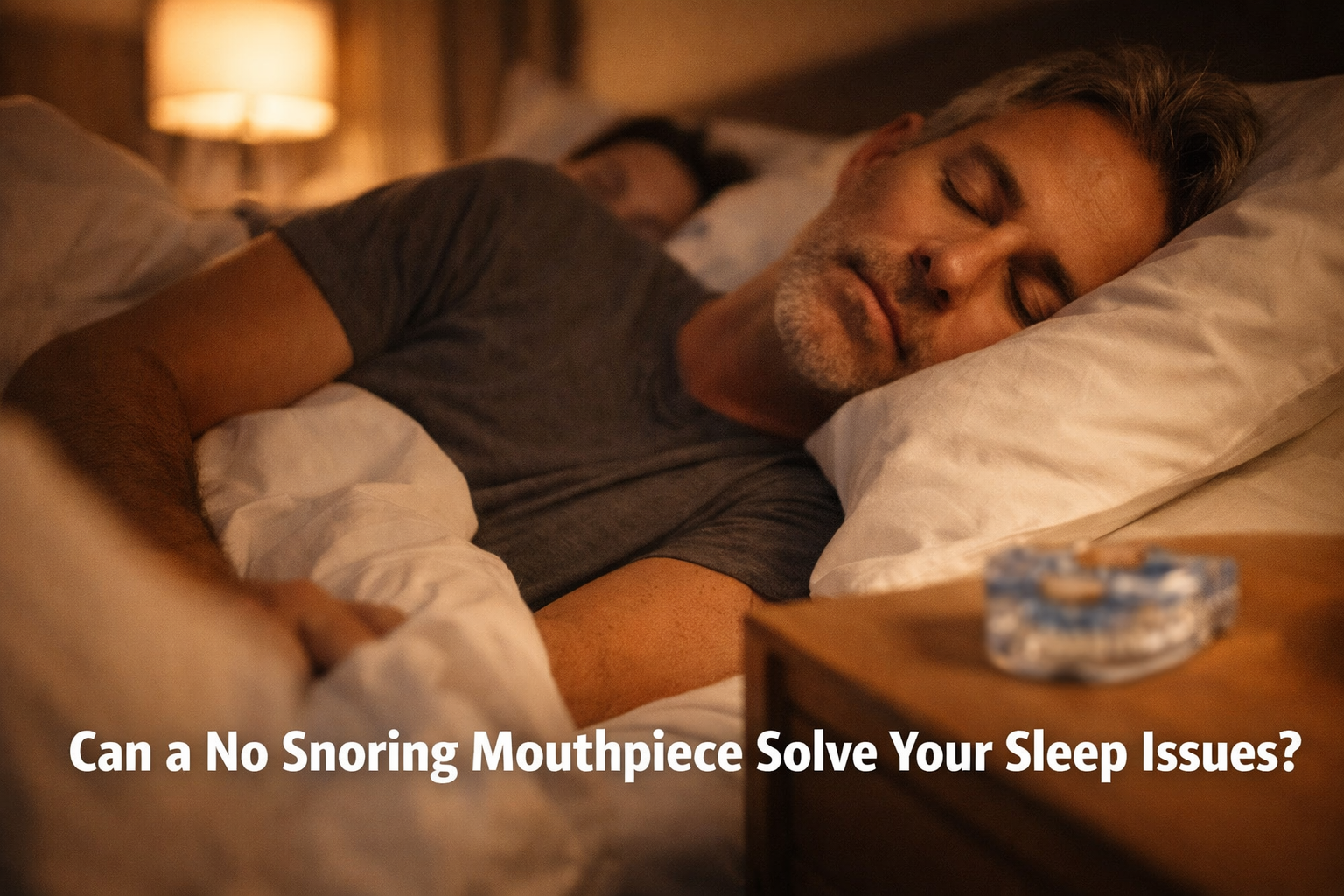
Can a No Snoring Mouthpiece Solve Your Sleep Issues?
Can a no snoring mouthpiece solve your sleep issues? For many, a dental appliance is the first line of defense against disruptive nighttime noise and fragmented sleep. While these devices are effective for silencing the bedroom, understanding the clinical difference between a simple over-the-counter guard and a medical-grade advancement device is vital for your long-term health.
According to Dr. Avinesh Bhar, Board Certified Sleep Physician at Sliiip.com, a mouthpiece should be viewed as a precision medical tool rather than a generic accessory. “While a no snoring mouthpiece can be life-changing for the right patient, it must be used to address the underlying structural cause of the airway collapse to be truly effective,” says Dr. Bhar.
It is a significant relief to find a solution that does not involve bulky machines or masks. However, if you are using a guard just to stop the noise while still waking up exhausted, you may be masking a deeper breathing problem. You deserve a solution that provides both silence and stable oxygen levels throughout the night.
Research published in the Journal of Dental Sleep Medicine demonstrates that Mandibular Advancement Devices (MADs) can reduce the Apnea-Hypopnea Index (AHI) by more than 50 percent in patients with mild to moderate obstructive sleep apnea. This confirms that a properly fitted appliance is a scientifically backed alternative to CPAP therapy.
SLIIIP’s board-certified sleep physicians can do sleep evaluations for sleep apnea. Virtual consultations in all 50 states. Home sleep tests shipped to your door.
No Snoring Mouthpiece Myths vs. Reality
Myth: Any “boil-and-bite” guard from a drugstore is a functional no snoring mouthpiece.
Reality: Generic guards often only protect the teeth from grinding. They do not provide the lower jaw advancement required to physically open the airway and prevent obstruction.
Myth: If I stop snoring with a mouthpiece, my sleep apnea is cured.
Reality: You can have “silent” apneas where the noise stops but the airway remains restricted. Only a follow-up sleep study can confirm whether your oxygen levels are stable throughout the night.
Myth: Mouthpieces are only for people who cannot tolerate CPAP therapy.
Reality: For many patients with specific jaw structures, a mouthpiece is actually the primary recommended treatment due to its high compliance rate and portability.
How a No Snoring Mouthpiece Works Internally

The mechanical goal of a no snoring mouthpiece is to address tongue-base obstruction. When you enter deep sleep, your jaw and tongue naturally relax and pull backward toward the throat. In a narrow airway, this creates the vibration we call snoring or a total blockage called apnea.
A medical-grade Mandibular Advancement Device gently shifts the lower jaw forward. Because the tongue is attached to the lower jaw, this forward shift pulls the tongue away from the back of the throat, physically widening the airway and allowing for silent, unobstructed breathing.
Choosing Between Over-the-Counter and Custom Devices
When searching for a non-snoring mouthpiece, you will encounter two main categories: thermoplastic “boil-and-bite” devices and custom-fabricated medical appliances. Over-the-counter options are inexpensive and can serve as a proof of concept to see if jaw advancement helps your snoring. However, they are often bulky and can cause significant jaw pain or tooth movement over time.
Custom devices, often managed through a collaboration between a sleep physician and a qualified sleep dentist, are titrated to your specific bite. These are slimmer, more comfortable, and allow for incremental adjustments. If you are serious about treating the root cause of your fatigue, a custom-fitted medical appliance is the superior clinical choice. At Sliiip.com, oral appliance therapy is prescribed and managed by board-certified physicians who oversee the full treatment process.
Who Is the Ideal Candidate for a Mouthpiece?
Not everyone who asks about a no snoring mouthpiece will find it effective. The best candidates are typically those with mild to moderate obstructive sleep apnea or those whose snoring is positional, meaning it gets worse when sleeping on their back.
Physicians also look at the Mallampati score and jaw alignment. If you have a recessed chin or a large tongue, a mouthpiece is often highly successful because it directly addresses that specific anatomical crowding. Not sure whether you fit the profile? Review the signs of sleep apnea or take our sleep apnea quiz before your consultation.
At Sliiip.com, we use home sleep apnea testing data to determine if your apnea severity falls within the range where a dental appliance can safely replace or augment other therapies.
The Importance of the Titration Process
A common mistake when using a no snoring mouthpiece is failing to titrate or adjust the device correctly. Simply wearing a guard is not enough: the jaw must be moved forward just enough to open the airway without overstraining the Temporomandibular Joint (TMJ).
This is why medical oversight is critical. If the jaw is advanced too far, you risk permanent bite changes. If it is not advanced far enough, you continue to experience oxygen deprivation during sleep. A board-certified sleep specialist ensures the device is doing its job by monitoring your symptoms and, in many cases, ordering a follow-up SleepImage test to verify that silent sleep is also healthy sleep.
Combining Mouthpieces with Lifestyle Changes
For many, a no snoring mouthpiece is one part of a larger recovery plan. While the device handles the structural blockage, other factors influence how hard it has to work. Reducing alcohol consumption before bed prevents the throat muscles from over-relaxing, which makes the mouthpiece more effective.
Managing nasal congestion is equally important. If your nose is blocked, you will naturally pull your mouth open to breathe, which can reduce the effectiveness of the appliance. Improving nasal breathing through hygiene and positioning creates a more comprehensive environment for restorative rest.
Watch also our video: Sleep Apnea: What is Oral Appliance Therapy?
Expert Q&A
- What does an oral appliance look like and will it be comfortable?
“When I’m discussing oral appliance therapy with my patients and showing them an example of an appliance, I like to make it about expectations. Obstructive Sleep Apnea is a very far-reaching condition, when left untreated it can have a negative impact on so many different systems of the body which in turn can cause a decrease in quality of life. So once the diagnosis is made, it really is no longer about whether to treat or not, but rather how to treat. When looked at this way, we are no longer comparing wearing an oral appliance to wearing nothing, but are comparing wearing an oral appliance to wearing a CPAP, or undergoing surgery. An oral appliance is typically much easier to get used to than PAP therapy or surgical side-effects. Most people have a few nights of getting used to having something different in their mouth, but quickly adjust and don’t have a problem wearing it all night. It’s a pretty simple transition considering the potential benefits of more restful sleep for the wearer as well as the added benefit of a bed partner likely not having to listen to snoring any longer. “
Brian Prins https://prinsdental.com/
Lifestyle Integration for Mouthpiece Users
To get the most out of your dental appliance, consider these steps alongside your device use.
Morning Jaw Stretches: Use a morning aligner or gentle jaw exercises to help your bite return to its natural position after a night of advancement.
Device Hygiene: Clean your no snoring mouthpiece daily with a non-abrasive cleaner to prevent bacterial buildup and gum irritation.
Nasal Strips: Use nasal strips in conjunction with the mouthpiece to ensure you can breathe comfortably through your nose and reduce the load on the appliance.
Side Sleeping: Even with a mouthpiece, side sleeping further reduces the gravitational pull on your airway and improves overall effectiveness.
SLIIIP’s board-certified sleep physicians can do sleep evaluations for sleep apnea. Virtual consultations in all 50 states. Home sleep tests shipped to your door.
Frequently Asked Questions
How do I know if a no snoring mouthpiece is right for me?
The best way to know is through a professional consultation and a home sleep apnea test. Generally, if your snoring improves when you manually move your lower jaw forward, a mouthpiece will likely help. However, a sleep physician must confirm that your apnea levels fall within the range that is safe for this type of treatment.
Can a no snoring mouthpiece cause jaw pain?
Temporary morning soreness in the jaw or teeth is common during the first few weeks of use. However, persistent or sharp pain may indicate that the device is improperly fitted or advanced too far. A custom-made medical device is much less likely to cause long-term TMJ issues than a generic over-the-counter option.
Is a mouthpiece as effective as a CPAP machine?
For mild to moderate sleep apnea, a mouthpiece can be just as effective as CPAP in reducing daytime sleepiness and improving quality of life. For severe cases, CPAP remains the gold standard. Some patients also explore broader CPAP alternatives when compliance is a concern.
How long does a no snoring mouthpiece last?
A high-quality, custom-made medical appliance typically lasts between three and five years with proper care. Over-the-counter boil-and-bite guards are made of softer materials and usually need replacing every three to six months as the material degrades and loses its structural integrity.
Can I wear a mouthpiece if I have dentures or implants?
This depends on the health of your remaining teeth and the stability of your implants. A no snoring mouthpiece requires stable anchor teeth to hold the jaw forward. If you have significant dental work, you must consult with a sleep dentist to determine if an appliance is viable for your specific situation.
Will a mouthpiece stop me from grinding my teeth?
Most advancement devices also act as a physical barrier between the upper and lower teeth, which protects them from bruxism. However, their primary purpose is airway management. If grinding is your only concern, a standard night guard is usually recommended rather than a full advancement device.
Can children use a no snoring mouthpiece?
Mouthpieces are generally not recommended for children because their jaws and teeth are still developing. Advancing a child’s jaw prematurely can interfere with natural growth patterns. Pediatric snoring should always be evaluated for enlarged tonsils or adenoids before any appliance is considered.
Do I need a sleep study before getting a mouthpiece?
Yes. It is clinically important to assess whether sleep apnea is present before treating snoring alone. A sleep study provides the baseline data needed to confirm that a no snoring mouthpiece is a safe and effective treatment for your specific respiratory profile. According to the National Heart, Lung, and Blood Institute, untreated sleep apnea carries significant cardiovascular risks that require proper diagnosis before any treatment is started.
How do I clean my dental sleep appliance?
Rinse your device every morning and clean it with a soft toothbrush and mild soap or a dedicated dental appliance cleaner. Avoid using toothpaste, as many formulas contain abrasives that create microscopic scratches where bacteria can accumulate over time.
Can a mouthpiece help with silent apnea?
Yes. Even in non-snorers, a mouthpiece can help keep a narrow airway open and reduce the work of breathing. This can help eliminate the nighttime adrenaline spikes that lead to morning anxiety and daytime brain fog, even when no snoring sound is present.
What happens if I stop wearing my no snoring mouthpiece?
Because the device provides a structural solution, the benefits only last as long as you wear it. If you stop using the appliance, your jaw will return to its naturally relaxed position during sleep, and your snoring or apnea events will likely return immediately.
Can I get a no snoring mouthpiece through Sliiip.com?
Our physicians at Sliiip.com specialize in diagnosing sleep disorders and determining the best treatment path. If a mouthpiece is appropriate for you, we can coordinate with your dentist or refer you to a qualified sleep dentist to ensure you receive a medical-grade, custom-fitted device backed by clinical oversight.
SLIIIP’s board-certified sleep physicians can do sleep evaluations for sleep apnea. Virtual consultations in all 50 states. Home sleep tests shipped to your door.
Latest posts
-
Why Are My Naps Never Refreshing?
Last updated: October 2, 2026. Medically reviewed by Dr. Avinesh Bhar, Board-Certified Sleep Physician, SLIIIP.com. Naps that leave you groggy usually come down to how long you sleep, when you…
-
Is Sleeping Too Much a Sleep Disorder?
Last updated: October 2, 2026. Medically reviewed by Dr. Avinesh Bhar, Board-Certified Sleep Physician, SLIIIP.com. Sleeping too much is not always a sleep disorder, but it can be a sign…
-
Why Does My Insomnia Get Worse After Stopping Sleep Medication?
Last updated: October 2, 2026. Medically reviewed by Dr. Avinesh Bhar, Board-Certified Sleep Physician, SLIIIP.com. Insomnia can get worse after stopping sleep medication for three main reasons. They are rebound…
Get updates
Spam-free subscription, we guarantee. This is just a friendly ping when new content is out.

