👉 Register for Free. How to Diagnose Sleep Apnea Faster in Primary Care – FREE Webinar by Dr. Audrey Wells. – Friday, April 24 at 12 PM ET

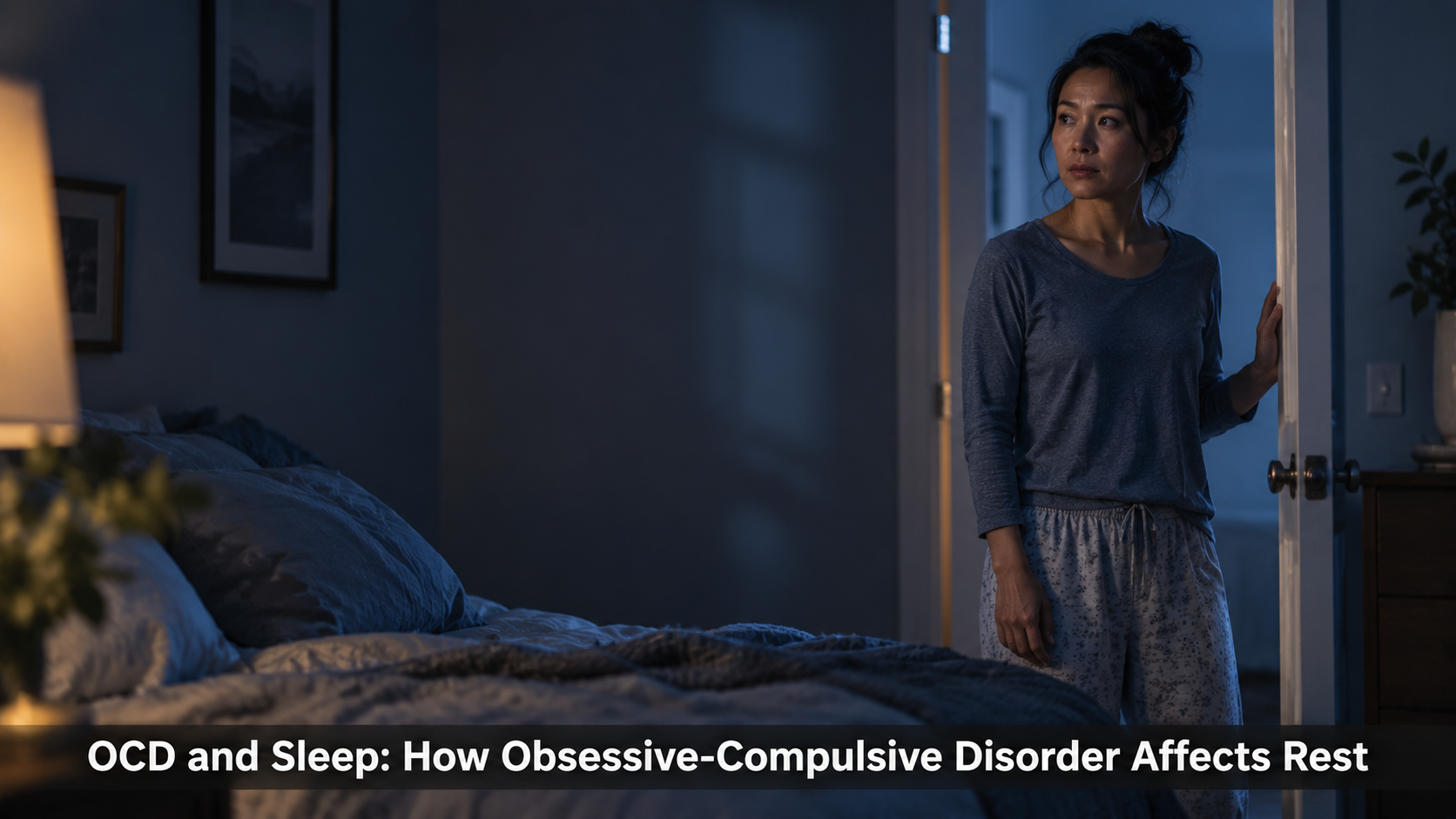
OCD and Sleep: How Obsessive-Compulsive Disorder Affects Rest
Last updated: September 6, 2026. Medically reviewed by Dr. Avinesh Bhar, Board-Certified Sleep Physician, SLIIIP.com.
OCD and sleep problems often occur together, though the connection gets far less attention than the anxiety and compulsions themselves. Dr. Avinesh Bhar, Board-Certified Sleep Physician at SLIIIP.com, sees patients managing OCD whose bedtime rituals and racing thoughts push sleep later and later without anyone identifying it as a sleep-specific pattern. Delayed sleep timing and insomnia symptoms are more common in people with OCD than in the general population. SLIIIP.com treats adults through virtual sleep evaluations, and Dr. Bhar explains how sleep and OCD interact.
SLIIIP’s board-certified sleep physicians can do sleep evaluations for sleep apnea. Virtual consultations in all 50 states. Home sleep tests shipped to your door.
What Is OCD?
OCD is a long-lasting disorder in which a person experiences uncontrollable and recurring thoughts, engages in repetitive behaviors, or both, according to the National Institute of Mental Health.
Symptoms are often time-consuming and can interfere with daily life, including the routines that support consistent sleep.
CHECK YOUR SLEEP SYMPTOMS: TAKE THE 2 MINUTE QUIZ
TAKE THE QUIZ
Nighttime Compulsions vs. Ordinary Bedtime Habits
It can be hard to tell where a normal bedtime habit ends and an OCD-driven compulsion begins. Most people check that a door is locked once and move on. For someone with OCD, that same check might happen many times, accompanied by intense anxiety if the ritual feels incomplete.
The distinguishing feature is usually distress and repetition, not the behavior itself. A single check is ordinary. A check repeated until it feels exactly right, often taking significant time away from sleep, points toward a compulsion rather than a routine.
Does OCD Affect Sleep Timing?
Yes. Delayed sleep timing and higher insomnia symptoms have been observed in adults with OCD compared to those without the condition, according to a study published on PMC.
The same research found that insomnia symptoms may help explain the relationship between delayed sleep timing and OCD symptom severity.
Why Bedtime Rituals and Racing Thoughts Delay Sleep
Nighttime is often when OCD symptoms feel most active, since a quiet room with fewer distractions can leave more space for intrusive thoughts and checking behaviors.
Rituals performed before bed, whether checking locks, repeating routines, or mental reviewing, can extend the time it takes to actually get into bed and fall asleep. This pattern can push bedtime progressively later, a delay that compounds over time if it becomes a habit.
The Two-Way Relationship Between Poor Sleep and OCD Symptoms
The relationship between sleep and OCD can work in both directions. Poor sleep is associated with increased negative mood and greater symptom severity in some studies, while OCD symptoms themselves interfere with the routines that support consistent sleep.
Improving sleep quality does not replace OCD treatment, but it may reduce some of the daily distress that makes symptoms feel more intense. For a broader look at sleep and mental health, see our guide on effective sleep solutions for mental health.
When an Independent Sleep Disorder May Be Involved
Not all sleep disruption in OCD comes from the condition itself. Sleep apnea, insomnia disorder, and delayed sleep phase patterns can develop independently and may need direct evaluation.
A sleep evaluation can help determine whether a separate, treatable sleep disorder is layered on top of OCD-related sleep changes. This distinction matters, since a sleep disorder like sleep apnea responds to its own specific treatment regardless of how well OCD symptoms are managed. Treating one condition without addressing the other often leaves a person feeling only partially better, which can be discouraging after putting in real effort on the mental health side alone.
When to See a Doctor
Talk to your mental health provider if OCD symptoms are worsening or if bedtime rituals are taking up an increasing amount of time each night.
Dr. Avinesh Bhar, Board-Certified Sleep Physician at SLIIIP.com, recommends a sleep evaluation for anyone with OCD whose bedtime consistently drifts later or who struggles with ongoing insomnia, since a coordinated approach between sleep and mental health care tends to work best. SLIIIP’s sleep physicians evaluate sleep disturbances in patients managing OCD, working alongside your existing mental health care team.
At Sliiip, we accept the following insurances:

Frequently Asked Questions About OCD and Sleep
Does OCD affect sleep?
Yes, delayed sleep timing and higher rates of insomnia symptoms have been observed in people with OCD.
Why does OCD get worse at night?
A quiet nighttime environment with fewer distractions can leave more space for intrusive thoughts and checking behaviors.
Can bedtime rituals be part of OCD?
Yes, checking, repeating, or mental reviewing rituals before bed are common and can delay sleep onset.
Does poor sleep make OCD symptoms worse?
Poor sleep quality has been associated with greater symptom severity and negative mood in some studies of OCD.
Can treating sleep problems help OCD symptoms?
Improving sleep does not replace OCD treatment but may reduce some of the daily distress associated with symptoms.
What is delayed sleep phase and how does it relate to OCD?
Delayed sleep phase means a naturally later sleep and wake time, and it has been linked to OCD symptom severity through insomnia symptoms.
Should I see a sleep physician if I have OCD?
A sleep evaluation can help determine whether an independent sleep disorder is contributing to your sleep problems.
Does SLIIIP treat OCD?
No, SLIIIP evaluates and treats sleep disorders and works alongside your mental health care team, which manages OCD directly.
Can OCD cause insomnia?
Insomnia symptoms are more common in people with OCD than in the general population.
Is it normal for OCD compulsions to happen right before bed?
Bedtime is a common time for compulsions to intensify, since there are fewer distractions from intrusive thoughts.
Can a consistent bedtime routine help with OCD-related sleep problems?
A structured wind-down routine can help, though rituals driven by OCD may need to be addressed with a mental health provider as well.
What is the connection between anxiety, OCD, and sleep?
Anxiety and OCD both commonly disrupt sleep through racing thoughts, heightened arousal, and compulsive behaviors at bedtime.
Can medication for OCD affect sleep?
Some medications used to treat OCD can affect sleep, which is worth discussing with your prescribing provider.
How is a sleep evaluation different from OCD treatment?
A sleep evaluation focuses on sleep-specific conditions like sleep apnea or insomnia, separate from OCD symptom treatment.
Can sleep apnea occur alongside OCD?
Yes, sleep apnea can occur independently of OCD and may go unrecognized if sleep problems are assumed to be OCD-related only.
Does exposure and response prevention therapy affect sleep?
ERP is a standard OCD treatment and, by reducing symptom severity over time, may indirectly improve sleep-related routines.
What is a home sleep test and how does it help?
A home sleep test screens for sleep apnea from home and can clarify whether a treatable breathing disorder is affecting your sleep.
Can OCD symptoms in children affect their sleep?
Yes, bedtime rituals and intrusive thoughts can affect sleep timing in children and teens with OCD as well as adults.
Does eveningness, or being a night owl, relate to OCD?
Research has found an association between eveningness, poorer sleep quality, and OCD symptoms.
Who should I contact first if bedtime rituals are taking over my nights?
Contact your mental health provider first, and consider a sleep evaluation if insomnia or delayed sleep timing persists independently.
SLIIIP’s board-certified sleep physicians can do sleep evaluations for sleep apnea. Virtual consultations in all 50 states. Home sleep tests shipped to your door.
Latest posts
-
Why Do I Feel Drunk or Confused When I Wake Up?
Last updated: October 2, 2026. Medically reviewed by Dr. Avinesh Bhar, Board-Certified Sleep Physician, SLIIIP.com. If you often feel drunk when you wake up, you may have sleep drunkenness. It…
-
Why Do I Sleep Through Multiple Alarms?
Last updated: October 2, 2026. Medically reviewed by Dr. Avinesh Bhar, Board-Certified Sleep Physician, SLIIIP.com. Most people who sleep through alarms are either deep in slow-wave sleep, short on sleep,…
-
Why Can’t I Wake Up Even After Getting Enough Sleep?
Last updated: October 2, 2026. Medically reviewed by Dr. Avinesh Bhar, Board-Certified Sleep Physician, SLIIIP.com. If you can’t wake up after enough sleep, the cause is usually not the number…
Get updates
Spam-free subscription, we guarantee. This is just a friendly ping when new content is out.

