👉 Register for Free. How to Diagnose Sleep Apnea Faster in Primary Care – FREE Webinar by Dr. Audrey Wells. – Friday, April 24 at 12 PM ET

Oral Appliance for Snoring
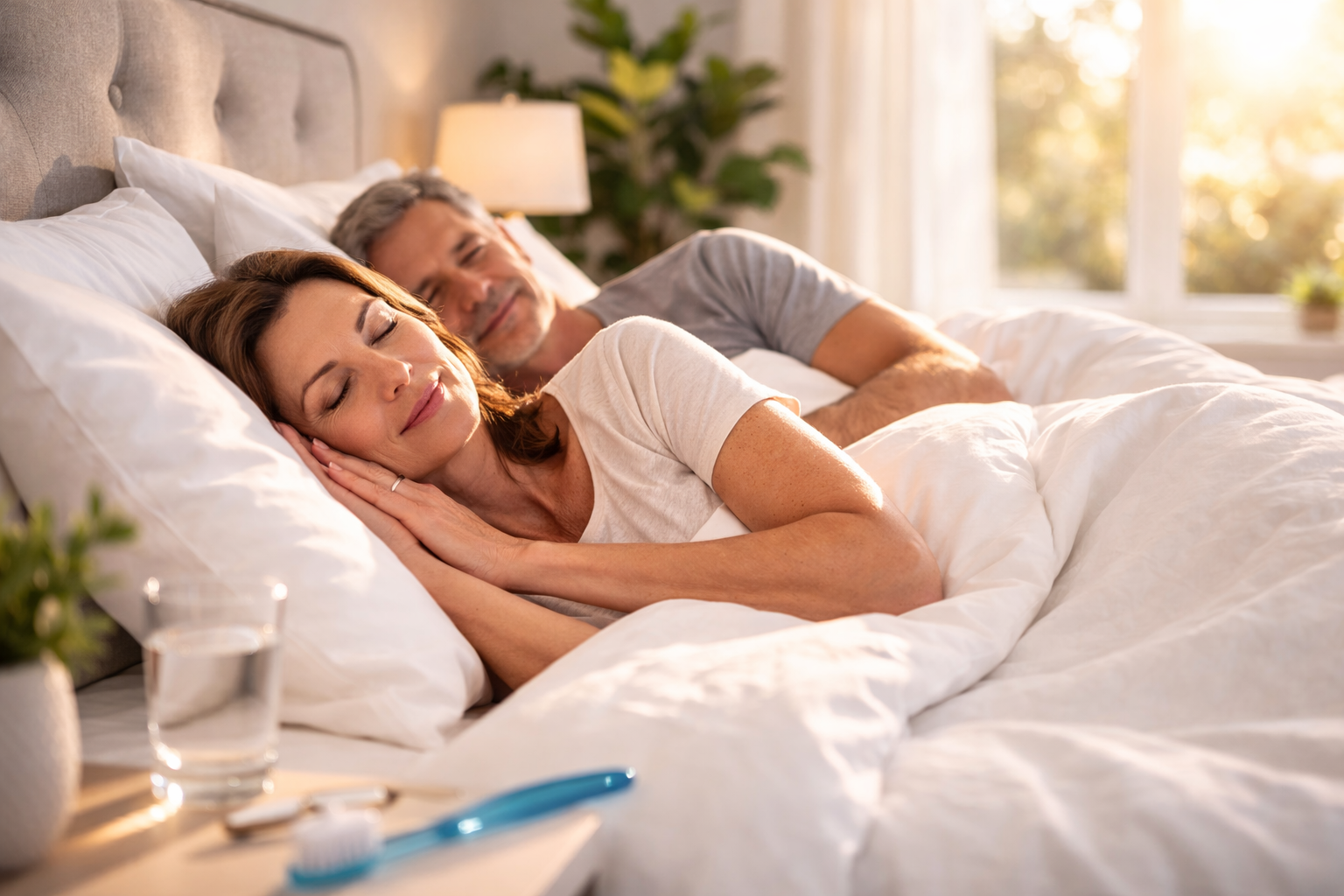
An oral appliance for snoring can significantly reduce or eliminate snoring by holding your lower jaw slightly forward during sleep. This opens the airway and reduces the vibration of soft tissue in the throat. Dr. Avinesh Bhar, the Founder of SLIIIP mentions that “Oral appliances are effective for snoring both but insurance can cover this if you have a sleep apnea diagnosis.”
When Snoring Is More Than Just a Noise Problem
Your bed partner has started sleeping in the guest room. You wake yourself up with your own snoring. You feel mildly embarrassed when sharing a hotel room with colleagues. Snoring is often dismissed as an annoyance, but when it starts affecting your relationships and your rest, it deserves attention.
The important question is not just how to stop the noise. It is whether the noise signals something deeper. Snoring is the most common symptom of obstructive sleep apnea, a condition that affects breathing during sleep. And the line between harmless snoring and sleep apnea is not always obvious without a sleep study.
An oral appliance can address both. But knowing what you are dealing with before choosing a solution is the smarter, safer path.
Myth vs Reality: Snoring and Oral Appliances
Myth: Snoring is harmless and purely a comfort issue.
Reality: While some snoring is benign, habitual loud snoring is the most common symptom of obstructive sleep apnea. According to the American Academy of Sleep Medicine, a significant percentage of people who snore heavily have undiagnosed sleep apnea.
Myth: An oral appliance is only for people with sleep apnea, not for snoring.
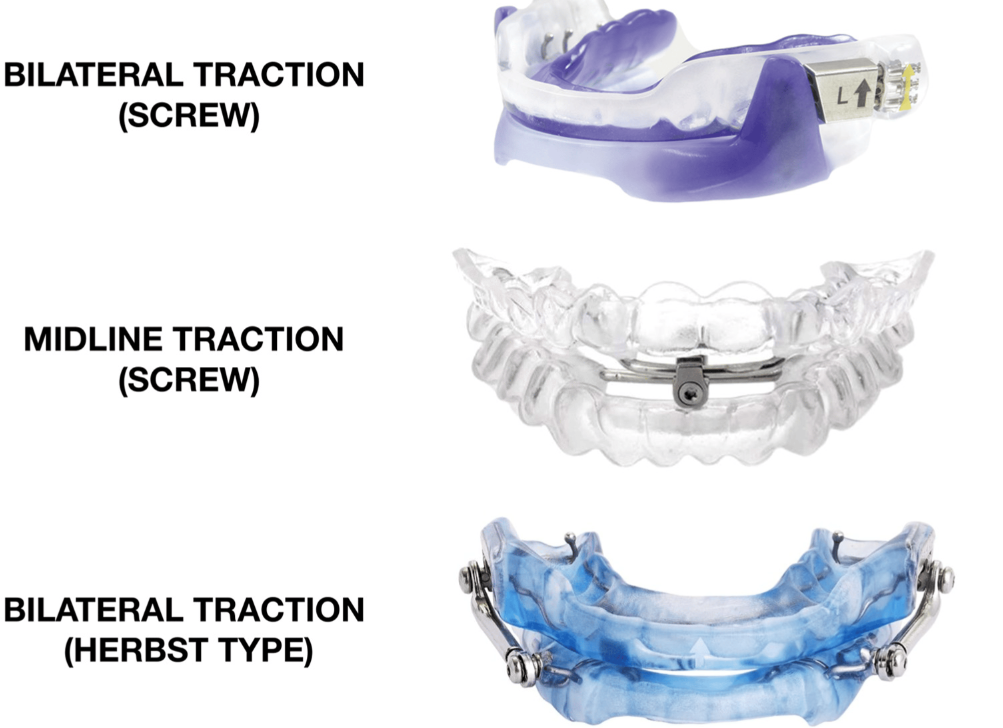
Reality: Oral appliances are recognized by the American Academy of Dental Sleep Medicine as effective for both obstructive sleep apnea and primary snoring. Mandibular advancement devices reduce snoring by opening the airway and minimizing soft tissue vibration.
Myth: You can tell the difference between snoring and sleep apnea without a sleep study.
Reality: Snoring volume and frequency do not reliably predict whether sleep apnea is present. The only way to distinguish primary snoring from obstructive sleep apnea is a diagnostic sleep study that measures breathing events, oxygen levels, and sleep stages.
Myth: If I only snore and do not have sleep apnea, I do not need to see a doctor.
Reality: A sleep evaluation is valuable even for snoring alone. It either rules out sleep apnea, giving you peace of mind, or it identifies a condition that benefits from monitoring and management.
Ready to find out what is behind your snoring?
Sliiip’s board-certified sleep physicians evaluate your symptoms and determine whether a sleep study is needed. No referral required. Available in all 50 states. Over 10,000 consultations completed. Most major insurance plans accepted.
How Snoring Happens
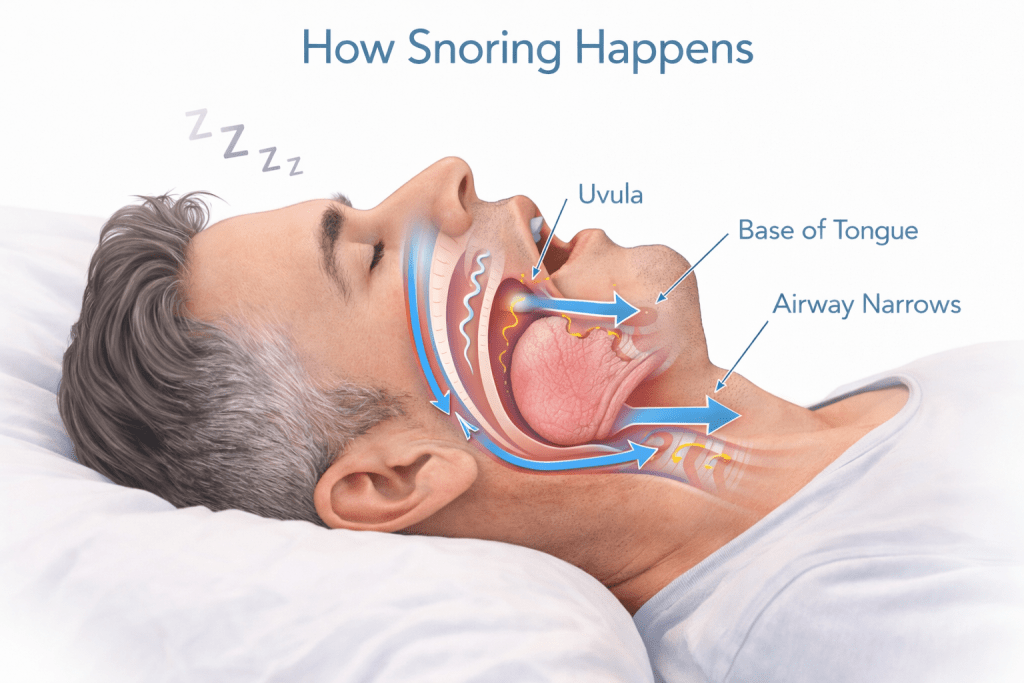
Snoring occurs when airflow causes the relaxed tissues in the back of your throat to vibrate during sleep. As you breathe in, the walls of your throat relax and narrow. The narrower the airway, the greater the vibration, and the louder the snoring.
Several factors contribute to airway narrowing during sleep.
- Natural muscle relaxation during sleep allows throat tissues to sag into the airway as you fall asleep.
- Sleeping on your back lets gravity pull the tongue and soft palate backward, narrowing the airway.
- Nasal congestion can force mouth breathing, increasing turbulence and instability in the throat.
- Alcohol consumption relaxes throat muscles beyond their normal degree, making airway collapse more likely.
- Excess tissue around the neck, often associated with weight, adds physical bulk that can compress and narrow the airway.
An oral appliance addresses one of the most significant anatomical contributors to snoring: the position of the lower jaw. By holding the mandible slightly forward, the device pulls the tongue base away from the back of the throat and tightens the soft tissue that would otherwise vibrate.
When Snoring Could Be Something More
Snoring alone is not the same as sleep apnea. But snoring accompanied by other signs may indicate that your airway is partially or completely closing during sleep, not just narrowing.
Pay attention to whether your snoring is accompanied by any of the following: gasping or choking sounds during sleep, pauses in breathing observed by a bed partner, excessive daytime sleepiness despite adequate hours in bed, morning headaches, difficulty concentrating during the day, waking frequently to urinate at night, or a dry mouth upon waking.
Check your partners snoring tonight to see if it sounds like this. If it does, it’s probably sleep apnea.
If any of these are present alongside your snoring, a sleep study is strongly recommended. A home sleep apnea test is a convenient way to evaluate your breathing during sleep without leaving your bedroom.

Even if you do not experience these additional signs, getting a sleep study before investing in a snoring solution ensures you are making an informed decision. Some people are surprised to discover that what they thought was simple snoring is actually obstructive sleep apnea.
Often these types of home sleep tests are covered by insurance. At SLIIIP we accept self-pay and insurance covered sleep tests.See the insurances we accept in the image below.

How Oral Appliances Reduce Snoring
Mandibular advancement devices are the most commonly used oral appliance for snoring. The device holds your lower jaw forward during sleep, which has several effects on the airway.
First, it moves the tongue base forward, creating more space behind the tongue where the airway is most vulnerable to collapse. Second, it stretches the soft palate and pharyngeal walls, which reduces the laxity of the tissue that causes vibration. Third, it stabilizes the jaw so it does not fall open during sleep, which would otherwise worsen airway narrowing.
The result is a wider, more stable airway with less tissue vibration. For many snorers, this means a dramatic reduction in snoring volume or complete elimination.
Expert Q and A with a Sleep Dentist
Jesse Whitely DDS
https://foothillsleepsolutions.com/
1) Patients don’t think they have sleep apnea.
This is always the challenge when presenting patients with the facts of what we see: elongated uvula, red gums, heavy bruxism, neck fat, etc. These are pretty solid indicators of the likelihood there is snoring and/or OSA, and things we regularly screen for in our general dental exams. Many of these patients will balk and think nothing of it. HOWEVER, when we are able to work side by side with medical professionals, who have done the diligence to diagnose OSA, this is rarely comes up. In my opinion and experience, having good, quality referral relationships with medical providers and working side by side with them is ultimately the best way to get patients to understand the complexity and severity of their disease and why we are recommending this treatment.
2) They think the oral appliance will be uncomfortable.
I work with patients to find the best appliance for them. There are really good, slim material options on the market, now, that can reduce this concern. I explain in detail what their sleep study indicates, why it is an issue for them and affecting their life, and how CPAP is the other alternative and likely more uncomfortable
3) They wonder if they have to wear the oral appliance all their life?
Most patients will, much like they would need to wear a CPAP their whole life. Now, if we can get a patient to be serious about their disease, discuss weight loss and work toward reducing some of the peripheral causes, there is a likelihood of reducing the need, but not likely eliminating it all together
4) How many years can an oral appliance last?
This will be different for everyone. Some people are really hard on the appliance and they will not last as long. If there is major dental work to be done, it is possible the appliance will no longer fit. Often these will last at least 3-5 years, if not longer
5) Does insurance cover oral appliance?
It can……but is wholly dependent on their individual policy to determine what their out of pocket cost might be
6) Is it more comfortable than CPAP?
The majority of people will resoundingly say YES
Oral Appliance Options for Snoring
If you snore and do not have sleep apnea, you have several oral appliance pathways.
Custom Mandibular Advancement Devices (Self-Pay) You can obtain a custom-fitted mandibular advancement device through a dental provider on a self-pay basis. Custom devices offer the best fit, adjustability, and durability. Without insurance coverage, the cost typically ranges from $1,500 to $2,500.
Over-the-Counter Mandibular Advancement Devices OTC boil-and-bite devices are available without a prescription and cost $30 to $200. While they may provide some snoring reduction, they lack the precision fit, adjustability, and durability of custom devices. They also cannot be verified through a follow-up sleep study.
Prescription Oral Appliances Through Telemedicine If your sleep study reveals obstructive sleep apnea, even at the mild level, a prescription oral appliance becomes available with potential insurance coverage. This pathway often makes financial and clinical sense, as it provides a custom device, professional fitting, and follow-up care.
To explore the types of mandibular advancement devices available, visit our MAD comparison guide.
The Value of Getting a Sleep Study First

Getting a sleep study before purchasing any snoring device serves multiple purposes.
- Confirms or rules out obstructive sleep apnea, providing clear diagnostic answers.
- If sleep apnea is present, insurance coverage for a custom oral appliance may become available, potentially saving you over a thousand dollars.
- If sleep apnea is not present, you gain clinical clarity, allowing you to choose a snoring solution with confidence, knowing a more serious condition has been ruled out.
- Provides a baseline measurement of your breathing and sleep metrics.
- Enables objective follow-up testing if you begin oral appliance therapy, so improvements can be measured with data rather than relying solely on subjective impressions.
Lifestyle Factors That Affect Snoring
While an oral appliance addresses the mechanical component of snoring, several lifestyle factors can amplify or reduce your symptoms.
Sleep Position Sleeping on your back increases snoring because gravity pulls the tongue and soft palate toward the back of the throat. Side sleeping can reduce snoring significantly for some people. A positional pillow or body pillow may help you maintain side sleeping throughout the night.
Alcohol and Sedatives Alcohol relaxes throat muscles beyond their normal degree, increasing both the likelihood and volume of snoring. Avoiding alcohol for three to four hours before bedtime often produces noticeable improvement.
Nasal Congestion Congestion from allergies, colds, or structural issues forces mouth breathing, which increases airway turbulence and snoring. Addressing nasal congestion through saline rinses, allergy management, or nasal strips may reduce snoring.
Weight Excess weight, particularly around the neck, increases the amount of tissue that can compress the airway during sleep. Even modest weight changes can affect snoring volume.
Hydration Dehydration can make the soft tissue in your throat stickier and more prone to vibration. Staying well-hydrated throughout the day supports softer, more pliable tissue.
For more strategies on reducing snoring, visit our how to stop snoring guide.
Making Quiet Nights Your New Normal
Whether your snoring turns out to be primary snoring or a sign of obstructive sleep apnea, the path forward begins with understanding. A telemedicine consultation takes minutes. A home sleep study takes one night. The clarity you gain lasts a lifetime.
An oral appliance, chosen with professional guidance and fitted for your specific anatomy, can transform your nights from noisy disruption to quiet restoration. The key is starting the conversation.
Frequently Asked Questions
Do oral appliances work for snoring without sleep apnea? Yes. Mandibular advancement devices reduce snoring by advancing the jaw forward and opening the airway. They are effective for primary snoring as well as snoring associated with obstructive sleep apnea.
Does insurance cover an oral appliance for snoring alone? No. Insurance coverage requires a diagnosis of obstructive sleep apnea confirmed by a sleep study. Snoring without sleep apnea is classified as a quality of life issue rather than a medical necessity.
How much does an oral appliance cost for snoring without insurance? Custom mandibular advancement devices typically cost $1,500 to $2,500 on a self-pay basis. Over-the-counter alternatives range from $30 to $200 but offer less precision and durability.
Should I get a sleep study before buying a snoring mouthguard? Yes. A sleep study determines whether your snoring is accompanied by obstructive sleep apnea. If sleep apnea is present, insurance may cover a custom oral appliance, saving you significant out-of-pocket expense.
What is the difference between primary snoring and sleep apnea? Primary snoring involves vibration of throat tissue without significant breathing pauses or oxygen level drops. Obstructive sleep apnea involves repeated partial or complete airway closure during sleep, measured by the apnea-hypopnea index on a sleep study.
Can lifestyle changes alone stop snoring? For some people, changes such as sleeping on your side, avoiding alcohol before bed, managing nasal congestion, and maintaining a healthy weight can meaningfully reduce snoring. For others, structural factors require a mechanical solution like an oral appliance.
Are OTC anti-snoring mouthguards effective? OTC boil-and-bite devices may provide some degree of snoring reduction for some people. However, they lack the custom fit, adjustability, and clinical verification of prescription mandibular advancement devices.
How quickly does an oral appliance reduce snoring? Many people notice a significant reduction in snoring from the first night of use. The full benefit may take a few weeks as the device is titrated to the optimal jaw position.
Can snoring come back after using an oral appliance? If you stop using the device, snoring will likely return because the underlying anatomy has not changed. Consistent nightly use is necessary to maintain the benefit.
Is snoring dangerous if I do not have sleep apnea? Primary snoring without sleep apnea is not considered medically dangerous. However, it can significantly affect sleep quality for both you and your bed partner, impacting daytime alertness and relationship harmony.
Can I use an oral appliance while wearing a retainer? No. Orthodontic retainers and oral appliances cannot be worn simultaneously. If you are currently in orthodontic care, complete that phase before pursuing oral appliance therapy.
Will losing weight stop my snoring? Weight loss can reduce snoring in many people, especially if excess weight around the neck is contributing to airway compression. However, some people continue to snore regardless of weight due to structural anatomy.
Latest posts
-
Why Are My Naps Never Refreshing?
Last updated: October 2, 2026. Medically reviewed by Dr. Avinesh Bhar, Board-Certified Sleep Physician, SLIIIP.com. Naps that leave you groggy usually come down to how long you sleep, when you…
-
Is Sleeping Too Much a Sleep Disorder?
Last updated: October 2, 2026. Medically reviewed by Dr. Avinesh Bhar, Board-Certified Sleep Physician, SLIIIP.com. Sleeping too much is not always a sleep disorder, but it can be a sign…
-
Why Does My Insomnia Get Worse After Stopping Sleep Medication?
Last updated: October 2, 2026. Medically reviewed by Dr. Avinesh Bhar, Board-Certified Sleep Physician, SLIIIP.com. Insomnia can get worse after stopping sleep medication for three main reasons. They are rebound…
Get updates
Spam-free subscription, we guarantee. This is just a friendly ping when new content is out.

