👉 Register for Free. How to Diagnose Sleep Apnea Faster in Primary Care – FREE Webinar by Dr. Audrey Wells. – Friday, April 24 at 12 PM ET

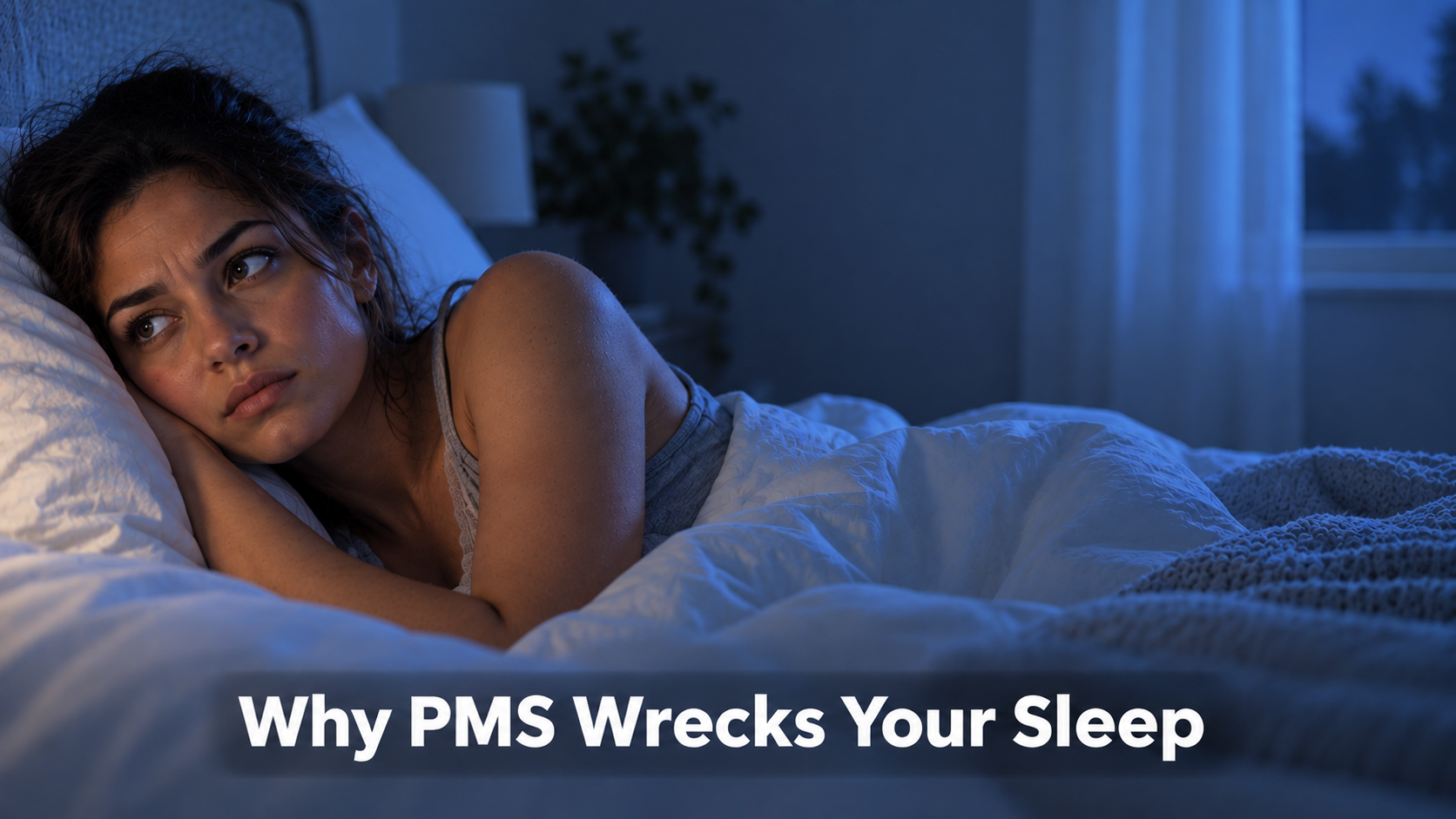
Why Does PMS Wreck My Sleep Even When My Symptoms Are Mild?
Last updated: September 21, 2026. Medically reviewed by Dr. Avinesh Bhar, Board-Certified Sleep Physician, SLIIIP.com.
Sleep can fall apart in the days before your period even when your other PMS symptoms feel manageable, because sleep disruption and PMS severity do not always move together.
For some women, disrupted sleep is the most disproportionate symptom of the premenstrual window, out of step with relatively mild cramping or mood changes. Dr. Avinesh Bhar, Board-Certified Sleep Physician at SLIIIP.com, notes that this mismatch is often a sign of heightened sensitivity to normal hormone shifts rather than a sign that nothing is really wrong. Understanding why this happens can validate a pattern many women have been told to just live with.
SLIIIP’s board-certified sleep physicians can do sleep evaluations for sleep apnea. Virtual consultations in all 50 states. Home sleep tests shipped to your door.
Why Sleep Can Be Hit Harder Than Other PMS Symptoms
In the late luteal phase, the days just before your period, progesterone and estrogen both drop sharply after two weeks of relatively higher levels. Progesterone’s calming effect on the brain, produced through its conversion to allopregnanolone, fades along with it. For most women this drop causes a mild, temporary dip in sleep quality that resolves once the period begins, which is part of why the more disruptive version can be mistaken for simply having a harder time than usual.
Some women’s brains appear to be more sensitive to this specific hormonal drop than others, even when their physical PMS symptoms like bloating or cramping stay mild. This sensitivity is part of what distinguishes ordinary premenstrual sleep disruption from a milder, more proportional response.
Is This Related to PMDD?
It can be. Premenstrual dysphoric disorder, or PMDD, is a more severe premenstrual condition affecting up to 5 percent of women of reproductive age, and trouble sleeping is a recognized symptom of it, according to the Office on Women’s Health. PMDD is thought to involve a heightened brain sensitivity to normal hormonal fluctuation rather than abnormal hormone levels themselves.
Disproportionate sleep disruption relative to other symptoms can be one thread of this broader sensitivity, even in women who do not meet the full diagnostic picture for PMDD. Serotonin activity, which shifts across the menstrual cycle, is believed to play a role in this heightened response.
Could Something Besides Hormones Be Involved?
Some research suggests that sleep-disordered breathing symptoms can fluctuate across the menstrual cycle, with breathing disruptions becoming more noticeable around menstruation and easing after ovulation as progesterone rises. For women whose premenstrual sleep disruption is severe or comes with snoring, gasping, or daytime exhaustion beyond what PMS alone would explain, an underlying breathing pattern is worth ruling out.
Cyclical sleep disruption that recurs every month in the same window is still worth a real evaluation, not dismissal, even when it resolves on its own once the period starts.
What Can Help in the Meantime
Tracking symptoms across two to three cycles helps confirm whether the pattern is truly tied to the luteal phase or driven by something else entirely. Consistent sleep and wake times, limiting alcohol in the days before your period, and moderate daytime exercise are associated with modest improvement in premenstrual sleep quality for some women.
None of these steps address PMDD-level symptoms or an underlying sleep disorder on their own, which is why persistent or severe disruption still calls for a proper evaluation rather than ongoing self-management. Self-management strategies are worth trying while you gather information, but they should not become the permanent plan if the underlying pattern never actually improves.
Watch: Dr. Bhar Explains Why Women Have More Sleep Problems Than Men
When to See a Doctor
If premenstrual sleep disruption is severe, comes with significant mood symptoms, or is affecting daily functioning for a week or more each month, it is worth discussing with a physician rather than treating as an unavoidable monthly cost. Dr. Bhar recommends evaluation especially when sleep problems feel out of proportion to other PMS symptoms, since that mismatch can point toward PMDD-related sensitivity or a coexisting sleep disorder that a home sleep test can help clarify.
Tracking the pattern against your cycle for two to three months gives a physician useful information to work from. This is especially worth doing if the disruption has been present for a long time and simply accepted as normal, since PMDD and related sensitivity patterns are treatable once identified rather than something to permanently work around.
Insurance and Cost
SLIIIP works with most major insurance plans, including Medicare and TRICARE, and offers transparent cash pricing for patients without applicable coverage.

SLIIIP’s board-certified sleep physicians can do sleep evaluations for sleep apnea. Virtual consultations in all 50 states. Home sleep tests shipped to your door.
Frequently Asked Questions
Why does PMS affect my sleep more than my other symptoms?
Some women’s brains are more sensitive to the sharp progesterone drop before menstruation, which can hit sleep harder than physical symptoms.
Is disrupted sleep before my period linked to PMDD?
It can be; trouble sleeping is a recognized symptom of PMDD, a more severe form of premenstrual syndrome.
What percentage of women have PMDD?
PMDD affects up to about 5 percent of women of reproductive age.
Can PMS cause insomnia even with mild cramps?
Yes, sleep disruption does not always track with the severity of physical PMS symptoms.
What causes the sleep disruption before a period?
A sharp drop in progesterone and estrogen in the late luteal phase reduces a natural calming effect on the brain.
Is it PMS or PMDD if my sleep is badly affected?
PMDD involves more severe symptoms overall and requires five or more symptoms to meet diagnostic criteria; a physician can help distinguish the two.
Can serotonin changes affect premenstrual sleep?
Yes, serotonin activity shifts across the menstrual cycle and may play a role in heightened premenstrual symptoms, including sleep disruption.
Does this pattern happen every month?
For many women it does, recurring in the same window before each period.
Can sleep apnea symptoms change across the menstrual cycle?
Some research suggests breathing disruptions may increase around menstruation and ease after ovulation.
Should I track my sleep against my cycle?
Yes, tracking for two to three cycles can help a physician identify a clear hormonal pattern.
Can birth control help with premenstrual sleep disruption?
It may help some women by stabilizing hormone fluctuation, though effects vary by individual and method.
Is it normal to need more sleep before my period?
Feeling more fatigued premenstrually is common, though disrupted, poor-quality sleep is a separate issue worth addressing.
Can antidepressants help PMDD-related sleep problems?
SSRIs are a recognized treatment for PMDD and may help improve associated sleep and mood symptoms; this should be discussed with a physician.
Does exercise help with premenstrual sleep issues?
Regular exercise is associated with modest improvements in PMS symptoms, including sleep quality, for some women.
Can stress make premenstrual sleep disruption worse?
Yes, stress and hormonal fluctuation can compound each other in the days before a period.
When should I see a doctor about this pattern?
If sleep disruption is severe, recurs monthly, or affects daily functioning, it is worth a medical evaluation.
Can a sleep evaluation help even if the cause is hormonal?
Yes, an evaluation can rule out a coexisting sleep disorder and help guide appropriate treatment.
Is premenstrual insomnia the same for every woman?
No, severity and pattern vary widely, and some women experience little to no premenstrual sleep disruption at all.
Can magnesium or other supplements help?
Some women report benefit from magnesium for PMS symptoms, though evidence is mixed and it should be discussed with a doctor.
What is the first step if this pattern is affecting my life?
Start tracking symptoms against your cycle and book an evaluation to discuss whether PMDD or a sleep disorder is contributing.
Take the Next Step
SLIIIP’s board-certified sleep physicians can do sleep evaluations for sleep apnea. Virtual consultations in all 50 states. Home sleep tests shipped to your door.
Latest posts
-
How Are My Hot Flashes Related to Menopause? The Mechanism Explained
Last updated: September 21, 2026. Medically reviewed by Dr. Avinesh Bhar, Board-Certified Sleep Physician, SLIIIP.com. Hot flashes are directly related to menopause through declining estrogen’s effect on the hypothalamus, the…
-
Why Did My Sleep Change So Fast in My Late 40s?
Last updated: September 21, 2026. Medically reviewed by Dr. Avinesh Bhar, Board-Certified Sleep Physician, SLIIIP.com. Sleep can change quickly in the late 40s because this is often when the perimenopause-to-menopause…
-
Why Does PMS Wreck My Sleep Even When My Symptoms Are Mild?
Last updated: September 21, 2026. Medically reviewed by Dr. Avinesh Bhar, Board-Certified Sleep Physician, SLIIIP.com. Sleep can fall apart in the days before your period even when your other PMS…
Get updates
Spam-free subscription, we guarantee. This is just a friendly ping when new content is out.

