👉 Register for Free. Peri/Menopause at Midnight: Why You Wake Up Hot, Wired, and Wide Awake at 3AM. – Friday, March 27th, 3:00 AM ET with Dr. Audrey Wells.

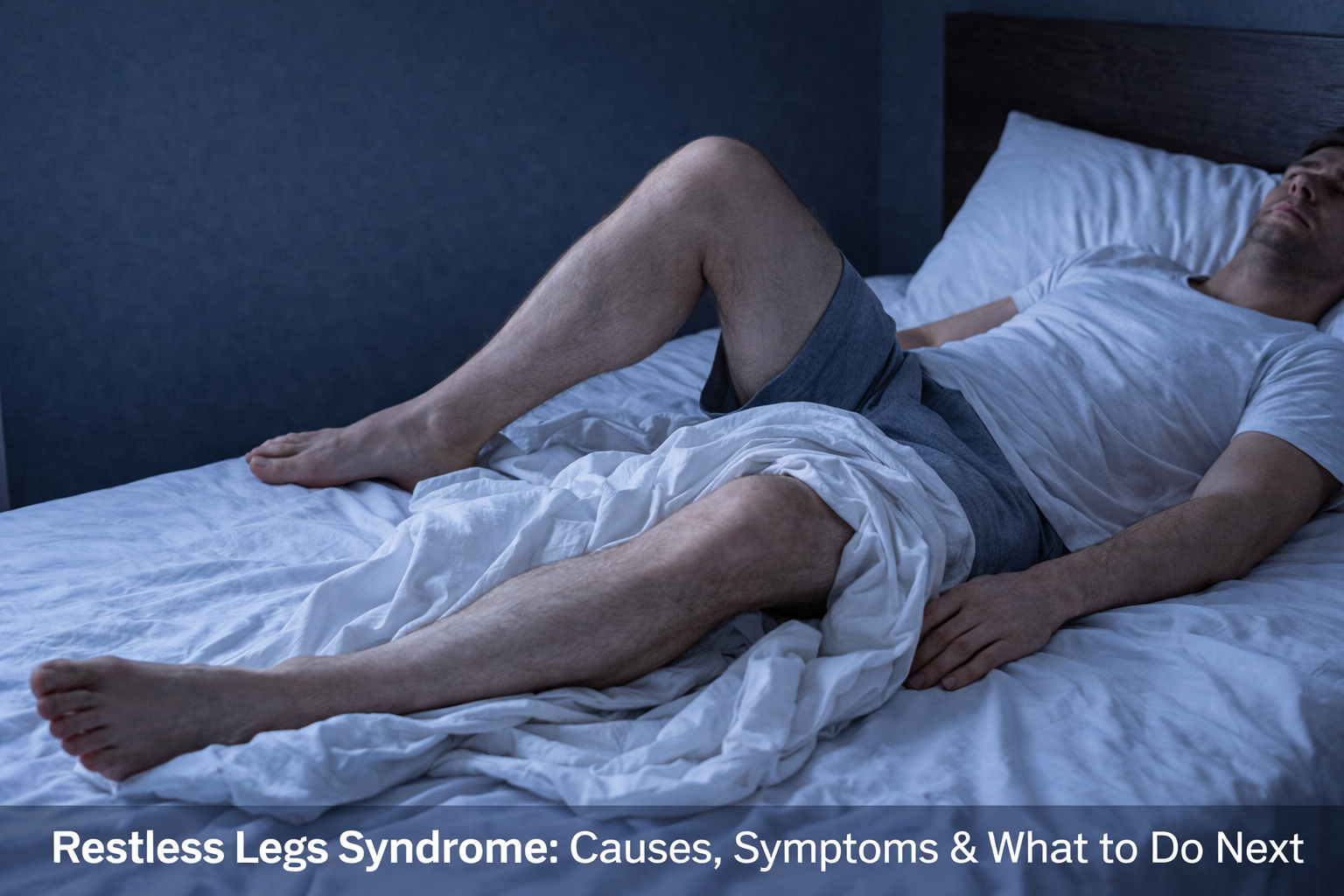
Restless Legs Syndrome: Causes, Symptoms, and What to Do Next
Restless legs syndrome is a neurological condition that creates uncomfortable sensations in the legs and an irresistible urge to move them, typically at rest and at night. It is a recognized sleep disorder that requires a clinical evaluation. If your legs are disrupting your sleep and your quality of life, a physician consultation is the appropriate first step.
Medically reviewed by Dr. Avinesh Bhar, Board Certified Sleep Physician, Sliiip.com
It starts at night. A creeping, crawling, or aching sensation in your legs that intensifies when you sit or lie down. Moving brings brief relief. But the urge returns. Sleep becomes impossible.
Restless legs syndrome, also called Willis-Ekbom disease, is not just restlessness. It is a neurological sleep disorder that disrupts nightly sleep, creates significant daytime fatigue, and is associated with other health conditions. Dr. Avinesh Bhar, board-certified sleep physician at Sliiip.com, regularly evaluates patients whose restless legs have gone undiagnosed for years.
SLIIIP’s board-certified sleep physicians can do sleep evaluations for sleep apnea. Virtual consultations in all 50 states. Home sleep tests shipped to your door.
Restless legs syndrome affects an estimated 5 to 10 percent of adults in the United States. It is more common in women and becomes more prevalent with age. (NINDS)
Myth vs. Reality
Common Belief | Clinical Reality |
Restless legs is just fidgeting or anxiety | RLS is a recognized neurological sleep disorder with defined diagnostic criteria |
Only older adults get RLS | RLS can occur at any age. Women are diagnosed at higher rates, particularly during pregnancy |
Moving around will fix it | Movement provides temporary relief but does not address the underlying cause |
RLS is harmless | Chronic RLS causes significant sleep disruption, daytime fatigue, and is associated with cardiovascular conditions |

What Causes Restless Legs Syndrome?
Restless legs syndrome involves dysregulation of the dopaminergic system, the brain network that controls movement. When dopamine signaling is disrupted, the motor system generates abnormal sensations and urges during rest.
Iron deficiency is one of the most clinically significant contributors to RLS. Iron is required for dopamine production. Low iron stores, even when hemoglobin levels appear normal, can impair the dopaminergic pathway and trigger or worsen RLS symptoms.
Other contributing factors include genetic predisposition, kidney dysfunction, peripheral neuropathy, and pregnancy.
Watch: Iron Levels & Restless Legs
Recognizing the Symptoms
The four diagnostic criteria for RLS: you experience an urge to move your legs, usually with uncomfortable sensations. The urge begins or worsens during rest. It is relieved, at least partially, by movement. Symptoms are worse in the evening or at night.
The sensations are described as crawling, aching, pulling, throbbing, or itching deep within the leg. They occur inside the leg itself and are aggravated by stillness.
How RLS Disrupts Sleep
Restless legs syndrome is primarily a sleep disorder. Its symptoms emerge most intensely at night. The result is difficulty falling asleep, repeated awakenings, and non-restorative sleep regardless of hours spent in bed.
Patients with RLS report exhaustion despite adequate time in bed. Daytime cognitive function, mood regulation, and performance are all affected by the chronic sleep disruption RLS creates.
RLS and Its Connection to Other Sleep Disorders
Patients with RLS have elevated rates of insomnia, periodic limb movement disorder, and co-occurring sleep-disordered breathing.
If you have RLS and also snore, wake repeatedly, or experience morning headaches, a home sleep test is appropriate. Addressing only one sleep disorder when two are present leads to incomplete recovery and continued fatigue.

SLIIIP’s board-certified sleep physicians can do sleep evaluations for sleep apnea. Virtual consultations in all 50 states. Home sleep tests shipped to your door.
Expert Q&A
Q: What is the clinical evaluation process for restless legs syndrome?
Diagnosis begins with a thorough clinical history focused on the four diagnostic criteria for RLS. I also evaluate iron status, look for co-occurring conditions, and assess for periodic limb movement disorder. A home sleep test is often indicated to evaluate sleep architecture and identify any concurrent sleep-disordered breathing. The goal is a complete picture, not just a label.
Dr. Avinesh Bhar, Board Certified Sleep Physician, Sliiip.com
Q: Is restless legs syndrome a lifelong condition?
RLS varies significantly from patient to patient. Some experience intermittent episodes. When a physiological driver such as iron deficiency is present and addressed, symptoms often improve meaningfully. A physician evaluation is the starting point for understanding your specific situation.
Dr. Avinesh Bhar, Board Certified Sleep Physician, Sliiip.com
Lifestyle Approaches
- Establish a consistent sleep and wake schedule to stabilize circadian rhythm
- Reduce caffeine and alcohol intake, both of which can aggravate RLS symptoms
- Engage in moderate physical activity during the day. Intense exercise close to bedtime can worsen symptoms
- Apply warm or cool compresses to the legs before bed
- Practice leg stretching or light walking in the hour before sleep
- Review any substances you are taking with a physician, as some can worsen dopaminergic symptoms
Lifestyle adjustments provide partial relief for mild symptoms. They do not address the neurological or physiological causes of moderate to severe RLS.
Frequently Asked Questions
What does restless legs syndrome feel like?
Patients describe RLS as a deep, uncomfortable sensation inside the legs | crawling, aching, throbbing, or pulling. The sensations intensify at rest and in the evening. Moving temporarily relieves the discomfort, but the urge to move returns quickly.
Is restless legs syndrome a serious condition?
Chronic RLS consistently disrupts sleep architecture, causes daytime fatigue, and is associated with cardiovascular conditions and quality of life decline. It warrants clinical evaluation and management.
What causes restless legs syndrome in women?
Women are diagnosed with RLS at higher rates than men. Hormonal changes during pregnancy are a documented trigger. Iron deficiency, more prevalent in women, is also a significant contributor to RLS severity.
Can restless legs syndrome be connected to iron levels?
Yes. Iron is required for dopamine production. Low iron stores, even when standard blood counts appear normal, can impair dopaminergic signaling and contribute to RLS symptoms.
Does restless legs syndrome go away on its own?
RLS secondary to a correctable cause, such as pregnancy or iron deficiency, may improve when that cause is addressed. Primary RLS typically persists and may worsen without proper evaluation and management.
Can I be evaluated for restless legs syndrome via telemedicine?
Yes. Sliiip conducts comprehensive sleep evaluations via telemedicine. A board-certified sleep physician reviews your symptom history and can order appropriate testing without an in-person visit. Available in all 50 states. No referral required.
Is restless legs syndrome the same as periodic limb movement disorder?
They are related but distinct. RLS involves sensory symptoms and the urge to move while awake. PLMD involves repetitive involuntary leg movements during sleep. Both disrupt sleep architecture and can co-occur.
Does sleep apnea make restless legs worse?
Co-occurring sleep-disordered breathing compounds the disruption caused by RLS. If you have RLS and also snore or wake unrefreshed, a home sleep test is clinically appropriate.
How is restless legs syndrome diagnosed?
RLS diagnosis is clinical and based on four criteria: urge to move the legs, worsening at rest, relief with movement, and symptoms worse in the evening or night. A physician also evaluates for underlying contributors including iron deficiency and co-occurring sleep disorders.
Do I need a sleep test if I think I have restless legs syndrome?
A home sleep test is often recommended as part of a comprehensive RLS evaluation to assess for periodic limb movement disorder and co-occurring sleep-disordered breathing.
Latest posts
-
When Anxiety Looks Like Insomnia and When It Is Sleep Apnea
Anxiety, insomnia, and sleep apnea share overlapping symptoms that are frequently misidentified. Racing thoughts, difficulty falling asleep, and unrefreshing sleep can reflect anxiety, primary insomnia, or untreated sleep-disordered breathing. Accurate…
-
Restless Legs Syndrome: Causes, Symptoms, and What to Do Next
Restless legs syndrome is a neurological condition that creates uncomfortable sensations in the legs and an irresistible urge to move them, typically at rest and at night. It is a…
·
-
Chronic Insomnia: When to Get a Sleep Test
Chronic insomnia lasting three or more months is not simply a stress response or a bad habit. It may signal an underlying sleep disorder, including sleep-disordered breathing, that a home…
Get updates
Spam-free subscription, we guarantee. This is just a friendly ping when new content is out.

