👉 Register for Free. How to Diagnose Sleep Apnea Faster in Primary Care – FREE Webinar by Dr. Audrey Wells. – Friday, April 24 at 12 PM ET

Telehealth Sleep Doctor: Find, Book, and Get Treated Online
You wake up exhausted, fog your way through mornings, and every time you try to get a referral to a sleep specialist, you’re looking at a two-to-four-month wait. Meanwhile, nothing changes. That cycle ends when you realize a telehealth sleep doctor can assess, diagnose, and treat your sleep disorder entirely through a secure video call, no referral needed, no waiting room, no overnight stay in a sleep lab. Dr. Avinesh Bhar, a Board-Certified Sleep Physician at SLIIIP.com, has spent his career making that shift real.
CHECK YOUR SLEEP SYMPTOMS: TAKE THE 2 MINUTE QUIZ
TAKE THE QUIZ
This isn’t fringe medicine or a workaround. SLIIIP is a nationwide telehealth sleep practice staffed by board-certified sleep physicians, delivering the same specialist-level care you’d expect from an in-person clinic, without the friction points that make traditional sleep medicine so hard to access.
By the time you finish this article, you’ll know exactly what to expect from a virtual sleep consultation, how home sleep testing fits into the process, what insurance covers, and how to find a provider worth your time.
SLIIIP’s board-certified sleep physicians can do sleep evaluations for sleep apnea. Virtual consultations in all 50 states. Home sleep tests shipped to your door.
What a telehealth sleep doctor is, and what they actually treat
A telehealth sleep doctor is a board-certified physician who has completed fellowship training in sleep medicine beyond their primary specialty, whether that’s internal medicine, pulmonology, neurology, or psychiatry. That distinction matters.
Board certification from the American Board of Sleep Medicine (or a primary specialty board’s sleep medicine subspecialty) means the doctor is trained to interpret home sleep test data, apnea-hypopnea index (AHI) scores, and oxygen desaturation patterns, as well as full polysomnography (PSG) data including sleep architecture.
It’s worth noting that standard home sleep apnea tests don’t capture EEG-derived sleep architecture the way an attended PSG does, a board-certified specialist knows when each type of study is appropriate and what each can and cannot tell you.
At SLIIIP we generally use these types of home sleep tests that are approved by insurances like Medicare, Tricare and commercial insurances. They are called the WatchPat and Sleep Image ring.

General telehealth platforms sometimes offer sleep-related consultations through general practitioners or nurse practitioners.
That’s a different level of care. A remote sleep medicine specialist is qualified to evaluate and manage the full spectrum of sleep disorders, including obstructive sleep apnea (OSA), chronic insomnia, restless legs syndrome, teeth grinding (bruxism), and sleep disruptions tied to anxiety, depression, ADHD, PTSD, menopause, and pregnancy. Many of these conditions, particularly OSA and chronic insomnia, can be diagnosed and managed through clinical history, validated symptom questionnaires, and home sleep testing without an in-person visit.
Your primary care doctor may screen for sleep problems, but they typically lack the subspecialty training to interpret HSAT data or design a CBT-I program. A telehealth sleep consultation with a true online sleep specialist fills that gap, and unlike a traditional referral chain, you can access one directly.
How a telehealth sleep doctor appointment works from booking to treatment
The process follows the same clinical logic as an in-person sleep medicine visit. The difference is that every step happens from your home, on your schedule, without a commute or a waiting room.
Booking your first visit (no referral required)
Most telehealth sleep practices let you self-schedule online in a few minutes. At SLIIIP, you can start with a 2-minute sleep symptom quiz to gauge your risk level before you even book. No primary care referral is required, which removes one of the biggest structural barriers in traditional sleep care. You pick a time, confirm your insurance, and receive a secure payment link before your appointment.
What happens during the video consultation
At your first visit, a board-certified sleep doctor reviews your symptoms, sleep history, medical background, and daytime functioning. Based on that assessment, they determine next steps: a home sleep apnea test (HSAT), a structured CBT-I program, a medication review, or some combination.
The visit is conducted over a HIPAA-compliant video platform, and you leave with a clear care plan rather than a vague instruction to “sleep more.”
How the at-home sleep test fits into the process
If the doctor orders an HSAT, a testing device ships directly to your address, typically within a few days. You wear it for at least two nights, then return it using the prepaid label included in the kit. Some disposable devices don’t require return at all. The doctor reviews the recorded data, including your AHI, oxygen desaturation patterns, and sleep position, then delivers your diagnosis at a follow-up virtual visit. Start to finish, this process often completes in under two weeks.
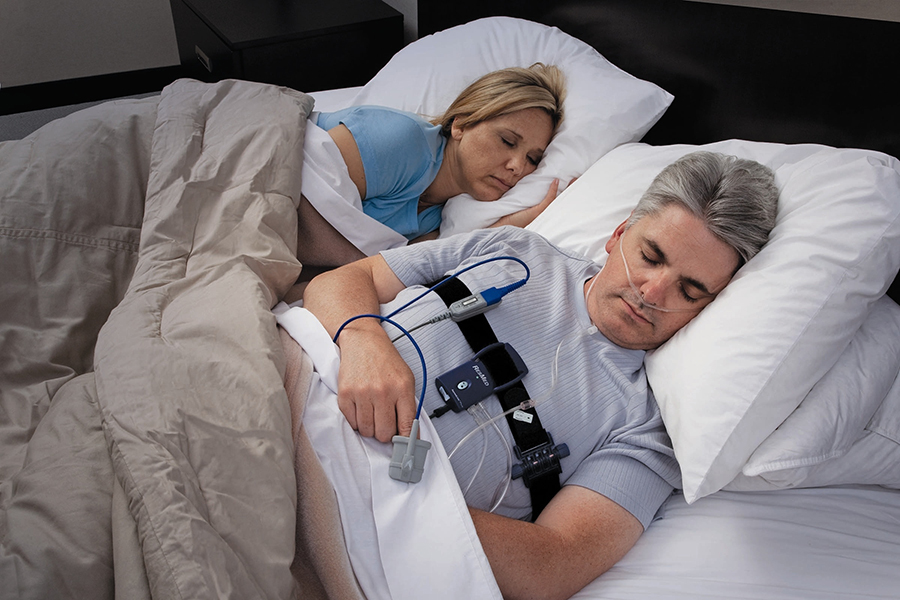
A traditional in-lab sleep study, by comparison, can take months from referral to results, a difference that matters when you’re exhausted and waiting for answers. For a useful overview of home-based diagnostic pathways and institutional programs, see this overview of home sleep apnea care.
Who qualifies for an at-home sleep test through telemedicine
The most common question patients ask before booking is whether they’ll actually be able to complete everything from home, or whether the doctor will redirect them to a lab. Home sleep testing is appropriate for a well-defined group of patients, and the telehealth intake process is designed to screen for eligibility before anything is ordered.
For formal criteria and technical recommendations, clinicians and patients can consult the AAST HSAT technical guideline.
Clinical signs that make you a strong candidate
To qualify for an HSAT, you generally need to be 18 or older with a high clinical probability of moderate-to-severe obstructive sleep apnea. Insurers typically require documentation of at least two qualifying symptoms, the most common include habitual loud snoring, witnessed gasping or apnea episodes, excessive daytime sleepiness, obesity (BMI above 30), hypertension, and diabetes.
The telehealth sleep doctor documents these during your intake consultation to support insurance authorization for the test.
When an in-lab sleep study is required instead
Home sleep testing isn’t for everyone, and a rigorous telehealth sleep practice will tell you that upfront.
Patients with suspected central sleep apnea, significant heart failure, moderate-to-severe COPD, obesity hypoventilation syndrome, chronic opioid use, or a history of stroke typically need an attended polysomnography in a certified sleep lab. If your intake reveals any of these conditions, the doctor will identify it and refer you accordingly. That’s exactly what a specialist should do, and it’s a sign you’re working with a legitimate practice rather than a box-checking platform.
Treatments a telehealth sleep doctor can actually prescribe and manage
The concern that a virtual doctor can only give advice and send you on your way is understandable, and it’s incorrect. A board-certified online sleep specialist can initiate and manage multiple evidence-based treatments through telemedicine, with some limitations depending on the treatment type.
CPAP prescriptions and remote monitoring
Following a confirmed OSA diagnosis, a telehealth sleep doctor can write a CPAP prescription and guide your initial setup. Modern CPAP devices transmit nightly data, including your residual AHI, leak rate, and usage hours, to a cloud platform.
Your remote sleep doctor reviews this data at follow-up visits and uses it to adjust pressure settings, recommend mask changes, and address compliance issues. Many pressure adjustments and comfort changes can be handled entirely remotely.
In some cases, patients may still benefit from in-person mask fitting or an attended titration study for complex presentations, and a good telehealth sleep practice will flag those situations rather than avoid them.
Oral appliance therapy and CBT-I delivered virtually
For patients with mild-to-moderate OSA who can’t tolerate CPAP, an online sleep specialist can prescribe oral appliance therapy (OAT) and coordinate with a local dentist for the fitting; the specialist manages the sleep medicine side while the dental fitting itself happens in person locally.
The American Academy of Sleep Medicine explicitly recommends OAT as a valid treatment option for patients who prefer it or can’t use CPAP effectively. For chronic insomnia, cognitive behavioral therapy for insomnia (CBT-I) is delivered through structured virtual sessions and is considered the first-line treatment over sleep medication by major clinical guidelines. Both treatment pathways are manageable through a telehealth sleep practice, with the specialist’s role fully handled via video.
Insurance coverage and costs: what to expect before you book
SLIIIP’s board-certified sleep physicians can do sleep evaluations for sleep apnea. Virtual consultations in all 50 states. Home sleep tests shipped to your door.
Private insurance, Medicare, and Tricare
Most major private insurers cover telehealth sleep medicine visits and home sleep testing when medically indicated, though coverage details vary by individual plan, so verifying your specific benefits before scheduling is always worth the call. UnitedHealthcare, Humana, Cigna, Blue Cross Blue Shield, and Aetna have all been confirmed to approve these services under qualifying plans.
Medicare covers both virtual sleep consultations and home sleep testing, with telehealth flexibilities extended through December 31, 2027, meaning patients can access care from home regardless of geographic location. Tricare covers telehealth sleep care as well, making a virtual sleep doctor a strong option for active-duty military, veterans, and their families dealing with PTSD-related sleep disruption. Medicaid coverage varies by state and by provider, so confirm with your specific plan before scheduling.
Cash-pay pricing and what to ask upfront
For patients paying out of pocket, SLIIIP charges $150 for an initial consultation and $125 for follow-up visits, with transparent pricing and no surprise billing. Before booking with any telehealth sleep practice, ask whether the platform verifies your insurance in advance, what your expected copay looks like, and whether home sleep test costs are billed separately through a third-party lab or bundled with the visit. A reputable practice answers all three questions before you ever pay a cent.
Choosing a telehealth sleep doctor: what to look for
Not every platform that advertises virtual sleep care has board-certified sleep medicine specialists on staff. Some are staffed by general practitioners or use nurse practitioners for initial consults.
That distinction has real clinical consequences when your home sleep test data needs accurate interpretation or your CPAP pressure needs a medically sound adjustment.
What to look for in an online sleep provider
Start by confirming that the doctors hold board certification in sleep medicine specifically, not just internal medicine or pulmonology without a sleep subspecialty. From there, check that the practice is licensed in your state and that a single provider handles your full care arc: initial consult, home test interpretation, and ongoing treatment management.
Fragmented care, where you’re handed off between providers at each stage, creates gaps that hurt outcomes. Finally, confirm insurance acceptance upfront and look for transparent cash-pay pricing if you’re not using insurance.
Why SLIIIP stands out among virtual sleep medicine options
SLIIIP is a nationwide telehealth sleep practice built around board-certified sleep doctors, with home sleep testing kits that ship directly to patients, remote CPAP management covering data review and pressure optimization, and a full treatment portfolio that includes oral appliance therapy and CBT-I. SLIIIP accepts most major insurance plans, Medicare, and Tricare, with clear cash-pay rates for patients without coverage.
The practice lists sleep disorders tied to anxiety, depression, ADHD, PTSD, pregnancy, and menopause among the conditions it manages, areas where many general telehealth platforms lack specialist-level expertise. Start with the 2-minute sleep symptom quiz to understand your risk level before your first appointment.
The bottom line on virtual sleep medicine
A telehealth sleep doctor can deliver board-certified, specialist-level care for a wide range of sleep disorders, comparable to an in-person visit for most diagnostic and management decisions, with exceptions for cases that genuinely require in-person procedures or lab testing. For the majority of patients, the referral barrier is gone.
The waiting room is gone. The overnight sleep lab stay is gone too. What remains is an evidence-based clinical pathway: assess your symptoms, meet with a specialist via video, complete a home sleep test if indicated, and start a treatment plan that’s monitored and adjusted remotely.
Choosing the right provider still matters. Look for board certification, state licensing, end-to-end care, and insurance transparency. Those aren’t nice-to-haves; they’re the baseline for safe, effective sleep medicine at any level of care.
If you’ve been putting this off because it felt complicated or uncertain, now you know exactly what the process looks like. Take the 2-minute SLIIIP sleep symptom quiz to understand your risk level, or book your first virtual appointment directly. Better sleep doesn’t require a waiting list anymore.
SLIIIP’s board-certified sleep physicians can do sleep evaluations for sleep apnea. Virtual consultations in all 50 states. Home sleep tests shipped to your door.
Latest posts
-
Why Can’t I Wake Up Even After Getting Enough Sleep?
Last updated: October 2, 2026. Medically reviewed by Dr. Avinesh Bhar, Board-Certified Sleep Physician, SLIIIP.com. If you can’t wake up after enough sleep, the cause is usually not the number…
-
Why Does My Heart Rate Drop So Low While I Sleep?
Last updated: October 2, 2026. Medically reviewed by Dr. Avinesh Bhar, Board-Certified Sleep Physician, SLIIIP.com. Your heart rate drops low while sleeping mainly because your body needs less work from…
-
Why Are My Naps Never Refreshing?
Last updated: October 2, 2026. Medically reviewed by Dr. Avinesh Bhar, Board-Certified Sleep Physician, SLIIIP.com. Naps that leave you groggy usually come down to how long you sleep, when you…
Get updates
Spam-free subscription, we guarantee. This is just a friendly ping when new content is out.

