
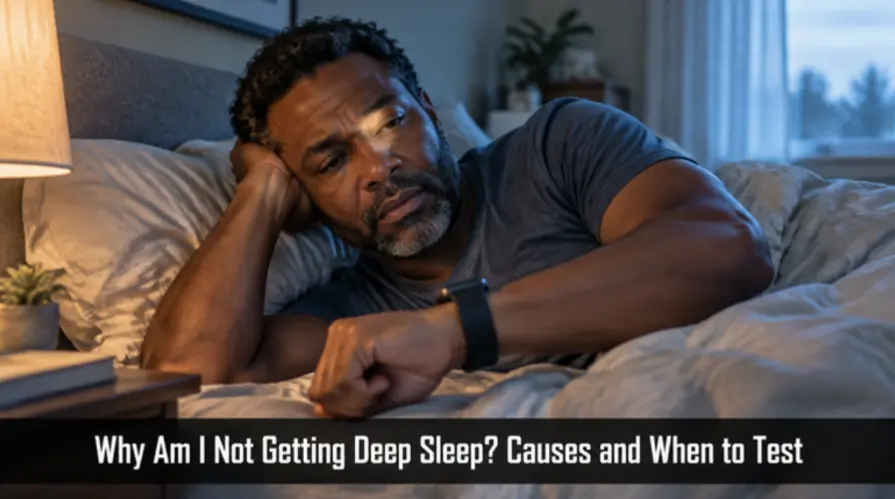
Why Am I Not Getting Deep Sleep? Causes and When to Test
Last updated: November 9, 2026. Medically reviewed by Dr. Avinesh Bhar, Board-Certified Sleep Physician, SLIIIP.com.
If you are not getting deep sleep, the usual reasons are too little total sleep, broken sleep, alcohol, stress, aging, or a sleep disorder.
Dr. Avinesh Bhar, Board-Certified Sleep Physician at SLIIIP.com, reviewed this guide. His key clinical point is that a low deep sleep number matters most with daytime sleepiness or unrefreshing sleep. A low deep sleep score is not a diagnosis.
Feeling tired after a full night, along with snoring or gasping, is a stronger reason to get checked than any app number.
TAKE THE QUIZ
SLIIIP’s board-certified sleep physicians evaluate adults for sleep apnea and other sleep disorders. Virtual consultations in all 50 states. Home sleep tests shipped to your door.
What Is Deep Sleep and Why Does It Matter?
Deep sleep is stage 3 of non-REM sleep, also called slow-wave sleep. According to the National Institute of Neurological Disorders and Stroke, stage 3 is the deep sleep you need to feel refreshed in the morning. Heart rate and breathing reach their lowest levels during this stage.
Most deep sleep happens early in the night. That detail helps explain several causes below. A late bedtime, a drink before bed, or an early breathing problem can all land during your deep sleep window.
Why Am I Not Getting Enough Deep Sleep?
The most common reasons are short sleep, broken sleep, substances close to bedtime, stress, normal aging, and untreated sleep disorders. Often more than one is involved. Work through the list below and notice which ones match your nights.
You are not sleeping long enough
Deep sleep comes in cycles, so less time in bed usually means fewer chances to reach it. Most adults need 7 to 9 hours a night. A short night leaves less room for every sleep stage.
Your sleep schedule keeps changing
Your body clock works best with steady timing. Shift work, late weekends, and jet lag can all push sleep out of its usual pattern. Going to bed and waking at the same time each day supports a steadier night.
Alcohol close to bedtime
Alcohol can make you drowsy at first. It is also linked to lighter, more broken sleep later in the night. Many people notice more wake-ups after an evening drink, even when they fell asleep quickly.
Caffeine late in the day
Caffeine blocks a brain chemical that builds sleep pressure. Coffee, tea, energy drinks, and some sodas can still affect you hours later. Avoiding caffeine late in the day is a simple first experiment.
Stress and a busy mind
Stress keeps the body on alert at night. People under long-term stress often describe light, restless sleep. If this sounds familiar, our guide on feeling tired but unable to sleep may also help.
Your bedroom setup
Noise, light, and heat can all pull you into lighter sleep without fully waking you. A dark, quiet, and cool room gives deep sleep its best chance. A snoring partner or a pet on the bed can also matter.
Medications
Some medications are associated with changes in sleep stages, including certain sleep aids. Never stop or change a prescribed medication on your own. Ask the prescribing clinician if you think a medication is affecting your sleep.
Normal aging
The National Heart, Lung, and Blood Institute notes that slow-wave sleep decreases through adulthood, and older people may not have any at all. A lower number at 65 than at 25 is expected. Age alone does not explain loud snoring, gasping, or heavy daytime sleepiness, though.
Can Sleep Apnea Cause Low Deep Sleep?
Yes, obstructive sleep apnea is linked to less deep sleep because repeated breathing events can pull the brain toward lighter sleep. Each event may end with a brief arousal you never remember. The result can be a full night in bed that still feels unrefreshing.
Signs that point toward sleep apnea include:
- Loud snoring most nights
- Gasping or choking during sleep
- Pauses in breathing that a partner notices
- Morning headaches or a dry mouth
- Waking up to urinate several times a night
- Heavy daytime sleepiness despite enough hours in bed
What Other Sleep Disorders Are Linked to Low Deep Sleep?
Insomnia, restless legs syndrome, periodic limb movements, and circadian rhythm disorders can all be associated with lighter or more broken sleep. Each one has a different pattern. Trouble falling asleep, an urge to move your legs, and a sleep window that runs very late all point in different directions.
Chronic pain, reflux, depression, and anxiety can also disturb sleep. A sleep physician can look at how these overlap. Your existing care team can keep managing the other conditions.
Watch: Dr. Wells explains why you are sleeping poorly
Can You Trust Your Sleep Tracker’s Deep Sleep Number?
You can use a tracker to see trends, but you should not treat its deep sleep number as a measurement. Sleep stages are defined by brain activity. As the NHLBI explains, sleep studies use sensors to record eye movements and brain activity to classify stages.
Most watches and rings do not read brain waves. They estimate stages from movement, heart rate, and similar signals. Two devices can give different numbers for the same night.
Here is a better way to use your tracker.
- Look at the trend over several weeks, not one night
- Compare it with how you feel during the day
- Note what changed on bad nights, such as alcohol or a late bedtime
- Bring the pattern to your doctor rather than a single score
How Much Deep Sleep Do You Need?
There is no single deep sleep target that fits every adult, because the amount changes with age and varies between people. Be wary of apps that grade you against one fixed number. How you feel and function during the day tells you more.
Chasing a score can also backfire. Worrying about sleep data can make it harder to relax at night. If checking your app raises your stress, take a two-week break from it.
What Can You Try Before Seeing a Doctor?
Start with steady sleep timing, enough time in bed, and fewer substances near bedtime. These steps are low risk and give you useful information. Try them for a few weeks before judging the results.
- Keep the same wake time every day, including weekends
- Give yourself at least 7 hours in bed
- Avoid caffeine and nicotine late in the day
- Avoid alcohol before bed
- Exercise most days, but not within a few hours of bedtime
- Keep your room dark, quiet, and cool
- Do not lie awake in bed for long; get up and do something calm
These habits support better sleep, but they do not treat a sleep disorder. If you stop snoring only when you sleep on your side, or you still wake up exhausted, keep going to the next step.
Which Test Actually Measures Deep Sleep?
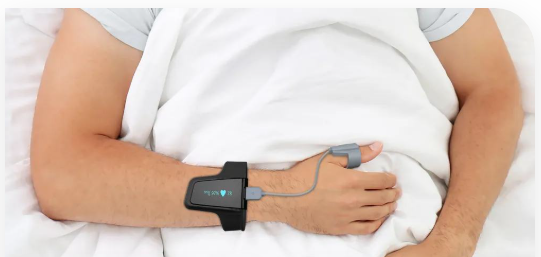
An in-lab sleep study, called polysomnography, measures brain activity and can score deep sleep directly. Most home sleep apnea tests do not measure brain waves. They focus on breathing, oxygen levels, and related signals.
That difference is useful to understand. A home sleep apnea test is designed to look for sleep apnea, a common medical reason for broken sleep. It will generally not tell you your deep sleep minutes. A sleep physician can decide which test fits your symptoms.
When to See a Doctor
See a doctor if poor sleep lasts more than a few weeks or affects your safety, mood, or work. Dr. Avinesh Bhar’s review points to one specific trigger for testing: daytime sleepiness despite 7 or more hours in bed.
Snoring or witnessed pauses in breathing make that trigger stronger. That combination deserves a medical evaluation, whatever your tracker says.
SLIIIP works with many insurance plans for sleep care, including the plans shown below:

Check your coverage before your visit. SLIIIP’s board-certified sleep physicians offer virtual consultations in all 50 states, with home sleep tests shipped to your door.
For cash payments, price for Initial Consultation is $150
Follow up appointments cost $125
Frequently Asked Questions
Why am I not getting any deep sleep on my tracker?
Your tracker estimates sleep stages and can be wrong. A very low reading can also reflect short or broken sleep, so compare it with how you feel.
Is low deep sleep dangerous?
A low reading alone is not a diagnosis. Ongoing unrefreshing sleep with daytime sleepiness should be checked by a doctor.
What stage of sleep is deep sleep?
Deep sleep is stage 3 of non-REM sleep. It is also called slow-wave sleep.
When does deep sleep happen?
Most deep sleep happens in the first half of the night.
Does deep sleep decrease with age?
Yes. Slow-wave sleep decreases through adulthood, and some older adults have very little.
Can sleep apnea reduce deep sleep?
Yes, sleep apnea is linked to less deep sleep. Repeated breathing events can pull the brain into lighter sleep.
Can you have sleep apnea without snoring?
Yes, some people with sleep apnea do not snore loudly. Fatigue or broken sleep may be the main clue.
Does alcohol reduce deep sleep?
Alcohol is linked to lighter, more broken sleep later in the night. Avoiding it before bed may help.
Does caffeine affect deep sleep?
Caffeine can stay active for hours and is associated with lighter sleep. Avoid it late in the day.
Does stress lower deep sleep?
Stress is associated with lighter, more restless sleep. Long-term stress is worth addressing with your clinician.
Can medications lower deep sleep?
Some medications are associated with changes in sleep stages. Do not change a prescription without talking to your prescriber.
How much deep sleep do I need?
No single number fits every adult. Daytime energy is a better guide than a tracker target.
Are sleep trackers accurate for deep sleep?
Most trackers estimate deep sleep without reading brain waves. They are more useful for trends than exact numbers.
Does a home sleep test measure deep sleep?
Most home sleep apnea tests do not measure brain waves. They look for breathing problems, not sleep stages.
What test measures deep sleep?
An in-lab polysomnography records brain activity and can score deep sleep directly.
Will exercise help me get more deep sleep?
Regular exercise is linked to better sleep overall. Try not to exercise within a few hours of bedtime.
Does a cool room help deep sleep?
A cool, dark, and quiet room supports better sleep overall. It is a low-risk change to try.
Can napping lower deep sleep at night?
Long or late naps can reduce sleep pressure at bedtime. Keep naps short and early if you take them.
Should I see a doctor for low deep sleep?
See a doctor if you feel unrefreshed for weeks, or if you snore, gasp, or feel sleepy during the day.
Can SLIIIP help if I am always tired after sleeping?
SLIIIP's sleep physicians evaluate adults for sleep apnea and other sleep disorders by virtual visit. They can decide whether testing makes sense for you.
Latest posts
-
Can Statins Cause Insomnia? What the Research Shows
Last updated: November 17, 2026. Medically reviewed by Dr. Avinesh Bhar, Board-Certified Sleep Physician, SLIIIP.com. For most people, probably not. A meta-analysis of placebo-controlled sleep lab studies found that statins…
-
Do Beta Blockers Cause Insomnia? What to Know
Last updated: November 17, 2026. Medically reviewed by Dr. Avinesh Bhar, Board-Certified Sleep Physician, SLIIIP.com. Beta blockers are linked to insomnia in some people. Some beta blockers lower nighttime melatonin,…
-
Do I Need a Sleep Study to Get the Sleep Apnea Pill?
Last updated: November 17, 2026. Medically reviewed by Dr. Avinesh Bhar, Board-Certified Sleep Physician, SLIIIP.com. Yes, almost certainly. Any sleep apnea medicine, including the AD109 pill if it is approved,…
Get updates
Spam-free subscription, we guarantee. This is just a friendly ping when new content is out.

