👉 Register for Free. How to Diagnose Sleep Apnea Faster in Primary Care – FREE Webinar by Dr. Audrey Wells. – Friday, April 24 at 12 PM ET

Ballistocardiography Sleep Sensors: How Under-Mattress Tracking Works
Last updated: September 14, 2026. Medically reviewed by Dr. Avinesh Bhar, Board-Certified Sleep Physician, SLIIIP.com.
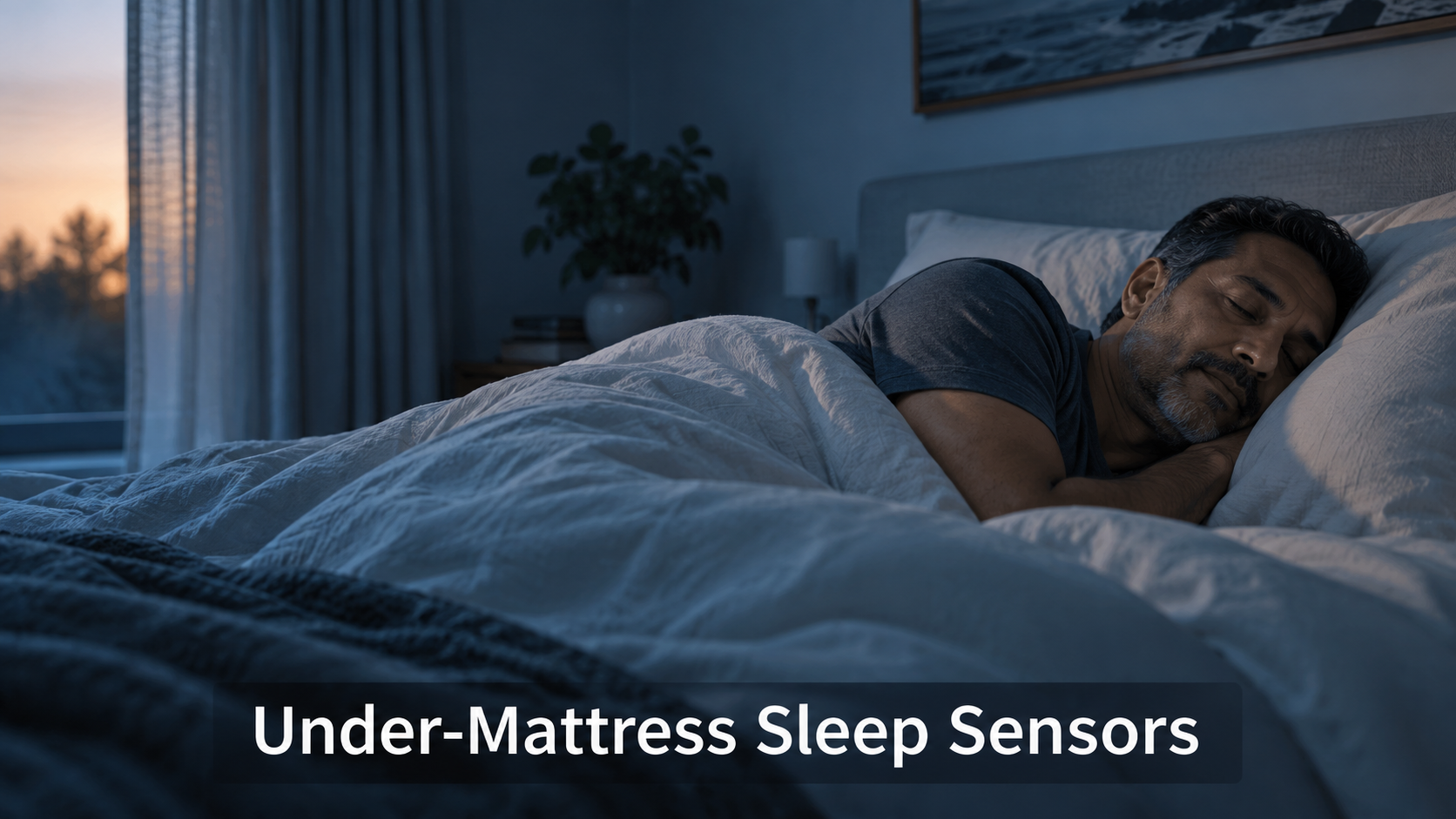
Ballistocardiography sleep sensors sit under your mattress and detect the tiny mechanical vibrations your body produces with every heartbeat and breath, tracking sleep without anything worn on your body. They can be surprisingly accurate for heart rate and breathing rate, but they are not a substitute for a diagnostic home sleep test. According to Dr. Avinesh Bhar, Board-Certified Sleep Physician at SLIIIP.com, under-mattress sensors are a comfortable way to monitor trends over time, though diagnosing a breathing disorder still requires a validated test reviewed by a physician. Contactless is convenient. It is not the same as clinical.
SLIIIP’s board-certified sleep physicians can do sleep evaluations for sleep apnea. Virtual consultations in all 50 states. Home sleep tests shipped to your door.
What Is Ballistocardiography?
Ballistocardiography, often shortened to BCG, measures the small recoil movements your body makes in response to blood being pumped by the heart. When a thin pressure sensor is placed under a mattress, it can pick up these vibrations, along with the larger movements from breathing and body position changes.
Software then separates these signals into three streams: heart rate, breathing rate, and gross body movement. Because nothing touches your skin, this category of device is sometimes called a nearable rather than a wearable.
Is Ballistocardiography Accurate for Sleep and Vital Signs?
For heart rate and breathing rate, ballistocardiography sensors perform quite well. A large clinical validation study across more than 68,000 reference measurements found a respiratory rate algorithm built on BCG data achieved a mean absolute error of about 1.29 breaths per minute against capnography and polysomnography, with accuracy highest in controlled sleep lab settings, according to research published in Scientific Reports.
Sleep stage accuracy is a different story. Under-mattress trackers vary widely in quality, and some early mattress-based devices showed poor agreement with polysomnography for detailed sleep staging, according to a review published in the Journal of Clinical Sleep Medicine.
A well-built ballistocardiography sensor can be excellent at tracking your heart and breathing rate overnight. Its sleep stage estimates should be treated with more caution.
Can a Ballistocardiography Sensor Detect Sleep Apnea?
Some can flag signs of disordered breathing, since apnea events change both the breathing signal and heart rate pattern the sensor picks up. However, most consumer under-mattress sensors are not FDA-cleared to diagnose obstructive sleep apnea, and their accuracy for counting individual breathing events, hypopneas in particular, still lags behind clinical devices, according to validation research on an under-mattress device for detecting moderate to severe sleep apnea.
How Does a Ballistocardiography Sensor Compare to a Home Sleep Test?
Feature | Ballistocardiography Sensor | WatchPAT (SLIIIP) | Sleep Image Ring (SLIIIP) |
Sensor type | Under-mattress pressure sensor | Peripheral arterial tone, chest and wrist sensors | Light-based finger sensor |
Worn on the body | No, fully contactless | Yes | Yes |
What it measures | Heart rate, breathing rate, movement | Oxygen, breathing effort, snoring, position | Heart rate, oxygen, breathing pattern |
Sleep staging | Variable by device, generally less reliable | Clinically validated | Clinically validated |
Calculates AHI for diagnosis | Rarely, not to clinical standard | Yes | Yes |
Reviewed by a physician | No | Yes, board-certified sleep physician | Yes, board-certified sleep physician |
Insurance accepted | No, out of pocket | Yes | Yes |
Best used for | Comfortable, long-term vital sign trends | Diagnosing sleep apnea | Diagnosing sleep apnea and insomnia workup |
Watch: Sleep Studies, Sleep Apnea, and Treatment with Avinesh Bhar MD
When to See a Doctor About Your Sleep
If your under-mattress sensor consistently shows irregular breathing patterns, elevated overnight heart rate, or restless nights that do not improve, it is worth having that pattern properly evaluated. Dr. Bhar recommends treating a persistent contactless-sensor warning the same way you would a wearable one: as a reason to book an evaluation, not as a final answer. The sensor can flag something unusual. A board-certified sleep physician can determine what it means.
Why a Real SLIIIP Evaluation Is Critical for an Accurate Diagnosis
Contactless data is a helpful starting point, but a real diagnosis still requires:
- A validated test. WatchPAT and the Sleep Image Ring calculate AHI using signals clinically validated against polysomnography.
- Physician interpretation. Vital sign trends need a trained clinician to translate them into a diagnosis and a plan.
- A treatment path. A diagnosis only matters if it leads to next steps, such as CPAP therapy, an oral appliance, or another approach.
- Insurance coverage. SLIIIP’s home sleep tests are accepted by insurance, unlike most consumer under-mattress sensors.

SLIIIP’s board-certified sleep physicians can do sleep evaluations for sleep apnea. Virtual consultations in all 50 states. Home sleep tests shipped to your door.
Frequently Asked Questions
What is ballistocardiography?
A method of detecting heartbeat and breathing by measuring tiny mechanical vibrations, often through a sensor placed under a mattress.
Are under-mattress sleep sensors accurate?
They tend to be accurate for heart rate and breathing rate, but less consistent for detailed sleep stage tracking.
Can a ballistocardiography sensor diagnose sleep apnea?
Generally no. Most consumer models are not FDA-cleared and are less accurate than clinical devices at counting breathing events.
Do I have to wear anything for ballistocardiography tracking?
No. The sensor sits under your mattress and requires no device on your body.
How does an under-mattress sensor detect breathing?
It picks up the mechanical movement of your chest and body as you breathe, along with heartbeat-related vibrations.
Is a ballistocardiography sensor comfortable?
Yes, since nothing touches your body, many people find it more comfortable than a ring or watch.
Can I use my under-mattress sensor data at a doctor’s appointment?
You can share the trends, but your doctor will still need a validated home sleep test to make a diagnosis.
Is a home sleep test more accurate than a ballistocardiography sensor?
Yes, for diagnosing sleep apnea specifically. WatchPAT and the Sleep Image Ring calculate a validated AHI, which most under-mattress sensors do not.
Does a ballistocardiography sensor track sleep stages well?
It varies significantly by device, and stage accuracy is generally less reliable than heart rate and breathing rate accuracy.
Are under-mattress sleep sensors FDA approved?
Most are marketed as general wellness devices, not FDA-cleared for diagnosing a specific sleep disorder.
Can an under-mattress sensor replace a sleep study?
No. It can provide useful vital sign trends but not a validated breathing-disorder diagnosis.
Why does my under-mattress sensor show different numbers than my ring?
Different sensing methods pick up different signals, so some variation between devices is normal.
Does insurance cover ballistocardiography sensors?
No. They are out-of-pocket wellness purchases, unlike SLIIIP’s home sleep tests.
What is the difference between a ballistocardiography sensor and the Sleep Image Ring?
The under-mattress sensor is contactless but not diagnostic. The Sleep Image Ring is diagnostic, reviewed by a physician, and accepted by insurance.
Can children use a ballistocardiography sensor?
SLIIIP does not evaluate or treat children. If you have concerns about a child’s sleep, a pediatrician or pediatric ENT specialist is the right next step.
Does a partner in the bed affect the accuracy?
Yes, most under-mattress sensors can struggle to separate two people’s signals unless the device is specifically designed for dual tracking.
What happens after a SLIIIP home sleep test?
A board-certified sleep physician reviews your results and discusses a treatment plan during a virtual visit.
Can these sensors detect snoring?
Most under-mattress sensors do not include a microphone, so snoring detection is limited or unavailable.
How long should I use an under-mattress sensor before trusting the trends?
A week or two is typically enough to smooth out normal night-to-night variability.
How do I know if I need a real sleep evaluation instead of just tracking with a mattress sensor?
Snoring, gasping awakenings, excessive daytime sleepiness, or irregular breathing patterns flagged by the sensor are all reasons to book a real evaluation.
Check your sleep symptoms with SLIIIP’s 2-minute quiz, then take the next step.
CHECK YOUR SLEEP SYMPTOMS: TAKE THE 2 MINUTE QUIZ
TAKE THE QUIZ
SLIIIP’s board-certified sleep physicians can do sleep evaluations for sleep apnea. Virtual consultations in all 50 states. Home sleep tests shipped to your door.
Latest posts
-
Circular Ring Sleep Accuracy: What It Gets Right and Wrong
Last updated: September 14, 2026. Medically reviewed by Dr. Avinesh Bhar, Board-Certified Sleep Physician, SLIIIP.com. The Circular Ring estimates sleep stages, heart rate, and recovery using a finger-worn light sensor,…
-
Ballistocardiography Sleep Sensors: How Under-Mattress Tracking Works
Last updated: September 14, 2026. Medically reviewed by Dr. Avinesh Bhar, Board-Certified Sleep Physician, SLIIIP.com. Ballistocardiography sleep sensors sit under your mattress and detect the tiny mechanical vibrations your body…
-
RingConn vs Oura: Which Smart Ring Tracks Sleep Better?
Last updated: September 10, 2026. Medically reviewed by Dr. Avinesh Bhar, Board-Certified Sleep Physician, SLIIIP.com. RingConn and Oura both track sleep through a finger-worn ring, but they differ most in…
Get updates
Spam-free subscription, we guarantee. This is just a friendly ping when new content is out.

