👉 Register for Free. How to Diagnose Sleep Apnea Faster in Primary Care – FREE Webinar by Dr. Audrey Wells. – Friday, April 24 at 12 PM ET

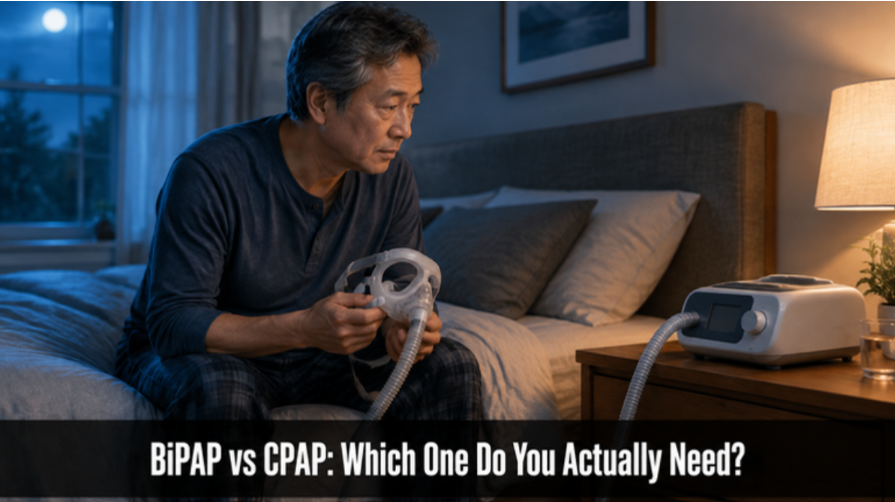
BiPAP vs CPAP: Which One Do You Actually Need?
Last updated: October 22, 2026. Medically reviewed by Dr. Avinesh Bhar, Board-Certified Sleep Physician, SLIIIP.com.
The main difference between BiPAP and CPAP is pressure. CPAP blows one steady pressure all night, while BiPAP uses a higher pressure when you breathe in and a lower one when you breathe out.
Dr. Avinesh Bhar, Board-Certified Sleep Physician at SLIIIP.com, advises patients who feel like they are fighting the air on the exhale to tell their doctor. That specific complaint is one of the few CPAP problems that can point toward bilevel therapy.
For most adults with obstructive sleep apnea, CPAP or auto-CPAP is the starting point, and BiPAP is a second step for specific medical reasons.
SLIIIP’s board-certified sleep physicians can do sleep evaluations for sleep apnea. Virtual consultations in all 50 states. Home sleep tests shipped to your door.
What Is the Difference Between BiPAP and CPAP?
CPAP delivers one fixed pressure, and BiPAP delivers two pressures that switch with each breath.
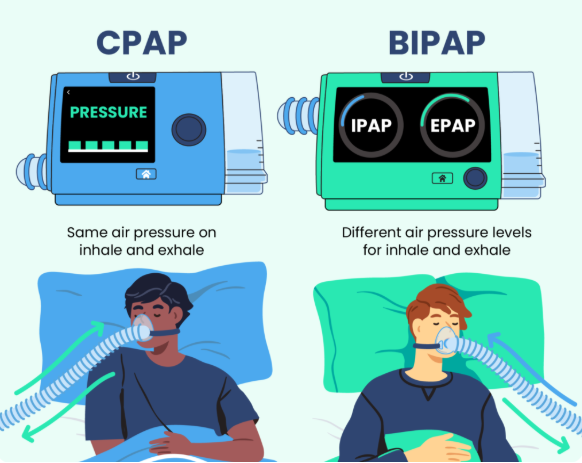
According to MedlinePlus from the National Library of Medicine, CPAP gives a gentle, steady flow of air that keeps your airway open. BiPAP, also called bilevel positive airway pressure, has a higher pressure when you breathe in and a lower pressure when you breathe out. That drop on the exhale is the whole idea. It can make breathing out feel easier, and it also gives the lungs extra help moving air.
The pressure on the breath in is called IPAP. The pressure on the breath out is called EPAP. The gap between the two is what helps air move in and out of the lungs. A CPAP machine only holds the airway open.
A bilevel machine holds it open and also gives each breath a small push.
You may also see the term BPAP. BiPAP started as a brand name, and BPAP or bilevel PAP is the general medical term. In daily life, people use all three names for the same type of device.
Where does auto-CPAP fit in?
Auto-CPAP, or APAP, is a third option that often gets mixed up with BiPAP. An APAP machine still uses one pressure at a time, but it changes that pressure through the night based on your breathing.
APAP adjusts to your needs over the night, while BiPAP splits every single breath into two pressures. Many people who start therapy today use APAP, since it can respond to changes like sleeping on your back or REM sleep.
Who Needs BiPAP Instead of CPAP?
BiPAP is usually prescribed when a person needs help moving air in and out of the lungs, not just help keeping the airway open. MedlinePlus lists respiratory failure, central sleep apnea, COPD, heart failure, and muscle weakness among the conditions where bilevel therapy may be used.
In a sleep clinic, the reasons a doctor may consider bilevel therapy usually fall into a few groups.
- Obstructive sleep apnea that CPAP did not control. This includes people who need very high pressures, or who still have events after careful CPAP adjustments.
- Trouble breathing out against high pressure. Some people cannot tolerate exhaling against a strong steady flow, even after settings and mask changes.
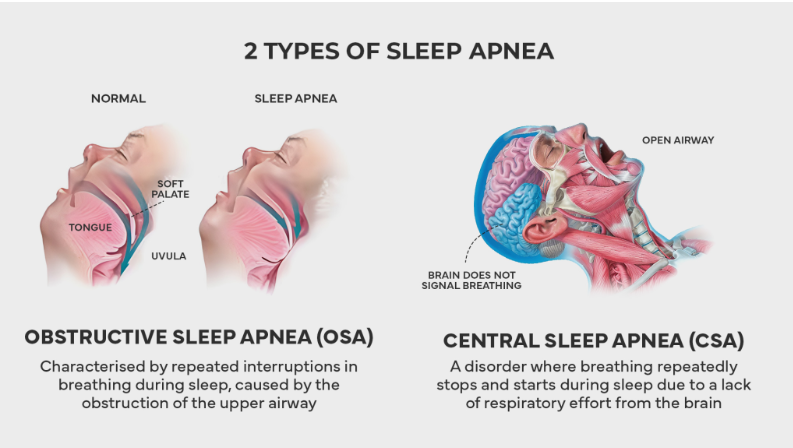
- Central or complex sleep apnea. In these patterns, the brain does not send a steady signal to breathe, so CPAP alone may not be enough. Some patients need other advanced devices instead.
- Lung or chest wall conditions. Severe COPD, obesity hypoventilation, and neuromuscular diseases are linked to weak breathing and high carbon dioxide levels during sleep.
- Heart failure with breathing problems at night. This group needs close follow-up with both a heart doctor and a sleep doctor.
A diagnosis drives the choice of machine, not personal preference. If you have central sleep apnea, see how it differs in our guide on central vs obstructive sleep apnea.
Is BiPAP Better Than CPAP?
BiPAP is not better than CPAP in general; it is a different tool for a different breathing problem. For typical obstructive sleep apnea, CPAP and APAP keep the airway open well, and they are simpler machines. BiPAP adds features that most people with a blocked airway simply do not need.
More features also come with trade-offs. Bilevel machines cost more than CPAP. They usually need more careful setup, and some require an in-lab sleep study to fine-tune two pressures. If the gap between the two pressures is not set well, some people find breathing feels out of sync with the machine.
The best machine is the one that controls your breathing events and that you can use every night. A perfectly set BiPAP that sits in the closet does less good than a CPAP you wear for most of the night.
Can I Switch to BiPAP Because CPAP Feels Uncomfortable?
Usually not as a first step, because most CPAP discomfort comes from the mask, the pressure setting, or dryness, not from the type of machine. These problems can often be fixed without a new device.
Watch: Dr. Wells answers how do you find the right CPAP mask?
Common CPAP complaints and the usual first fixes include the following.
- Air leaks or mask marks: a different mask size or style. Our guide to CPAP mask types compares full face, nasal, and nasal pillow masks.
- Dry mouth or a stuffy nose: humidifier and heated tubing changes, or a chin strap if your mouth falls open.
- Feeling smothered when you first lie down: the ramp feature, which starts at a low pressure and builds slowly as you fall asleep.
- Hard to breathe out: exhale relief settings, which many CPAP machines have built in. These lower the pressure slightly as you exhale.
- Swallowing air or bloating: a pressure review with your doctor, since high pressure is one possible factor.
If these steps fail, your sleep physician can look at your machine data. That data shows leaks, hours of use, and leftover breathing events. Only a prescribing doctor should change your pressure or move you to a different machine. Changing settings on your own can leave sleep apnea untreated, even when you feel fine.
Why Do Insurers Usually Want You to Try CPAP First?
For obstructive sleep apnea, many insurers will only cover a bilevel machine after CPAP has been tried and shown not to work. A Medicare fact sheet from CMS says CPAP must first be tried and proven ineffective. Only then does Medicare cover this type of bilevel device for sleep apnea.
The same fact sheet defines ineffective as failing to meet treatment goals on CPAP. That failure has to happen even with a proper mask fit and suitable pressure settings. In other words, a doctor has to document that the CPAP problems were not just a bad mask or a wrong setting.
Medicare also has a use rule for ongoing coverage of PAP devices.
The standard is 4 or more hours per night on 70% of nights during 30 days in a row. Your machine records this data, and your doctor reviews it at a follow-up visit. Private plans often use similar rules, so it helps to check your own plan.
Bilevel coverage for other conditions, such as COPD or hypoventilation, follows separate rules. Those rules often require blood gas tests, oxygen readings, or an in-lab sleep study.
How Does a Doctor Decide Between CPAP, APAP, and BiPAP?
The decision starts with a sleep test that shows what type of sleep apnea you have and how severe it is. For many adults, a home sleep test is enough to confirm obstructive sleep apnea and start CPAP or APAP.
From there, the doctor watches how you do on therapy. A sleep physician will usually look at these points.
- Your apnea-hypopnea index (AHI) on the machine, which shows leftover breathing events.
- Mask leak and nightly hours of use.
- How you feel during the day, including sleepiness, focus, and morning headaches.
- Other health problems, such as lung disease, heart failure, or opioid use, that change breathing during sleep.j
If the data shows central events, very high pressure needs, or signs of low breathing, the next step may be an in-lab study. That study lets a technician adjust two pressures in real time and see which setting works best. This careful step-by-step process is the reason most people never need BiPAP at all.
What Does It Feel Like to Use BiPAP?
Many people describe BiPAP as feeling like the machine breathes along with them. The air feels stronger as you inhale and softer as you exhale. Some people find this easier to tolerate than a steady CPAP flow.
The masks, tubing, and cleaning routine are the same as with CPAP. Most CPAP masks work with bilevel machines, so you usually do not need new supplies if you switch. The first few nights can still take some getting used to, just like with any PAP device.
Bilevel machines can also come with a backup breathing rate. That feature gives a breath if you pause for too long, and it is mainly used for central sleep apnea and some lung conditions.
When to See a Doctor
Dr. Avinesh Bhar recommends a follow-up visit if you still struggle on CPAP after a few weeks. That includes trouble breathing out, ongoing sleepiness, or pulling the mask off at night.
These are signs your therapy needs review, and they are not a reason to quit.
Talk with a doctor soon if you notice any of these signs.
- You still snore, gasp, or stop breathing on CPAP, based on what a bed partner sees.
- Your machine shows a high AHI or large leaks for more than a week or two.
- You wake with headaches, confusion, or deep fatigue despite using CPAP every night.
- You have COPD, heart failure, or a nerve or muscle disease, along with sleep symptoms.
- You feel short of breath during the day, or your ankles swell.
Seek urgent care right away for severe shortness of breath, chest pain, blue lips, or confusion. Those symptoms need emergency help, not a sleep visit.
SLIIIP works with many major insurance plans. Check your coverage before your visit.

SLIIIP’s board-certified sleep physicians can do sleep evaluations for sleep apnea. Virtual consultations in all 50 states. Home sleep tests shipped to your door.
For cash payments, price for Initial Consultation is $150
Follow up appointments cost $125
Frequently Asked Questions
What is the main difference between BiPAP and CPAP?
CPAP uses one steady pressure all night. BiPAP uses a higher pressure when you breathe in and a lower one when you breathe out.
What does BiPAP stand for?
BiPAP stands for bilevel positive airway pressure. It is also called BPAP or bilevel PAP.
What does CPAP stand for?
CPAP stands for continuous positive airway pressure. It keeps the airway open with one constant flow of air.
Is BiPAP stronger than CPAP?
BiPAP can reach higher pressures on the breath in, but stronger is not the same as better. The right machine depends on your diagnosis.
Is BiPAP better for sleep apnea?
For most obstructive sleep apnea, CPAP or APAP works well. BiPAP is mainly used when CPAP fails or another breathing problem is present.
What is APAP?
APAP is auto-adjusting CPAP. It changes a single pressure through the night based on your breathing.
Can I ask for BiPAP instead of CPAP?
You can ask, but most insurers want proof that CPAP was tried first. Your doctor decides based on your sleep test and therapy data.
Does insurance cover BiPAP?
Many plans do, but often only after a documented CPAP trial for obstructive sleep apnea. Other conditions have their own rules.
Who usually needs BiPAP?
People with central sleep apnea, COPD, obesity hypoventilation, or nerve and muscle diseases are common candidates. So are some people who fail CPAP.
Is BiPAP used for COPD?
Yes, bilevel therapy may be used in some people with COPD. It can help with high carbon dioxide levels during sleep.
Can BiPAP help if I cannot exhale against CPAP?
It may, but exhale relief settings on CPAP are usually tried first. A doctor reviews this with you.
Do BiPAP and CPAP use the same masks?
Yes, most masks work with both types of machine. Your current mask can often move over if you switch.
Is BiPAP harder to get used to?
Some people find it easier because the exhale feels softer. Others need time to feel in sync with the two pressures.
Does BiPAP cost more than CPAP?
Yes, bilevel machines usually cost more than CPAP. Insurance rules can also be stricter.
Can I change my CPAP pressure myself?
No, pressure changes should come from your prescribing doctor. Wrong settings can leave sleep apnea untreated.
Do I need an in-lab sleep study for BiPAP?
Often yes, because two pressures need careful tuning. Some patients may be adjusted using home data instead.
Can BiPAP treat central sleep apnea?
Bilevel with a backup rate is one option for some central sleep apnea. Some people need other advanced devices instead.
How many hours should I use my machine?
Medicare's standard is 4 or more hours on 70% of nights. More use is generally linked to better results.
What if CPAP is still not working for me?
Ask your sleep doctor to review your machine data. Mask, pressure, and humidity changes solve many problems.
How do I find out which machine I need?
Start with a sleep evaluation and sleep test. The results show the type and severity of your sleep apnea.
SLIIIP's board-certified sleep physicians can do sleep evaluations for sleep apnea. Virtual consultations in all 50 states. Home sleep tests shipped to your door.
Latest posts
-
Sleepwalking in Adults: Causes, Risks, and When to Get Help
Last updated: October 23, 2026. Medically reviewed by Dr. Avinesh Bhar, Board-Certified Sleep Physician, SLIIIP.com. Sleepwalking in adults is a sleep disorder where a person gets up and moves around…
-
Nocturia and Sleep Apnea: Why You Wake Up to Pee at Night
Last updated: October 23, 2026. Medically reviewed by Dr. Avinesh Bhar, Board-Certified Sleep Physician, SLIIIP.com. Nocturia means waking up more than once a night to urinate. It is often blamed…
-
CPAP Side Effects: What’s Common and When to Call a Doctor
Last updated: October 21, 2026. Medically reviewed by Dr. Avinesh Bhar, Board-Certified Sleep Physician, SLIIIP.com. The most common CPAP side effects are dry mouth, a dry or stuffy nose, air…
·
Get updates
Spam-free subscription, we guarantee. This is just a friendly ping when new content is out.

