👉 Register for Free. How to Diagnose Sleep Apnea Faster in Primary Care – FREE Webinar by Dr. Audrey Wells. – Friday, April 24 at 12 PM ET

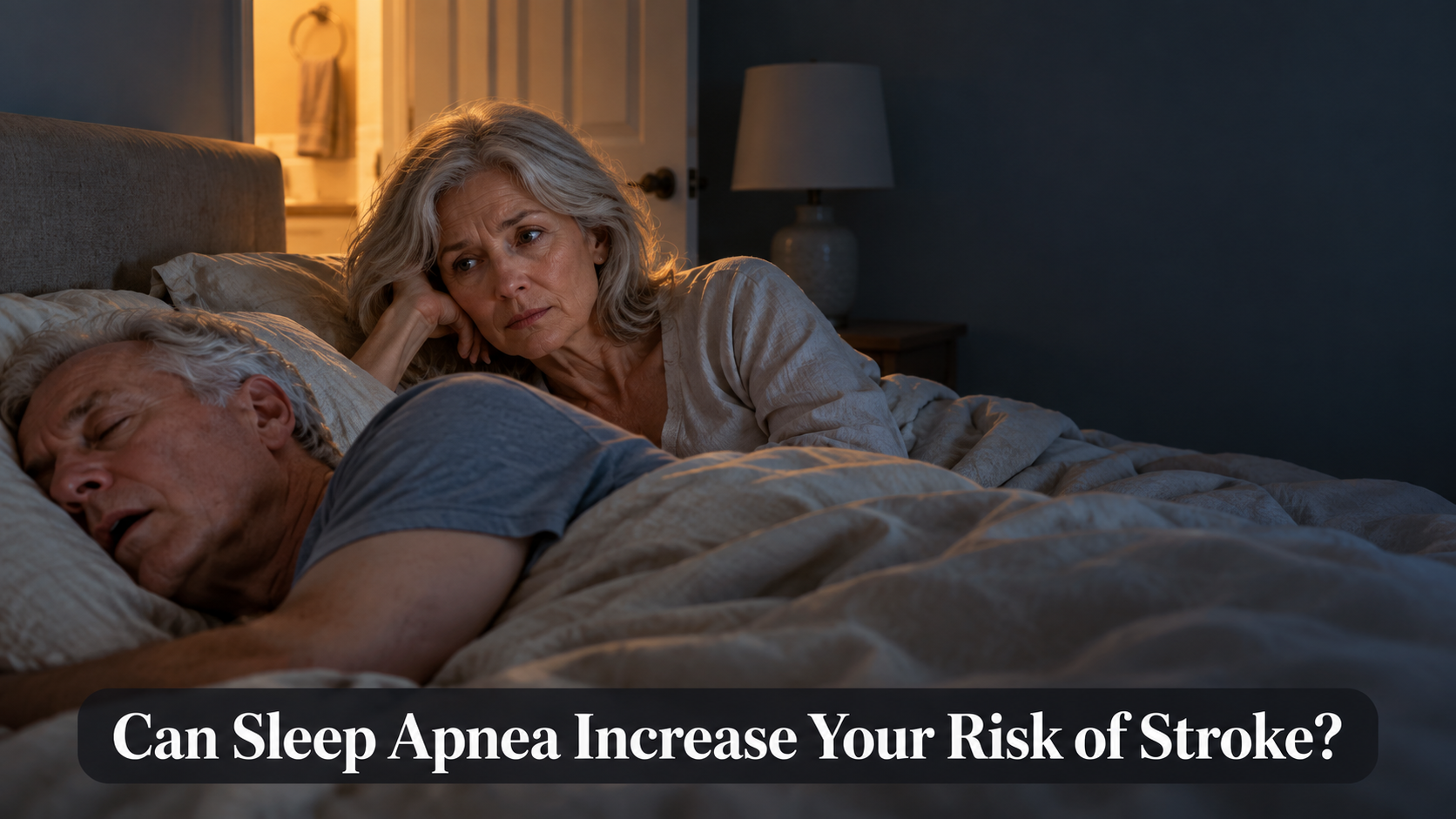
Can Sleep Apnea Increase Your Risk of Stroke?
Last updated: October 2, 2026. Medically reviewed by Dr. Avinesh Bhar, Board-Certified Sleep Physician, SLIIIP.com.
Yes. Research links obstructive sleep apnea to a higher chance of stroke, and the link appears to run in both directions. Dr. Avinesh Bhar, Board-Certified Sleep Physician at SLIIIP.com, sees many patients with high blood pressure or atrial fibrillation. He asks each one about loud snoring, gasping, and morning headaches. Those clues can point to a sleep apnea stroke risk that nobody has checked yet. Sleep apnea is a stroke risk factor you can screen for at home. Finding it early gives you and your doctors one more risk to manage.
SLIIIP’s board-certified sleep physicians can do sleep evaluations for sleep apnea. Virtual consultations in all 50 states. Home sleep tests shipped to your door.
What Is the Link Between Sleep Apnea and Stroke?
A stroke happens when blood flow to part of the brain is blocked or a blood vessel in the brain bursts. Brain cells in that area start to die within minutes. Obstructive sleep apnea is a different problem. Your upper airway narrows or closes again and again while you sleep. Each pause cuts airflow until your brain wakes you just enough to breathe.
These two conditions sound unrelated. Yet they share a lot of ground. Research from the National Heart, Lung, and Blood Institute found that sleep apnea may raise the risk of stroke. The same page notes that a stroke can also raise the risk of central sleep apnea. That is the type where the brain does not send steady signals to breathe.
So the relationship goes both ways. Sleep apnea is associated with a higher chance of a first stroke. A stroke can then disturb breathing during sleep.
Can Sleep Apnea Raise Your Stroke Risk?
Yes, untreated obstructive sleep apnea is associated with a higher risk of stroke. It is not a guarantee, and it is one risk factor among many. Age, blood pressure, smoking, diabetes, and heart rhythm all matter too.
The point is not to scare you. The point is that sleep apnea is common, often missed, and something you can test for. Many people who have it do not know it. They blame their tiredness on work, age, or stress.
If you want a broader look at the long-term risks, our guide on whether sleep apnea can kill you covers the full picture.
How Could Sleep Apnea Affect Blood Flow to the Brain?
Researchers are still working out the exact pathways. Several nightly changes seem to play a part. Here they are in plain words.
Oxygen drops
Every time breathing pauses, oxygen in your blood falls. Your body treats this as an emergency. Over months and years, these repeated drops put stress on blood vessels. Our article on nocturnal hypoxemia explains this process in more detail.
Blood pressure surges
When your brain jolts you awake to breathe, it releases stress hormones. Your heart rate and blood pressure spike. This can happen dozens of times an hour in severe cases. High blood pressure is a major risk factor for stroke. Sleep apnea is linked to blood pressure that is hard to control, even with medication.
Heart rhythm changes
Sleep apnea is associated with atrial fibrillation, often called AFib. AFib is an irregular heartbeat that lets blood pool in the heart. Pooled blood can form clots that travel to the brain. You can read more in our article on sleep apnea and atrial fibrillation.
Strain on the heart and arteries
Fighting to breathe against a closed airway creates big pressure swings in the chest. Combined with low oxygen and stress hormones, this may add wear to the heart and arteries. Our guide on whether sleep apnea can cause heart disease covers the heart side.
What Is a Wake-Up Stroke?
A wake-up stroke is a stroke that happens during sleep. The person goes to bed feeling fine and wakes up with symptoms. Because nobody saw it start, doctors cannot always tell exactly when it began.
Timing matters a lot in stroke care. Some treatments only work within a certain window after symptoms start. This is one reason a wake-up stroke can be harder to treat.
Researchers are studying whether sleep apnea plays a role in strokes that occur overnight. The nighttime oxygen drops and blood pressure surges described above happen while you sleep. That makes the question worth asking. If you live alone or have known stroke risk factors, a sleep evaluation is one practical step.
Is Sleep Apnea Common After a Stroke?
Per the NHLBI, a stroke can raise the risk of breathing problems during sleep. Some people had obstructive sleep apnea before the stroke and never knew it. Others develop central sleep apnea because the stroke affected the brain areas that control breathing.
This matters for recovery. Poor sleep can leave people too tired for rehab. It can also make mood, focus, and memory harder to rebuild. Stroke survivors often see a neurologist, a cardiologist, and a primary care doctor. A sleep evaluation can be one more piece of that team effort.
SLIIIP does not treat stroke. Our role is the sleep side. We evaluate adults for sleep apnea and share findings with the doctors already managing your stroke or heart care.
Who Should Think About Their Sleep and Stroke Risk?
You may want to look closer at your sleep if any of these apply to you:
- You snore loudly most nights.
- A partner has seen you stop breathing or gasp in your sleep.
- You wake up with headaches or a dry mouth.
- You feel sleepy during the day, even after a full night in bed.
- You have high blood pressure that is hard to control.
- You have AFib or another heart rhythm problem.
- You have had a stroke or a mini-stroke, also called a TIA.
- You have type 2 diabetes or carry extra weight around the neck.
None of these prove you have sleep apnea. But each one is a good reason to ask about it.
What Are the Warning Signs of a Stroke?
A stroke is a medical emergency. If you think someone is having a stroke, call 911 right away. The CDC teaches the BE FAST test to spot the signs:
- B, Balance: Is the person suddenly dizzy or off balance?
- E, Eyes: Do they have sudden trouble seeing?
- F, Face: Ask them to smile. Does one side of the face droop?
- A, Arms: Ask them to raise both arms. Does one arm drift down?
- S, Speech: Is their speech slurred or strange?
- T, Time: Call 911 right away.
The CDC also advises calling an ambulance instead of driving to the hospital. Note the time the symptoms first appeared. This information helps the care team choose the best treatment.
These signs also apply when someone wakes up with symptoms. Do not wait to see if they pass. Do not assume it is just grogginess.
How Is Sleep Apnea Checked?
Most adults can start with a home sleep test. You wear a small device for one or more nights in your own bed. It records breathing, oxygen levels, and heart rate. A sleep physician then reviews the data.
Some people need an in-lab study instead. This is often the case after a stroke or with certain heart conditions. Central sleep apnea can be harder to spot on a basic home test. Your sleep physician will decide which test fits your history.
If sleep apnea shows up, your sleep physician will talk with you about options. These may include CPAP, an oral appliance, or other approaches. Your neurologist or cardiologist stays in charge of stroke and heart care.
Watch: Why Sleep Apnea Is More Dangerous Than Most People Realize | Signs, Risks & Treatment
When to See a Doctor
Call 911 first for any sudden stroke sign. That includes face droop, arm weakness, slurred speech, vision loss, or sudden severe headache. Do the same for chest pain or fainting.
For sleep concerns, book an evaluation if you snore loudly, stop breathing in your sleep, or feel exhausted most days. This is especially true if you also have high blood pressure, AFib, diabetes, or a past stroke or TIA.
Dr. Avinesh Bhar, Board-Certified Sleep Physician at SLIIIP.com, has a clear recommendation for stroke and TIA survivors. Once you are medically stable, ask your care team about a sleep evaluation. He also suggests bringing a list of current medications and any recent blood pressure readings to the visit. A sleep evaluation does not replace stroke care, but it can fill in a missing piece.
Insurance Accepted at SLIIIP
SLIIIP works with most major insurance plans, including Medicare, TRICARE (Humana Military), Aetna, Cigna, Humana, UnitedHealthcare, Blue Cross Blue Shield, Kaiser Permanente, Ambetter, MultiPlan, Beech Street, Allied, Alliant, NovaNet, Secure Health, Coventry Health Care, and Clover Health.

SLIIIP’s board-certified sleep physicians can do sleep evaluations for sleep apnea. Virtual consultations in all 50 states. Home sleep tests shipped to your door.
Frequently Asked Questions
Can sleep apnea increase your risk of stroke?
Yes, obstructive sleep apnea is associated with a higher stroke risk. It is one risk factor among several, including blood pressure and heart rhythm.
Does sleep apnea cause strokes directly?
Research shows an association, not a simple cause and effect. Sleep apnea may add to stroke risk through low oxygen, blood pressure spikes, and heart rhythm changes.
Why does low oxygen at night matter for the brain?
Repeated oxygen drops put stress on blood vessels over time. This strain is one possible link between sleep apnea and stroke.
Can sleep apnea raise blood pressure?
Sleep apnea is linked to high blood pressure, including blood pressure that is hard to control. High blood pressure is a major stroke risk factor.
What does AFib have to do with sleep apnea and stroke?
Sleep apnea is associated with AFib, an irregular heartbeat. AFib can allow clots to form and travel to the brain.
What is a wake-up stroke?
It is a stroke that happens during sleep and is noticed on waking. Because the start time is unknown, treatment choices can be more limited.
Is sleep apnea common after a stroke?
A stroke can raise the risk of sleep breathing problems. Some survivors had sleep apnea before the stroke, and others develop it afterward.
What is central sleep apnea?
Central sleep apnea happens when the brain does not send steady signals to breathe. A stroke can raise the risk of this type.
Should stroke survivors get a sleep test?
Many benefit from asking about one once they are medically stable. Your neurologist and a sleep physician can decide together.
Does SLIIIP treat stroke?
No. SLIIIP evaluates adults for sleep disorders and works alongside your neurologist, cardiologist, and primary care doctor.
What are the BE FAST stroke signs?
Balance loss, eye changes, face droop, arm weakness, and speech trouble. T stands for time to call 911.
Should I drive someone with stroke signs to the hospital?
No, call 911 for an ambulance. Care can begin on the way to the emergency room.
Can snoring be a sign of stroke risk?
Loud, frequent snoring can be a sign of sleep apnea. Sleep apnea is associated with a higher stroke risk.
Can a home sleep test check for sleep apnea?
Yes, many adults can start with a home sleep test. Some people, including some stroke survivors, may need an in-lab study instead.
Will treating sleep apnea prevent a stroke?
No treatment can promise that. Managing sleep apnea is one part of managing overall heart and brain health with your doctors.
Who is most at risk for sleep apnea?
Risk rises with age, extra weight, a family history, and male sex. High blood pressure and heart conditions are also common in people with it.
Can young adults with sleep apnea have a higher stroke risk?
Sleep apnea can affect adults of any age. Anyone with symptoms should get checked, whatever their age.
What symptoms of sleep apnea should I watch for?
Loud snoring, gasping at night, morning headaches, and daytime sleepiness. A partner often notices the breathing pauses first.
Can I see a sleep doctor online?
Yes, SLIIIP offers virtual sleep consultations for adults in all 50 states. Home sleep tests can be shipped to your door.
What should I bring to a sleep evaluation?
Bring your medication list, recent blood pressure readings, and notes on your symptoms. A partner’s observations about your breathing can also help.
SLIIIP’s board-certified sleep physicians can do sleep evaluations for sleep apnea. Virtual consultations in all 50 states. Home sleep tests shipped to your door.
Latest posts
-
Why Can’t I Wake Up Even After Getting Enough Sleep?
Last updated: October 2, 2026. Medically reviewed by Dr. Avinesh Bhar, Board-Certified Sleep Physician, SLIIIP.com. If you can’t wake up after enough sleep, the cause is usually not the number…
-
Why Does My Heart Rate Drop So Low While I Sleep?
Last updated: October 2, 2026. Medically reviewed by Dr. Avinesh Bhar, Board-Certified Sleep Physician, SLIIIP.com. Your heart rate drops low while sleeping mainly because your body needs less work from…
-
Why Are My Naps Never Refreshing?
Last updated: October 2, 2026. Medically reviewed by Dr. Avinesh Bhar, Board-Certified Sleep Physician, SLIIIP.com. Naps that leave you groggy usually come down to how long you sleep, when you…
Get updates
Spam-free subscription, we guarantee. This is just a friendly ping when new content is out.

