👉 Register for Free. How to Diagnose Sleep Apnea Faster in Primary Care – FREE Webinar by Dr. Audrey Wells. – Friday, April 24 at 12 PM ET

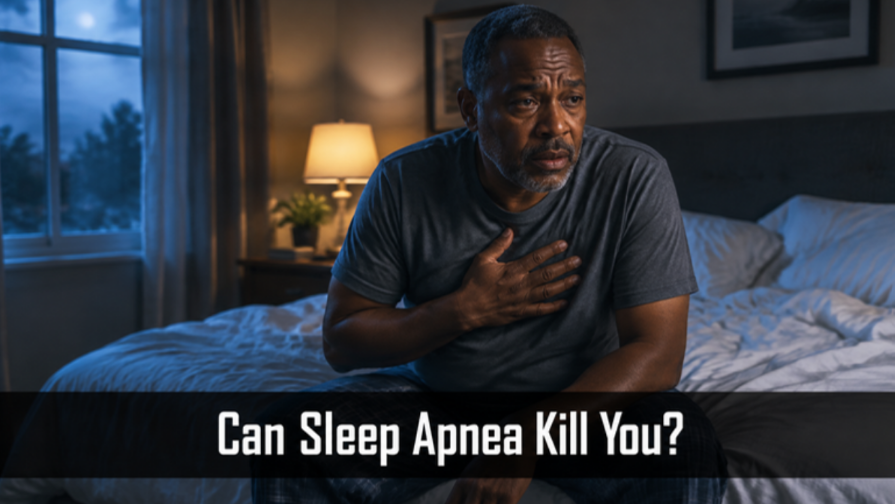
Can Sleep Apnea Kill You?
Last updated: October 20, 2026. Medically reviewed by Dr. Avinesh Bhar, Board-Certified Sleep Physician, SLIIIP.com.
Sleep apnea rarely kills someone in a single night, but untreated sleep apnea is linked to a higher risk of death over time. The risk comes mostly from strain on the heart, blood pressure, and brain, built up over years of broken breathing. Dr. Avinesh Bhar, Board-Certified Sleep Physician at SLIIIP.com, checks two numbers first. He looks at how often breathing stops each hour and how low oxygen drops. The danger of sleep apnea is long-term and cumulative, not usually sudden. The good news is that sleep apnea can be tested for at home and managed with a doctor’s help.
SLIIIP’s board-certified sleep physicians can do sleep evaluations for sleep apnea. Virtual consultations in all 50 states. Home sleep tests shipped to your door.
Can sleep apnea kill you in your sleep?
Sleep apnea itself very rarely causes death during a single breathing pause. Your brain senses the drop in oxygen and wakes you just enough to breathe again. Most people never remember these brief wake-ups. The real concern is what happens when this cycle repeats dozens or hundreds of times a night. Each pause can lower oxygen and push up heart rate and blood pressure. Over months and years, that repeated stress is linked to serious heart and brain problems.
This is why doctors talk about sleep apnea as a risk factor rather than an emergency. Some people with severe sleep apnea and existing heart disease may face a higher risk of dangerous heart rhythms at night. For most people, though, the threat builds slowly and quietly.
What does the research say about sleep apnea and the risk of death?
Large studies link severe, untreated obstructive sleep apnea to a higher risk of dying early. One study described by the American Academy of Sleep Medicine followed 6,441 adults aged 40 and older for about eight years. People with severe obstructive sleep apnea were 46 percent more likely to die than people without it. Those with moderate sleep apnea had a 17 percent higher risk. Men aged 40 to 70 with severe sleep apnea were twice as likely to die as men of the same age without it.
The same AASM summary mentions a second study that followed 1,522 adults for 18 years. In that group, people with severe sleep apnea were three times more likely to die. That study also suggested that regular CPAP use may be linked to a lower risk of early death. These studies show associations, not proof that sleep apnea alone caused each death. Still, the pattern across studies is consistent enough that sleep doctors take it seriously.
How does untreated sleep apnea affect your body?
Untreated sleep apnea affects far more than how rested you feel. According to the National Heart, Lung, and Blood Institute, untreated sleep apnea increases the risk for stroke, heart attack, and other serious problems. Here are the main areas doctors watch.
Heart and blood pressure
Each breathing pause can trigger a surge of stress hormones. Your heart beats harder and your blood vessels tighten. Over time, sleep apnea is linked to high blood pressure, irregular heart rhythms like atrial fibrillation, and heart failure. You can read more in our guide on how sleep apnea affects the heart.
Stroke
Drops in oxygen and swings in blood pressure may strain the blood vessels that feed the brain. Sleep apnea is linked to a higher risk of stroke, which we cover in detail in Can Sleep Apnea Increase Your Risk of Stroke?
Metabolism and blood sugar
Sleep apnea is associated with insulin resistance, type 2 diabetes, and weight gain. Weight gain can then narrow the airway further. This can create a cycle that is hard to break without treatment.
Brain, mood, and focus
Poor sleep quality is linked to trouble concentrating, making decisions, and remembering things. Many people also notice irritability or low mood. These changes can affect work, relationships, and safety.
Is drowsy driving a hidden danger of sleep apnea?
Yes, daytime sleepiness from sleep apnea is linked to a higher risk of car crashes. When your sleep is broken all night, your brain may slip into short sleep episodes during the day. These lapses can last only a few seconds. At highway speed, a few seconds is enough to cause a serious crash. This is one of the most immediate risks of untreated sleep apnea, and it affects other people on the road too.
If you have ever nodded off at a red light or drifted out of your lane, take it seriously. Pull over when you feel drowsy, and talk with a doctor about your sleep.
Is central sleep apnea more dangerous than obstructive sleep apnea?
Central sleep apnea is less common, but it is often linked to other serious health conditions. In obstructive sleep apnea, the airway collapses or gets blocked during sleep. In central sleep apnea, the brain does not send the right signals to breathe. Central sleep apnea is often seen in people with heart failure, after a stroke, or with certain medicines like opioids. Because it often travels with these conditions, it needs a careful medical evaluation.
Who is most at risk?
Some people face a higher risk of serious problems from sleep apnea. Risk tends to rise when sleep apnea is severe, untreated, and combined with other health conditions.
- People with moderate or severe sleep apnea that has never been treated
- Adults with heart disease, high blood pressure, or a history of stroke
- People with type 2 diabetes or obesity
- Men in midlife, based on the study findings above
- Anyone who drives often or works with heavy machinery while sleepy
- People who take opioids or sedatives, which can affect breathing during sleep
Warning signs you should not ignore
Many people with sleep apnea do not know they have it. A bed partner is often the first to notice something is wrong. Watch for these common signs.
- Loud, frequent snoring, especially with pauses or silence
- Choking or gasping sounds during sleep
- Waking up with a dry mouth or morning headache
- Feeling tired after a full night of sleep
- Dozing off while reading, watching TV, or driving
- Waking up often to urinate at night
- High blood pressure that is hard to control
One sign alone does not mean you have sleep apnea, but several together are worth a conversation with a doctor.
Does treating sleep apnea lower these risks?
Treatment for sleep apnea is linked to better health outcomes, especially for people who use it regularly. The long-term study described by the AASM suggested regular CPAP use may be associated with a lower risk of early death. Other options include oral appliances, position changes, and weight management, depending on your results. The best plan depends on how severe your sleep apnea is and what other conditions you have. Never change your CPAP settings on your own. Always talk with your sleep doctor before adjusting any part of your treatment.
Watch: Why Sleep Apnea Is More Dangerous Than Most People Realize | Signs, Risks & Treatment
When to See a Doctor
See a doctor if you snore loudly, stop breathing during sleep, or feel sleepy during the day. Dr. Avinesh Bhar recommends a sleep test for anyone with loud snoring plus high blood pressure, heart rhythm problems, or a past stroke. In these patients, finding sleep apnea early may help protect the heart and brain over time. A home sleep test can measure how often your breathing stops and how low your oxygen drops. Your results then guide which treatment fits you best.
Get emergency care right away if you have chest pain, sudden weakness on one side, trouble speaking, or severe shortness of breath. These are not signs to wait on or to bring up at a routine visit.
If you already have sleep apnea and stopped using your treatment, reach out to your sleep doctor. Many people stop because of mask discomfort or dry mouth, and these problems can often be fixed.
SLIIIP works with many major insurance plans, so you can check your coverage before your visit.

Check your insurance coverage in minutes, then schedule a virtual sleep evaluation with a board-certified sleep physician.
For cash payments, price for Initial Consultation is $150
Follow up appointments cost $125
Frequently Asked Questions
Can sleep apnea kill you?
Untreated sleep apnea is linked to a higher risk of early death over time. The risk comes mostly from strain on the heart, blood vessels, and brain.
Can you die in your sleep from sleep apnea?
It is rare to die from a single breathing pause because the brain usually wakes you to breathe. People with severe sleep apnea and heart disease may face a higher risk at night.
How much does severe sleep apnea raise the risk of death?
One large study found people with severe obstructive sleep apnea were 46 percent more likely to die than people without it.
Is mild sleep apnea dangerous?
Mild sleep apnea carries less risk than severe sleep apnea. It can still affect sleep quality and may worsen over time, so it is worth discussing with a doctor.
What is the most dangerous effect of sleep apnea?
Heart problems, stroke, and drowsy driving are among the most serious risks linked to untreated sleep apnea.
Does sleep apnea cause heart attacks?
Sleep apnea is linked to a higher risk of heart attack. It is one risk factor among several, such as blood pressure and cholesterol.
Can sleep apnea cause a stroke?
Untreated sleep apnea is associated with a higher risk of stroke, according to the NHLBI.
Is central sleep apnea more serious than obstructive sleep apnea?
Central sleep apnea is less common and is often linked to heart failure, stroke, or opioid use. It needs a careful medical evaluation.
Can sleep apnea cause sudden cardiac death?
Some research links sleep apnea to dangerous heart rhythms at night, mainly in people with existing heart disease.
How many times can you stop breathing in your sleep?
People with severe sleep apnea can have 30 or more breathing pauses or shallow breaths per hour.
What does AHI mean?
AHI stands for apnea-hypopnea index. It counts how many times per hour your breathing stops or becomes shallow during sleep.
Does treating sleep apnea lower the risk of death?
Long-term research suggests regular CPAP use may be linked to a lower risk of early death.
Can you have sleep apnea and not know it?
Yes. Many people never remember their nighttime awakenings, and a bed partner often notices first.
Is snoring always a sign of sleep apnea?
No. Many people snore without sleep apnea, but loud snoring with pauses or gasping is a warning sign.
Can losing weight help sleep apnea?
Weight loss is linked to fewer breathing pauses in many people with overweight. It may not resolve sleep apnea on its own.
Is sleep apnea more dangerous for men?
One study found men aged 40 to 70 with severe sleep apnea were twice as likely to die as men without it.
Can sleep apnea make you fall asleep while driving?
Yes. Daytime sleepiness from sleep apnea is linked to a higher risk of car crashes.
How is sleep apnea diagnosed?
Sleep apnea is diagnosed with a sleep study, either at home or in a sleep lab, reviewed by a sleep physician.
Can I take a sleep apnea test at home?
Yes. Many adults can use a home sleep test after a visit with a sleep physician who reviews their symptoms.
Should I stop CPAP if it feels uncomfortable?
No. Talk with your sleep doctor first, since mask fit and comfort issues can often be fixed.
SLIIIP's board-certified sleep physicians can do sleep evaluations for sleep apnea. Virtual consultations in all 50 states. Home sleep tests shipped to your door.
Latest posts
-
Sleepwalking in Adults: Causes, Risks, and When to Get Help
Last updated: October 23, 2026. Medically reviewed by Dr. Avinesh Bhar, Board-Certified Sleep Physician, SLIIIP.com. Sleepwalking in adults is a sleep disorder where a person gets up and moves around…
-
Nocturia and Sleep Apnea: Why You Wake Up to Pee at Night
Last updated: October 23, 2026. Medically reviewed by Dr. Avinesh Bhar, Board-Certified Sleep Physician, SLIIIP.com. Nocturia means waking up more than once a night to urinate. It is often blamed…
-
CPAP Side Effects: What’s Common and When to Call a Doctor
Last updated: October 21, 2026. Medically reviewed by Dr. Avinesh Bhar, Board-Certified Sleep Physician, SLIIIP.com. The most common CPAP side effects are dry mouth, a dry or stuffy nose, air…
·
Get updates
Spam-free subscription, we guarantee. This is just a friendly ping when new content is out.

