
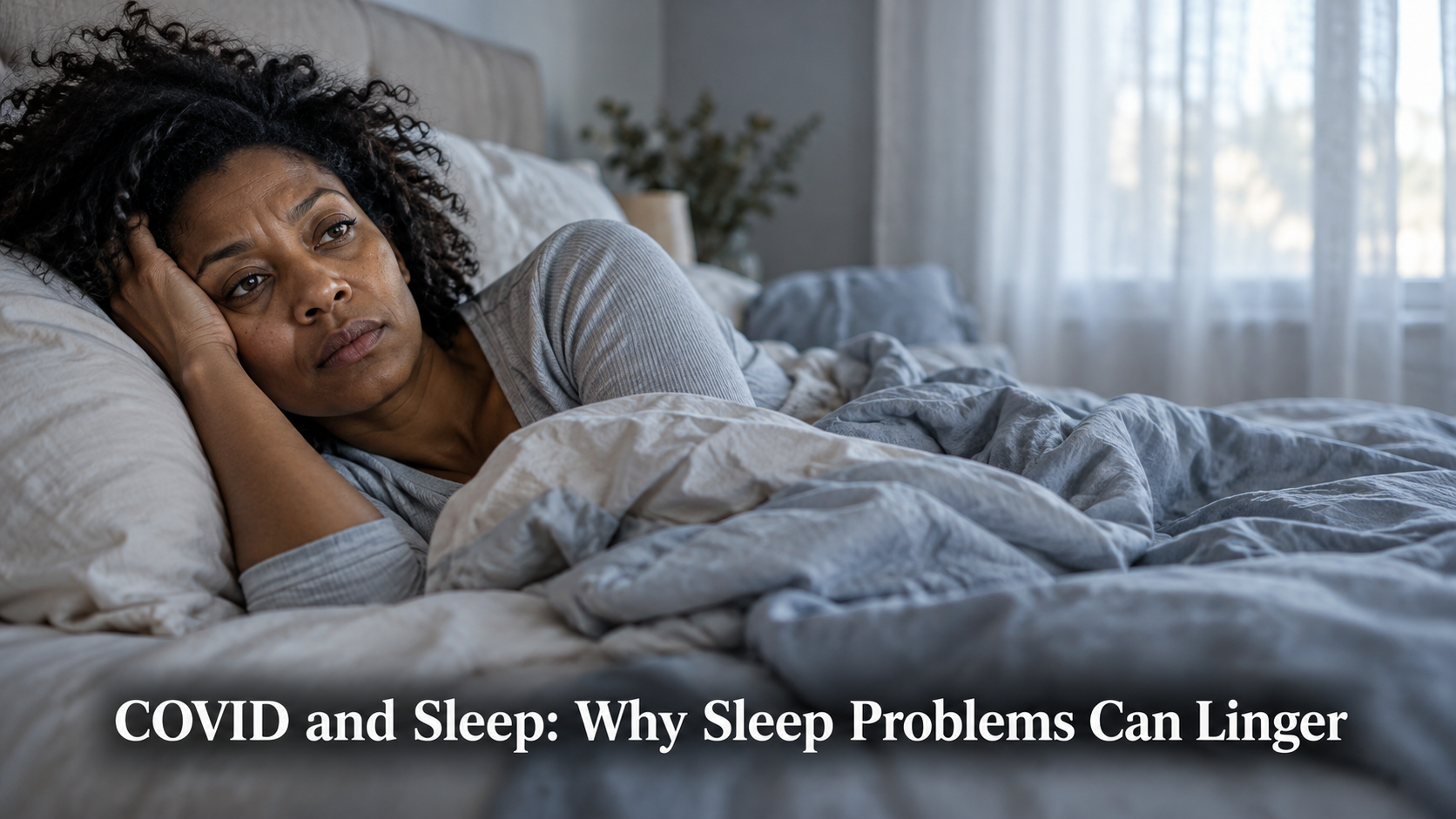
COVID and Sleep: Why Sleep Problems Can Linger After Infection
Last updated: October 13, 2026. Medically reviewed by Dr. Avinesh Bhar, Board-Certified Sleep Physician, SLIIIP.com.
The link between COVID and sleep often shows up after the test turns negative. Sleep trouble can last for weeks or months after the infection itself clears. Insomnia, heavy daytime sleepiness, and a body clock that feels out of sync are among the sleep problems reported after COVID-19. Dr. Avinesh Bhar, Board-Certified Sleep Physician, SLIIIP.com, is trained in both sleep medicine and pulmonary medicine. He advises that new loud snoring or gasping at night after COVID deserves a real sleep evaluation. The same goes for sleep that never feels refreshing.
Sleep problems after COVID are a recognized concern, and the NIH has launched clinical trials focused on them. Most of these problems can be sorted out with the right evaluation. At SLIIIP.com, board-certified sleep physicians help adults figure out which sleep symptoms need testing and which need time.
SLIIIP’s board-certified sleep physicians can do sleep evaluations for sleep apnea. Virtual consultations in all 50 states. Home sleep tests shipped to your door.
Can COVID Affect Your Sleep?
Yes, COVID-19 is associated with sleep problems both during the illness and after recovery. For some people, these problems fade within a few weeks. For others, they stay long after the cough and fever are gone.
Sleep trouble is common enough after COVID that federal researchers are studying it directly. The NIH launched clinical trials on sleep disturbances in Long COVID as part of its RECOVER initiative. One trial looks at excessive daytime sleepiness. Another looks at complex sleep problems, such as trouble falling asleep and an off-track sleep-wake cycle.
Long COVID is the term for health problems that continue or appear after a COVID-19 infection. Sleep problems are one part of that picture. Fatigue, brain fog, and trouble with exercise often show up alongside them.
What Sleep Problems Show Up After COVID?
The most common sleep complaints after COVID include insomnia, excessive daytime sleepiness, and unrefreshing sleep. People describe these problems in many different ways. Here are the patterns that come up most often:
- Insomnia: trouble falling asleep, staying asleep, or waking too early.
- Excessive daytime sleepiness: feeling the need to nap or nodding off during quiet tasks.
- Unrefreshing sleep: sleeping a full night but waking up tired anyway.
- A shifted body clock: feeling wide awake late at night and groggy all morning.
- Fragmented sleep: waking up many times without a clear reason.
Some people have only one of these problems. Others notice several at once. Feeling tired after COVID does not always mean you are sleeping badly, but the two often overlap. A sleep physician can help tell the difference.
Why Might COVID Disrupt Sleep?
Researchers are still studying exactly why COVID is linked to sleep problems, and several factors may play a role. No single cause explains every case. These are the factors most often discussed:
- Symptoms at night: cough, congestion, body aches, and fever can break up sleep during the illness.
- Changed routines: more time in bed, less daylight, and irregular naps can shift your body clock.
- Stress and worry: health concerns, isolation, and missed work can keep the mind busy at bedtime.
- Lingering fatigue: low daytime energy can lead to long naps that make nighttime sleep harder.
Habits formed while you were sick can outlast the illness itself. For example, a few weeks of late mornings and long naps can make it hard to fall asleep at a normal hour. That pattern can look like insomnia even after you feel better.
Is There a Link Between COVID and Sleep Apnea?
Sleep apnea and COVID are separate conditions, but their symptoms can overlap in ways that make sleep apnea easy to miss. Obstructive sleep apnea is a disorder where the airway narrows or closes during sleep. It is linked to loud snoring, pauses in breathing, morning headaches, and daytime fatigue.
After COVID, many people expect to feel tired for a while. That expectation can hide a sleep problem that was already there or that started around the same time. If fatigue after COVID comes with snoring or gasping at night, sleep apnea should be ruled out. A home sleep test is one common way to check for it.
Researchers have also looked at whether sleep apnea is linked to how people do during a COVID infection. That work is ongoing. What matters for you is simple: breathing problems during sleep are worth checking, whether or not you have had COVID.
How Does Sleep Support Recovery From an Infection?
Steady, good-quality sleep is linked to a healthy immune response. According to the NHLBI at the National Institutes of Health, ongoing sleep deficiency can change how your body’s natural defenses respond to germs. That change may make it harder to fight common infections.
Sleep is not a treatment for COVID, but poor sleep is linked to a weaker defense against infections in general. That is one reason sleep matters during recovery. The same idea applies to other viral illnesses, as explained in our guide to flu and sleep.
Dr. Bhar has also written about what he saw in hospitals during the early pandemic in an insider’s observation of COVID-19. That piece covers the health care side of the crisis. This article focuses on the sleep problems many people still notice today.
What Can Help You Sleep Better After COVID?
Simple, steady sleep habits are a good first step for most adults with sleep trouble after COVID. They will not fix every problem, but they give your body clock a stable base. Here are habits worth trying:
- Keep a fixed wake time: get up at the same time every day, even after a bad night.
- Get morning daylight: a short walk outside early in the day helps set your body clock.
- Limit naps: keep naps short and early in the afternoon if you need one.
- Cut caffeine after lunch: its effects can last many hours.
- Keep the bedroom cool, dark, and quiet: this makes it easier to stay asleep.
- Wind down before bed: spend the last hour on calm activities away from bright screens.
The NIH trials are testing options such as melatonin and light therapy for Long COVID sleep problems. Those trials are still underway, so ask a clinician before starting any sleep aid on your own. Do not stop or change any prescribed treatment without talking to your doctor first.
Watch: Sleep Studies, Sleep Apnea, and Treatment with Avinesh Bhar MD
When to See a Doctor
See a doctor if sleep problems last more than a few weeks after you recover from COVID. Dr. Bhar recommends a sleep evaluation when poor sleep, loud snoring, or daytime sleepiness continues after other COVID symptoms have faded. He also advises checking sooner if sleepiness affects your driving or your safety at work.
Reach out to a sleep physician if you notice any of the following:
- Loud snoring, gasping, or choking at night.
- Pauses in breathing that a partner has seen.
- Daytime sleepiness that makes you nod off while reading or driving.
- Insomnia that has lasted more than a month.
- Morning headaches or waking up with a dry mouth.
New shortness of breath, chest pain, or confusion needs urgent medical care, not a sleep visit. Call 911 or go to an emergency room for those symptoms. For lingering fatigue, brain fog, or other Long COVID symptoms, your primary care doctor is a good place to start.
You can also read is my fatigue normal? to sort everyday tiredness from fatigue that needs a closer look.
Insurance plans accepted at SLIIIP include: Kaiser Permanente, Ambetter, Medicare, Beech Street (a MultiPlan network), Humana Military / TRICARE, MultiPlan, Humana, Allied, Alliant, Cigna, NovaNet, Secure Health, Aetna, Blue Cross Blue Shield, UnitedHealthcare, Coventry Health Care, and Clover Health.

SLIIIP’s board-certified sleep physicians can do sleep evaluations for sleep apnea. Virtual consultations in all 50 states. Home sleep tests shipped to your door.
Frequently Asked Questions About COVID and Sleep
Can COVID cause insomnia?
Insomnia is one of the sleep problems reported after COVID-19. It often improves with time, but it can persist for some people.
How long do sleep problems last after COVID?
For many people, sleep improves within a few weeks. For others, sleep problems continue for months as part of Long COVID.
Is it normal to sleep a lot after COVID?
Extra sleep is common while you recover. Heavy sleepiness that lasts for weeks should be checked by a doctor.
What is Long COVID?
Long COVID is the term for health problems that continue or appear after a COVID-19 infection. Sleep problems can be part of it.
Can COVID change my sleep schedule?
Yes. Long naps, late mornings, and less daylight during illness can shift your body clock.
Why do I feel tired after COVID even when I sleep enough?
Fatigue after COVID is common and can happen even with enough sleep. Ongoing unrefreshing sleep may point to a sleep disorder worth checking.
Can COVID cause sleep apnea?
Sleep apnea and COVID are separate conditions. However, overlapping symptoms like fatigue can hide sleep apnea, so new snoring should be checked.
Is the NIH studying sleep after COVID?
Yes. The NIH RECOVER initiative launched trials on daytime sleepiness and complex sleep problems in Long COVID.
Does melatonin help sleep after COVID?
Melatonin is being studied in NIH trials for Long COVID sleep problems. Ask a clinician before taking it.
Can poor sleep slow recovery from an infection?
Ongoing sleep deficiency is linked to a weaker immune response. Good sleep supports overall recovery.
Should I nap after COVID?
Short, early naps are usually fine. Long or late naps can make nighttime sleep harder.
Why do I wake up at night since having COVID?
Night waking can be linked to stress, changed routines, or a sleep disorder. If it lasts more than a few weeks, talk to a doctor.
Can COVID cause vivid dreams?
Some people report unusual dreams during and after illness. If dreams disrupt your sleep often, mention them to your doctor.
Can anxiety after COVID affect sleep?
Yes. Worry and stress are linked to trouble falling and staying asleep.
When should I worry about sleep problems after COVID?
Worry if problems last more than a few weeks or come with snoring, gasping, or dangerous sleepiness. A sleep evaluation can help.
Can a sleep test be done at home after COVID?
Yes. A home sleep test is a common way to check for obstructive sleep apnea.
Does SLIIIP treat COVID?
No. SLIIIP evaluates and treats sleep disorders in adults and can work alongside your existing care team.
Can I see a sleep doctor online for post-COVID sleep problems?
Yes. SLIIIP offers virtual consultations in all 50 states.
What daily habits support better sleep after COVID?
A fixed wake time, morning daylight, short naps, and less caffeine after lunch all support a steadier sleep schedule.
Does insurance cover a sleep evaluation?
Many plans cover sleep evaluations. You can verify your benefits with SLIIIP before your visit.
SLIIIP’s board-certified sleep physicians can do sleep evaluations for sleep apnea. Virtual consultations in all 50 states. Home sleep tests shipped to your door.
Latest posts
-
Can Statins Cause Insomnia? What the Research Shows
Last updated: November 17, 2026. Medically reviewed by Dr. Avinesh Bhar, Board-Certified Sleep Physician, SLIIIP.com. For most people, probably not. A meta-analysis of placebo-controlled sleep lab studies found that statins…
-
Do Beta Blockers Cause Insomnia? What to Know
Last updated: November 17, 2026. Medically reviewed by Dr. Avinesh Bhar, Board-Certified Sleep Physician, SLIIIP.com. Beta blockers are linked to insomnia in some people. Some beta blockers lower nighttime melatonin,…
-
Do I Need a Sleep Study to Get the Sleep Apnea Pill?
Last updated: November 17, 2026. Medically reviewed by Dr. Avinesh Bhar, Board-Certified Sleep Physician, SLIIIP.com. Yes, almost certainly. Any sleep apnea medicine, including the AD109 pill if it is approved,…
Get updates
Spam-free subscription, we guarantee. This is just a friendly ping when new content is out.

