👉 Register for Free. How to Diagnose Sleep Apnea Faster in Primary Care – FREE Webinar by Dr. Audrey Wells. – Friday, April 24 at 12 PM ET

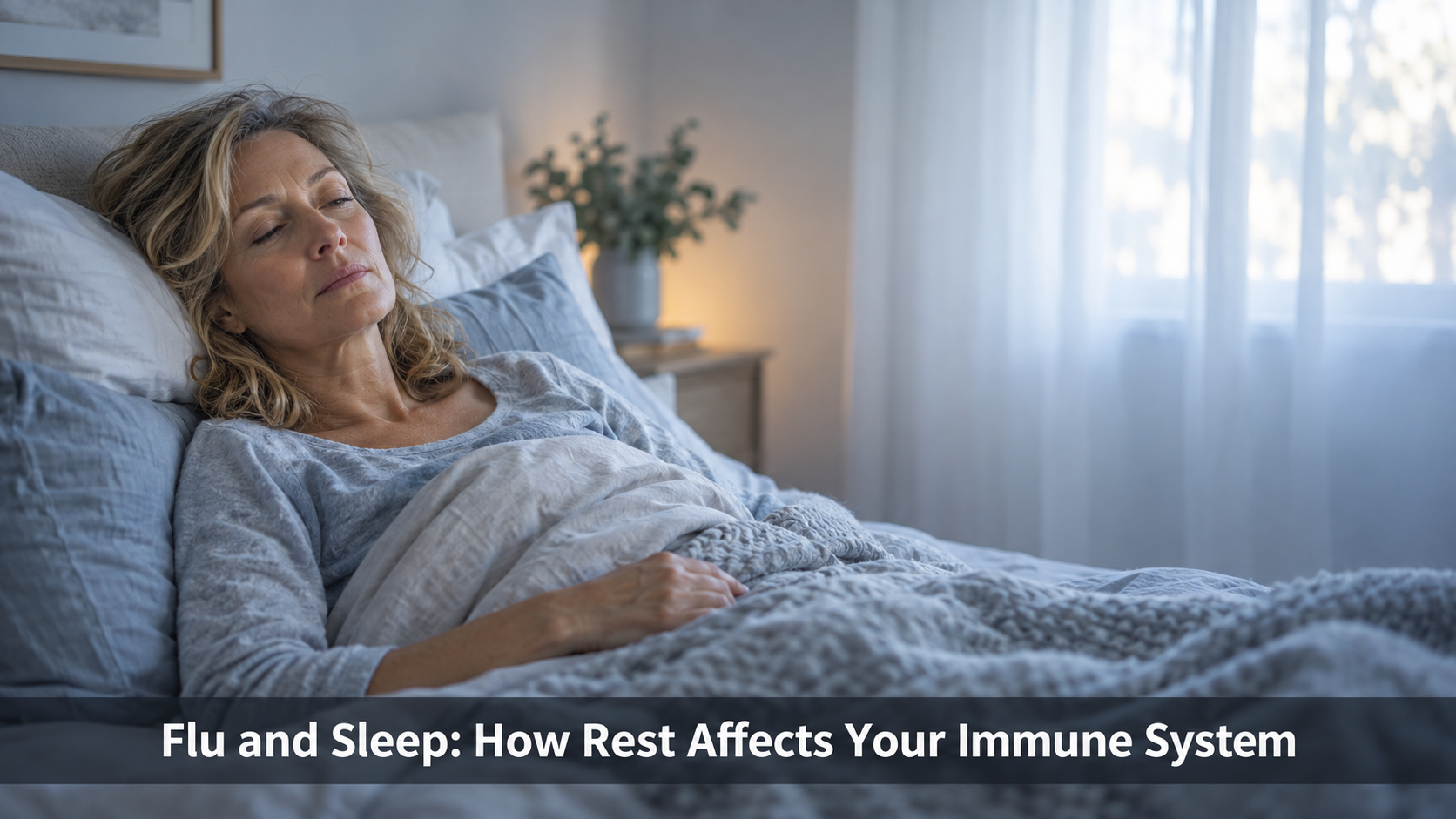
Flu and Sleep: How Rest Affects Your Immune System
Last updated: September 6, 2026. Medically reviewed by Dr. Avinesh Bhar, Board-Certified Sleep Physician, SLIIIP.com.
Flu and sleep are connected in ways many people do not realize until they are sick. Dr. Avinesh Bhar, Board-Certified Sleep Physician at SLIIIP.com, regularly sees patients whose flu symptoms lingered longer because a stretch of short nights left their immune system running on empty before the virus ever arrived. Sleep is one of the main tools your body uses to fight off influenza, and cutting it short can make symptoms last longer and hit harder. SLIIIP.com treats adults through virtual sleep evaluations, and Dr. Bhar explains what happens inside the body during a bout of flu and how your sleep habits shape the outcome.
SLIIIP’s board-certified sleep physicians can do sleep evaluations for sleep apnea. Virtual consultations in all 50 states. Home sleep tests shipped to your door.
What Flu Symptoms Look Like (and Why Fatigue Hits Hardest)
Flu symptoms typically include fever, chills, body aches, headache, sore throat, cough, and fatigue that comes on suddenly, according to the CDC. Most people notice the fatigue first, even before a fever registers on a thermometer.
That exhaustion is not just the virus talking. It is also your immune system pulling energy away from other functions to fight the infection. When someone is already short on sleep before the flu hits, that fatigue can feel overwhelming because the body has less reserve to draw from.
CHECK YOUR SLEEP SYMPTOMS: TAKE THE 2 MINUTE QUIZ
TAKE THE QUIZ
Can Lack of Sleep Make the Flu Worse?
Yes. Poor sleep in the days before or during a flu infection is linked to slower recovery and more severe symptoms. The National Heart, Lung, and Blood Institute explains that a specific type of immune cell becomes more active during sleep, which is one reason people who sleep too little get sick more often and recover more slowly.
Short sleep also raises inflammation in ways that can make aches, congestion, and fatigue feel more intense during an active infection.
How Sleep Supports Your Immune System Before You Get Sick
Your immune system does much of its preparation work while you sleep, not while you are awake. During deep sleep, the body produces proteins that help coordinate the immune response to infection.
Adults who consistently get less than seven hours of sleep a night show a weaker immune response to common viruses than adults who sleep seven to nine hours. This is one reason sleep habits during flu season matter even before any symptoms appear. Building a steady sleep schedule ahead of cold and flu season is one of the simplest ways to give your immune system a head start. For a broader look at this connection, see our guide on sleep and immunity.
Does Sleep Affect How Well Flu Shots Work?
Yes, timing matters. Research on vaccination and sleep suggests that getting enough sleep in the days before and after a flu shot supports a stronger antibody response. People who are sleep deprived around the time of vaccination may produce fewer protective antibodies, though the vaccine still provides meaningful protection either way.
If you are scheduling a flu shot, planning for a full night of sleep the night before and after is a small step that may help your body respond more fully.
Watch: Dr. Bhar Explains Why Sleep Is Important
Sleep Habits That Help While You Are Recovering From the Flu
Getting good rest while sick with the flu is not always simple, since fever, congestion, and aches can all interrupt sleep. A few adjustments tend to help.
Keep the bedroom cool, since a lower room temperature can offset the warmth of a fever.
Use a humidifier or saline rinse to ease congestion that makes breathing through the nose difficult.
Stay hydrated during the day, since dehydration can make nighttime congestion and headaches worse.
Avoid screens in the hour before bed, since a body already fighting inflammation benefits from a calmer wind-down.
Prioritizing sleep during a flu illness, not just pushing through it, is one of the most direct ways to support recovery.
Sleep Apnea, CPAP Therapy, and Getting Sick
For people who already manage sleep apnea with CPAP therapy, a cold or flu adds a layer of complexity. Congestion can make the mask feel harder to tolerate, and some patients stop using their device for a few nights, which is not the intended path.
Sleep apnea itself is associated with a weaker immune response, which means an unmanaged airway problem can make it harder to bounce back from a flu infection. Our guide on using CPAP while sick covers specific adjustments for congestion and humidity settings during an illness.
When to See a Doctor
Most flu cases resolve within a week with rest and fluids, but some symptoms call for medical attention. See a doctor if you have difficulty breathing, chest pain, ongoing high fever, or symptoms that improve and then return worse.
Dr. Avinesh Bhar, Board-Certified Sleep Physician at SLIIIP.com, also recommends a sleep evaluation for anyone who gets sick often, recovers slowly, or feels exhausted even on nights they are not ill, since an underlying sleep disorder like sleep apnea can be part of the pattern. A home sleep test is a simple way to find out whether disrupted breathing during sleep is working against your immune system.
At Sliiip, we accept the following insurances:

SLIIIP’s board-certified sleep physicians can do sleep evaluations for sleep apnea. Virtual consultations in all 50 states. Home sleep tests shipped to your door.
Frequently Asked Questions About Flu and Sleep
Does lack of sleep make the flu worse?
Yes. Poor sleep before or during a flu infection is linked to more severe symptoms and a slower recovery.
How many hours of sleep help fight the flu?
Most adults recover best getting seven to nine hours of sleep a night, especially during an active infection.
Can sleep affect how well a flu shot works?
Yes. Getting enough sleep around the time of vaccination supports a stronger antibody response.
Why do I feel so tired when I have the flu?
Fatigue during flu is partly the virus and partly your immune system pulling energy away from other functions to fight it.
Does napping help when you have the flu?
Yes, short naps can supplement nighttime sleep when illness interrupts rest, though naps should not replace a full night’s sleep.
Can poor sleep make you more likely to catch the flu?
Yes. Adults who sleep less than seven hours a night are more likely to catch respiratory viruses than those who sleep seven to nine hours.
Does fever affect sleep quality?
Yes. Fever can cause night sweats, chills, and frequent waking, all of which fragment sleep during illness.
Is it normal to sleep more than usual with the flu?
Yes. The body often increases total sleep time during infection to support immune function.
How long do flu symptoms usually last?
Most uncomplicated flu symptoms resolve within three to seven days, though fatigue and cough can linger longer.
Can CPAP therapy be used during the flu?
Yes, though congestion may require humidity or mask adjustments. See our guide on using CPAP while sick for details.
Does sleep apnea make flu recovery slower?
Untreated sleep apnea is associated with a weaker immune response, which may slow recovery from a viral illness.
Should I stop CPAP therapy if I have the flu?
No. Stopping CPAP during an illness removes airway support exactly when your body needs rest the most.
What sleep position helps with flu congestion?
Sleeping with the head slightly elevated can ease nasal congestion and postnasal drip during a cold or flu.
Can a humidifier improve sleep during the flu?
Yes, added moisture in the air can ease congestion and coughing, making it easier to fall and stay asleep.
Does alcohol or caffeine make flu symptoms worse at night?
Yes, both can disrupt sleep and dehydrate the body, which can slow recovery during an active infection.
When should I see a doctor for flu symptoms?
See a doctor if you have difficulty breathing, chest pain, persistent high fever, or symptoms that return worse after improving.
Can chronic poor sleep weaken long-term immunity?
Yes, research links chronic sleep deficiency to broader immune changes that go beyond a single illness.
Does the flu affect sleep even after symptoms resolve?
Yes, fatigue and altered sleep patterns can persist for one to two weeks after other flu symptoms clear.
Is fatigue after the flu a sign of another sleep disorder?
It can be. Fatigue that continues well beyond typical flu recovery is worth discussing with a sleep physician.
How can I tell if my tiredness is the flu or a sleep disorder?
If exhaustion persists long after other flu symptoms resolve, or if you snore or gasp during sleep, a sleep evaluation can clarify the cause.
SLIIIP’s board-certified sleep physicians can do sleep evaluations for sleep apnea. Virtual consultations in all 50 states. Home sleep tests shipped to your door.
Latest posts
-
World Heart Day and Sleep Apnea: What Your Heart Wants You to Know
Last updated: September 6, 2026. Medically reviewed by Dr. Avinesh Bhar, Board-Certified Sleep Physician, SLIIIP.com. World Heart Day falls on September 29 each year, and in 2026 the World Heart…
-
Recovery, Addiction, and Sleep: Why Rest Matters in Early Recovery
Last updated: September 6, 2026. Medically reviewed by Dr. Avinesh Bhar, Board-Certified Sleep Physician, SLIIIP.com. Recovery from addiction and sleep problems often show up together, and one can make the…
-
Cholesterol Screening and Sleep Apnea: What the Connection Means for You
Last updated: September 6, 2026. Medically reviewed by Dr. Avinesh Bhar, Board-Certified Sleep Physician, SLIIIP.com. Cholesterol screening and sleep apnea are not usually discussed in the same appointment, but they…
Get updates
Spam-free subscription, we guarantee. This is just a friendly ping when new content is out.

