👉 Register for Free. How to Diagnose Sleep Apnea Faster in Primary Care – FREE Webinar by Dr. Audrey Wells. – Friday, April 24 at 12 PM ET

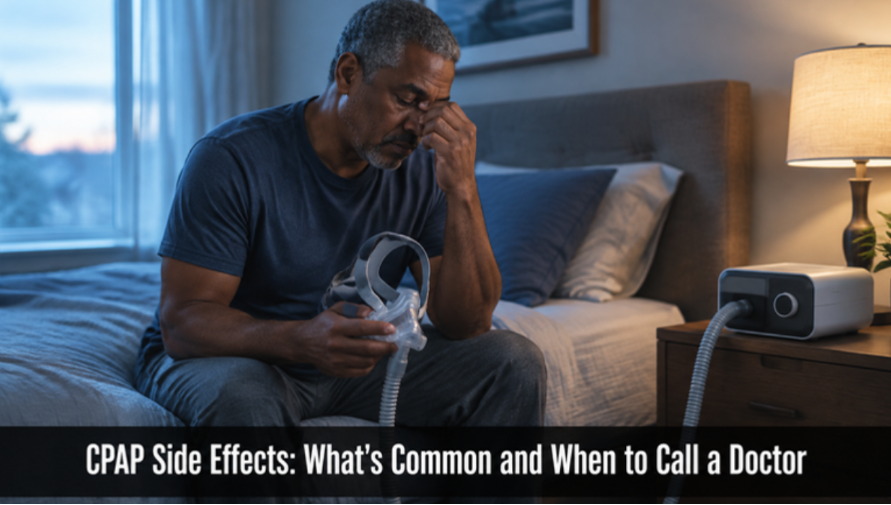
CPAP Side Effects: What’s Common and When to Call a Doctor
Last updated: October 21, 2026. Medically reviewed by Dr. Avinesh Bhar, Board-Certified Sleep Physician, SLIIIP.com.
The most common CPAP side effects are dry mouth, a dry or stuffy nose, air leaks, mask marks, and swallowed air. Most of them are linked to mask fit, pressure, or humidity, and most can be adjusted.
Dr. Avinesh Bhar, Board-Certified Sleep Physician at SLIIIP.com, sees side effects as a signal to review the setup. He tells patients they are not a reason to quit therapy on their own.
CPAP side effects are common, but they are usually a fit or settings problem, not a sign that CPAP is wrong for you. Stopping CPAP without talking to your doctor brings back the breathing pauses it was controlling.
SLIIIP’s board-certified sleep physicians can do sleep evaluations for sleep apnea. Virtual consultations in all 50 states. Home sleep tests shipped to your door.
What Are the Most Common CPAP Side Effects?
The most common CPAP side effects are air leaks, dry mouth, dry nose, a noisy mask, and skin irritation. These show up in new users and in people who have used CPAP for years.
A large real-life study looked at 1,484 long-term CPAP users. More than 75 percent reported at least one mask side effect, according to research published in Respiratory Research. The patients in that study had used CPAP for a median of about 4.4 years. Side effects do not always fade with time, so long-term users should report them too.
Here are the side effects people mention most often.
- Air leaks: air escaping around the mask edge, often onto the eyes or face.
- Dry mouth: common in mouth breathers and with nasal masks when the mouth falls open.
- Dry or stuffy nose: linked to dry air, low humidity, or a cold room.
- Mask marks and skin irritation: red lines, sore spots, or rashes where the cushion presses.
- Swallowed air (aerophagia): bloating, burping, or gas in the morning.
- Morning headaches: sometimes linked to pressure, leaks, or sinus pressure.
- Noise: a whistling mask or hose that wakes you or your partner.
For a deeper look at one of these, see our guide on whether CPAP can cause headaches.
Watch: Dr. Wells explains how long it takes to get comfortable with CPAP
Are There Long-Term Side Effects of Using a CPAP Machine?
For most people, the long-term side effects of CPAP are the same comfort issues seen early on, such as dryness, leaks, and skin irritation. CPAP is a pressurized air treatment, not a drug, so it does not build up in the body.
The bigger long-term issue is how side effects affect use. In the Respiratory Research study, dry mouth was linked to using CPAP less than four hours a night. Leaks, a noisy mask, and a dry nose were each linked to more daytime sleepiness, even in people still using CPAP. That matters, because sleepiness on CPAP can look like the treatment is failing when the real issue is the mask.
Poor cleaning habits also add up over time. A dirty mask, hose, or water tank is linked to skin breakouts, odors, and nose irritation. Rinse the mask daily and follow your supplier’s schedule for replacing cushions, filters, and tubing.
Can CPAP Cause Dry Mouth or a Stuffy Nose?
Yes, CPAP can cause dry mouth and a dry or stuffy nose, and these are some of the most reported complaints. Moving air dries the airway, especially in winter or in air-conditioned rooms.
Dry mouth usually means air is leaving through the mouth.
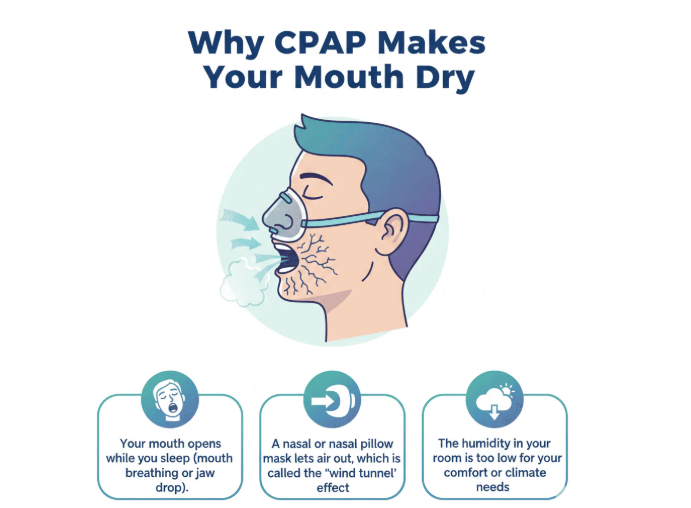
This happens when the mouth opens during sleep with a nasal mask, or when a full-face mask leaks. A chin strap, a different mask style, or more humidity are common fixes your care team may suggest.
A dry or stuffy nose often improves with heated humidification and heated tubing. Raising humidity is one of the simplest changes that can make CPAP more comfortable. Check your machine’s humidity setting before changing anything else. If congestion lasts weeks, a sinus or allergy problem may also be part of the picture.
Why Do I Feel Bloated or Gassy on CPAP?
Bloating on CPAP is usually linked to swallowed air, called aerophagia. Air that goes into the stomach instead of the lungs can cause burping, gas, and a tight belly in the morning.
Aerophagia is often linked to pressure that is higher than you need, or to mouth breathing. Sleeping with your head slightly raised may help some people. Never change your pressure settings yourself.
Pressure changes should be reviewed by your sleep physician using your machine data. Our article on managing bloating and flatulence on CPAP covers this side effect in more detail.
Skin Marks, Rashes, and Eye Irritation
Red lines on the face after removing the mask are common and usually fade within an hour. Lines that last most of the morning often mean the straps are too tight.
A CPAP mask should seal with the lightest strap tension that stops leaks. Overtightening pushes the cushion out of shape, which can cause more leaks, not fewer. Many people tighten the straps when the real problem is a worn cushion or the wrong mask size.
Air leaking near the top of a nasal or full-face mask can blow into the eyes. This is linked to dry, red, or watery eyes in the morning. Refitting the mask while lying down, in your usual sleep position, often helps find the leak.
Rashes or sores under the cushion should not be ignored. They may point to pressure from the mask, skin oils on the cushion, or a reaction to the material. A mask liner or a different cushion type may help. Ask your supplier or care team before trying new products on your skin.
Side Effects That Are Not Normal
Most CPAP side effects are uncomfortable but not dangerous. A few symptoms are different and should be checked rather than worked around.
- Chest pain, severe shortness of breath, or fainting. Call 911 for these.
- Ear pain or ear pressure that does not go away after you remove the mask.
- Nosebleeds that keep coming back.
- Fever, cough, or sinus pain that may point to an infection.
- Feeling as sleepy as before you started CPAP, even with good nightly use.
- New loud snoring or gasping while wearing the mask.
Ongoing sleepiness on CPAP is a reason to review your data, not a reason to stop. Sleepiness may be linked to leaks, the wrong pressure, short nightly use, or a second sleep problem. A sleep physician can look at your machine reports to see which one fits.
How to Make CPAP Side Effects Easier to Live With
Small changes often make a large difference in comfort. Here are steps that are safe to try before your next visit:
- Clean the mask cushion daily with mild soap and water.
- Replace cushions, filters, and tubing on your supplier’s schedule.
- Wash your face before bed to remove oils and lotions.
- Use the machine’s ramp feature if starting pressure feels strong.
- Turn on heated humidity, and adjust it within the range your care team set.
- Practice wearing the mask while awake, such as when reading or watching TV.
Many people need a few weeks to adjust. If CPAP still feels hard after trying these steps, our guide on common reasons people struggle with CPAP may help you pinpoint the cause.
When to See a Doctor
See a sleep doctor if side effects keep you from using CPAP most nights, or if you still feel tired despite steady use. You should also reach out if a side effect gets worse over time instead of better.
Dr. Bhar recommends booking a follow-up before giving up on therapy. In that visit, he reviews the machine’s usage, leak, and residual AHI data alongside your symptoms.
That review often shows whether the fix is a new mask, a humidity change, a pressure adjustment, or a different treatment option. He also advises patients never to change their own pressure settings, since the wrong pressure can make side effects and breathing events worse.
For people who truly cannot tolerate CPAP, other options exist. These include oral appliances and other therapies, depending on your sleep apnea severity and anatomy. A sleep physician can help you weigh these choices safely.
SLIIIP works with most major insurance plans, including Medicare and TRICARE. Check your coverage in a few minutes before you book.

SLIIIP’s board-certified sleep physicians can do sleep evaluations for sleep apnea. Virtual consultations in all 50 states. Home sleep tests shipped to your door.
For cash payments, price for Initial Consultation is $150
Follow up appointments cost $125
Frequently Asked Questions
What are the most common CPAP side effects?
Air leaks, dry mouth, dry or stuffy nose, mask marks, and swallowed air are the most common. Most are linked to mask fit, pressure, or humidity.
Are there long-term side effects of CPAP?
For most people, long-term side effects are ongoing comfort issues like dryness, leaks, and skin irritation. CPAP is pressurized air, not a drug.
Do CPAP side effects go away with time?
Some fade as you adjust, but many continue unless the setup changes. Long-term users should still report them to their care team.
Can CPAP cause dry mouth?
Yes. Dry mouth usually means air is escaping through the mouth, often from mouth breathing or a leaking mask.
Can CPAP cause a stuffy nose?
Yes. Dry, moving air can irritate the nose, and heated humidity often helps.
Why do I feel bloated after using CPAP?
Bloating is usually linked to swallowed air, called aerophagia. It is often tied to pressure or mouth breathing.
Can CPAP cause headaches?
Morning headaches on CPAP can be linked to pressure, leaks, or sinus pressure. Ongoing headaches should be reviewed by your doctor.
Why do I have red marks on my face from CPAP?
Marks usually come from straps that are too tight or a worn cushion. Use the lightest tension that stops leaks.
Can CPAP irritate my eyes?
Yes. Air leaking near the top of the mask can dry or redden the eyes, and refitting often helps.
Is it normal to feel tired while using CPAP?
Some tiredness is common in the first weeks. Ongoing sleepiness despite steady use should be reviewed with your sleep doctor.
Can I adjust my own CPAP pressure?
No. Pressure changes should be made by your sleep physician based on your machine data.
How often should I replace my CPAP mask cushion?
Follow your supplier's schedule, which is often every few weeks for cushions. Worn cushions are linked to more leaks.
Can a dirty CPAP cause problems?
Yes. A dirty mask or tank is linked to skin breakouts, odors, and nose irritation.
Does a chin strap help with CPAP dry mouth?
A chin strap may help keep the mouth closed with a nasal mask. Ask your care team if it fits your setup.
Is ear pain a normal CPAP side effect?
Ear pain that does not go away is not typical. Let your doctor know about it.
Can CPAP cause nosebleeds?
Dry air can be linked to nosebleeds in some people. Nosebleeds that keep coming back should be checked.
Should I stop CPAP if I have side effects?
No. Talk to your sleep doctor first, since stopping brings back the breathing pauses CPAP was controlling.
What can I use if I cannot tolerate CPAP?
Oral appliances and other therapies may be options. A sleep physician can help decide what fits your case.
Can a different mask reduce side effects?
Yes. The wrong mask style or size is a common cause of leaks, dryness, and skin marks.
Can I see a sleep doctor online about CPAP problems?
Yes. SLIIIP offers virtual consultations in all 50 states to review sleep apnea care and CPAP concerns.
SLIIIP's board-certified sleep physicians can do sleep evaluations for sleep apnea. Virtual consultations in all 50 states. Home sleep tests shipped to your door.
Latest posts
-
CPAP Side Effects: What’s Common and When to Call a Doctor
Last updated: October 21, 2026. Medically reviewed by Dr. Avinesh Bhar, Board-Certified Sleep Physician, SLIIIP.com. The most common CPAP side effects are dry mouth, a dry or stuffy nose, air…
·
-
What Is Cataplexy? Signs, Triggers, and When to Get Tested
Last updated: October 21, 2026. Medically reviewed by Dr. Avinesh Bhar, Board-Certified Sleep Physician, SLIIIP.com. Cataplexy is a sudden, brief loss of muscle strength that is usually set off by…
-
Can a Deviated Septum Cause Sleep Apnea?
Last updated: October 22, 2026. Medically reviewed by Dr. Avinesh Bhar, Board-Certified Sleep Physician, SLIIIP.com. A deviated septum rarely causes sleep apnea on its own, but it can make breathing…
Get updates
Spam-free subscription, we guarantee. This is just a friendly ping when new content is out.

