👉 Register for Free. How to Diagnose Sleep Apnea Faster in Primary Care – FREE Webinar by Dr. Audrey Wells. – Friday, April 24 at 12 PM ET

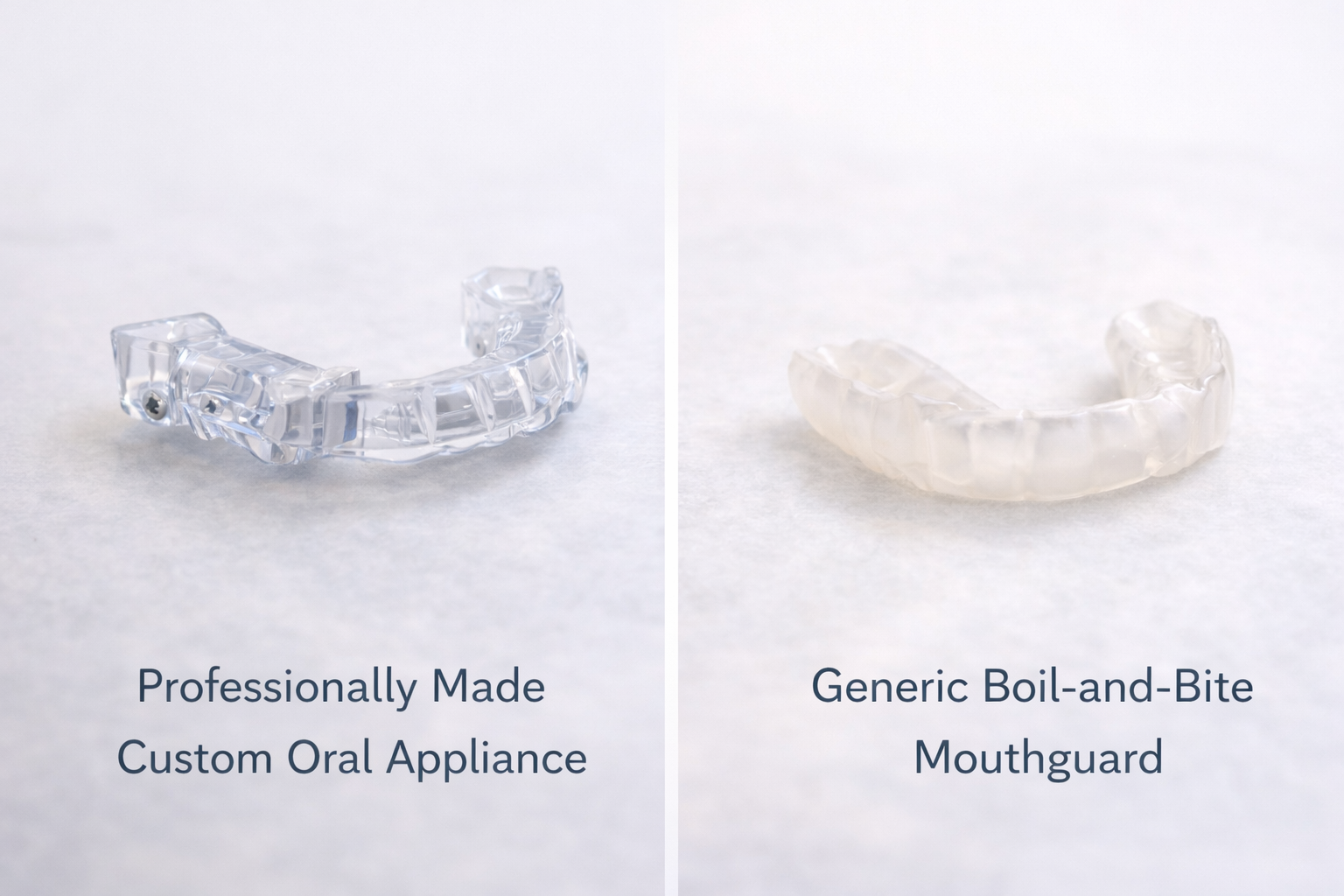
Custom Oral Appliance vs Mouth Guard for Sleep Apnea
Which One is Better? Dr. Avinesh Bhar Answers
Many people wonder whether a custom oral appliance is better than a mouth guard for sleep apnea. In this article, Dr. Avinesh Bhar, Founder of SLIIIP answers this question from a sleep doctor perspective.
A custom oral appliance is a prescription mandibular advancement device fabricated from precise dental impressions and titrated by a trained professional. An over-the-counter mouth guard is a prefabricated or boil-and-bite device purchased without a prescription. Custom devices offer superior fit, adjustability, durability, and clinical effectiveness, while OTC options are less expensive but lack the precision needed to reliably manage obstructive sleep apnea.
These devices are used to treat sleep apnea which is a condition that affects roughly 30 million U.S. adults.
When a Cheaper Mouthguard Feels Like the Easy Answer
You have seen the ads. Sleep apnea mouth guards for $30, $50, maybe $100. They promise to stop your snoring and open your airway overnight. You dip them in hot water, bite down, and you are supposedly good to go.
Compared to the process of scheduling a sleep study, consulting a physician, and getting a custom-fitted device, the over-the-counter route looks temptingly simple. And when you are exhausted from broken sleep, simple sounds very appealing.
But there is a meaningful difference between reducing snoring noise and actually managing a condition that affects your oxygen levels.
Understanding that difference before you spend money on any device could save you from wasted time, wasted dollars, and continued unmanaged sleep apnea.
Myth vs Reality: Mouth Guards and Sleep Apnea
Myth: Boil-and-bite mouthguards are just as effective as custom devices for sleep apnea.
Reality: Published research shows that custom-fabricated, titratable mandibular advancement devices outperform prefabricated alternatives in reducing the apnea-hypopnea index and improving sleep quality.
Myth: You do not need a prescription for a sleep apnea mouthguard.
Reality: Effective oral appliances for obstructive sleep apnea are classified as medical devices and require a prescription from a physician. Over-the-counter products marketed for snoring are not FDA-approved for sleep apnea.
Myth: A custom oral appliance is not worth the extra cost.
Reality: Custom devices are covered by most medical insurance plans when prescribed for sleep apnea. After insurance, the out-of-pocket cost may be comparable to or less than repeated purchases of OTC devices that wear out quickly and deliver inconsistent results.
Myth: You can self-diagnose and self-manage sleep apnea.
Reality: Sleep apnea is a medical condition that requires proper diagnosis through a sleep study and ongoing follow-up to ensure your airway is adequately managed. Self-management with an unmonitored device can create a false sense of security.
What Makes a Custom Oral Appliance Different?
A custom oral appliance starts with precise measurements of your teeth, jaw, and bite. These measurements are captured through dental impressions or digital scans taken by a trained dental professional. The device is then fabricated in a dental laboratory using medical-grade materials designed for long-term nightly use.

The defining feature of a custom oral appliance is titration. The device includes an adjustment mechanism that allows your dental provider to incrementally advance your lower jaw forward over a period of weeks until the optimal position is found. This position is verified through a follow-up sleep study to confirm your airway is staying open effectively throughout the night.
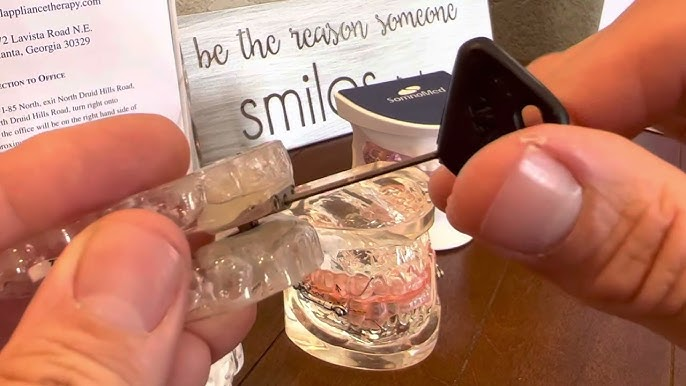
Custom devices come in several configurations, including two-piece designs with lateral connectors, adjustable telescopic hardware, and hinge-based systems. Each is engineered to maintain a specific jaw position while allowing some degree of natural movement, including the ability to open your mouth and drink water without removing the device.
Materials used in custom devices are biocompatible, durable, and designed to withstand years of nightly use. The average lifespan of a well-maintained custom oral appliance is three to five years.
To learn about specific device options available through Sliiip, visit our mandibular advancement device comparison page.
What Cheap Mouth Guards Actually Offer
Over-the-counter (OTC) mouth guards fall into two broad categories.
1️⃣ Boil-and-Bite Devices Offer Limited Precision
- Made from thermoplastic material that softens in hot water.
- You bite down to create a rough impression of your teeth.
- Provide only a generic level of jaw advancement.
- Lose fit over time as the material softens with repeated use and cleaning.
2️⃣ One-Size-Fits-All Devices Lack Customization
- Come in a fixed shape with no personalization.
- Cannot account for differences in jaw size, tooth alignment, or bite structure.
- Typically the least expensive — and often the least effective — option.
3️⃣ No Titration = No Fine-Tuning
- OTC devices do not include a titration mechanism.
- You cannot make small, incremental adjustments to optimize jaw position.
- Without titration, mandibular advancement is essentially a guess rather than a calibrated solution.
4️⃣ Short Lifespan Can Increase Long-Term Cost
- Made from less durable materials.
- Often last only a few months before needing replacement.
- Over time, repeated purchases can approach — or exceed — the cost of a single custom device, especially when insurance coverage applies.
Clinical Effectiveness: Custom vs OTC Mouth Guards
The clinical evidence strongly favors custom-fabricated, titratable oral appliances over prefabricated alternatives.
A custom device allows your provider to find the exact jaw advancement position that opens your airway sufficiently. This precision is confirmed through objective measurement with a follow-up sleep study. If the first setting is not optimal, adjustments are made and the results are remeasured.
The American Academy of Dental Sleep Medicine recommends custom-made, titratable oral appliances as the standard for oral appliance therapy. Prefabricated devices are generally not recommended for the management of obstructive sleep apnea.
Expert Q and A with 2 Sleep Dentists
1) Is it more comfortable than CPAP?
As a Dental Sleep Medicine Specialist, I see patients looking for CPAP-alternatives. They feel like they’ve a “failed” CPAP, when in reality, the technology simply failed to integrate into their lives. From a clinical perspective, oral appliances offer a level of comfort that CPAP cannot match.
The primary reason for the comfort is freedom. An oral appliance eliminates the claustrophobia of a facial mask, the noise of a motor, and the restriction of a pressurized hose. They are more comfortable because of their custom-fit design. Patients can sleep in any position without worrying about “mask leak”. Patients can use the restroom without having to remove the device. When patients travel, they are very convenient to carry along.
We see significantly higher long-term adherence, patient compliance, partner acceptance and since the oral device stays in the mouth all night it ends up being more effective in controlling the Obstructive Sleep Apnea than a CPAP machine that ends up on the floor by 2.00 AM.
-Hiral Desai, DDS, MDS, Diplomate (ABDSM)
https://orangecountysleepapneacenter.com/
———————————————————————————————————————
2) How comfortable are oral appliances to wear?
Oral appliances are custom-fitted and designed specifically for each individual’s mouth. This personalized fit helps avoid uneven pressure, prevent irritation, and ensure the appliance stays securely in place. Because of this precise fit, oral appliances are safe, comfortable, and highly effective. In fact, most patients don’t even notice they’re wearing it once they reach deeper levels of sleep. With proper use, it becomes a natural and easy part of your nighttime routine.
3) Does insurance cover oral appliances?
Coverage varies. Some medical insurance plans partially cover oral appliances for sleep apnea. Most carriers require a formal diagnosis of sleep apnea confirmed by a sleep study, a prescription from a physician or sleep specialist, documentation of medical necessity and prior authorization. Our team verifies your benefits and coverage details before treatment begins.
Dr. Anita Kabaria DDS www.bergentmj.com
Comfort and Fit Comparison
Custom oral appliances are designed for your exact dental anatomy. The fit is precise, which minimizes movement, reduces gum irritation, and allows you to sleep comfortably in any position. Because the device is stable on your teeth, it stays in place throughout the night without requiring you to clench or bite down.
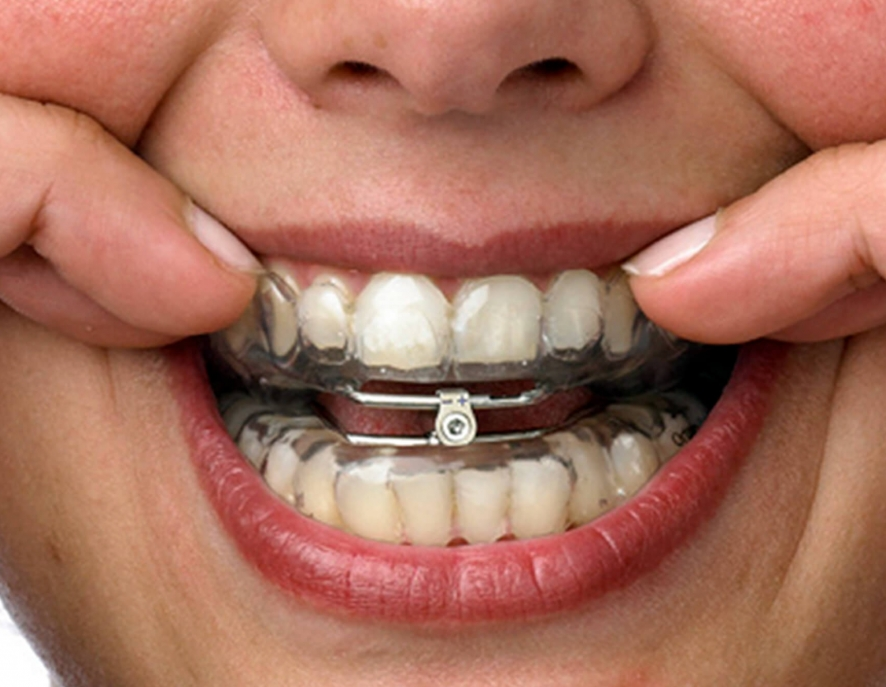
If you have dental crowns, bridges, implants, or any missing teeth, a custom device can be designed around these features. An OTC device cannot accommodate them, increasing the risk of damage to dental work or an inadequate fit.
Insurance and Cost Comparison
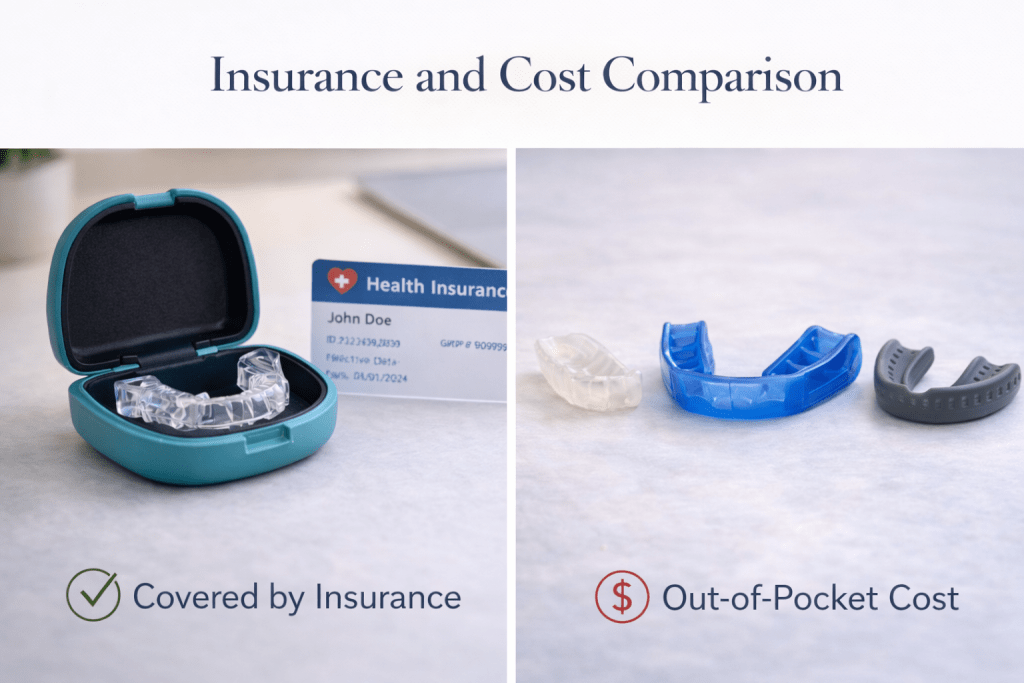
Custom oral appliances (HCPCS code E0486) are covered by most medical insurance plans and Medicare when prescribed for obstructive sleep apnea. After insurance, out-of-pocket costs vary but are often significantly reduced.
Over-the-counter devices are not covered by insurance. While the upfront price is lower, the lack of insurance reimbursement, shorter lifespan, and need for frequent replacement can make OTC devices more expensive over time.
For a detailed breakdown of insurance coverage, including Medicare criteria and documentation requirements, see our guide on oral appliance options for sleep apnea.
Durability and Lifespan
Custom oral appliances are built to last three to five years with proper care. The materials are medical-grade acrylic or nylon composites designed for the moist, high-stress environment of your mouth. Titanium or stainless steel hardware provides reliable adjustment over the life of the device.
OTC boil-and-bite devices typically last two to six months before the thermoplastic material degrades, loses its shape, or becomes unhygienic. Prefabricated devices may last slightly longer but still fall well short of the lifespan of a custom device.
When an OTC Device Might Make Sense
There is one scenario where an OTC mandibular advancement device may serve a purpose: as a temporary, short-term measure while you are in the process of getting a proper sleep evaluation and custom device.
If your sleep physician agrees that a temporary device provides some benefit while you wait for your custom appliance to be fabricated, an OTC device could bridge the gap. However, this should always be discussed with your physician and should never replace the process of getting a proper diagnosis and monitored therapy.
Home Sleep Apnea Test for Oral Appliance
Getting a custom oral appliance through Sliiip follows a straightforward process. You begin with a telemedicine consultation with a board-certified sleep physician. If a sleep study is needed, a home sleep apnea test is shipped to your home.

Based on your results, your physician recommends the appropriate approach, and if oral appliance therapy is indicated, you are connected with a sleep-trained dentist for custom fitting.
This home sleep test from SLIIIP is covered by Medicare, Tricare and these major insurances listed below.

Living With Your Custom Oral Appliance
Once you receive your custom device, integrate it into your nightly routine just as you would brushing your teeth. Store it in a ventilated case during the day. Clean it each morning with a soft brush and mild soap. Avoid hot water, which can warp the material. Bring the device to all dental appointments so your provider can inspect it for wear.
The adjustment period for a custom device is typically one to two weeks. Minor jaw soreness or increased salivation are normal during this time and resolve quickly. Your dental provider fine-tunes the advancement setting over several visits until the optimal position is confirmed.
Frequently Asked Questions
Are over-the-counter mouth guards FDA-approved for sleep apnea? Most OTC mouth guards are marketed for snoring reduction only and are not FDA-approved for obstructive sleep apnea. Custom oral appliances prescribed by a physician carry FDA clearance for sleep apnea management.
Can a boil-and-bite mouthguard reduce snoring? It may reduce snoring volume by partially advancing the jaw. However, reduced snoring does not confirm that your airway is staying adequately open. Only a sleep study can verify whether breathing disruptions are being addressed.
How much does a custom oral appliance cost compared to an OTC device? Custom oral appliances cost $1,500 to $2,500 before insurance but are often covered by medical plans. OTC devices cost $30 to $200 per unit but are not insured and need replacement every few months.
Do dentists recommend OTC mouth guards for sleep apnea? No. The American Academy of Dental Sleep Medicine recommends custom-fabricated, titratable oral appliances for obstructive sleep apnea. OTC devices lack the precision, durability, and clinical verification needed for reliable management.
How long does a custom oral appliance last? A well-maintained custom oral appliance typically lasts three to five years. Insurance generally allows replacement at the end of this period. OTC devices last two to six months before losing their shape and effectiveness.
Can I adjust the advancement on a custom oral appliance myself? Some custom devices include patient-accessible adjustment mechanisms. However, your dental provider guides the titration process and verifies results with a follow-up sleep study. Self-adjustment without professional oversight is not recommended.
Is a custom oral appliance more comfortable than an OTC device? Yes. Custom devices are fabricated from precise impressions of your teeth, providing a stable, low-profile fit. OTC devices are bulkier, less stable, and more likely to cause gum soreness and jaw discomfort.
What happens if my OTC device breaks? You purchase a new one at full price. There is no warranty support, professional adjustment, or insurance reimbursement. With a custom device, repairs may be covered and your provider can address fit issues directly.
Can I get a custom oral appliance through telemedicine? Yes. Sliiip provides the sleep evaluation and prescription through telemedicine, then coordinates with a local sleep-trained dentist for the hands-on fitting and follow-up. The process is designed to be convenient while maintaining clinical standards.
Do I need a sleep study to buy an OTC mouth guard? No prescription or sleep study is required to purchase an OTC device. However, without a sleep study, you have no way of knowing whether you have sleep apnea, how severe it is, or whether the device is helping.
Will an OTC mouth guard change my bite? Any device that repositions your jaw has the potential to affect your bite over time. With a custom device, your dental provider monitors for bite changes during follow-up visits. With an OTC device, there is no monitoring, and bite changes may go unnoticed until they become significant.
Is it safe to use an OTC mouth guard every night without medical supervision? Using any jaw-repositioning device without professional oversight carries risks, including unmonitored bite changes, inadequate management of sleep apnea, and a false sense of security about your airway health. Medical supervision ensures your approach is safe and effective.
Latest posts
-
Why Are My Naps Never Refreshing?
Last updated: October 2, 2026. Medically reviewed by Dr. Avinesh Bhar, Board-Certified Sleep Physician, SLIIIP.com. Naps that leave you groggy usually come down to how long you sleep, when you…
-
Is Sleeping Too Much a Sleep Disorder?
Last updated: October 2, 2026. Medically reviewed by Dr. Avinesh Bhar, Board-Certified Sleep Physician, SLIIIP.com. Sleeping too much is not always a sleep disorder, but it can be a sign…
-
Why Does My Insomnia Get Worse After Stopping Sleep Medication?
Last updated: October 2, 2026. Medically reviewed by Dr. Avinesh Bhar, Board-Certified Sleep Physician, SLIIIP.com. Insomnia can get worse after stopping sleep medication for three main reasons. They are rebound…
Get updates
Spam-free subscription, we guarantee. This is just a friendly ping when new content is out.

