👉 Register for Free. How to Diagnose Sleep Apnea Faster in Primary Care – FREE Webinar by Dr. Audrey Wells. – Friday, April 24 at 12 PM ET

Scandinavian Sleep Method: Two Duvets, Better Rest
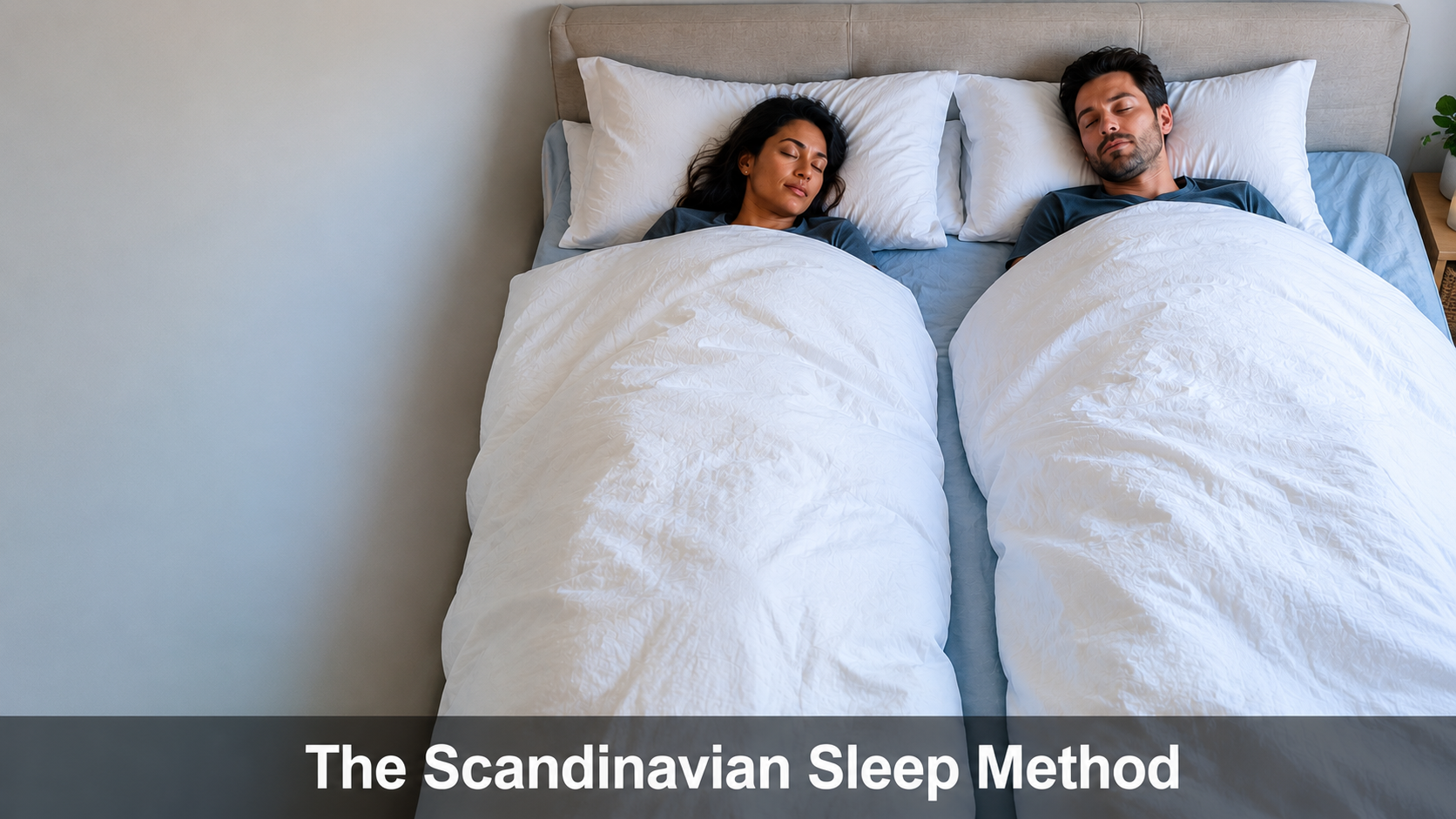
The Scandinavian sleep method, the Nordic habit of sharing a bed while using two separate duvets instead of one, is an idea Dr. Avinesh Bhar, Board-Certified Sleep Physician at SLIIIP.com, hears couples ask about when a partner’s tossing or blanket stealing keeps waking them. It sounds almost too simple to matter, yet the small change removes a nightly source of friction. Two duvets can end the tug of war over the covers without anyone leaving the bed. This article is for general education and does not diagnose or treat any condition. It explains what the method is, why it helps, who benefits most, and how to try it, while pointing you to your own doctor for any lasting sleep concern. The goal is a practical look at a habit you can test tonight.
SLIIIP’s board-certified sleep physicians can do sleep evaluations for sleep apnea. Virtual consultations in all 50 states. Home sleep tests shipped to your door.
What Is the Scandinavian Sleep Method?
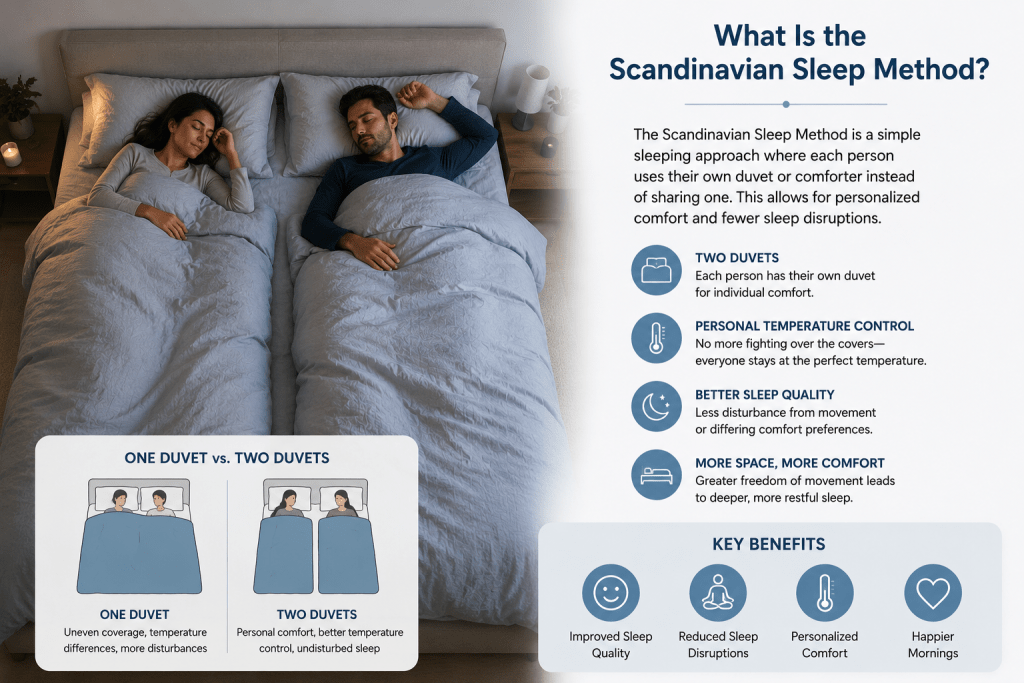
The Scandinavian sleep method is a simple sleeping arrangement common in Nordic countries. Two people share one bed, but each has their own separate duvet rather than one large shared blanket. Each person gets their own cover to pull, tuck, and adjust without affecting the other.
The setup usually means two twin size duvets on a larger bed, one for each sleeper. There is no shared top sheet fight and no midnight cover grab. Each person simply manages their own warmth.
The idea has spread beyond Scandinavia as more couples look for small ways to sleep better together. It keeps the closeness of a shared bed while removing one of its most common annoyances. That balance is a big part of the appeal. Couples get to keep the intimacy and warmth of falling asleep next to each other, while quietly solving the one thing that so often turns a shared bed into a nightly source of low grade tension.
CHECK YOUR SLEEP SYMPTOMS: TAKE THE 2 MINUTE QUIZ
TAKE THE QUIZ
Why Sharing One Blanket Disrupts Couples
A single shared duvet creates a nightly negotiation that most couples know well. When one person rolls over or pulls the blanket, the other can be left exposed and cold, which triggers a small waking. These micro wakings add up across a night. You may not remember any single one in the morning, but a string of brief arousals can leave you feeling as though you barely slept, even when the clock says you spent plenty of time in bed.
Partners also differ in how warm they like to be. One person may run hot and want less cover, while the other feels chilly and wants more. A shared blanket forces a compromise that leaves at least one person uncomfortable.
Movement is the other issue. Every tug and turn travels across a shared blanket, disturbing the other sleeper even if they do not fully wake. If a restless partner keeps pulling you out of sleep, our guide on how to stop waking up multiple times at night covers related habits.
How Two Duvets Can Improve Rest
Giving each person their own duvet removes the blanket battle entirely. With separate covers, one partner can burrow in while the other stays light, and neither disturbs the other. Everyone controls their own warmth all night long.
The change can also mean fewer awakenings from a partner’s movement. Because your cover stays put no matter what the other person does, a restless night on one side of the bed matters less on the other. Steadier, less broken sleep is the goal. When your rest is not tied to what the person beside you does, the night becomes more predictable, and that predictability is often what tired couples are really chasing.
There is a relationship upside too. Many couples report less late night frustration once the cover fight disappears, which can make bedtime feel calmer. Our page on the importance of sleep explains why protecting rest is worth these small adjustments.
Who Benefits Most From This Approach
Some couples gain more than others. Pairs with very different temperature preferences, or one restless sleeper, often see the biggest difference. When one person is a furnace and the other is always cold, separate duvets solve a daily standoff.
Light sleepers also tend to benefit, since they are most easily disturbed by a partner’s movement or a sudden draft. Removing those triggers can protect their deeper sleep. If you often wake tired despite time in bed, our article on why you wake up tired may help you spot other factors.
For couples who love sharing a bed but struggle with sleep quality, this is a gentle middle path. It stops short of separate rooms while still solving real problems. Some may later explore other options, and our page on sleep divorce covers that larger conversation.
How to Try the Scandinavian Sleep Method
Getting started is easy and low cost. Buy two duvets sized for one person each, usually twin or twin XL, to fit your shared bed. Skip the single large comforter and let each person have their own.
You can keep a coordinated look by choosing matching covers or a shared bedspread laid over both during the day. At night, each person uses their own duvet underneath. Our ultimate sleep routine guide shows how to fold this into a calm wind down.
Give it a couple of weeks before you judge the results. According to the Centers for Disease Control and Prevention, a comfortable sleep environment is a core part of healthy rest, and personal warmth control fits right in. If it works, you may wonder why you waited so long.
Watch: How Does a Home Sleep Test Work?
When Sleep Problems Go Beyond the Blanket
Two duvets can smooth over cover fights, but they cannot fix an underlying sleep condition. If you or your partner still wake tired, snore loudly, or gasp for air after making the switch, something deeper may be at work. A blanket change does not address that.
Conditions like obstructive sleep apnea fragment sleep from the inside, no matter how the bed is set up. As Dr. Avinesh Bhar notes, loud snoring or lasting tiredness that does not respond to good habits deserves a real evaluation. Heavy snoring in particular is worth discussing, and our guide on how to stop snoring is a useful starting point.
The National Heart, Lung, and Blood Institute notes that ongoing sleep problems are worth a professional look. A sleep evaluation is one part of a broader view of your health, and any concern beyond sleep belongs with your own physician.
At Sliiip, we accept the following insurances:

SLIIIP’s board-certified sleep physicians can do sleep evaluations for sleep apnea. Virtual consultations in all 50 states. Home sleep tests shipped to your door.
Frequently Asked Questions
What is the Scandinavian sleep method?
It is a Nordic sleeping arrangement where a couple shares a bed but uses two separate duvets. Each person gets their own cover to adjust freely.
Why do couples use two duvets?
Separate duvets end the blanket tug of war and let each person control their own warmth. This can reduce awakenings from a partner’s movement.
Does the Scandinavian sleep method really work?
Many couples report calmer, less broken sleep after switching. Results vary, but the change targets common sources of disturbance.
What size duvets do I need?
Two twin or twin XL duvets usually fit a shared queen or king bed. Each person uses their own underneath.
Can I still make the bed look nice?
Yes, a shared bedspread or matching covers laid over both keeps a tidy look. At night, each person uses their own duvet.
Is this the same as a sleep divorce?
No, a sleep divorce means sleeping in separate beds or rooms. The Scandinavian method keeps you in the same bed with separate covers.
Who benefits most from separate duvets?
Couples with different temperature preferences or a restless partner tend to benefit most. Light sleepers often notice a big difference too.
Will two duvets fix my partner’s snoring?
No, separate duvets do not address snoring. Loud snoring is worth discussing with a doctor.
Does this help with different sleep temperatures?
Yes, each person can choose a warmer or lighter duvet. That solves a common temperature mismatch.
Can separate duvets reduce night waking?
They can reduce awakenings caused by a partner pulling the covers. Other causes of night waking may still need attention.
Is it strange to sleep with two duvets?
It is very common in Nordic countries and increasingly popular elsewhere. Many couples find it more comfortable once they try it.
Do we lose closeness with separate duvets?
Sharing the same bed keeps you close, and many couples feel calmer without cover fights. The arrangement is about comfort, not distance.
How much does it cost to try?
It usually just means buying two smaller duvets. It is a low cost change to test, and unlike a new mattress or a bigger bedroom, it does not commit you to anything. If it does not suit you, going back to a shared blanket takes seconds.
Can this help if my partner and I have different schedules?
Separate covers make it easier when one person shifts or gets up. Less disturbance can help the other stay asleep.
Will it help me fall asleep faster?
Removing a common frustration can make bedtime calmer for some people. Falling asleep also depends on your overall routine.
Is the method good for hot sleepers?
Yes, a hot sleeper can use a lighter duvet without leaving a partner cold. Everyone simply gets to set their own level of warmth.
Can kids or pets disrupt this setup?
Children and pets can still affect sleep regardless of covers. The method mainly addresses partner related disturbances.
Do I need a bigger bed for two duvets?
A queen or king comfortably fits two twin duvets. Smaller beds can work but may feel tight, since two duvets need a little more surface area to lie flat without constantly sliding off the edges.
Is this a substitute for treating a sleep disorder?
No, it is a comfort change, not a treatment. Ongoing sleep problems deserve a professional look.
When should we see a doctor about our sleep?
If either partner stays tired despite good habits, or snores heavily or gasps for air, seek an evaluation. A sleep visit can clarify what is going on.
SLIIIP’s board-certified sleep physicians can do sleep evaluations for sleep apnea. Virtual consultations in all 50 states. Home sleep tests shipped to your door.
Latest posts
-
Why Can’t I Wake Up Even After Getting Enough Sleep?
Last updated: October 2, 2026. Medically reviewed by Dr. Avinesh Bhar, Board-Certified Sleep Physician, SLIIIP.com. If you can’t wake up after enough sleep, the cause is usually not the number…
-
Why Does My Heart Rate Drop So Low While I Sleep?
Last updated: October 2, 2026. Medically reviewed by Dr. Avinesh Bhar, Board-Certified Sleep Physician, SLIIIP.com. Your heart rate drops low while sleeping mainly because your body needs less work from…
-
Why Are My Naps Never Refreshing?
Last updated: October 2, 2026. Medically reviewed by Dr. Avinesh Bhar, Board-Certified Sleep Physician, SLIIIP.com. Naps that leave you groggy usually come down to how long you sleep, when you…
Get updates
Spam-free subscription, we guarantee. This is just a friendly ping when new content is out.

