
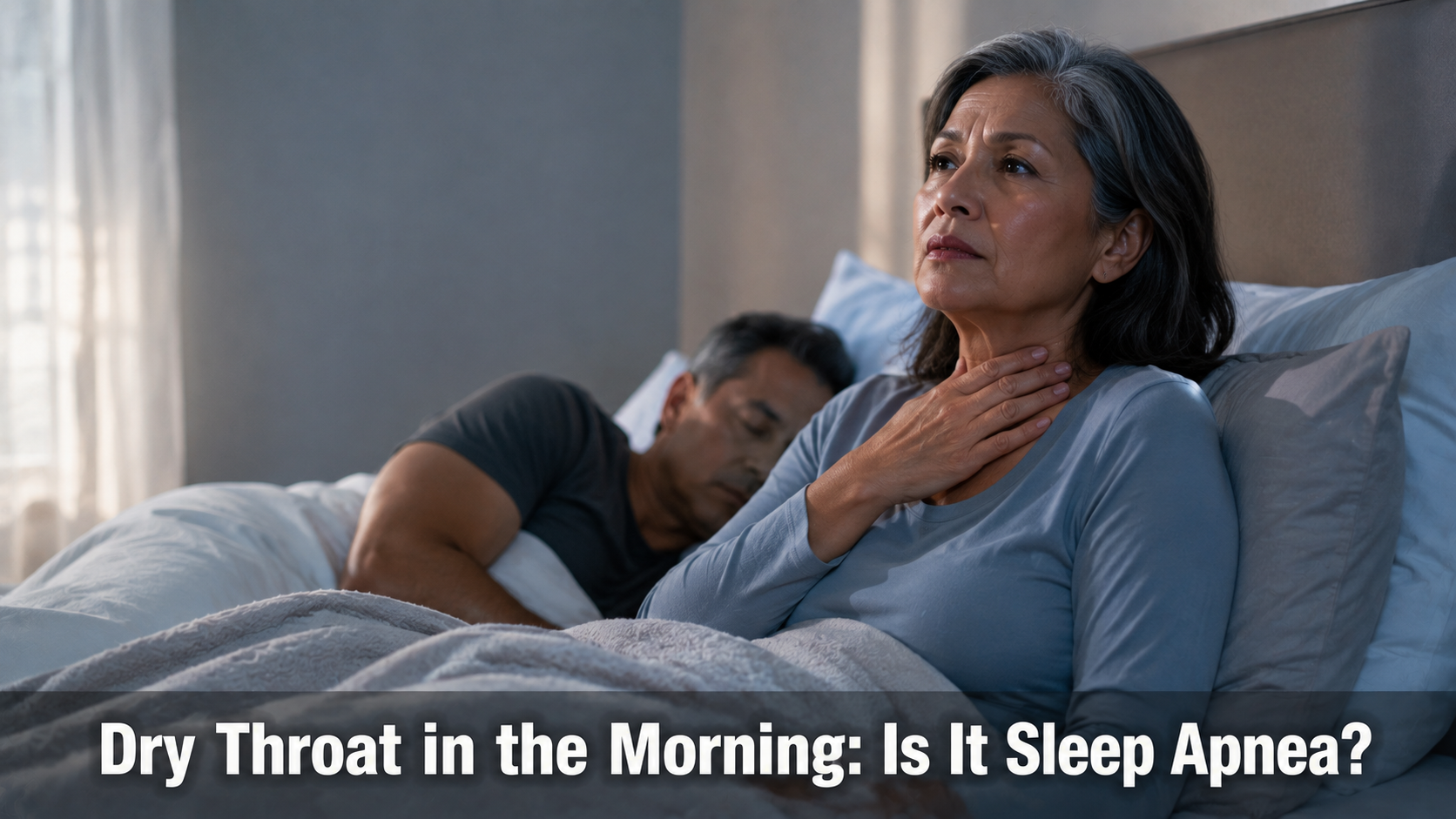
Dry Throat in the Morning: Is It Sleep Apnea?
A dry, scratchy throat most mornings usually means air moved through your mouth instead of your nose overnight, and Dr. Avinesh Bhar, Board-Certified Sleep Physician at SLIIIP.com, treats it as a clue worth following rather than an isolated annoyance. A dry throat on its own is common and usually harmless. A dry throat that shows up alongside snoring or daytime tiredness is a different picture, and one worth mentioning to a doctor.
This guide is not about fixing mouth breathing itself. SLIIIP already covers that in detail in our article on mouth breathing and sleep. This one focuses on a narrower, more practical question: how do you tell whether your dry throat is nothing, or a sign worth checking out? The National Heart, Lung, and Blood Institute lists daytime sleepiness, loud snoring, and gasping as the symptoms that, together, point toward sleep apnea rather than a simple dry throat.
SLIIIP’s board-certified sleep physicians can do sleep evaluations for sleep apnea. Virtual consultations in all 50 states. Home sleep tests shipped to your door.
Why Do I Wake Up With a Dry Throat?
Waking up with a dry throat almost always comes down to airflow moving through the mouth instead of the nose during sleep. The mouth does not trap moisture the way the nose does, so air passing through it overnight dries out the throat tissue by morning. This can happen for a night or two because of a stuffy nose, allergies, or a dry bedroom, or it can happen most nights as part of a consistent breathing pattern during sleep.
Other common, low-risk contributors include not drinking enough water during the day, alcohol in the evening, certain medications that reduce saliva, and simply sleeping with your mouth open due to congestion.
Is Waking Up With a Dry Throat a Sign of Sleep Apnea?
A dry throat by itself is not enough to diagnose sleep apnea. It becomes a more meaningful signal when it shows up alongside other symptoms, since obstructive sleep apnea causes repeated pauses or shallow breaths, and the body often compensates by breathing through the mouth, which dries out the throat by morning.
The distinction usually comes down to what else is happening overnight. A dry throat paired with loud snoring, gasping, or daytime sleepiness is a stronger signal than dry throat on its own, especially during allergy season or in a dry climate.
The Symptom Combination Worth Watching
Dr. Avinesh Bhar notes that patients often describe a dry throat as a minor complaint and do not connect it to snoring or fatigue until asked directly. Bringing up all three symptoms together, rather than mentioning dry throat in isolation, gives a doctor a much clearer picture. Watch for this combination in particular:
- A dry throat most mornings, not just occasionally.
- Snoring that a partner or family member has commented on.
- Feeling tired during the day despite a full night in bed.
- Waking up gasping or feeling like you stopped breathing.
Two or more of these together, on a regular basis, is worth a conversation with a doctor. One symptom alone, especially during allergy season, usually is not.
Watch: Sleep Studies, Sleep Apnea, and Treatment with Dr. Avinesh Bhar
When a Dry Throat Is Probably Nothing
Most cases of morning dry throat have a simple, low-risk explanation. A dry throat tied to a clear cause, like seasonal allergies, a dry winter bedroom, or a glass of wine before bed, usually resolves once that cause is addressed.
A few checks worth trying first, drawn from the CDC’s general sleep guidance:
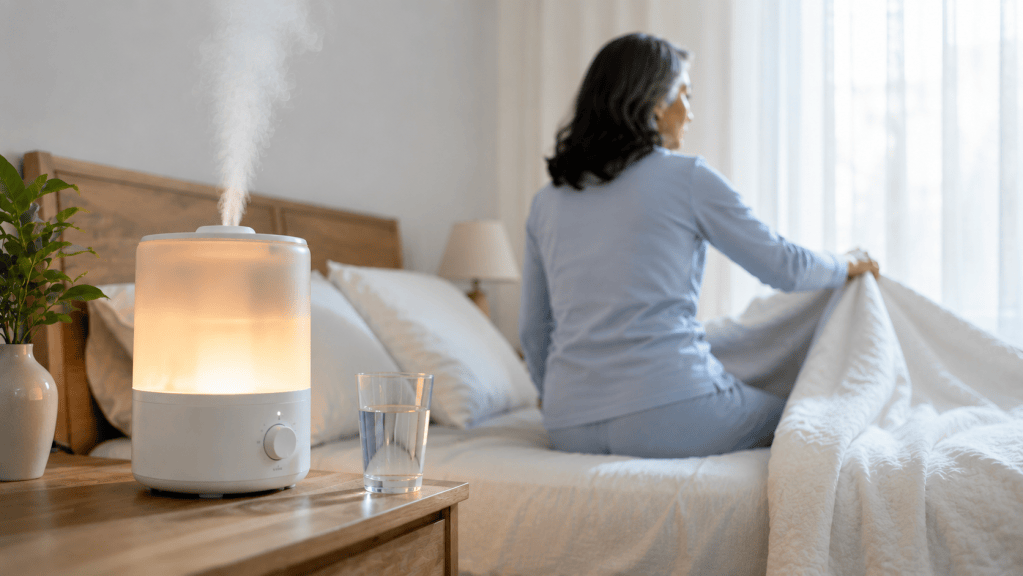
- Run a humidifier in the bedroom, especially in dry winter months.
- Treat nasal congestion before bed with saline rinses or an allergy medication, if appropriate.
- Cut back on alcohol in the few hours before sleep.
- Stay hydrated during the day, tapering off close to bedtime.
If a dry throat clears up within a week or two of these changes, and there is no snoring or daytime fatigue involved, it was most likely one of these everyday causes rather than something that needs a medical evaluation.
When to Take It Further
If dry throat keeps showing up alongside snoring or daytime sleepiness despite these changes, the next step is understanding what is actually happening while you sleep. SLIIIP offers a home sleep apnea test that records breathing patterns from your own bed, rather than requiring an overnight stay in a lab.
For more on the mechanics of mouth breathing itself, including whether mouth taping is worth trying, see SLIIIP’s guides on mouth breathing and sleep and does mouth taping work for snoring.
At Sliiip, we accept the following insurances:
Kaiser Permanente, Ambetter, Medicare, Beech Street, Humana Military, Tricare, MultiPlan, Humana, Allied, Alliant, Cigna, NovaNet, Secure Health, Aetna, Blue Cross Blue Shield, UnitedHealthcare, Coventry Health Care, Clover Health.
SLIIIP’s board-certified sleep physicians can do sleep evaluations for sleep apnea. Virtual consultations in all 50 states. Home sleep tests shipped to your door.
Frequently Asked Questions
Why do I always wake up with a dry mouth and throat?
The most common cause is breathing through the mouth during sleep, which dries out the throat tissue overnight.
Is a dry throat every morning a sign of sleep apnea?
It can be, especially alongside snoring or daytime sleepiness, but dry throat alone is not enough to confirm sleep apnea.
Can allergies cause a dry throat in the morning?
Yes. Nasal congestion from allergies often forces mouth breathing during sleep, which leads to a dry throat by morning.
Does drinking more water help with dry throat at night?
Staying hydrated during the day can help, though drinking too much water right before bed may interrupt sleep instead.
Can a humidifier fix a dry throat while sleeping?
A humidifier adds moisture to dry indoor air, which often reduces dry throat symptoms, especially in winter.
Should I see a doctor for a dry throat that happens every day?
Yes, especially if it comes with snoring, gasping, or daytime tiredness.
Does sleeping on my back make dry throat worse?
For many people, yes. Back sleeping increases the likelihood of mouth breathing compared to side sleeping.
What is a home sleep apnea test?
It is a simplified sleep study completed at home with a small device, instead of an overnight stay in a sleep lab.
Is mouth taping a good fix for dry throat?
Not without medical guidance first. SLIIIP’s article on mouth taping covers the evidence and who should avoid it.
How long should I try home fixes before seeing a doctor?
One to two weeks is reasonable if dry throat is the only symptom. See a doctor sooner if snoring or fatigue is also present.
SLIIIP’s board-certified sleep physicians can do sleep evaluations for sleep apnea. Virtual consultations in all 50 states. Home sleep tests shipped to your door.
Latest posts
-
Can Sleep Apnea Cause Chest Pain at Night?
Last updated: November 17, 2026. Medically reviewed by Dr. Avinesh Bhar, Board-Certified Sleep Physician, SLIIIP.com. Sleep apnea is linked to nighttime chest discomfort, but it is rarely the only explanation.…
-
Which Sleep Aids Are Safe With Heart Disease?
Last updated: November 17, 2026. Medically reviewed by Dr. Avinesh Bhar, Board-Certified Sleep Physician, SLIIIP.com. No sleep aid is automatically safe with heart disease, so the right choice depends on…
-
Can Statins Cause Insomnia? What the Research Shows
Last updated: November 17, 2026. Medically reviewed by Dr. Avinesh Bhar, Board-Certified Sleep Physician, SLIIIP.com. For most people, probably not. A meta-analysis of placebo-controlled sleep lab studies found that statins…
Get updates
Spam-free subscription, we guarantee. This is just a friendly ping when new content is out.

