
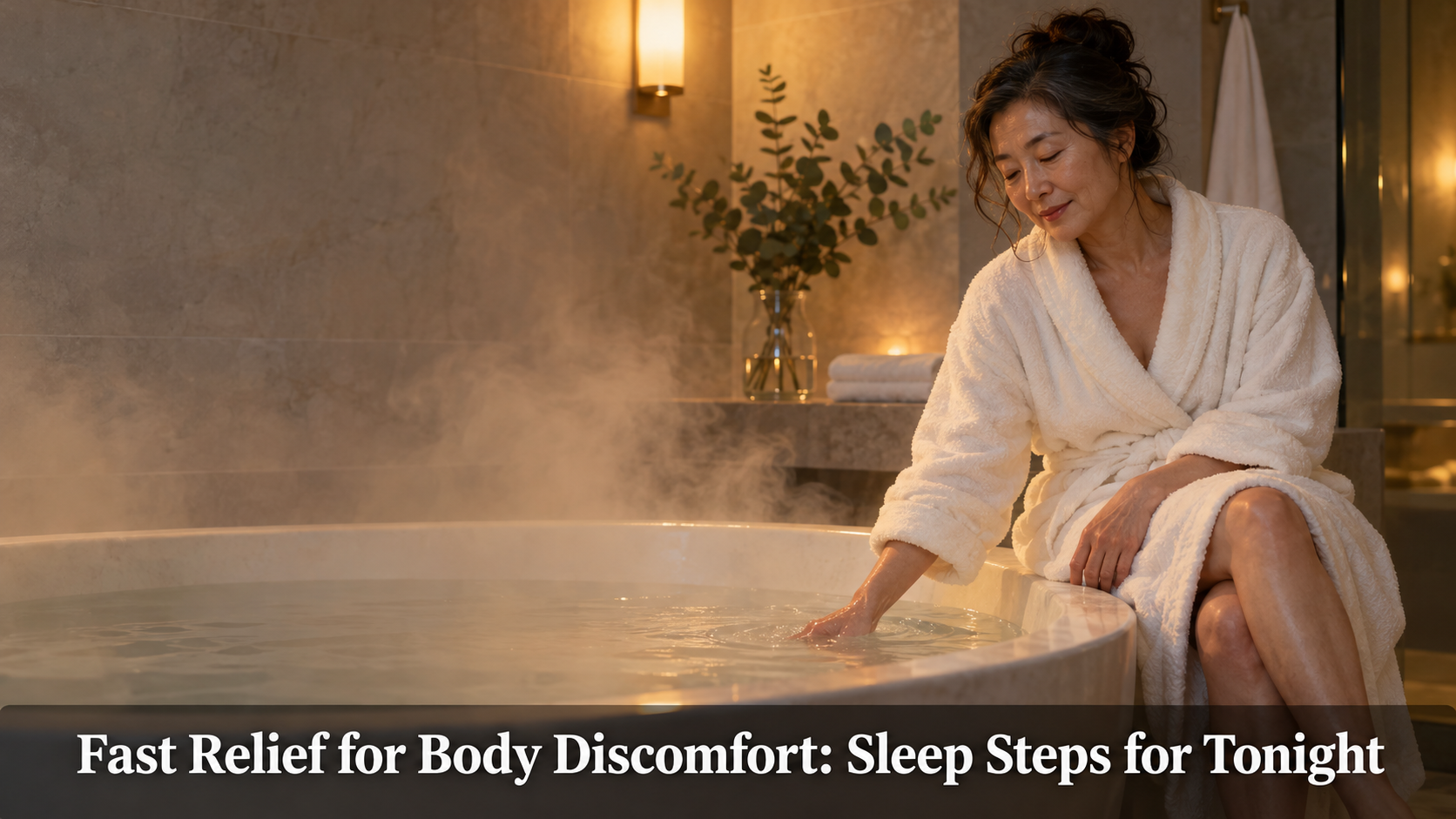
Fast Relief for Body Discomfort: Sleep Steps for Tonight
Last updated: October 13, 2026. Medically reviewed by Dr. Avinesh Bhar, Board-Certified Sleep Physician, SLIIIP.com.
Fast symptom relief for body discomfort often starts with simple comfort steps you can take tonight. A warm shower, gentle stretching, a well-supported sleep position, and a cool, dark bedroom make it easier for many people to rest. Dr. Avinesh Bhar, Board-Certified Sleep Physician, SLIIIP.com, advises that discomfort waking you most nights for more than a few weeks needs its own attention. At that point, the broken sleep is part of the problem, not just a side effect.
Research links nights of better sleep with lower pain the next day. Comfort steps can make tonight easier, but they do not treat the cause of ongoing discomfort. At SLIIIP.com, board-certified sleep physicians help adults find out when a sleep disorder is keeping the cycle going.
SLIIIP’s board-certified sleep physicians can do sleep evaluations for sleep apnea. Virtual consultations in all 50 states. Home sleep tests shipped to your door.
What Can You Do Tonight for Body Discomfort?
The quickest comfort steps for body discomfort at night are warmth, gentle movement, good support, and a calm wind-down. None of these are cures. They are simple ways to help your body settle so sleep comes more easily.
Try these steps in the hour before bed:
- Take a warm shower or bath. Warmth helps many people relax tense muscles before sleep.
- Stretch gently for five to ten minutes. Slow stretches for the neck, back, hips, and legs can ease stiffness.
- Use a heating pad on a low setting. Keep it on a timer and never fall asleep with it on high.
- Drink a glass of water earlier in the evening. Steady fluids during the day help, but a large drink at bedtime can wake you up.
- Skip heavy meals and alcohol before bed. Both are linked to lighter, more broken sleep.
If you use an over-the-counter pain reliever, follow the label and ask a pharmacist about your other medicines. Some products combine pain relievers with sleep aids. Taking two products with the same ingredient can lead to an accidental overdose.
Does Better Sleep Help With Body Aches?
Yes, better sleep is linked to lower next-day pain, and poor sleep is linked to higher next-day pain. A study in the Journal of Neuroscience found that when sleep quality dropped from one night to the next, pain rose the following day. When sleep improved, pain went down.
The same study found that one night without sleep lowered the point at which heat felt painful. Brain areas that sense pain became more active. Areas that help calm pain became less active. Sleep and pain work in both directions: pain disrupts sleep, and poor sleep makes pain feel worse.
That two-way link is why comfort steps and sleep habits work best together. Easing discomfort helps you sleep. Sleeping better may help discomfort feel more manageable the next day.
What Sleep Positions Ease Pressure on Sore Areas?
The best sleep position for body discomfort keeps your spine in a straight, neutral line with pillows filling the gaps. Small pillow changes can take strain off sore spots. Here are simple setups to try:
- Back sleepers: place a pillow under your knees to ease pressure on the lower back.
- Side sleepers: put a pillow between your knees to keep your hips level.
- Neck discomfort: choose a pillow that keeps your head in line with your shoulders, not tilted up or down.
- Shoulder discomfort: sleep on the other side, or on your back, and hug a pillow for support.
- Stomach sleepers: this position can twist the neck, so try a thin pillow or slowly train yourself to sleep on your side.
Your mattress matters too. A mattress that sags or feels lumpy can leave you stiff by morning. If you wake up sorer than you went to bed, your sleep surface is worth a look.
How Should You Set Up Your Bedroom for Comfortable Sleep?
A cool, dark, quiet bedroom and a steady sleep schedule give your body the best chance to rest through discomfort. The NHLBI at the National Institutes of Health recommends several basic habits for healthy sleep:
- Go to bed and wake up at about the same time every day.
- Keep your bedroom quiet, cool, and dark.
- Spend the last hour before bed on calm activities, away from bright screens.
- Avoid caffeine and nicotine, since caffeine’s effects can last for hours.
- Try a warm bath or relaxation techniques before bed.
- Keep naps to about 20 minutes, or nap earlier in the day.
A steady schedule is one of the simplest ways to support better sleep. It helps your body know when to wind down, even on nights when you feel sore.
What Should You Avoid When You Are Sore at Night?
Avoid using alcohol, long naps, or extra medicine as a shortcut to sleep when you are uncomfortable. These can seem helpful in the moment but often make sleep worse later in the night.
- Alcohol: it may help you fall asleep, but it is linked to broken sleep later in the night.
- Long or late naps: they can make it harder to fall asleep at bedtime.
- Doubling up on medicines: never take more than the label says, and do not mix sleep aids with other medicines without asking a pharmacist.
- Screens in bed: bright light and scrolling can keep your mind alert.
- Lying in bed awake for a long time: if you cannot sleep, get up for a few minutes and do something calm in dim light.
Do not change or stop any prescribed treatment to manage discomfort on your own. Talk to the clinician who prescribed it first.
When Is Body Discomfort a Sign of a Sleep Disorder?
Body discomfort can be linked to a sleep disorder when it shows up mainly at night or right after waking. Two sleep disorders are worth knowing about.
Restless legs syndrome causes an uncomfortable urge to move the legs, often in the evening or at bedtime. Moving the legs eases the feeling for a short time. It can make falling asleep very hard.
Obstructive sleep apnea breaks up sleep with repeated pauses in breathing. It is linked to morning headaches, jaw tension, a dry mouth, and waking up tired and sore. Many people with sleep apnea do not know they have it.
If discomfort comes with snoring, gasping, or a strong urge to move your legs at night, a sleep evaluation can help find the cause. You can also read about the broader pattern in our guide to muscle recovery and sleep.
Watch: The Critical Importance of Sleep Management – Dr. Avinesh Bhar
When to See a Doctor
See a doctor if body discomfort keeps you from sleeping most nights for more than a few weeks. Dr. Bhar recommends a sleep evaluation when discomfort comes with snoring, morning headaches, or a strong urge to move your legs at night. He also advises a visit with your primary care doctor to look at causes that comfort steps cannot reach.
A sleep physician can help if you notice:
- Leg discomfort with an urge to move that gets worse at night.
- Waking up sore, tired, or with a headache after a full night in bed.
- Loud snoring or pauses in breathing that a partner has noticed.
- Daytime sleepiness that makes it hard to work or drive safely.
Some symptoms need urgent care, not comfort steps. Call 911 for chest pain, trouble breathing, sudden weakness, or numbness on one side of the body. See a doctor quickly for pain after an injury, a high fever, a hot or swollen joint, or pain that keeps getting worse.
Insurance plans accepted at SLIIIP include: Kaiser Permanente, Ambetter, Medicare, Beech Street (a MultiPlan network), Humana Military / TRICARE, MultiPlan, Humana, Allied, Alliant, Cigna, NovaNet, Secure Health, Aetna, Blue Cross Blue Shield, UnitedHealthcare, Coventry Health Care, and Clover Health.

SLIIIP’s board-certified sleep physicians can do sleep evaluations for sleep apnea. Virtual consultations in all 50 states. Home sleep tests shipped to your door.
Frequently Asked Questions About Relief for Body Discomfort at Night
What is the fastest way to relieve body discomfort at night?
Many people find warmth, gentle stretching, and good pillow support help them settle. These steps ease comfort but do not treat the underlying cause.
Does a warm bath help sore muscles before bed?
A warm bath helps many people relax before sleep. The NHLBI lists it as a healthy sleep habit.
Is heat or ice better for body aches?
Heat is often used for stiff, tense muscles. Ice is often used for a new injury with swelling.
Can poor sleep make body aches worse?
Yes. Poor sleep is linked to higher pain the next day.
Can better sleep reduce pain?
Research links better sleep quality with lower next-day pain. Results vary from person to person.
What is the best sleep position for back discomfort?
Lying on your back with a pillow under your knees, or on your side with a pillow between your knees, keeps the spine more neutral.
Can my pillow cause neck discomfort?
A pillow that is too high or too flat can bend your neck out of line. Choose one that keeps your head level with your shoulders.
Is it safe to sleep with a heating pad?
Use a low setting with an automatic shut-off. Do not fall asleep with a heating pad on high.
Can I take a pain reliever and a sleep aid together?
Ask a pharmacist first. Some products already contain both, which raises the risk of taking too much.
Does alcohol help you sleep when you are sore?
Alcohol may help you fall asleep, but it is linked to broken sleep later in the night.
Should I nap if I slept badly because of discomfort?
A short nap of about 20 minutes is usually fine. Long or late naps can make the next night harder.
Can a mattress cause morning stiffness?
A sagging or worn mattress can be linked to morning stiffness and aches.
What is restless legs syndrome?
Restless legs syndrome is a sleep-related condition that causes an uncomfortable urge to move the legs, often at bedtime.
Can sleep apnea cause morning aches?
Sleep apnea breaks up sleep and is linked to morning headaches and waking up tired and sore.
Does stretching before bed help sleep?
Gentle stretching can ease stiffness and help many people relax before sleep.
When should I see a doctor for body discomfort at night?
See a doctor if discomfort disrupts your sleep most nights for more than a few weeks.
What symptoms need urgent care?
Chest pain, trouble breathing, sudden weakness, or numbness need emergency care right away.
Can a sleep test be done at home?
Yes. A home sleep test is a common way to check for obstructive sleep apnea.
Does SLIIIP treat body pain?
No. SLIIIP evaluates and treats sleep disorders in adults and can work alongside your existing care team.
Can I see a sleep doctor online?
Yes. SLIIIP offers virtual consultations in all 50 states.
SLIIIP’s board-certified sleep physicians can do sleep evaluations for sleep apnea. Virtual consultations in all 50 states. Home sleep tests shipped to your door.
Latest posts
-
Can Sleep Apnea Cause Chest Pain at Night?
Last updated: November 17, 2026. Medically reviewed by Dr. Avinesh Bhar, Board-Certified Sleep Physician, SLIIIP.com. Sleep apnea is linked to nighttime chest discomfort, but it is rarely the only explanation.…
-
Which Sleep Aids Are Safe With Heart Disease?
Last updated: November 17, 2026. Medically reviewed by Dr. Avinesh Bhar, Board-Certified Sleep Physician, SLIIIP.com. No sleep aid is automatically safe with heart disease, so the right choice depends on…
-
Can Statins Cause Insomnia? What the Research Shows
Last updated: November 17, 2026. Medically reviewed by Dr. Avinesh Bhar, Board-Certified Sleep Physician, SLIIIP.com. For most people, probably not. A meta-analysis of placebo-controlled sleep lab studies found that statins…
Get updates
Spam-free subscription, we guarantee. This is just a friendly ping when new content is out.

