👉 Register for Free. How to Diagnose Sleep Apnea Faster in Primary Care – FREE Webinar by Dr. Audrey Wells. – Friday, April 24 at 12 PM ET

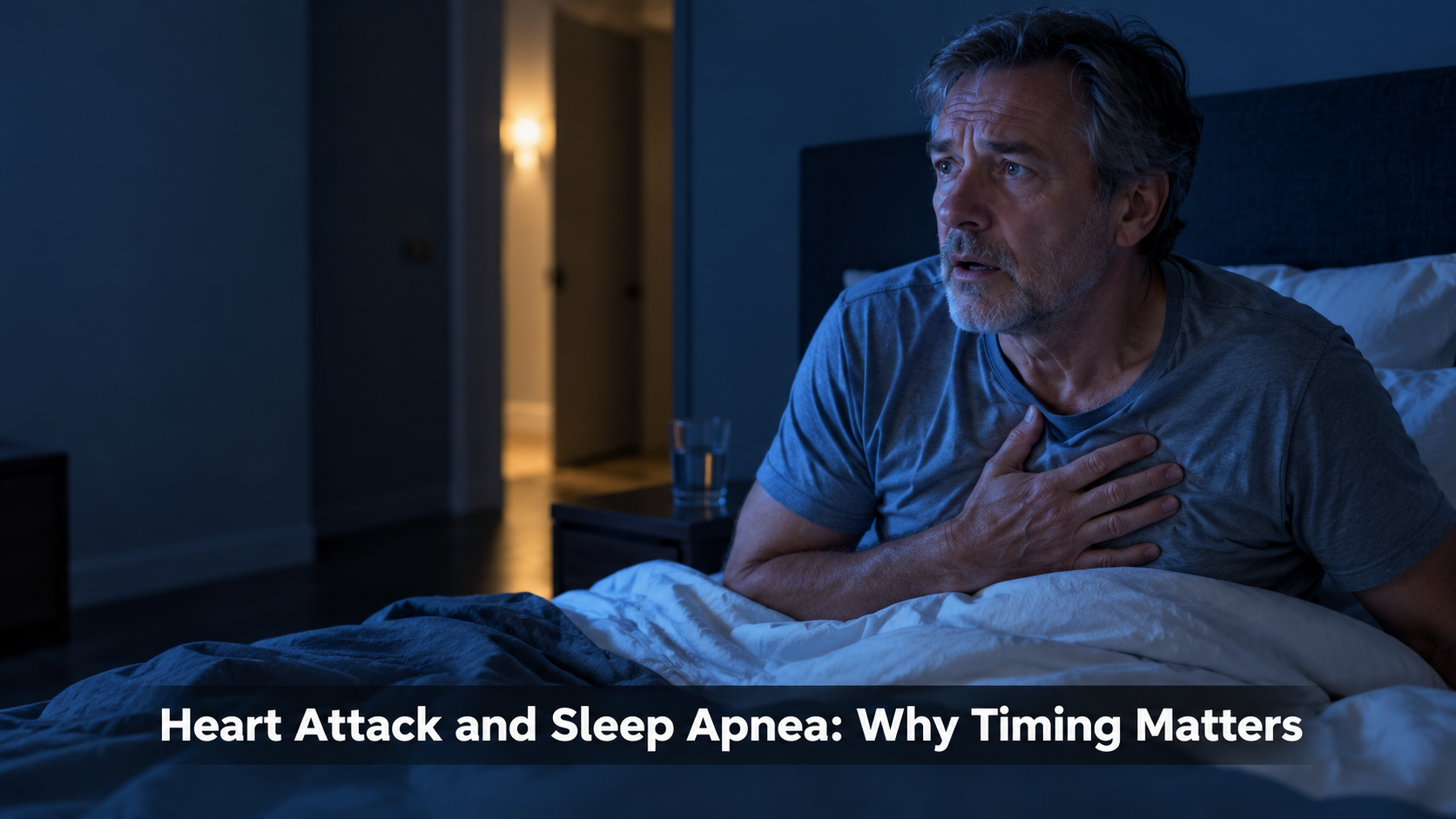
Heart Attack and Sleep Apnea: Why Timing Matters
Last updated: September 21, 2026. Medically reviewed by Dr. Avinesh Bhar, Board-Certified Sleep Physician, SLIIIP.com.
Sleep apnea is associated with an increased risk of heart attack, and research shows it also changes when heart attacks tend to happen, shifting the typical pattern toward the middle of the night rather than the early morning hours most people associate with cardiac events. Patients with sleep apnea who have a heart attack are far more likely to have it occur between midnight and 6 a.m. than people without sleep apnea. Dr. Avinesh Bhar, Board-Certified Sleep Physician at SLIIIP.com, points to this timing shift as one of the clearest signals that sleep apnea is not just a general risk factor but an active nighttime trigger. Recognizing this pattern is part of why unexplained nighttime chest symptoms deserve serious attention.
SLIIIP’s board-certified sleep physicians can do sleep evaluations for sleep apnea. Virtual consultations in all 50 states. Home sleep tests shipped to your door.
How Common Is Sleep Apnea in Heart Attack Patients?
Sleep apnea is significantly more common among people who have had a heart attack than in the general population. Research has found sleep apnea in up to roughly 65 percent of patients with acute myocardial infarction, compared with a much lower prevalence in the general adult population, according to a study published on PubMed Central. Obstructive sleep apnea is more common than the central type in this group and does not tend to resolve on its own over time without treatment.
Why Do Heart Attacks in Sleep Apnea Patients Happen at Night?
In the general population, heart attacks follow a well-documented circadian pattern, occurring most often in the early morning hours after waking, linked to the natural morning surge in blood pressure and heart rate. Sleep apnea patients show a strikingly different pattern: one study found that 32 percent of heart attacks in people with sleep apnea occurred between midnight and 6 a.m., compared with only 7 percent in people without sleep apnea, according to research published in the Journal of the American College of Cardiology, available on PubMed Central.
The odds of having sleep apnea were six times higher among patients whose heart attack occurred during those nighttime hours compared with the rest of the day. This shift is attributed to the acute hemodynamic and neurohormonal changes that occur during apnea events themselves, including sudden oxygen drops, blood pressure spikes, and surges in stress hormones, all of which can act as a trigger in someone with vulnerable coronary arteries.
Does Sleep Apnea Affect Recovery After a Heart Attack?
Yes, research on outcomes after a heart attack suggests that untreated sleep apnea is associated with a worse prognosis. Studies have found that sleep apnea combined with significant nighttime oxygen drops is independently associated with a higher rate of major cardiac and cerebrovascular events in the months following a heart attack, even after accounting for traditional risk factors.
This means the connection between sleep apnea and heart attacks is not limited to raising the initial risk; it continues to matter for recovery and long-term outcomes after the event has already occurred.
Watch: Is Mild Sleep Apnea Serious?
When to See a Doctor
If you have had a heart attack and have not been evaluated for sleep apnea, or if you snore, feel excessively tired, or wake with chest discomfort, shortness of breath, or a racing heart in the middle of the night, a sleep evaluation is a reasonable and often overlooked step in cardiac recovery. Dr. Bhar recommends sleep apnea screening as a standard part of care after a heart attack, given how common the overlap is and the evidence that untreated sleep apnea is linked to worse outcomes afterward.
A home sleep test can determine whether a breathing disorder is present, information that is directly relevant to both immediate safety and long-term cardiac recovery.
Insurance and Cost
SLIIIP works with most major insurance plans, including Medicare and TRICARE, and offers transparent cash pricing for patients without applicable coverage.

SLIIIP’s board-certified sleep physicians can do sleep evaluations for sleep apnea. Virtual consultations in all 50 states. Home sleep tests shipped to your door.
Frequently Asked Questions
Does sleep apnea increase the risk of a heart attack?
Yes, sleep apnea is associated with an increased risk of heart attack through mechanisms including oxidative stress, inflammation, and blood pressure changes.
Why do heart attacks in sleep apnea patients happen at night?
Research shows a shift in timing toward midnight to 6 a.m., linked to the acute physiological changes that occur during apnea events.
What percentage of heart attack patients have sleep apnea?
Studies have found sleep apnea in up to roughly 65 percent of patients with acute myocardial infarction.
Is the nighttime heart attack pattern specific to sleep apnea?
Yes, one study found 32 percent of heart attacks in sleep apnea patients occurred overnight, compared with 7 percent in those without sleep apnea.
Can sleep apnea affect recovery after a heart attack?
Yes, research links untreated sleep apnea after a heart attack to a higher rate of major cardiac events in the following months.
Should sleep apnea screening be routine after a heart attack?
Given how common the overlap is, screening is a reasonable step, though practices vary by hospital and cardiology program.
What causes the nighttime spike in heart attack risk with sleep apnea?
Sudden oxygen drops, blood pressure spikes, and stress hormone surges during apnea events are thought to act as triggers.
Is central or obstructive sleep apnea more common in heart attack patients?
Obstructive sleep apnea is more common than central sleep apnea among people who have had a heart attack.
Can treating sleep apnea after a heart attack improve outcomes?
Some evidence suggests treatment may improve outcomes, though this should be addressed directly with a cardiology and sleep medicine team.
Does sleep apnea related heart attack risk go away on its own?
No, research indicates obstructive sleep apnea in this population does not typically resolve without treatment.
Can a home sleep test be done after a recent heart attack?
Yes, though timing should be coordinated with your cardiology team as part of your overall recovery plan.
Why might a heart attack at night be mistaken for something else?
Nighttime chest discomfort can be attributed to indigestion, anxiety, or other causes, delaying recognition of a cardiac event.
Can undiagnosed sleep apnea contribute to a first heart attack?
Yes, since sleep apnea is often undiagnosed, it can be an unrecognized contributing factor even before any cardiac event occurs.
Does snoring indicate higher heart attack risk?
Snoring alone doesn't confirm sleep apnea, but combined with other symptoms it raises the likelihood enough to warrant evaluation.
Can nighttime oxygen drops alone predict heart attack risk?
Research has found nocturnal hypoxemia independently associated with heart attack timing and prognosis, separate from apnea frequency alone.
Should heart attack survivors tell their cardiologist about sleep symptoms?
Yes, sharing snoring, breathing pauses, or excessive daytime sleepiness is directly relevant to ongoing cardiac risk management.
Can stress alone explain the nighttime heart attack pattern?
Stress contributes, but the specific timing shift is more directly tied to the acute physiological events of sleep apnea itself.
Is this connection different for men and women?
The underlying research spans both sexes, though sleep apnea can present differently in women, which may affect recognition.
Can elderly heart attack patients benefit from sleep apnea screening?
Yes, research has specifically found that sleep apnea worsens heart rhythm disorders and outcomes in elderly patients with recent heart attacks.
What is the first step if I've had a heart attack and suspect sleep apnea?
Raise it with your cardiologist and pursue a sleep evaluation to determine whether a breathing disorder is part of your risk profile.
Take the Next Step
SLIIIP’s board-certified sleep physicians can do sleep evaluations for sleep apnea. Virtual consultations in all 50 states. Home sleep tests shipped to your door.
Latest posts
-
CPAP Cleaning Machine: Do You Really Need One?
Last updated: October 24, 2026. Medically reviewed by Dr. Avinesh Bhar, Board-Certified Sleep Physician, SLIIIP.com. Most people do not need a CPAP cleaning machine. Mild soap, warm water, and a…
·
-
Migraines and Sleep: How They Affect Each Other
Last updated: October 24, 2026. Medically reviewed by Dr. Avinesh Bhar, Board-Certified Sleep Physician, SLIIIP.com. Migraines and sleep affect each other in both directions. Short or broken sleep is linked…
-
Sleepwalking in Adults: Causes, Risks, and When to Get Help
Last updated: October 23, 2026. Medically reviewed by Dr. Avinesh Bhar, Board-Certified Sleep Physician, SLIIIP.com. Sleepwalking in adults is a sleep disorder where a person gets up and moves around…
Get updates
Spam-free subscription, we guarantee. This is just a friendly ping when new content is out.

