👉 Register for Free. How to Diagnose Sleep Apnea Faster in Primary Care – FREE Webinar by Dr. Audrey Wells. – Friday, April 24 at 12 PM ET


How Often Should You Actually Replace Your CPAP Mask and Tubing?
Knowing when to replace your CPAP mask and tubing keeps your therapy clean, comfortable, and working the way it should, and Dr. Avinesh Bhar, Board-Certified Sleep Physician at SLIIIP.com, sees worn-out parts trip people up more often than they expect.
Worn parts can let air leak, hold onto bacteria, and make the mask feel less comfortable, so a simple replacement routine protects both your hygiene and your sleep.
SLIIIP’s board-certified sleep physicians can do sleep evaluations for sleep apnea. Virtual consultations in all 50 states. Home sleep tests shipped to your door.
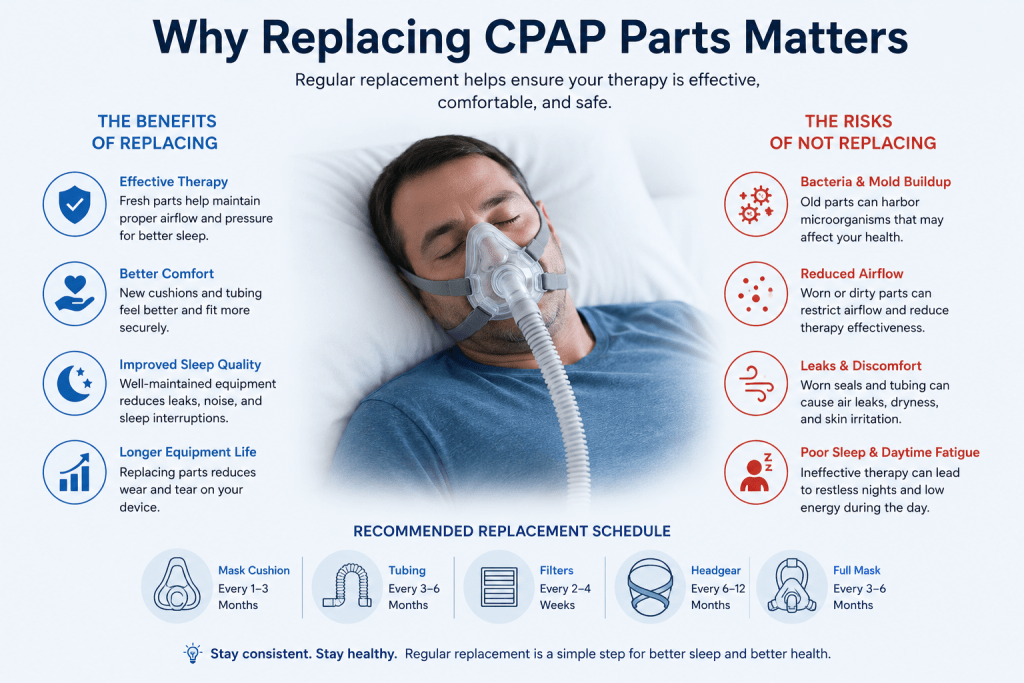
Why Replacing CPAP Parts Matters
Your CPAP equipment touches your face and carries the air you breathe all night, so cleanliness and good condition matter. Over time, mask cushions lose their shape, tubing collects moisture, and filters fill with dust. Old parts can let air slip out around the edges, which lowers comfort and can pull you out of restful sleep.
Fresh parts seal better, feel softer, and keep your airway path clean, which helps you stick with therapy night after night. If your mask has felt off lately, the guide to the best CPAP mask can help you find a better fit.
Keeping up with replacements is also part of getting the most from your therapy. When the gear works well, you are more likely to use it, and consistent use is what supports better sleep over time.
CHECK YOUR SLEEP SYMPTOMS: TAKE THE 2 MINUTE QUIZ
TAKE THE QUIZ
How Often to Replace Your CPAP Mask and Tubing
Most manufacturers and suppliers share a general timeline for swapping out CPAP parts. These are typical guidelines, and your own schedule may vary based on wear, your supplier, and your plan.
Part | Typical Replacement |
Mask cushion or pillows | Every 2 weeks to 1 month |
Full mask | Every 3 months |
Tubing | Every 3 months |
Disposable filters | Every 2 weeks |
Reusable filters | Every month, replaced about every 6 months |
Headgear and straps | Every 6 months |
Water chamber | Every 6 months |
As a simple rule, the soft parts that touch your skin wear out fastest, while frames and headgear last longer. Your CPAP mask and tubing usually sit on a three-month cycle, with the cushion replaced more often. For the parts themselves, the CPAP supplies page is a helpful reference.
These timelines are general care guidance, not medical advice. Your equipment supplier and your own physician can confirm the right schedule for you.
Signs It Is Time to Replace Your Mask
Numbers on a calendar help, but your mask often tells you when it is worn. Watch for a few clear signs.
- Air leaks. If air slips out around the edges even after adjusting, the cushion may be worn.
- Discoloration or stiffness. Soft silicone that turns yellow or hard has passed its prime.
- Skin marks or irritation. Deep marks or redness can point to a poor seal. The tips on how to get rid of CPAP lines can help here.
- A loose fit. Headgear that no longer holds its shape lets the mask shift at night.
A mask that leaks or slips can lower the benefit of your therapy, so trust these signs even if the calendar says you have time left. If discomfort is a recurring theme, the article on why CPAP may not feel right covers common fixes.
Signs It Is Time to Replace Your Tubing
Tubing is easy to overlook, but it works hard every night. Look for these cues.
- Tiny cracks or holes. Even a small hole lets air escape and lowers pressure.
- Cloudy or stained insides. Buildup you cannot fully clean is a sign to swap the tube.
- A musty smell. Odor that lingers after cleaning means it is time for a fresh tube.
- Frequent water pooling. Some moisture is normal, but constant pooling can wear a tube faster.
Clean tubing supports steady airflow, so replacing a worn tube keeps your CPAP mask and tubing working as a team. Heated tubes may follow a slightly different timeline, so check the notes that came with yours.
What About Filters, Headgear, and the Water Chamber
The mask and tube get the most attention, but the smaller parts matter too. Filters keep dust out of your machine and your airway, so a clogged filter can make the unit work harder. Disposable filters often need swapping every couple of weeks, while reusable ones get rinsed more often and replaced a few times a year.
Headgear stretches with use, and a loose strap is a common reason masks leak, so refreshing it twice a year helps the whole setup seal well. The water chamber in a humidifier also benefits from regular replacement to stay clean. Keeping these parts fresh, along with routine cleaning, protects your comfort. A CPAP cleaning machine can make upkeep easier between replacements.
How Cleaning Extends the Life of Your CPAP Mask and Tubing
Good cleaning habits will not replace worn parts, but they help your gear reach its full lifespan and stay hygienic. A quick daily wipe of the cushion and a weekly wash of the mask and tube go a long way.
Gentle, regular cleaning keeps oils, dust, and moisture from building up, which means your CPAP mask and tubing stay comfortable right up to their replacement date. Let parts air dry fully before the next use. If you are unwell, the guide on using CPAP while sick offers extra care tips.
Saving money on supplies is possible too. The article on how to save on CPAP shares practical ideas for keeping costs down.
Insurance and Replacement Schedules
Many insurance plans help cover routine CPAP supply replacements on a set schedule. Coverage and timing vary by plan, so it pays to know your benefits before you reorder.
Knowing your plan’s replacement allowance helps you stay stocked without paying more than you need to. To see what your plan covers for supplies, the verify benefits link above is the quickest path. For broader cost context, the CPAP machine costs guide and the page on whether insurance covers CPAP machines are useful reads.
Dr. Avinesh Bhar often reminds patients that small habits, like a standing reorder reminder, keep therapy on track. A short virtual visit can also help you review your equipment and your overall plan.
Simple Habits to Keep Your Equipment Fresh
A few easy routines make replacement and care effortless.
- Set a reminder. A monthly calendar note keeps cushion swaps from slipping your mind.
- Inspect during cleaning. Check for cracks, leaks, and wear while you wash your gear.
- Keep a spare cushion. A backup means you are never stuck with a worn part.
- Log your reorder dates. A simple note helps you track what you have replaced.
- Pair upkeep with a steady routine. The ultimate sleep routine guide can anchor these habits.
These are practical care tips, not medical advice. For questions about your therapy or your health, your own physician is the right guide.
Watch: How to Manage Mask Leak on CPAP
Trusted General Resources
For plain-language background on healthy sleep, the CDC sleep information page is a reliable starting point. For a general overview of breathing pauses during sleep, the NHLBI sleep apnea page offers clear, educational information.
At Sliiip, we accept the following insurances:

SLIIIP’s board-certified sleep physicians can do sleep evaluations for sleep apnea. Virtual consultations in all 50 states. Home sleep tests shipped to your door.
Frequently Asked Questions
How often should you replace your CPAP mask and tubing?
As a general guide, the full mask and tubing are often replaced about every three months, while the soft cushion is swapped every two weeks to a month. Your supplier and plan can confirm your exact schedule.
How often should I replace the mask cushion?
Cushions and nasal pillows wear the fastest, so many people replace them every two weeks to once a month. Watch for leaks or stiffness as a sign.
How often should CPAP tubing be replaced?
Tubing is commonly replaced about every three months, sooner if you notice cracks, cloudiness, or a smell that cleaning does not remove.
How do I know my CPAP mask is worn out?
Look for air leaks around the edges, stiff or discolored silicone, deep skin marks, or headgear that no longer holds its shape.
Can I clean my mask instead of replacing it?
Cleaning helps your mask last and stay hygienic, but it does not undo wear. Once the seal weakens, replacement is the better step.
How often should I replace CPAP filters?
Disposable filters often need swapping every couple of weeks, while reusable filters get rinsed more often and replaced a few times a year.
How often should headgear be replaced?
Headgear and straps stretch with use, so refreshing them about every six months helps the mask keep a good seal.
Does insurance cover CPAP supply replacements?
Many plans cover routine supply replacements on a schedule, though coverage and timing vary. Verify your benefits to learn what your plan includes.
What happens if I do not replace my mask?
A worn mask can leak air, feel less comfortable, and hold bacteria, which can lower the benefit of your therapy and disrupt your sleep.
How often should the water chamber be replaced?
The humidifier water chamber benefits from replacement about every six months to stay clean and clear.
Can old tubing affect my therapy?
Yes. Cracks or holes in tubing can let air escape and lower pressure, so a worn tube is worth replacing.
How do I clean my CPAP mask and tubing?
A daily wipe of the cushion and a weekly wash of the mask and tube with mild soap and water work well. Let parts air dry fully before use.
Why does my mask leak air?
Common causes include a worn cushion, loose headgear, or a fit that no longer matches your face. Adjusting or replacing parts usually helps.
How long does a CPAP machine last?
Machines often last around five years, though this varies. Your supplier and plan can guide replacement timing for the unit itself.
Can a dirty mask cause skin irritation?
A mask with buildup or a poor seal can irritate the skin. Regular cleaning and timely replacement help keep skin comfortable.
Should I replace tubing if it has water inside?
Some moisture is normal. Constant pooling can wear a tube faster, so inspect it often and replace it if you see damage.
How often should I replace the chin strap?
Like headgear, a chin strap stretches with use and is commonly refreshed about every six months.
Do heated tubes have a different schedule?
Heated tubes may follow a slightly different timeline. Check the notes that came with your tube or ask your supplier.
Where can I buy replacement CPAP supplies?
The SLIIIP CPAP supplies page is a helpful starting point, and your provider can guide you on what fits your therapy.
Who can I talk to about my CPAP therapy?
SLIIIP offers virtual consultations in all 50 states, so you can review your equipment and your plan with a sleep physician from home.
Take the Next Step
SLIIIP’s board-certified sleep physicians can do sleep evaluations for sleep apnea. Virtual consultations in all 50 states. Home sleep tests shipped to your door.
SLIIIP’s board-certified sleep physicians can do sleep evaluations for sleep apnea. Virtual consultations in all 50 states. Home sleep tests shipped to your door.
Latest posts
-
Why Can’t I Wake Up Even After Getting Enough Sleep?
Last updated: October 2, 2026. Medically reviewed by Dr. Avinesh Bhar, Board-Certified Sleep Physician, SLIIIP.com. If you can’t wake up after enough sleep, the cause is usually not the number…
-
Why Does My Heart Rate Drop So Low While I Sleep?
Last updated: October 2, 2026. Medically reviewed by Dr. Avinesh Bhar, Board-Certified Sleep Physician, SLIIIP.com. Your heart rate drops low while sleeping mainly because your body needs less work from…
-
Why Are My Naps Never Refreshing?
Last updated: October 2, 2026. Medically reviewed by Dr. Avinesh Bhar, Board-Certified Sleep Physician, SLIIIP.com. Naps that leave you groggy usually come down to how long you sleep, when you…
Get updates
Spam-free subscription, we guarantee. This is just a friendly ping when new content is out.

