👉 Register for Free. How to Diagnose Sleep Apnea Faster in Primary Care – FREE Webinar by Dr. Audrey Wells. – Friday, April 24 at 12 PM ET


How to Sleep Better in a Dorm Room
The CDC recommends that adults get at least seven hours of sleep each night. Dorm life makes that hard to protect. Roommates keep different schedules, hallways stay loud late into the night, and shared walls carry sound easily. Dr. Avinesh Bhar, a board-certified sleep physician at SLIIIP.com, sees this pattern often in students: a workable sleep schedule at home that falls apart within the first few weeks of shared dorm living. SLIIIP.com, a virtual sleep medicine practice, works with students on practical ways to protect sleep in a shared living space.
A quiet, dark, cool room supports deeper sleep, even in a small dorm room. Most sleep problems in dorms come from light, noise, and mismatched schedules, not from the mattress. These issues are fixable with a few changes to the room and a short conversation with a roommate.
SLIIIP’s board-certified sleep physicians can do sleep evaluations for sleep apnea. Virtual consultations in all 50 states. Home sleep tests shipped to your door.
Why Dorm Rooms Disrupt Sleep
Dorm rooms pack a lot of activity into a small space. Hallway noise, late-night conversations, and phone notifications interrupt sleep even when a student never fully wakes up. Overhead lights, streetlights through thin curtains, and a laptop screen left on can all delay the release of melatonin, the hormone that signals the body it is time to sleep.
Temperature matters too. Dorm heating and cooling systems are often out of a student’s control. A room that runs too warm makes it harder to fall asleep and stay asleep through the night.
How Can I Sleep Better in a Noisy Dorm Room?
The most effective fix for dorm noise is layering sound control instead of relying on one method. A white noise machine or a fan covers sudden sounds like doors closing or people talking in the hall. Foam earplugs add a second layer for nights when the noise is heavier than usual. Blackout curtains or a sleep mask block streetlights and hallway light that leaks under the door.
Keeping the same bedtime and wake time, even on weekends, also helps the body adjust to a noisy environment over time. A consistent schedule trains the brain to expect sleep at a certain hour, which can offset some of the disruption from an unpredictable dorm.
Set Up Your Space for Better Sleep
A few physical changes can make a dorm room feel more like a place built for rest.
- Keep the room on the cooler side, around 65 to 68 degrees Fahrenheit, if the thermostat allows it.
- Use a power strip with a timer to shut off lamps and string lights automatically.
- Store phones across the room instead of next to the bed to reduce late-night scrolling.
- Add a small rug or curtains to absorb sound in a room with hard floors and bare walls.
None of these changes require special equipment. Most can be done with items already common in a dorm room.
Talk to Your Roommate About Sleep Schedules
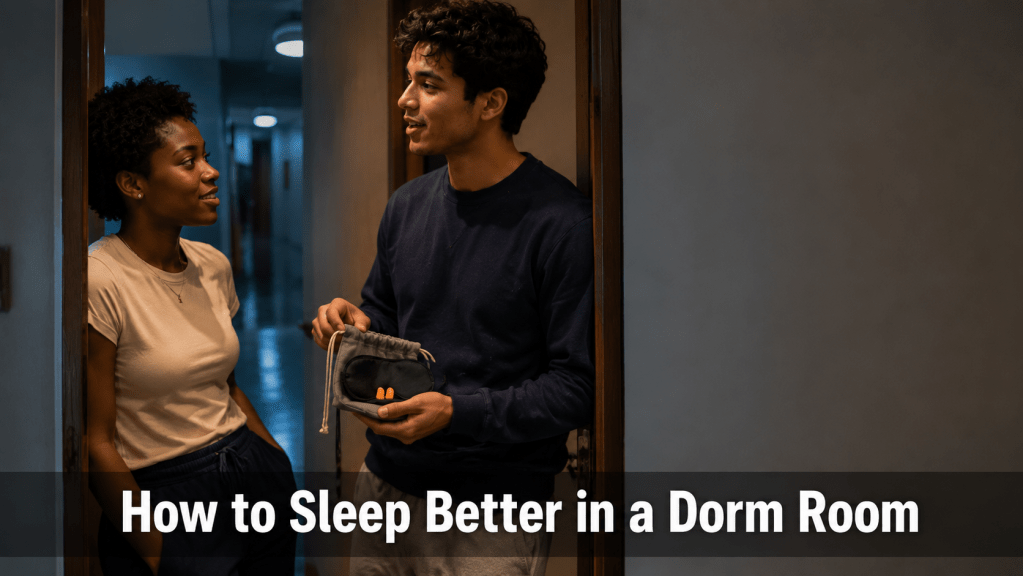
Mismatched schedules cause more sleep disruption than most students expect. One roommate staying up late with lights and music on can affect the other’s sleep for the entire semester. A short, direct conversation early in the year, about quiet hours and lights-out expectations, prevents most of this friction.
Setting a shared understanding, even an informal one, gives both roommates a way to raise the issue later without conflict.
Building a Wind-Down Routine in a Shared Space
A consistent wind-down routine helps signal to the brain that sleep is coming, even in a room shared with someone else. This does not require quiet time from a roommate, just a personal set of cues that stay the same each night.
Simple options include dimming a desk lamp instead of using overhead lights, reading a physical book instead of scrolling on a phone, or listening to a calm playlist through headphones. Doing the same two or three steps each night, in the same order, builds a signal the brain learns to recognize over time This will help to get enough sleep every night.
Packing a small kit for sleep, such as earplugs, a sleep mask, and a phone charger that is not next to the pillow, also reduces the friction of getting ready for bed. When these items are easy to reach, students are more likely to use them consistently instead of skipping the routine on busy nights.
Common Mistakes That Make Dorm Sleep Worse
A few habits tend to work against good sleep in a dorm setting, even when a student is trying to sleep well.
- Studying or watching videos in bed trains the brain to associate the bed with being awake, not with sleep.
- Napping for long stretches in the late afternoon can make it harder to fall asleep at night.
- Drinking caffeine after mid-afternoon can delay sleep onset by several hours for many people.
- Keeping the room fully dark during the day, then bright at night, can confuse the body’s internal clock.
Avoiding these patterns, alongside the setup changes above, gives a dorm room a better chance of supporting consistent sleep through the semester.
Watch our video: The Importance of Sleep Behaviors
When Poor Sleep Might Be More Than a Dorm Problem
Some sleep struggles are not about the room at all. Dr. Avinesh Bhar, a board-certified sleep physician at SLIIIP.com, points out that loud snoring, gasping during sleep, or ongoing daytime sleepiness despite a full night in bed can signal an underlying sleep disorder, not just a difficult living situation. These signs are worth mentioning to a doctor, especially if they continue after a student improves their sleep setup and schedule.
SLIIIP.com offers virtual evaluations and home sleep apnea testing for students who want to rule out a medical cause for ongoing sleep problems.
At Sliiip, we accept the following insurances:

SLIIIP’s board-certified sleep physicians can do sleep evaluations for sleep apnea. Virtual consultations in all 50 states. Home sleep tests shipped to your door.
Frequently Asked Questions
Why can’t I sleep in my dorm room even when I’m tired?
Light, noise, and an inconsistent schedule are the most common reasons. A tired body can still struggle to fall asleep in a disruptive environment.
Do earplugs actually help in a dorm?
Yes. Foam earplugs reduce sudden noises like doors, footsteps, and hallway conversations, which are common triggers for waking up during the night.
Is it bad to nap during the day if I sleep poorly at night?
A short nap, under 20 minutes, in the early afternoon can help with alertness without making nighttime sleep harder. For more on napping, see SLIIIP’s guide to the benefits of napping.
Should I talk to my roommate about noise or lights?
Yes. Most sleep conflicts between roommates come from unspoken expectations. A short conversation about quiet hours early in the semester prevents bigger issues later.
Can poor dorm sleep affect my grades?
Sleep supports memory and focus, both of which affect academic performance. Ongoing poor sleep can make it harder to concentrate in class and retain information while studying.
What temperature is best for sleeping in a dorm room?
Around 65 to 68 degrees Fahrenheit works well for most people. Cooler rooms tend to support deeper, more consistent sleep.
When should I see a doctor about dorm sleep problems?
If poor sleep continues after fixing light, noise, and schedule issues, or if you notice loud snoring or daytime sleepiness, it is worth discussing with a doctor.
Does screen use before bed make dorm sleep worse?
Yes. Bright screens close to bedtime can delay melatonin release and make it harder to fall asleep, on top of any noise or light already in the room.
Ready to Talk to a Sleep Specialist?
If sleep problems continue despite changes to your dorm setup and schedule, SLIIIP.com offers virtual consultations with a board-certified sleep physician. Book an appointment to talk through your symptoms.
Latest posts
-
Why Are My Naps Never Refreshing?
Last updated: October 2, 2026. Medically reviewed by Dr. Avinesh Bhar, Board-Certified Sleep Physician, SLIIIP.com. Naps that leave you groggy usually come down to how long you sleep, when you…
-
Is Sleeping Too Much a Sleep Disorder?
Last updated: October 2, 2026. Medically reviewed by Dr. Avinesh Bhar, Board-Certified Sleep Physician, SLIIIP.com. Sleeping too much is not always a sleep disorder, but it can be a sign…
-
Why Does My Insomnia Get Worse After Stopping Sleep Medication?
Last updated: October 2, 2026. Medically reviewed by Dr. Avinesh Bhar, Board-Certified Sleep Physician, SLIIIP.com. Insomnia can get worse after stopping sleep medication for three main reasons. They are rebound…
Get updates
Spam-free subscription, we guarantee. This is just a friendly ping when new content is out.

