👉 Register for Free. How to Diagnose Sleep Apnea Faster in Primary Care – FREE Webinar by Dr. Audrey Wells. – Friday, April 24 at 12 PM ET

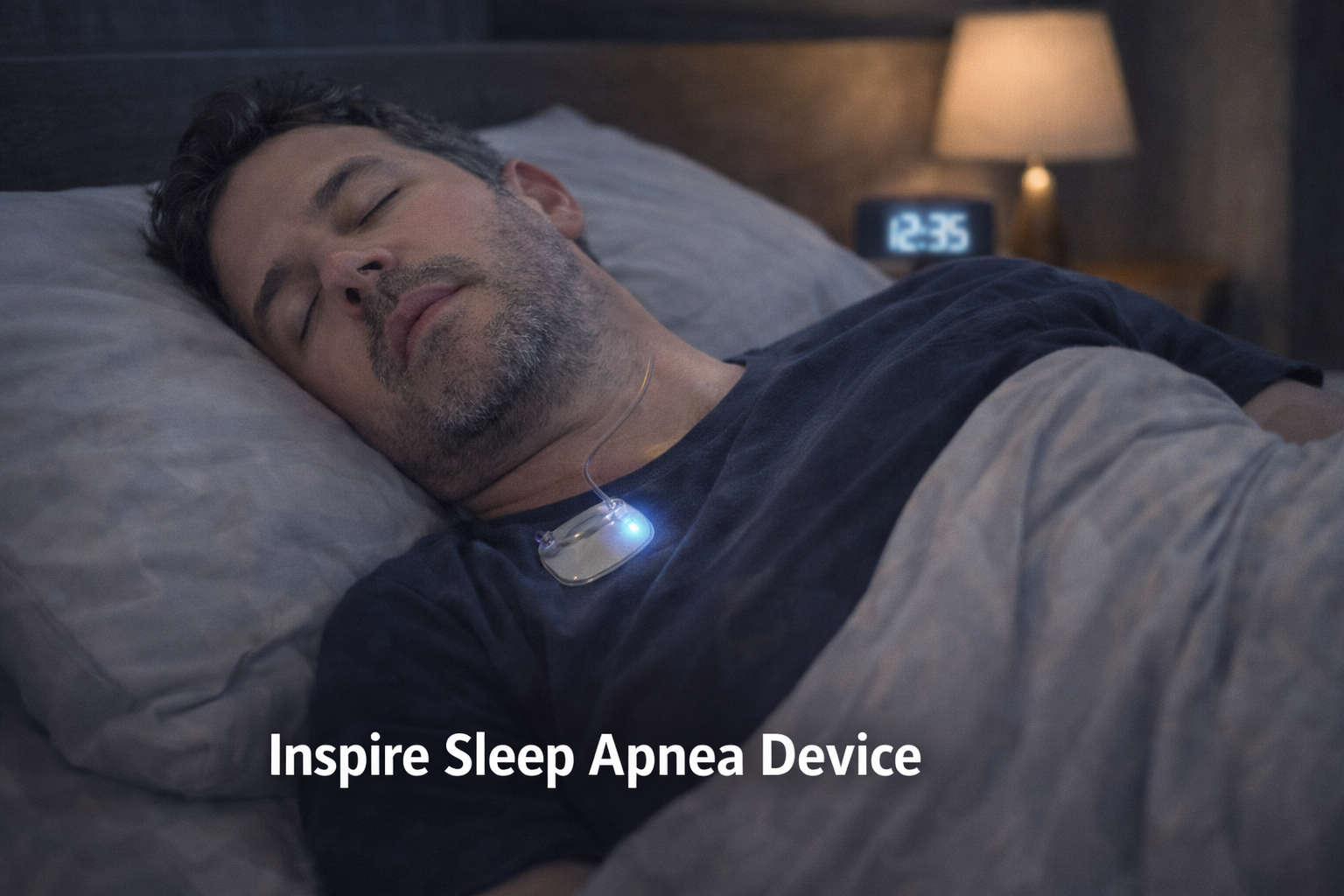
Inspire Sleep Apnea Device: Is the Implant Right for You? A Physician Explains
Inspire sleep apnea devices are often overlooked as a treatment option, according to Dr. Avinesh Bhar. Board-Certified Sleep Physician at SLIIIP.com, even among patients who have struggled with CPAP for years without finding relief.
Awareness of the Inspire implant has grown fast since its FDA approval. More patients who are frustrated with CPAP or oral appliances are now asking whether a surgical option could work for them.
Without clear, physician authored guidance, patients are left with manufacturer websites and personal testimonials. At SLIIIP.com, board certified sleep physicians evaluate patients for all treatment pathways. This includes those who cannot tolerate CPAP and are exploring alternatives like the Inspire sleep apnea device.
At SLIIIP.com, every treatment option is evaluated on its clinical merit, so patients get a recommendation that fits their actual situation.
SLIIIP’s board certified sleep physicians can do sleep evaluations for sleep apnea. Virtual consultations in all 50 states. Home sleep tests shipped to your door.
SLIIIP’s board-certified sleep physicians can do sleep evaluations for sleep apnea. Virtual consultations in all 50 states. Home sleep tests shipped to your door.

What Is the Inspire Sleep Apnea Device and How Does Upper Airway Stimulation Work?
The Inspire sleep apnea device is an implantable system that treats obstructive sleep apnea (OSA) through a mechanism called upper airway stimulation (UAS). Unlike CPAP, which delivers pressurized air through a mask to keep the airway open, Inspire works internally stimulating the nerve that controls the tongue so it moves slightly forward and prevents the airway collapse that causes apnea events.
The system consists of three components implanted during a short outpatient procedure: a small pulse generator placed under the skin near the collarbone, a sensing lead that monitors breathing patterns near the chest, and a stimulation lead connected to the hypoglossal nerve under the chin. The device activates automatically when the patient begins sleeping and responds to each breath, applying gentle electrical stimulation to keep the patient airway throughout the night.
The patient controls the device using a small handheld remote turning it on before sleep and off upon waking. There is no mask, no hose, and no machine noise. For patients who have struggled with CPAP adherence due to claustrophobia, mask discomfort, or simply lifestyle incompatibility, this represents a fundamentally different treatment experience.
The Inspire sleep apnea device was FDA-approved for obstructive sleep apnea and has continued to expand its approved criteria with subsequent device generations.
CHECK YOUR SLEEP SYMPTOMS: TAKE THE 2 MINUTE QUIZ
TAKE THE QUIZ
Who Qualifies for the Inspire Implant?
Qualification for the Inspire sleep apnea device is not universal, and candidacy requires specific clinical criteria to be met. A sleep physician evaluation is the essential first step.
AHI (Apnea-Hypopnea Index) criteria: Inspire is indicated for patients with moderate-to-severe OSA, generally defined as an AHI between 15 and 65. Patients with very mild apnea typically do not qualify, and historically patients with AHIs above 65 were excluded though criteria have evolved with newer device generations.
CPAP failure: The standard clinical requirement is documented CPAP failure or intolerance. This means you must have attempted CPAP therapy and been unable to tolerate or achieve adherence with it.
BMI considerations: Earlier versions of Inspire had BMI restrictions, though this threshold has been adjusted upward with newer approvals. The underlying clinical concern is that very high BMI is associated with a different pattern of airway collapse (concentric collapse) that may respond less well to nerve stimulation.
Anatomy (DISE evaluation): Most surgeons require a drug-induced sleep endoscopy (DISE) before proceeding with Inspire. During this brief procedure, the patient is sedated while a physician examines how the airway collapses during sleep. Inspire works most effectively when the collapse pattern is anterior-posterior (tongue-based) rather than circumferential (complete ring-like closure of the soft palate). Patients with the latter pattern are generally not good candidates.
Age: Inspire is approved for adults. Pediatric use is a separate, evolving area of study.
If you are unsure whether you might qualify, a SLIIIP telemedicine consultation is the right starting point. Physicians can review your diagnostic history, AHI results, and CPAP compliance data before any surgical referral is considered.
Watch: Sleep Apnea and Mouth Taping
The Procedure: Before, During, and After the Inspire Implant
Understanding what the surgical process involves helps patients make informed decisions rather than being surprised at any stage.
Before surgery: The evaluation phase typically includes a formal sleep study or review of existing diagnostic data, a DISE procedure (as described above), and a consultation with a surgeon trained in the Inspire implant. Most patients complete the evaluation process over several weeks.
The procedure itself: The Inspire implantation is typically performed as outpatient surgery under general anesthesia and takes approximately two to three hours. Surgeons make three small incisions one near the collarbone, one under the chin, and one on the side of the chest to place the three components of the system. Most patients go home the same day.
Recovery: Post-surgical discomfort is generally described as manageable and typically resolves within two to four weeks. Patients are advised to avoid strenuous activity during early recovery. The device is not activated immediately; a healing period of approximately four weeks is standard before the device is turned on and the titration phase begins.
Titration and optimization: Once activated, the device is gradually adjusted to find the ideal stimulation settings for each patient. This is done in follow-up visits and may take several weeks to optimize fully. Response to the Inspire sleep apnea device is evaluated through a follow-up sleep study once settings are established.
Inspire vs. CPAP vs. Oral Appliance: An Honest Comparison
No treatment is right for everyone, and the goal is always matching the patient to the most appropriate, sustainable solution.
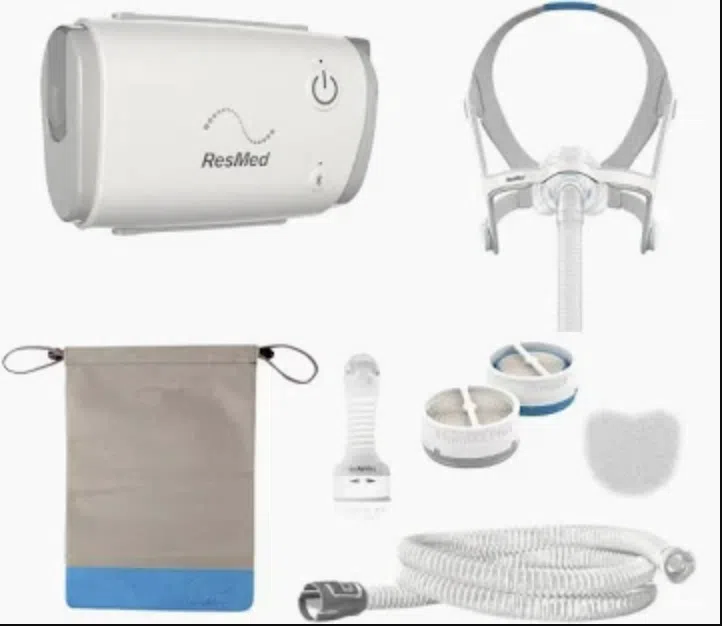
CPAP remains the most effective treatment for moderate-to-severe obstructive sleep apnea when used consistently. It reduces AHI reliably, is non-surgical, and is widely available. The challenge is adherence; many patients struggle with mask comfort, claustrophobia, noise, or the inconvenience of traveling with equipment. For those who use it, CPAP is typically the most evidence-supported first-line option.
Oral appliances are mandibular advancement devices worn in the mouth during sleep. They reposition the jaw to reduce upper airway obstruction and are most effective for mild-to-moderate sleep apnea. They are less effective than CPAP for severe apnea but are often preferred by patients who cannot tolerate CPAP. SLIIIP physicians work with patients on oral appliance options see Best Oral Appliance for Sleep Apnea for more detail.
Inspire sits in a distinct category: it is most relevant for patients with moderate-to-severe apnea who have documented CPAP failure and want a hands-free, maskless solution. It does not require nightly setup, does not restrict sleep position, and is invisible to a bed partner. The tradeoffs are that it is surgical, carries the risks associated with any implanted device, requires a significant candidacy evaluation, and is not effective for all airway collapse patterns.
For context on non-surgical options, see What Is Sleep Apnea and Oral Appliance for Sleep Apnea.

SLIIIP’s board-certified sleep physicians can do sleep evaluations for sleep apnea. Virtual consultations in all 50 states. Home sleep tests shipped to your door.
At Sliiip, we accept the following insurances:
Kaiser Permanente Ambetter Medicare Beech Street Humana Military Tricare MultiPlan Humana Allied Alliant Cigna NovaNet Secure Health Aetna Blue Cross Blue Shield UnitedHealthcare Coventry Health Care Clover Health
SLIIIP’s board-certified sleep physicians can do sleep evaluations for sleep apnea. Virtual consultations in all 50 states. Home sleep tests shipped to your door.
How Much Does the Inspire Implant Cost? Insurance and Medicare Coverage
The Inspire sleep apnea device is a significant financial consideration. Without insurance, the total cost including the device, surgical facility, and follow-up care is often in the range of $30,000 to $40,000 or more.
Insurance coverage: The majority of major commercial insurance plans now cover the Inspire sleep apnea device for qualifying patients, though prior authorization is required. Coverage determinations typically require documentation of a formal sleep study with AHI results, evidence of CPAP failure or intolerance, and the results of a DISE evaluation confirming surgical candidacy.
Medicare: Medicare covers the Inspire procedure under specific criteria for beneficiaries who meet the clinical qualifications. Coverage requirements align generally with the standard candidacy criteria described above.
Out-of-pocket costs: Even with insurance, patients may face co-pays, deductibles, and cost-sharing responsibilities. SLIIIP’s team can assist patients in verifying their specific benefits for sleep apnea evaluation and treatment using the benefits verification link below.
Risks, Side Effects, and What the Outcomes Data Shows
As with any surgical procedure, the Inspire implant carries risks that should be discussed candidly with a qualified physician.
Common side effects reported in clinical trials and post-market studies include tongue soreness or abrasion (from the stimulation), temporary discomfort at incision sites, and temporary changes in voice that generally resolve. Some patients experience swallowing discomfort during the titration phase.
Less common but clinically significant risks include infection at the implant site, lead migration requiring revision surgery, and device malfunction requiring replacement. These complications are infrequent but real.
Efficacy outcomes: Clinical trial data for the Inspire sleep apnea device has shown meaningful reductions in AHI and improvements in daytime symptoms and quality of life measures in appropriately selected patients. Studies report response rates in the range of 66–78% when patients are correctly chosen based on candidacy criteria. For non-responders, further evaluation and possible surgical revision or transition to an alternative treatment may be necessary.
Important caveat: The device’s effectiveness is highly dependent on proper candidacy selection. Patients who proceed to implantation without meeting candidacy criteria particularly those with circumferential airway collapse on DISE have substantially lower response rates.
When Inspire Is Not the Right Choice and What Is
Inspire is not appropriate for every CPAP-intolerant patient. Situations where alternative paths should be explored include:
- AHI outside the qualified range
- Circumferential airway collapse on DISE
- Significant medical comorbidities that increase surgical risk
- Patients who have not yet attempted or adequately trialed CPAP or oral appliances
In these cases, working with a sleep physician to optimize CPAP therapy, explore oral appliance options, consider positional therapy, or evaluate weight-related interventions may yield better outcomes without surgical risk.
A SLIIIP telemedicine consultation gives CPAP-intolerant patients access to a board-certified sleep physician who can evaluate their full clinical picture, review diagnostic data, and provide a treatment roadmap before any surgical consultation is needed.
Frequently Asked Questions About the Inspire Sleep Apnea Device
What is the Inspire device for sleep apnea?
It is an implantable upper airway stimulation system that sends gentle electrical signals to the hypoglossal nerve to keep the airway open during sleep without a CPAP mask.
How effective is Inspire for sleep apnea?
Clinical studies show meaningful AHI reduction and quality of life improvement in appropriately selected patients, with response rates of approximately 66–78%.
Is the Inspire procedure painful?
Most patients describe post-surgical discomfort as moderate and manageable, resolving within two to four weeks.
How do I know if I qualify for Inspire?
Qualification requires meeting AHI criteria, documented CPAP failure, favorable anatomy on DISE, and BMI considerations. A sleep physician evaluation is the first step.
Does insurance cover the Inspire implant?
Most major insurance plans and Medicare cover the procedure for qualifying patients. Prior authorization and clinical documentation are required.
Can I have an MRI with the Inspire device?
Certain MRI scans are compatible with Inspire. Patients should inform any provider about the implant before imaging. Whole-body MRI requires specific settings and may have restrictions.
Does the Inspire device need to be replaced?
The pulse generator battery typically lasts approximately 10–11 years, after which the generator (not the leads) is replaced in a minor outpatient procedure.
Can the device be removed if needed?
Yes. The Inspire sleep apnea device can be explanted, though this is not without its own surgical considerations.
Does Inspire work for all types of sleep apnea?
It is FDA-approved specifically for obstructive sleep apnea and is not a treatment for central sleep apnea.
What is the recovery time after Inspire implantation?
Most patients resume normal daily activity within two to four weeks. Strenuous activity is restricted during this period.
Will my partner notice the device during sleep?
The stimulation is gentle and generally not noticeable to a bed partner. The only external component is a small remote.
What happens if the stimulation wakes me up?
Titration adjustments can reduce stimulation intensity if it causes discomfort or arousals. The device settings are individually optimized.
Is Inspire covered by Medicare?
Yes, for patients who meet the clinical criteria. Documentation requirements apply.
Can I use Inspire if I’ve had prior throat or jaw surgery?
Prior upper airway procedures do not automatically disqualify a patient but are discussed during candidacy evaluation.
Is Inspire better than a sleep apnea oral appliance?
For severe sleep apnea in CPAP-intolerant patients with appropriate anatomy, Inspire typically provides greater AHI reduction than an oral appliance. For mild-to-moderate apnea, an oral appliance may be equally effective without surgery.
How long does the Inspire implant surgery take?
The procedure typically takes two to three hours and is performed on an outpatient basis.
What is a DISE evaluation?
Drug-induced sleep endoscopy is a brief procedure where the patient is sedated and the physician examines how the airway collapses, to determine if Inspire anatomy criteria are met.
Who performs Inspire implantation?
An otolaryngologist (ENT surgeon) trained specifically in the Inspire procedure performs the implantation.
What is the age requirement for Inspire?
The device is FDA-approved for adults. Physician consultation is needed for evaluation of candidacy.
What should I do first if I’m considering Inspire?
Begin with a telemedicine consultation with a board-certified sleep physician who can review your diagnostic history, confirm you have tried CPAP, and discuss whether you are likely to meet candidacy criteria before proceeding to surgical evaluation.
Thank you for reading this article.
SLIIIP’s board-certified sleep physicians can do sleep evaluations for sleep apnea. Virtual consultations in all 50 states. Home sleep tests shipped to your door.
Latest posts
-
RingConn vs Oura: Which Smart Ring Tracks Sleep Better?
Last updated: September 10, 2026. Medically reviewed by Dr. Avinesh Bhar, Board-Certified Sleep Physician, SLIIIP.com. RingConn and Oura both track sleep through a finger-worn ring, but they differ most in…
-
Withings ScanWatch Sleep Tracking Accuracy: What It Can and Cannot Tell You
Last updated: September 10, 2026. Medically reviewed by Dr. Avinesh Bhar, Board-Certified Sleep Physician, SLIIIP.com. Withings ScanWatch is a hybrid analog watch that tracks sleep stages and can flag nighttime…
Get updates
Spam-free subscription, we guarantee. This is just a friendly ping when new content is out.

