👉 Register for Free. How to Diagnose Sleep Apnea Faster in Primary Care – FREE Webinar by Dr. Audrey Wells. – Friday, April 24 at 12 PM ET

Magnesium for Sleep: Does It Actually Work? A Sleep Doctor Explains
Magnesium for sleep is often overlooked, according to Dr. Avinesh Bhar. Board-Certified Sleep Physician at SLIIIP.com, many individuals experience symptoms without clear awareness.
Despite being the most-searched sleep supplement of 2026, magnesium remains misunderstood most people reach for it based on social media recommendations rather than a clear understanding of how it works, who it helps, and when it isn’t enough.
At SLIIIP.com, physicians see patients every week who have tried magnesium with mixed results, often because they chose the wrong form, the wrong dose, or didn’t address a deeper sleep disorder driving their symptoms. This guide separates the science from the hype.
SLIIIP’s board-certified sleep physicians can do sleep evaluations for sleep apnea. Virtual consultations in all 50 states. Home sleep tests shipped to your door.
SLIIIP’s board-certified sleep physicians can do sleep evaluations for sleep apnea. Virtual consultations in all 50 states. Home sleep tests shipped to your door.
Why Magnesium Matters for Your Sleep
Magnesium is the fourth most abundant mineral in the human body, involved in more than 300 enzymatic reactions. Several of those reactions are directly relevant to sleep quality and the regulation of the nervous system.
First, magnesium supports the production and activity of GABA (gamma-aminobutyric acid), the brain’s primary inhibitory neurotransmitter. GABA is what quiets neurological activity and allows the brain to transition into sleep. Without sufficient magnesium, GABA receptors function less efficiently meaning the nervous system stays in a higher state of arousal than it should at night.
Second, magnesium is involved in the regulation of melatonin, the hormone that governs the sleep-wake cycle. Deficiency has been associated with disrupted melatonin production, which can make it harder to fall asleep at a consistent time.
Third, magnesium helps regulate cortisol, the body’s primary stress hormone. Elevated evening cortisol is one of the most common physiological contributors to difficulty falling asleep and frequent nighttime waking. Adequate magnesium levels support the natural evening decline in cortisol that the body needs for restful sleep.
Collectively, these mechanisms explain why low magnesium, which affects an estimated 50–60% of Americans due to poor dietary intake, is frequently associated with poor sleep quality, difficulty initiating sleep, and lighter, more fragmented rest.

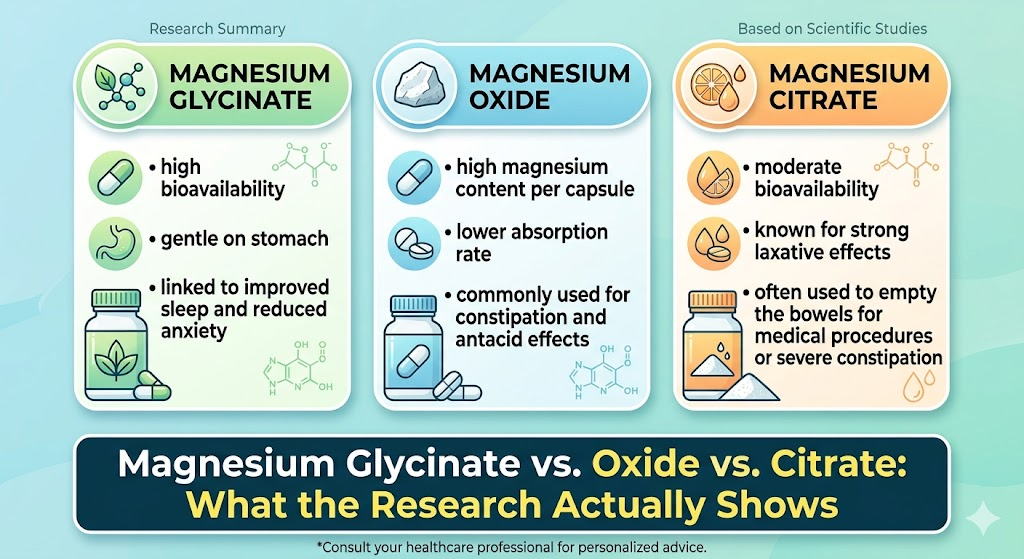
Magnesium Glycinate vs. Oxide vs. Citrate: What the Research Actually Shows
Not all magnesium supplements are equal, and the form matters significantly for both absorption and sleep-specific effects.
Magnesium glycinate is the form most consistently recommended for sleep wellness. It is bound to glycine, an amino acid that has its own independent calming effect on the nervous system. Glycinate is highly bioavailable, meaning it absorbs efficiently without causing digestive discomfort. This is the form most physicians at SLIIIP.com discuss with patients exploring magnesium as a wellness support tool.
Magnesium oxide is the most common form found in low-cost supplements. It has very poor absorption with only around 4% bioavailability and is far more likely to cause gastrointestinal side effects than to meaningfully impact sleep. Most people who say magnesium “didn’t work” for them were likely using this form.
Magnesium citrate is more bioavailable than oxide and is often used for digestive wellness, but it can have a laxative effect at higher doses. It may have mild benefits for sleep, though the evidence is less robust than for glycinate.
Magnesium L-threonate is a newer form specifically studied for its ability to cross the blood-brain barrier. Early research suggests it may support cognitive function and sleep quality, though it is generally more expensive and the clinical evidence is still developing.
The takeaway: if you are exploring magnesium for sleep, glycinate is the form with the best evidence and tolerability profile.
How Much Magnesium Do You Need for Sleep?
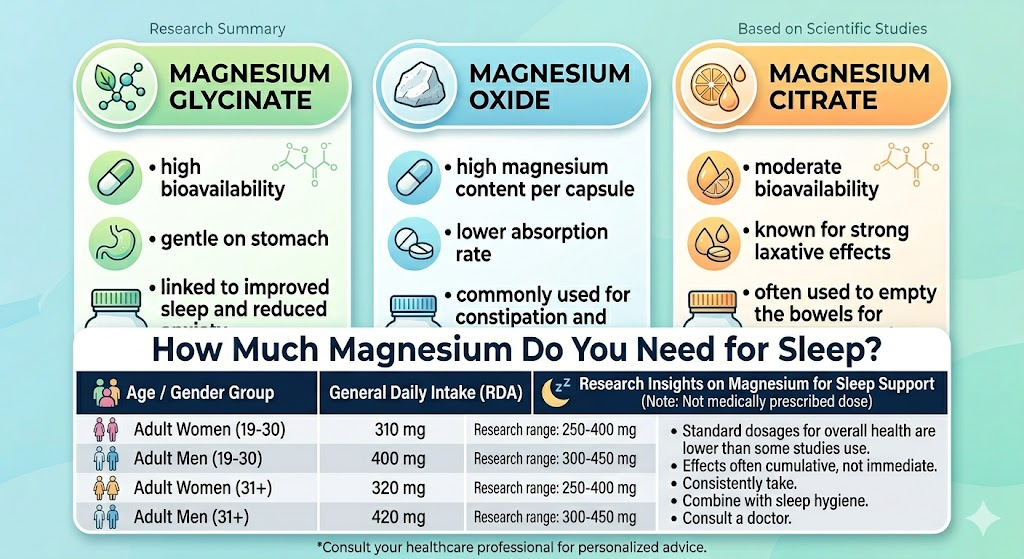
The Recommended Dietary Allowance (RDA) for magnesium is 310–420 mg per day for adults, depending on age and sex. Most Americans do not meet this through diet alone.
For sleep support, doses typically range from 200 to 400 mg of magnesium glycinate taken 30 to 60 minutes before bed. Some individuals find benefits at lower doses; others require closer to the upper range. Starting at a lower dose and gradually adjusting is generally the sensible approach.
It is worth noting that magnesium supplements are not a sedative. The effect is not immediate or dramatic; it typically supports a gradual improvement in sleep quality over several weeks of consistent use, particularly in individuals whose sleep difficulties are related to nervous system overactivity or deficiency-driven GABA dysfunction.
Magnesium-rich foods include pumpkin seeds, dark leafy greens, legumes, nuts, whole grains, and dark chocolate. Improving dietary intake alongside supplementation is a more comprehensive approach to maintaining adequate levels.
Watch:Sleep Apnea, Explained.
SLIIIP’s board-certified sleep physicians can do sleep evaluations for sleep apnea. Virtual consultations in all 50 states. Home sleep tests shipped to your door.
Who Benefits Most from Magnesium for Sleep
The evidence for magnesium for sleep is strongest in three specific populations:
- People with insomnia are driven by anxiety or nervous system hyperarousal. If you struggle to fall asleep because your mind races, you feel physically tense, or you experience a general state of alertness when you should be winding down, magnesium’s role in GABA function and cortisol regulation may be particularly relevant.
- People with Restless Legs Syndrome (RLS) or periodic limb movements. Some research supports magnesium supplementation as a supportive wellness strategy for individuals experiencing the uncomfortable leg sensations that disrupt sleep onset. The evidence here is not definitive, but magnesium is frequently discussed as part of a broader wellness approach for RLS.
- Older adults. Magnesium absorption declines with age, and older adults are more likely to be deficient. Several studies examining sleep quality in older adults have found that magnesium supplementation was associated with improved sleep efficiency, reduced early waking, and better subjective sleep experience.
People who are unlikely to see dramatic results from magnesium supplementation include those whose poor sleep is caused by an underlying sleep disorder such as obstructive sleep apnea, circadian rhythm disruption, or a clinical insomnia disorder requiring structured behavioral treatment. In these cases, supplementation may offer marginal support but will not address the root cause.
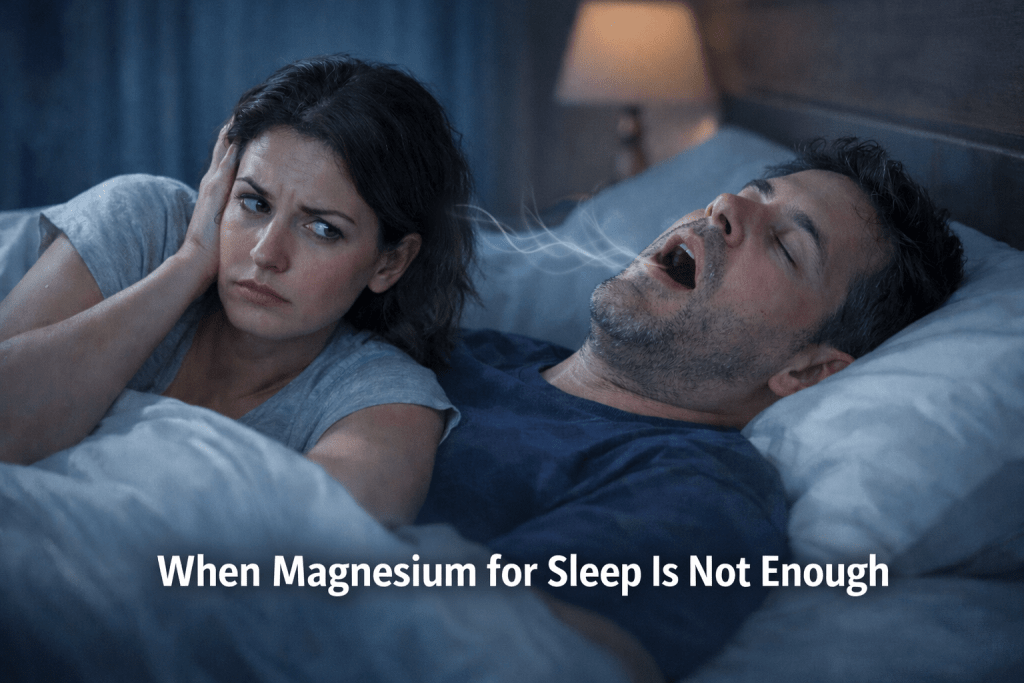
When Magnesium for Sleep Is Not Enough: Signs of an Underlying Disorder
This is where a physician’s perspective becomes essential. Many patients discover that magnesium helps slightly but doesn’t resolve their sleep problems and that is a clinically meaningful finding.
If you have tried magnesium consistently for 4–6 weeks and still experience any of the following, an evaluation with a sleep physician is warranted:
- Waking up feeling unrefreshed regardless of how many hours you sleep
- Loud snoring reported by a partner, or gasping sounds during sleep
- Excessive daytime sleepiness that interferes with daily function
- Waking frequently throughout the night for no clear reason
- Morning headaches or dry mouth upon waking
- Difficulty staying awake while driving or in sedentary activities
These symptoms can indicate obstructive sleep apnea, a condition that affects an estimated 30 million Americans and remains undiagnosed in the majority of them. No supplement resolves sleep apnea but a home sleep test can identify it in the comfort of your own bedroom, and virtual consultations with board-certified sleep physicians make evaluation more accessible than ever.
Internal link: For more on the signs of a breathing-related sleep disorder, see Signs of Sleep Apnea.
What a Sleep Doctor Recommends Before Reaching for Supplements
Dr. Avinesh Bhar emphasizes that supplements should be viewed as supportive tools within a broader sleep wellness strategy not as a substitute for evaluating whether a structural or medical cause is driving poor sleep.
His clinical guidance for patients exploring magnesium:
- Start with dietary assessment. Before buying supplements, consider whether your diet provides adequate magnesium. Increasing intake through whole foods is the foundation.
- Choose the right form. Magnesium glycinate is the preferred choice for sleep-related wellness goals.
- Pair it with sleep hygiene practices. Supplement effects are amplified when combined with consistent sleep and wake times, reduced evening screen exposure, limited caffeine after noon, and a wind-down routine.
- Give it time. Four to six weeks of consistent use is a reasonable trial period before evaluating whether the supplement is helping.
- If symptoms persist, get evaluated. A home sleep test and a telemedicine visit take far less time than months of trial-and-error supplementation. Ruling out a sleep disorder is always the right first step.
At Sliiip, we accept the following insurances:

SLIIIP’s board-certified sleep physicians can do sleep evaluations for sleep apnea. Virtual consultations in all 50 states. Home sleep tests shipped to your door.
Kaiser Permanente Ambetter Medicare Beech Street Humana Military Tricare MultiPlan Humana Allied Alliant Cigna NovaNet Secure Health Aetna Blue Cross Blue Shield UnitedHealthcare Coventry Health Care Clover Health
SLIIIP’s board-certified sleep physicians can do sleep evaluations for sleep apnea. Virtual consultations in all 50 states. Home sleep tests shipped to your door.
For more on evidence-based approaches to addressing sleep difficulties, see Insomnia Treatment Methods and Top Sleep Aids.
Frequently Asked Questions About Magnesium for Sleep
Does magnesium actually help you sleep better?
For some people, particularly those with low magnesium levels or anxiety-driven insomnia, magnesium supplementation is associated with improved sleep quality. It is not a sedative, but supports nervous system processes that regulate sleep.
Which magnesium is best for sleep?
Magnesium glycinate is most consistently recommended for sleep wellness due to its high bioavailability and calming effects from the glycine component.
How long does it take for magnesium to help sleep?
Most people need 3–6 weeks of consistent supplementation before noticing a meaningful change in sleep quality. Expect gradual improvement rather than an immediate effect.
Can I take magnesium every night?
Yes, for most healthy adults, daily magnesium supplementation at recommended doses is considered safe. If you have kidney disease or take certain medications, consult a physician first.
What is the best time to take magnesium for sleep?
Most physicians recommend taking magnesium glycinate 30–60 minutes before your target bedtime.
Can too much magnesium affect sleep negatively?
Very high doses can cause digestive discomfort and, in extreme cases, affect heart rhythm. Staying within the recommended range (200–400 mg of glycinate) is appropriate for most adults.
Does magnesium help with sleep apnea?
No. Magnesium does not treat or prevent sleep apnea. If you suspect sleep apnea, a clinical evaluation is necessary.
Is magnesium glycinate the same as magnesium?
Magnesium glycinate is a specific form of magnesium bound to glycine. It is not the same as standard magnesium oxide found in most pharmacy supplements.
Does magnesium help with REM sleep?
Preliminary research suggests magnesium may support more time in deeper sleep stages, though the evidence specific to REM is limited.
Can magnesium help with waking up in the middle of the night?
For people whose nighttime waking is related to cortisol elevation or nervous system hyperarousal, magnesium may provide some benefit. Waking caused by a breathing disorder like sleep apnea requires clinical evaluation.
Does melatonin work better with magnesium?
Some people find the combination helpful. Magnesium supports melatonin production pathways, so they may be complementary. Neither replaces evaluation for an underlying sleep disorder.
What foods are highest in magnesium?
Pumpkin seeds, dark leafy greens, legumes, almonds, cashews, dark chocolate, and whole grains are among the richest dietary sources.
Can children take magnesium for sleep?
Only under the guidance of a pediatrician. Dosing and safety profiles differ significantly for children, and childhood sleep difficulties may have distinct causes.
Is magnesium better than melatonin for sleep?
They work differently. Melatonin supports sleep timing; magnesium supports nervous system regulation. Depending on the cause of your sleep difficulties, one may be more relevant than the other.
Does magnesium help with anxiety-related sleep problems?
Magnesium’s role in GABA function means it is most relevant for sleep difficulties connected to nervous system overactivity or anxiety. It is not a treatment for anxiety disorders.
Can I get enough magnesium through diet alone?
Many Americans do not. However, improving dietary intake is always the preferable starting point before adding supplementation.
Does magnesium deficiency cause insomnia?
Magnesium deficiency is associated with increased sleep difficulties, including trouble falling asleep and reduced sleep quality, based on available research.
What happens if I take magnesium oxide for sleep?
Magnesium oxide has very low bioavailability (~4%) and is unlikely to meaningfully support sleep. It is more likely to cause gastrointestinal side effects.
Can magnesium help with shift work sleep problems?
Magnesium may provide some nervous system support, but shift work disrupts the circadian clock in ways that require more targeted strategies beyond supplementation.
When should I see a doctor instead of trying supplements?
If you experience persistent fatigue despite adequate sleep time, loud snoring, gasping during sleep, morning headaches, or difficulty staying awake during the day these are signs to seek a clinical evaluation rather than continuing to self-manage with supplements.
Thank you for reading this article.
Latest posts
-
Sleep Debt: What It Is and How to Pay It Back
Most people first hear the term sleep debt after a rough week, and Dr. Avinesh Bhar, Board-Certified Sleep Physician at SLIIIP.com, says the banking metaphor is useful right up until…
-
Studying at Night vs Morning: Which Works Better for You?
The debate over studying at night vs morning usually gets framed as a discipline question, but Dr. Avinesh Bhar, Board-Certified Sleep Physician at SLIIIP.com, treats it as a biology question…
-
Can’t Sleep the Night Before an Exam? Here Is What to Do
If you can’t sleep the night before an exam, you are dealing with a normal stress response rather than a broken sleep system, according to Dr. Avinesh Bhar, Board-Certified Sleep…
Get updates
Spam-free subscription, we guarantee. This is just a friendly ping when new content is out.

