
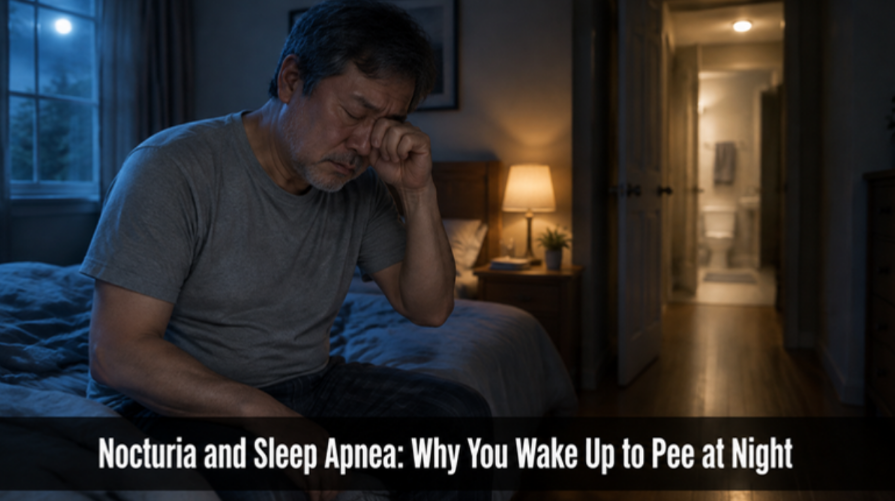
Nocturia and Sleep Apnea: Why You Wake Up to Pee at Night
Last updated: October 23, 2026. Medically reviewed by Dr. Avinesh Bhar, Board-Certified Sleep Physician, SLIIIP.com.
Nocturia means waking up more than once a night to urinate. It is often blamed on age, the bladder, or a late glass of water. But nocturia and sleep apnea are linked, and the bathroom trip may be a clue to a breathing problem. Dr. Avinesh Bhar, Board-Certified Sleep Physician at SLIIIP.com, advises patients to notice what woke them first. Was it the urge to pee, or did they wake up and then feel the urge? Many people who wake to pee at night are first being woken by pauses in their breathing. If you get up two or more times a night, a sleep evaluation is worth considering alongside a bladder checkup.
SLIIIP’s board-certified sleep physicians can do sleep evaluations for sleep apnea. Virtual consultations in all 50 states. Home sleep tests shipped to your door.
What Is Nocturia?
Nocturia is the need to wake from sleep to urinate. Getting up once in a while is normal. Doctors start to pay attention when it happens more than once a night, on most nights.
According to the American Academy of Sleep Medicine, about half of adults over 50 will experience nocturia. Nocturia becomes more common with age, but it is usually a symptom of something else, not a condition on its own. That is why the cause matters more than the count.
Nocturia is different from needing to pee often during the day. It is also different from bedwetting. With nocturia, you wake up, feel the urge, and walk to the bathroom. Then you try to fall back asleep.
Each trip breaks your sleep into shorter pieces. Over weeks, broken sleep is linked to daytime tiredness, low focus, and poor mood. Older adults also face a higher risk of falls during dark nighttime walks.
Can Sleep Apnea Cause You to Wake Up to Pee at Night?
Yes, sleep apnea is strongly associated with nocturia, and it is one of the most overlooked causes. The AASM lists obstructive sleep apnea among the sleep disorders that nocturia can point to.
Obstructive sleep apnea happens when the airway narrows or closes during sleep. Breathing pauses for a few seconds, then restarts with a small arousal. These arousals can happen many times an hour without you remembering them.
A classic study published in the Archives of Internal Medicine looked at 80 adults who had overnight sleep testing. About 79 percent of their nighttime bathroom awakenings were linked to sleep apnea, snoring, or leg movements during sleep. Patients guessed the real cause correctly less than 5 percent of the time.
In other words, many people believe the bladder woke them up, when a sleep disruption came first. Once awake, the brain notices a bladder that would have waited until morning.
How Does Sleep Apnea Make You Pee More?
Researchers describe two main ways sleep apnea is linked to extra nighttime urine. The first involves the heart. The second involves the arousals themselves.
The heart hormone signal
When the airway closes, the chest works hard to pull in air against the blockage. This creates strong pressure swings inside the chest. These swings stretch the heart chambers.
A stretched heart releases a hormone called atrial natriuretic peptide, or ANP. ANP tells the kidneys to release more salt and water. The body acts as if it has too much fluid, so the kidneys make more urine at night.
Repeated arousals
Each breathing pause ends with a brief arousal from deep sleep. During deep sleep, the body normally makes less urine. Constant arousals keep you in lighter sleep, where a full bladder is easier to notice.
Low oxygen during apnea events may also play a role. It can affect blood pressure and fluid balance overnight. The full picture is still being studied.
Other Common Causes of Nocturia
Sleep apnea is only one possible cause. A good evaluation looks at the whole picture. Common causes include:
- Drinking a lot of fluid, caffeine, or alcohol in the evening
- Diuretic medicines, often called water pills, taken later in the day
- An enlarged prostate in men
- An overactive bladder or reduced bladder capacity
- Urinary tract infections
- High blood sugar from diabetes
- Swelling in the legs that moves back into the blood when you lie down
- Heart or kidney conditions
- Pregnancy and menopause
More than one cause can be present at the same time. For example, a man may have an enlarged prostate and untreated sleep apnea. Treating only one may leave the bathroom trips unchanged.
Do not change the timing of a prescribed medicine on your own. The AASM advises talking with a doctor first. Your doctor can tell you if a different schedule is safe.
Signs Your Nighttime Bathroom Trips May Be Sleep Apnea
Nocturia linked to sleep apnea rarely shows up alone. Look for other clues that appear on the same nights or the next day.
- Loud snoring, or a partner who hears you stop breathing
- Waking up gasping, choking, or with a racing heart
- A dry mouth or sore throat in the morning
- Morning headaches
- Feeling tired even after a full night in bed
- Trouble focusing or staying awake during the day
- High blood pressure that is hard to control
If several of these sound familiar, read our guide on waking up gasping for air. If you often wake at the same hour, our article on waking up at 2AM covers other common patterns.
Not everyone with sleep apnea snores loudly. Women and people with a slim build are often missed. Some people only notice the bathroom trips and the daytime fatigue.
Is It My Bladder or My Sleep?
There is no way to know for sure at home. But a few simple steps can give your doctor useful clues.
Keep a bladder diary for three to five days. Write down when you drink, how much, and when you urinate. Note every time you wake at night and what you noticed first.
If you make large amounts of urine at night but normal amounts during the day, the cause is often outside the bladder. This pattern is called nocturnal polyuria. Sleep apnea, leg swelling, and evening fluids are common reasons for it.
If you pass only small amounts each time, the bladder or prostate may be involved. A primary care doctor or urologist can check for these. A sleep evaluation can run alongside that workup.
Does Treating Sleep Apnea Reduce Nocturia?
For many people with both conditions, treating sleep apnea is associated with fewer nighttime bathroom trips. Results vary from person to person.
Treatment such as CPAP keeps the airway open during sleep. With fewer breathing pauses, chest pressure swings ease and arousals drop. Research has linked regular CPAP use with less nighttime urine in many people with obstructive sleep apnea.
If you already use CPAP and still wake to pee often, talk with your sleep physician. Never change your CPAP pressure or settings on your own. Your doctor can review your data and check for other causes.
Simple Habits That May Help Tonight
These habits do not replace an evaluation. They may still lower the number of trips while you look for the cause.
- Drink most of your fluids earlier in the day
- Cut back on caffeine and alcohol in the late afternoon and evening
- Empty your bladder right before bed
- Raise your legs for an hour in the evening if your ankles swell
- Use a dim night light to lower your fall risk
- Keep the room cool, dark, and quiet so you fall back asleep faster
If these steps do not change much after a few weeks, the cause may be medical. That is a good time to talk with a doctor.
Watch: Dr. Wells explains why you wake up at 3am
When to See a Doctor
See a doctor if you wake to urinate two or more times a night for several weeks. Get care sooner if you also notice blood in your urine, pain, fever, or sudden thirst.
Dr. Avinesh Bhar recommends a sleep evaluation when nocturia comes with snoring, gasping, or daytime sleepiness. In his view, these patients should not wait for a bladder workup to finish before checking their breathing. Both checks can happen at the same time.
A home sleep test can measure breathing pauses and oxygen levels while you sleep in your own bed. Your sleep physician then reviews the results with you. If you have mild symptoms, our guide to mild sleep apnea explains what the numbers can mean.
Many insurance plans cover sleep evaluations and home sleep tests. SLIIIP works with major insurers, including the plans below.

SLIIIP’s board-certified sleep physicians can do sleep evaluations for sleep apnea. Virtual consultations in all 50 states. Home sleep tests shipped to your door.
For cash payments, price for Initial Consultation is $150
Follow up appointments cost $125
Frequently Asked Questions About Nocturia and Sleep Apnea
What is nocturia?
Nocturia is waking up from sleep to urinate. Doctors usually focus on it when it happens more than once a night.
How many times a night is normal to pee?
Getting up once a night or less is common. Two or more times on most nights is worth discussing with a doctor.
Can sleep apnea make you pee at night?
Yes, sleep apnea is strongly associated with nocturia. Breathing pauses can trigger hormone changes and arousals linked to more nighttime urine.
Why does sleep apnea increase urine production?
Airway blockage causes pressure swings that stretch the heart. The heart then releases ANP, a hormone that tells the kidneys to make more urine.
What is ANP?
ANP stands for atrial natriuretic peptide. It is a hormone released by the heart that increases salt and water loss through urine.
Is nocturia a sign of sleep apnea?
It can be. The AASM lists obstructive sleep apnea among the sleep disorders nocturia may point to.
Can you have sleep apnea without snoring?
Yes. Some people with sleep apnea snore very little, especially women and people with a slim build.
Does CPAP help with nighttime urination?
For many people with sleep apnea, regular CPAP use is associated with fewer bathroom trips. Results vary by person.
Is nocturia just part of getting older?
It becomes more common with age, but it usually has a cause. That cause is worth finding at any age.
Can an enlarged prostate cause nocturia?
Yes, an enlarged prostate is a common cause in men. It can exist alongside sleep apnea.
Can drinking water before bed cause nocturia?
Yes, large evening fluid intake is a common cause. Moving most fluids earlier in the day may help.
Does alcohol make nocturia worse?
Alcohol increases urine production and is linked to worse sleep apnea. Both effects can add to nighttime trips.
What is nocturnal polyuria?
It means making too much urine at night compared with the daytime. Sleep apnea is one common cause.
What is a bladder diary?
It is a log of your drinks, bathroom trips, and nighttime wake-ups over a few days. It helps your doctor find a pattern.
Should I see a urologist or a sleep doctor?
You may need both. A sleep evaluation can happen alongside a urology or primary care workup.
Can women with nocturia have sleep apnea?
Yes. Sleep apnea in women is often missed, and nocturia may be one of the few clues.
Can a home sleep test check for sleep apnea?
Yes, a home sleep test measures breathing and oxygen overnight. A sleep physician reviews the results with you.
Is nocturia dangerous?
Nocturia itself is not life-threatening. It can disrupt sleep, raise fall risk at night, and point to conditions that need care.
Should I stop taking my water pill to sleep better?
No. Talk with your doctor before changing any medicine or the time you take it.
Does SLIIIP accept insurance?
Yes, SLIIIP works with many major insurance plans. You can verify your coverage before booking.
SLIIIP's board-certified sleep physicians can do sleep evaluations for sleep apnea. Virtual consultations in all 50 states. Home sleep tests shipped to your door.
Latest posts
-
Can Statins Cause Insomnia? What the Research Shows
Last updated: November 17, 2026. Medically reviewed by Dr. Avinesh Bhar, Board-Certified Sleep Physician, SLIIIP.com. For most people, probably not. A meta-analysis of placebo-controlled sleep lab studies found that statins…
-
Do Beta Blockers Cause Insomnia? What to Know
Last updated: November 17, 2026. Medically reviewed by Dr. Avinesh Bhar, Board-Certified Sleep Physician, SLIIIP.com. Beta blockers are linked to insomnia in some people. Some beta blockers lower nighttime melatonin,…
-
Do I Need a Sleep Study to Get the Sleep Apnea Pill?
Last updated: November 17, 2026. Medically reviewed by Dr. Avinesh Bhar, Board-Certified Sleep Physician, SLIIIP.com. Yes, almost certainly. Any sleep apnea medicine, including the AD109 pill if it is approved,…
Get updates
Spam-free subscription, we guarantee. This is just a friendly ping when new content is out.

