
Is an Online Sleep Test Cheaper Than a Sleep Lab? A Cost Breakdown
Last updated: November 1, 2026. Medically reviewed by Dr. Avinesh Bhar, Board-Certified Sleep Physician, SLIIIP.com.
Yes, in most cases an online sleep test costs far less than a sleep lab study. A home sleep apnea test ordered through SLIIIP is only $250.
An overnight lab study often costs over a thousand.
Dr. Avinesh Bhar, Board-Certified Sleep Physician at SLIIIP.com, sees a home test as the usual first step for adults with signs of obstructive sleep apnea. That applies when there is no major heart, lung, or nerve condition.
The cheapest test is the one that fits your symptoms and gives a clear answer the first time.
SLIIIP’s board-certified sleep physicians can do sleep evaluations for sleep apnea. Virtual consultations in all 50 states. Home sleep tests shipped to your door.
Is an Online Sleep Test Cheaper Than a Sleep Lab?
For most adults with suspected obstructive sleep apnea, an online home sleep test is the lower-cost option. The gap often reaches several hundred to a few thousand dollars before insurance.
The main reason is simple. A lab study pays for a private room, overnight staff, and a full set of sensors. A home test uses a small device you wear in your own bed.
Research backs up the savings for insurers too. A cost study summarized by the American Academy of Sleep Medicine compared home and lab testing for obstructive sleep apnea. It found the home-based path was less costly to the payer. Lower costs for insurers are one reason many plans now prefer a home test first.
If you are wondering if you have a sleep disorder. Try our free quiz and get your results right away.
TAKE THE QUIZ
What Does Each Option Usually Cost?
Prices vary by state, provider, and insurance plan. Still, the typical ranges are far apart.
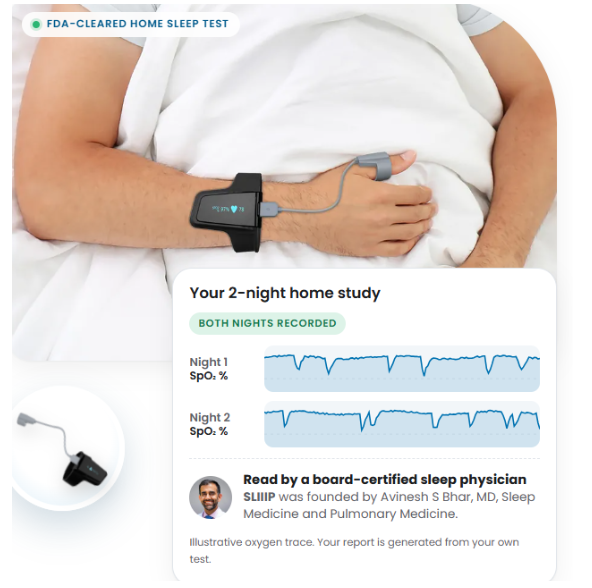
- Home sleep apnea test: SLIIIP’s guide to home sleep study insurance coverage lists typical prices of about $150 to $500.
At SLIIIP though, you can get a home sleep study test at $250 – no referral required
- In-lab sleep study (polysomnography): The same guide lists about $1,000 to $3,000 or more. Some hospital labs charge much higher.
- Telehealth visit: Many online sleep clinics charge a separate fee for the doctor visit. SLIIIP’s telehealth sleep doctor page lists $150 for a self-pay first visit and $125 for follow-ups.
What Does an Online Sleep Test Include?
A real online sleep test is more than a gadget in the mail. A valid home sleep apnea test needs a doctor’s order, an FDA-cleared device, and a sleep physician to read the results.
A full online path usually includes these steps:
- A video visit to review your symptoms, health history, and sleep habits.
- A home test device shipped to your door, often worn for one or two nights.
- A sleep physician’s review of your breathing, oxygen levels, and heart rate data.
- A results visit to explain your score and talk about next steps.
Store-bought wearables and kits that skip the doctor are a different thing. SLIIIP explains the difference in its guide to home sleep apnea tests vs over-the-counter kits. Those kits usually cannot be used to qualify for CPAP coverage.
Why Does a Sleep Lab Cost More?
A sleep lab study measures more signals and uses trained staff all night, which raises the cost.
In a lab, a technologist places sensors on your scalp, face, chest, and legs. These track brain waves, eye movements, muscle activity, breathing, oxygen, and heart rhythm. The technologist watches you through the night and can fix loose sensors right away.
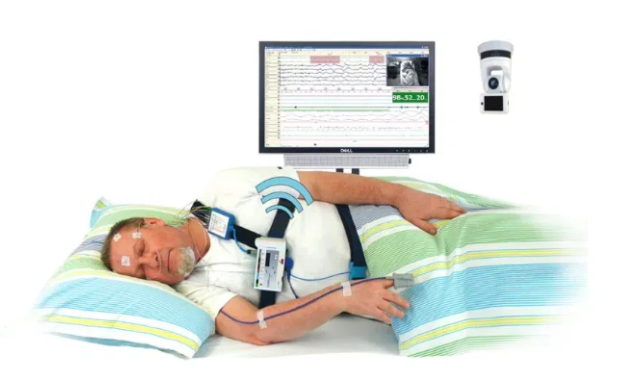
That level of detail matters for some people. It helps doctors spot conditions a home test is not built to find. Examples include narcolepsy, periodic limb movements, and some types of central sleep apnea.
You also pay for the facility. Hospital-based labs often bill a facility fee on top of the reading fee. Stand-alone sleep centers may cost less than hospital labs.
Does Insurance Change Which Option Is Cheaper?
Insurance often narrows the price gap, but a home test usually stays the lower out-of-pocket choice.
According to Medicare, Part B covers Type I, II, III, and IV sleep tests.
You need signs and symptoms of sleep apnea, and a doctor must order the test. Type I tests are covered only in a sleep lab. After the Part B deductible, you pay 20% of the Medicare-approved amount.
Twenty percent of a lower bill is a smaller number.
That is why a covered home test often costs Medicare patients less out of pocket than a covered lab study.
Private plans vary more. Many require prior approval for a lab study. Some approve a lab study only after a home test fails or is not a good fit. Your deductible, copay, and network status all shape your final bill.
Hidden Costs to Ask About Before You Book
The sticker price is not always the full price. Ask for a written quote that lists every fee, from the first visit to the results visit.
- Separate reading fee: Some providers charge one fee for the device and another for the physician’s report.
- Facility fee: Hospital labs may add a facility charge that does not show up in early quotes.
- Repeat test: If a home test fails because of a loose sensor, ask whether a retest is included.
- Follow-up visits: A results visit or treatment visit may be billed on its own.
- Out-of-network billing: Check that both the lab and the reading doctor are in your network.
HSA and FSA funds can often be used for sleep testing. This can lower your real cost if you have one of these accounts.
When Is a Sleep Lab Worth the Higher Price?
A lab study is worth the extra cost when a home test is likely to miss the problem. Paying for a home test first can cost more in the end if you will need a lab study anyway.
A lab study is often the better first choice if you have:
- Serious heart failure, COPD, or another major lung condition.
- A nerve or muscle disease that affects breathing.
- Use of strong opioid pain medicines.
- Signs of narcolepsy, such as sudden sleep attacks or muscle weakness with strong emotions.
- Acting out dreams, violent movements, or unusual behaviors during sleep.
- Strong sleep apnea symptoms but a negative or unclear home test.
A lab is also used to fine-tune CPAP pressure in some cases. A sleep physician can tell you which test fits your health picture.
How to Keep Your Sleep Testing Costs Low
A few steps can help you avoid paying twice.
- Start with a sleep physician visit so the right test is chosen the first time.
- Ask your insurer whether a home test is covered and if prior approval is needed.
- Compare a self-pay price with your in-network cost after your deductible.
- Follow the device setup steps closely to avoid a failed night of data.
- Ask what treatment would cost if the test shows sleep apnea.
Untreated sleep apnea is linked to higher risks of high blood pressure, heart disease, and drowsy driving. Putting off a test to save money may cost more over time.
Watch: Why Sleep Apnea Is More Dangerous Than Most People Realize | Signs, Risks & Treatment
When to See a Doctor
See a doctor if you snore loudly, stop breathing in your sleep, wake up gasping, or feel very sleepy during the day. Morning headaches, waking up to pee often, and trouble focusing are other common clues.
Dr. Avinesh Bhar recommends a sleep evaluation before you buy any test on your own. That visit decides whether a home test or a lab study fits you.
This one step is often the best way to avoid paying for a test that cannot answer your question.
If you already had a home test and still have symptoms after a negative result, talk with a sleep physician. A lab study may be the next step.
Many insurance plans cover a sleep evaluation and home sleep test. SLIIIP works with many major insurers, including Medicare and TRICARE.

SLIIIP’s board-certified sleep physicians can do sleep evaluations for sleep apnea. Virtual consultations in all 50 states. Home sleep tests shipped to your door.
For cash payments, price for Initial Consultation is $150
Follow up appointments cost $125
Frequently Asked Questions
Is an online sleep test cheaper than a sleep lab?
Usually, yes. A home sleep apnea test ordered online often costs a few hundred dollars, while a lab study often costs over a thousand.
How much does a home sleep apnea test cost?
Typical prices run about $150 to $500, depending on the provider and what is included.
How much does an in-lab sleep study cost?
An in-lab study often costs about $1,000 to $3,000 or more before insurance.
Why is a sleep lab more expensive?
A lab pays for a room, overnight staff, and many more sensors than a home device uses.
Does Medicare cover home sleep tests?
Yes. Medicare Part B covers Type I to IV sleep tests when you have sleep apnea symptoms and a doctor orders one, with Type I limited to labs.
How much will I pay with Medicare?
After the Part B deductible, you usually pay 20% of the Medicare-approved amount.
Do private insurers prefer home tests?
Many do. Some plans approve a lab study only when a home test is not a good fit or comes back unclear.
Is an online sleep test as accurate as a lab test?
A home test is reliable for finding moderate to severe obstructive sleep apnea, but it can miss milder cases and other sleep disorders.
Can a home test diagnose narcolepsy?
No. Narcolepsy testing needs an overnight lab study and a daytime nap test.
Does a telehealth visit cost extra?
Often, yes. Many clinics bill the doctor visit separately from the test device and reading.
Can I use my HSA or FSA for a sleep test?
In many cases, yes. Sleep testing is usually an eligible medical expense.
Are store-bought sleep apnea kits cheaper?
They may cost less, but kits without a doctor's order and reading usually cannot be used for a diagnosis or CPAP coverage.
What hidden costs should I ask about?
Ask about separate reading fees, facility fees, repeat test fees, and follow-up visit charges.
What if my home test fails?
Ask your provider whether a repeat night is included in the price before you book.
Who should skip a home test and go to a lab?
People with serious heart or lung disease, nerve or muscle conditions, strong opioid use, or signs of narcolepsy often need a lab study.
Can a negative home test be wrong?
Yes. If symptoms continue after a negative home test, a sleep physician may order a lab study.
Do I need a referral for an online sleep test?
Many telehealth sleep clinics do not need a referral, but your insurance plan may have its own rules.
Does SLIIIP offer home sleep tests?
Yes. SLIIIP offers virtual visits in all 50 states and home sleep tests shipped to your door.
Is it worth paying for a sleep test?
Untreated sleep apnea is linked to heart and safety risks, so testing is often worth the cost.
How do I get a written price quote?
Ask the clinic for an itemized quote that lists the visit, device, reading, and follow-up fees.
SLIIIP offers convenient virtual sleep consultations and home sleep tests shipped directly to your door. Get expert guidance from board-certified sleep physicians and take the next step toward better sleep health.
Latest posts
-
Can Statins Cause Insomnia? What the Research Shows
Last updated: November 17, 2026. Medically reviewed by Dr. Avinesh Bhar, Board-Certified Sleep Physician, SLIIIP.com. For most people, probably not. A meta-analysis of placebo-controlled sleep lab studies found that statins…
-
Do Beta Blockers Cause Insomnia? What to Know
Last updated: November 17, 2026. Medically reviewed by Dr. Avinesh Bhar, Board-Certified Sleep Physician, SLIIIP.com. Beta blockers are linked to insomnia in some people. Some beta blockers lower nighttime melatonin,…
-
Do I Need a Sleep Study to Get the Sleep Apnea Pill?
Last updated: November 17, 2026. Medically reviewed by Dr. Avinesh Bhar, Board-Certified Sleep Physician, SLIIIP.com. Yes, almost certainly. Any sleep apnea medicine, including the AD109 pill if it is approved,…
Get updates
Spam-free subscription, we guarantee. This is just a friendly ping when new content is out.

