👉 Register for Free. How to Diagnose Sleep Apnea Faster in Primary Care – FREE Webinar by Dr. Audrey Wells. – Friday, April 24 at 12 PM ET

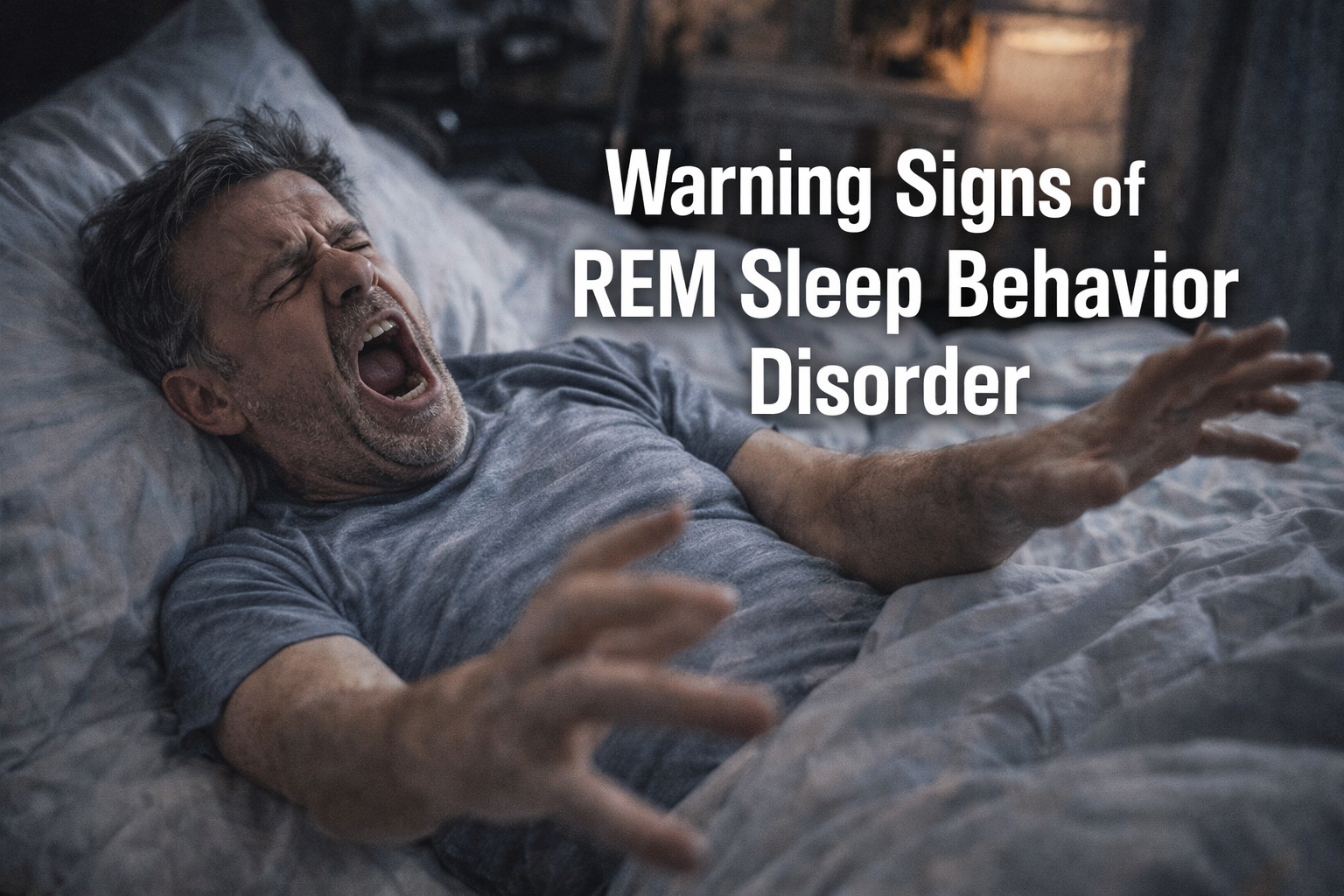
REM Sleep Behavior Disorder: When Your Dreams Become Physical
REM sleep behavior disorder causes people to physically act out their dreams. It is not sleepwalking. It is not just vivid dreams. It is a neurological condition that requires clinical evaluation and carries significant long-term health implications when left unaddressed.
Reviewed by Dr. Avinesh Bhar, Board Certified Sleep Physician at Sliiip.com
Your partner grabs you in the middle of the night. You have been punching the mattress, shouting, or throwing yourself out of bed. You have no memory of it. But you were dreaming vividly.
This is not unusual sleep. It is REM sleep behavior disorder. And it is telling you something important about what is happening in your nervous system.
Research from the American Academy of Sleep Medicine estimates that REM sleep behavior disorder affects between 0.5% and 1% of the general adult population, but studies tracking patients over time find that up to 80% eventually develop a neurodegenerative condition such as Parkinson’s disease, Lewy body dementia, or multiple system atrophy.
SLIIIP’s board-certified sleep physicians can do sleep evaluations for sleep apnea. Virtual consultations in all 50 states. Home sleep tests shipped to your door.
Myth vs. Reality: What Patients Get Wrong About RBD
Myth: Acting out dreams is just vivid dreaming or sleepwalking.
Reality: REM sleep behavior disorder is neurologically distinct from both. It occurs exclusively during REM sleep, involves complex, often violent movements that mirror dream content, and is associated with specific brainstem changes that sleepwalking is not.
Myth: It is harmless if no one gets hurt.
Reality: REM sleep behavior disorder is one of the strongest known predictors of future neurodegeneration. Its presence indicates changes in the brainstem circuits that regulate muscle paralysis during REM sleep. Clinical evaluation is essential regardless of injury history.
Myth: Only older men get RBD.
Reality: While idiopathic RBD is more common in men over 50, symptomatic RBD can occur at any age and in both sexes, particularly in association with other neurological conditions, certain medications, or sleep disorders including narcolepsy.
What Normally Happens During REM Sleep
During REM sleep, your brain is highly active. You dream. Emotional memories are processed. Neural pathways are consolidated.
To protect you from acting out those dreams, the brainstem activates a system that paralyzes most voluntary muscles. This is called REM atonia. It is a healthy, automatic process that keeps you safe while your brain runs its most vivid programming.
In REM sleep behavior disorder, this system fails. The atonia does not engage properly. Muscles remain active during REM. The content of your dreams translates directly into movement.
The Neurological Significance of RBD
This is not simply a sleep problem.
The brainstem pathways that control REM atonia are the same pathways that become damaged in the early stages of synucleinopathies, the family of neurodegenerative conditions that includes Parkinson’s disease and Lewy body dementia.
RBD does not cause these conditions. But its presence indicates that the relevant neural circuits are already showing changes. Research published in the journal Lancet Neurology found that idiopathic RBD converts to a neurodegenerative condition in over 70% of cases within 12 years of diagnosis.
This makes early, accurate diagnosis clinically critical.
Watch our video on the process of falling asleep
Expert Q&A
Q: If someone is diagnosed with RBD, does that mean they will develop Parkinson’s?
Dr. Avinesh Bhar, Board Certified Sleep Physician, Sliiip.com: RBD is considered a prodromal marker for certain neurodegenerative conditions, but it does not guarantee a specific outcome. What it does provide is a critical window for monitoring, evaluation, and coordination with neurology. The priority is accurate diagnosis, which requires sleep testing, and ongoing clinical follow-up. Patients who know they have RBD can take an active role in monitoring their neurological health.
How RBD Is Diagnosed
Diagnosis requires a formal sleep study.
A video polysomnography, conducted in a sleep laboratory, is the gold standard. It records brain wave activity, eye movement, muscle tone, body position, and video footage of behavior during sleep simultaneously.
The hallmark finding is elevated chin or limb muscle activity during REM sleep, confirming the absence of normal REM atonia. This finding, combined with a clinical history of dream enactment behavior, establishes the diagnosis.
A home sleep test, while valuable for diagnosing obstructive sleep apnea, does not capture the full polysomnographic data required for RBD diagnosis. A telemedicine consultation is the appropriate starting point to determine which evaluation pathway is right for your presentation.
Has Someone Told You That You Act Out Your Dreams?
SLIIIP’s board-certified sleep physicians evaluate REM sleep behavior disorder and complex sleep disorders through telemedicine, available in all 50 states. More than 10,000 consultations. No referral required.
RBD and Sleep Apnea: An Important Overlap
Obstructive sleep apnea and REM sleep behavior disorder frequently co-occur.
Sleep apnea disrupts REM sleep through repeated arousals, which can either mask RBD or make its evaluation more complex. Research suggests that when sleep apnea is present alongside RBD, treating the apnea sometimes reduces the apparent severity of RBD symptoms, though the underlying neurological process remains.
Any comprehensive evaluation of suspected RBD should assess for concurrent sleep-disordered breathing. The home sleep test is a practical initial step that can identify the sleep apnea component and inform the complete evaluation plan.
The Safety Dimension of Untreated RBD
People with RBD are at risk of injury to themselves and their sleep partners.
Sleep-related injuries in RBD include falls from bed, bruising, lacerations, and in some cases, more serious trauma. Partners report being struck, scratched, or kicked. The episodes are often more violent than routine sleepwalking because they mirror the content of active, emotionally charged dreams.
This is not something to monitor and hope resolves on its own. It requires clinical evaluation and, where appropriate, a coordinated approach to managing the behavior safely.
Expert Q&A
Q: What can be done about RBD while awaiting a full evaluation?
Dr. Avinesh Bhar, Board Certified Sleep Physician, Sliiip.com: The priority before formal evaluation is environmental safety. Remove sharp objects from the sleep area. Lower the bed to the floor if possible. Place padded mats alongside the bed. Consider temporarily sleeping in separate spaces if a partner is at risk of injury. Concurrently, pursue a clinical evaluation promptly. RBD is not a condition to manage on your own. CBT-I and behavioral sleep support can be part of a broader management plan alongside medical care.
Conditions Associated With RBD
RBD does not always appear in isolation.
Idiopathic RBD, where no cause is identified, carries the highest risk of future neurodegeneration. Symptomatic RBD occurs in the context of existing neurological conditions including Parkinson’s disease, multiple system atrophy, and Lewy body dementia.
RBD also occurs in patients with narcolepsy, where it is associated with the same REM regulatory disruption that characterizes that condition. The narcolepsy and cataplexy relationship provides relevant context for patients with overlapping symptoms.
Certain medications, including some antidepressants and antipsychotics, can trigger or worsen RBD. Medication-induced RBD typically resolves when the causative agent is discontinued, which is distinct from idiopathic RBD in its implications.
Lifestyle and Sleep Environment Recommendations
Clinical evaluation and medical management are the priorities. The following evidence-based steps can support safer sleep and overall wellbeing while working with your sleep physician.
Maintain a regular sleep schedule. Consistent timing reduces REM fragmentation and helps stabilize the sleep architecture that RBD disrupts.
Create a safe sleep environment before you sleep. Remove bedside lamps, furniture with sharp edges, and anything that could become a projectile. Pad the floor beside the bed.
Limit alcohol. Alcohol suppresses REM sleep early in the night and causes a REM rebound in the latter hours, when RBD episodes are most common and often most severe.
Reduce stress before bedtime. High emotional arousal before sleep intensifies dream content and can amplify behavioral episodes.
Avoid sleep deprivation. Sleep debt increases REM pressure, which intensifies REM-stage activity and can worsen the frequency and severity of RBD episodes.
SLIIIP’s board-certified sleep physicians can do sleep evaluations for sleep apnea. Virtual consultations in all 50 states. Home sleep tests shipped to your door.
Your Sleep Behavior Matters. Get It Evaluated.
SLIIIP’s board-certified sleep physicians evaluate REM sleep behavior disorder and related conditions via telemedicine. All 50 states. No referral required. Major insurance accepted including Medicare and Tricare.

Frequently Asked Questions
What is REM sleep behavior disorder?
REM sleep behavior disorder is a condition in which the normal muscle paralysis of REM sleep fails to engage. Affected individuals physically act out their dreams, producing movements ranging from small twitches to vigorous activity like punching, kicking, jumping, or shouting during sleep.
Is REM sleep behavior disorder dangerous?
Yes, in two ways. First, there is a direct physical risk of injury to the individual and their sleep partner during episodes. Second, idiopathic RBD carries a significant long-term risk of developing neurodegenerative conditions such as Parkinson’s disease or Lewy body dementia.
How is RBD different from sleepwalking?
Sleepwalking occurs during non-REM sleep, involves calm, purposeful but automatized behavior, and the individual typically has no memory of the episode. RBD occurs during REM sleep, involves behavior that mirrors active dream content, is often vigorous or violent, and the individual may recall the dream vividly.
What causes RBD?
In idiopathic cases, no cause is identified, but the condition reflects dysfunction in the brainstem circuits that control REM atonia. Symptomatic cases are associated with neurodegenerative diseases, narcolepsy, and certain medications including some antidepressants.
Can RBD be cured?
There is no cure for idiopathic RBD. Management focuses on reducing the frequency and severity of episodes, ensuring a safe sleep environment, and monitoring for the development of associated neurological conditions. Some cases associated with medications resolve when the medication is changed.
Does RBD mean I will get Parkinson’s disease?
Not definitively. Research shows that a significant proportion of people with idiopathic RBD eventually develop a neurodegenerative condition, but the timeline varies widely and not every patient converts. The diagnosis provides an important opportunity for monitoring and early intervention if neurological changes emerge.
How is RBD treated?
Management includes sleep environment modification, behavioral approaches, and in some cases physician-directed pharmacological options which are outside the scope of this article. A board-certified sleep physician coordinates the appropriate evaluation and management plan. Telemedicine consultation is an accessible starting point.
Can stress make RBD worse?
Yes. Emotional arousal before sleep intensifies dream content, and sleep deprivation increases REM pressure. Both can amplify the frequency and intensity of RBD episodes. Stress management and consistent sleep timing are supportive measures.
Does sleep apnea cause RBD?
Sleep apnea does not cause RBD, but the two conditions frequently co-occur. Sleep apnea disrupts REM sleep and can complicate the evaluation of RBD. Treating sleep apnea sometimes reduces the apparent severity of RBD symptoms, but the underlying neurological process requires independent evaluation.
Can women have RBD?
Yes. While idiopathic RBD is more commonly diagnosed in men over 50, women can develop RBD, particularly in association with narcolepsy or neurodegenerative conditions. Women with RBD may present with less violent episodes, which can lead to underdiagnosis.
How do I know if I have RBD?
Common indicators include reports from a sleep partner of vigorous movements, speaking, shouting, or appearing to fight during sleep. You may recall vivid dreams corresponding to the reported behavior. Unexplained injuries discovered upon waking are another indicator. A clinical evaluation with a board-certified sleep physician is the appropriate next step.
Is RBD covered by insurance?
Evaluation and management of RBD is covered by most major insurance plans, including Medicare and Tricare. A telemedicine consultation with a board-certified sleep physician is the most accessible and time-efficient starting point for beginning the evaluation process.
Latest posts
-
How Do I Turn My Brain Off at Night?
Learning to turn my brain off at night is less about forcing silence and more about lowering the body’s alert signal, says Dr. Avinesh Bhar, Board-Certified Sleep Physician at SLIIIP.com,…
-
Why Am I So Tired Even After 8 Hours?
Feeling tired even after 8 hours in bed points to a gap between sleep time and sleep quality, explains Dr. Avinesh Bhar, Board-Certified Sleep Physician at SLIIIP.com, and that gap…
-
How to Reset Your Circadian Rhythm After Night Shifts
Resetting your circadian rhythm after night shifts works better when you stop treating it as one problem, says Dr. Avinesh Bhar, Board-Certified Sleep Physician at SLIIIP.com, because recovering between rotations…
Get updates
Spam-free subscription, we guarantee. This is just a friendly ping when new content is out.

